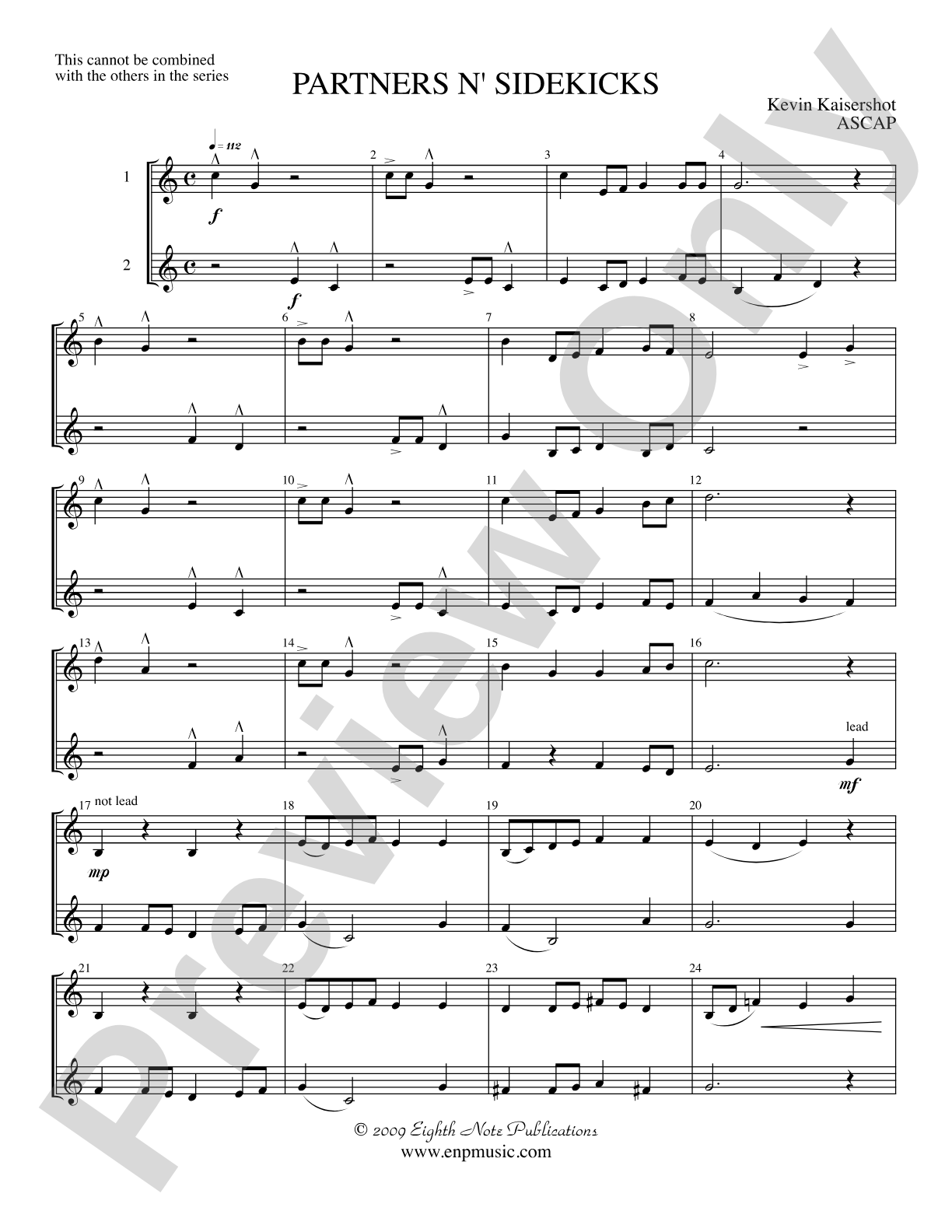
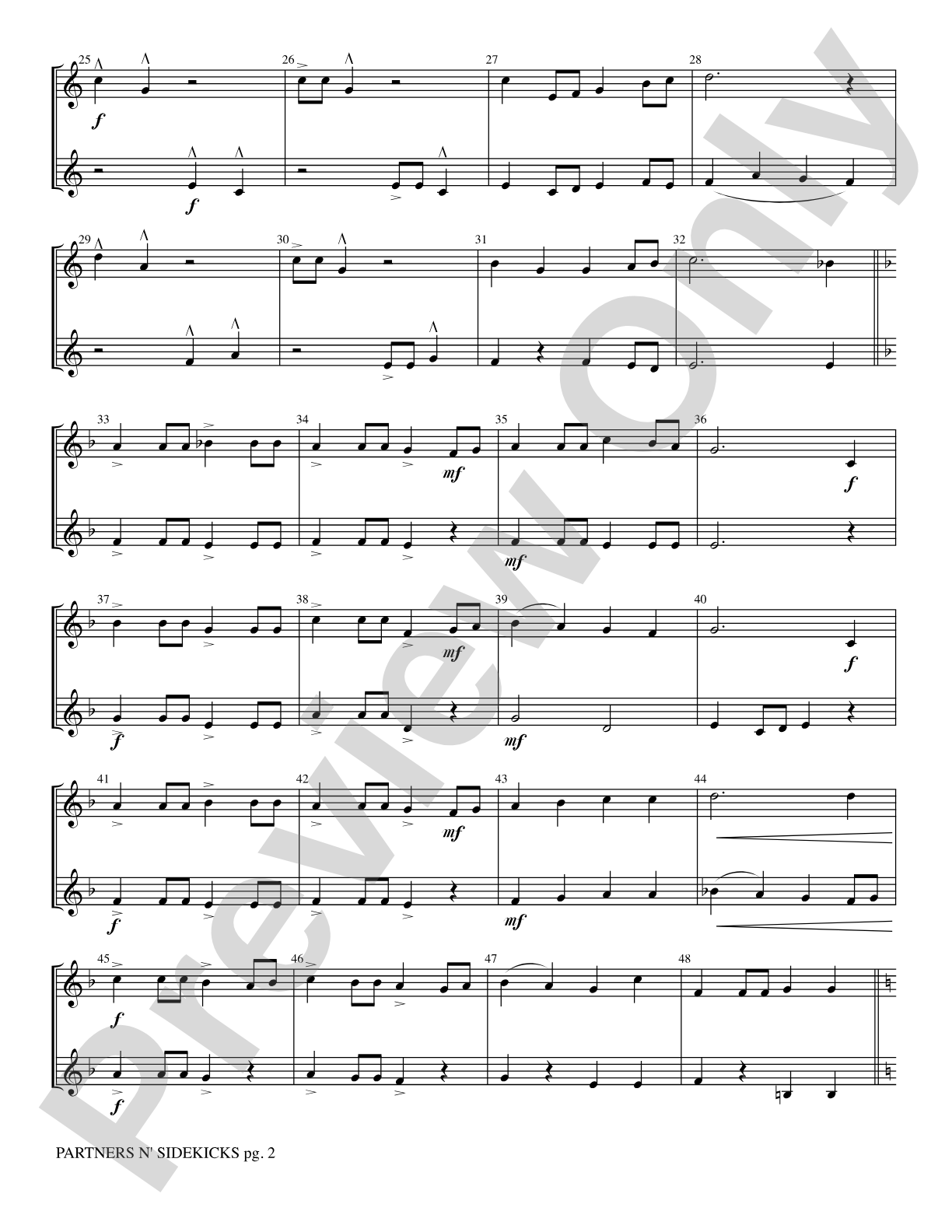
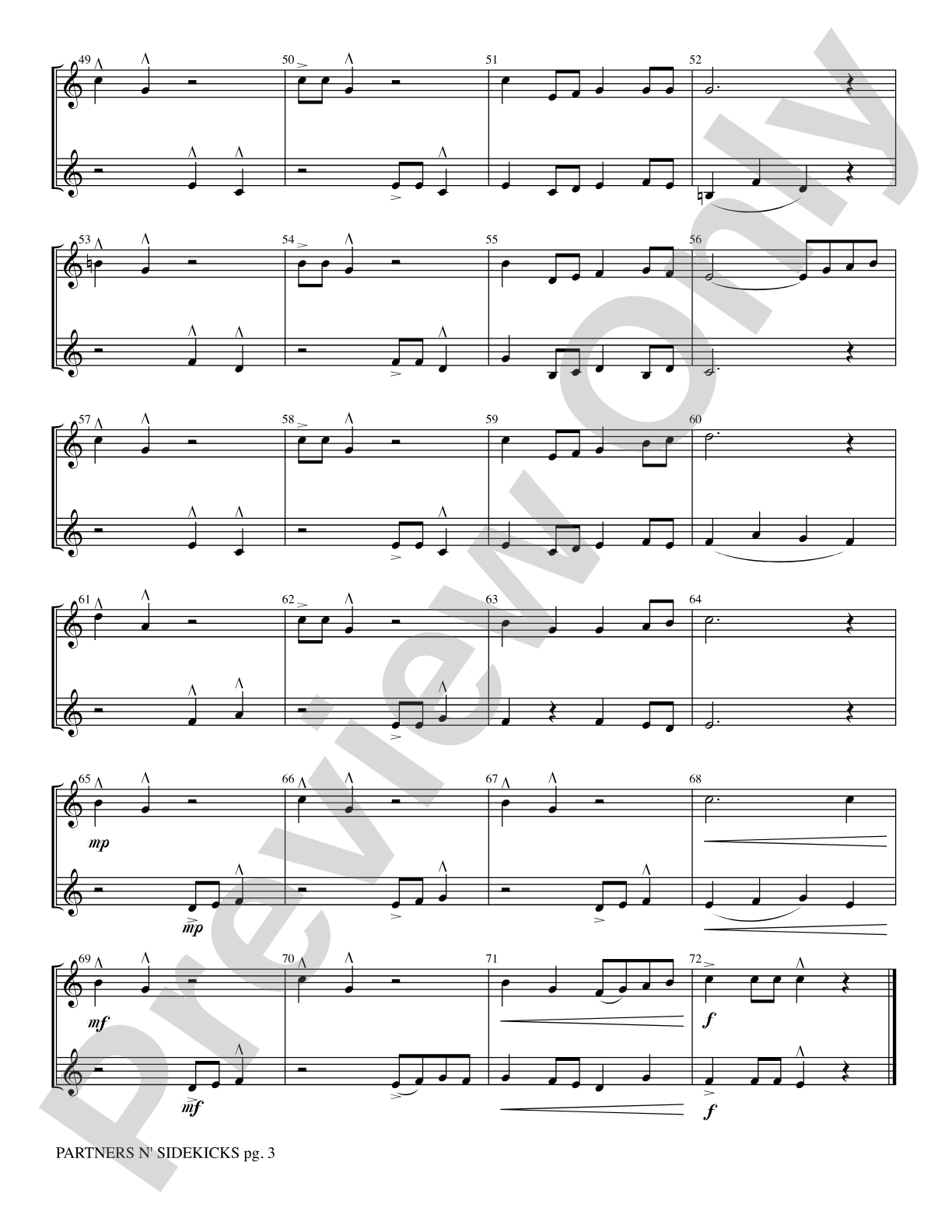
Designed for beginning level instrumentalists, Partners n' Sidekicks was written for a couple of my former students whose musical energies were contagious. Though both very independent players (a skill that served them well as they progressed), they worked very well together, each challenging the other to be better. So it is with this piece that allows each performer to present the musical line as well as work together (in harmony) as the piece progresses.
Discover MakeMusic Cloud: thousands of interactive titles your students can play along with today.
Kaisershot writes duets that respect the independence of beginning players while building ensemble listening skills. The piece grows organically from solo lines into harmony, so students experience genuine musical partnership rather than playing in lockstep. It's the kind of writing that shows students why they need a stand partner.
What to expect
The energy shifts between playful independence and supportive unity. Each horn gets space to shine individually before the writing brings them together in harmony, creating a conversation between two voices rather than a performance by one soloist with accompaniment. The whole arc celebrates what happens when two musicians trust each other enough to challenge and lift each other up.
Who it's for
Beginning horn players working with a stand partner or instructor in a duet setting. The piece suits students building confidence with independent lines and learning to listen to another player in real time. Contest and festival programs looking for accessible brass duet material that develops musicianship alongside technical skills.
How to get the most out of it
Balance the opening solo lines carefully. The first player to enter should be audible but not overwhelming, giving the second player a clear reference point for their entrance.
Listen actively during the unison passages. Matching tone and intonation matters more than rushing the tempo; take time to blend before moving forward.
Shape the harmonic sections with attention to both parts. Neither horn should dominate; let the melody float naturally between you as the composition intends.
Mark your part with cues from the other horn during rests. Knowing where your partner is keeps you locked together, especially in passages where you're not playing.
How to use it
Pair this with other brass duets or chamber works in a recital or festival setting where it showcases both individual musicianship and collaborative listening. It works well as a midpoint piece in a student recital, balancing solo repertoire with ensemble experience. Consider programming it alongside a solo horn piece to give your student variety in their festival entry.
Skills your students will build
Balancing solo and accompanying roles within a duet
Listening and responding to another player in real time
Playing independent lines while maintaining harmonic awareness
Sustaining tone quality during longer phrases
Matching intonation and blend in harmonic passages
You May Also Like
Scan to Complete Your Purchase
Use your phone's camera to scan the code below
You'll log in on your phone and the order will be added to your account