Palmer-Hughes Spinet Organ Course, Book 2 Cover Image

Palmer-Hughes Spinet Organ Course, Book 2: Organ Book

$7.99 USD
Sale price  $7.99 USD Regular price 
Skip to product information
Palmer-Hughes Spinet Organ Course, Book 2 Cover Image

Palmer-Hughes Spinet Organ Course, Book 2: Organ Book

By Willard A. Palmer and Bill Hughes

Item: 00-102

$7.99
Shipped

One moment…

Description
A musically stimulating spinet organ course that teaches chords and smooth voice leading, note reading and pedaling. For those students interested in creating a truly professional sound. A Federation Festivals 2020-2024 selection.

Palmer-Hughes Spinet Organ Course, Book 2: Organ Book isn't in MakeMusic Cloud just yet...but it could be. Let us know you'd like to see it, and you'll help shape what comes next. In the meantime, start a free trial and dive into thousands of interactive titles your students can play along with today.

Sample Pages

Sample Audio
No sample audio found.
Sample Video
Additional Details
Series: Palmer-Hughes Spinet Organ Course
Publisher: Alfred Music
Page Count: 32
ISBN10: 0-7390-2894-4
ISBN13: 978-0-7390-2894-0
UPC: 038081012124
SKU: 00-102

More about this title

About the Author: Willard A. Palmer
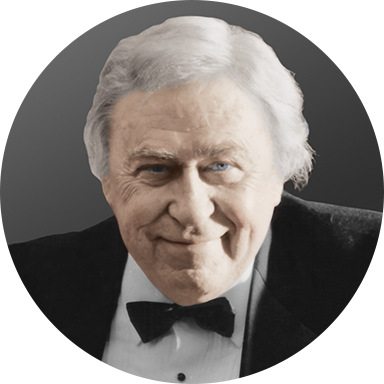
Willard A. Palmer

Dr. Willard A. Palmer established himself as a prolific composer and pedagogue whose creative output exceeded 789 published works spanning accordion, piano, Hammond organ, guitar, and choral music. His publications reached global audiences through translations into German, Japanese, French, Dutch, and Spanish, while his service as choir director at Memorial Lutheran Church in Houston shaped generations of local musicians. Palmer's foundation in keyboard technique came from his teacher Mae Vardeman, who cultivated his improvisational gifts during formative years spent performing on radio broadcasts and in regional ensembles across Mississippi.

His scholarly contributions earned him international recognition, particularly for his research into Baroque ornamentation and performance practice. Palmer directed the Riemenschneider Bach Institute and contributed foundational research that informed the Alfred Masterworks series. His dual doctoral degrees (Humanities in 1971, Music in 1983) reflected a career that bridged practical music instruction with rigorous musicological inquiry. At the University of Houston, he pioneered the first successful college accordion curriculum, teaching for 18 years and establishing accordion as a legitimate college instrument.

Why we love this

Palmer and Hughes built this method around genuine musicality rather than mechanical finger patterns, making it engaging for intermediate students who are ready for real repertoire. The integration of voice leading and chord construction creates a seamless bridge between reading skills and the harmonic thinking spinet players actually need, and its Federation Festivals selection validates both its pedagogical soundness and musical substance.

What to expect

Methodical yet expressive, the course unfolds with clear progression from foundational concepts to genuinely listenable pieces. The voice leading creates an elegant sound even at moderate tempos, and students recognize early that their practice is building toward polished performances rather than just completing exercises.

Who it's for

Organ students who have completed Book 1 and are ready to deepen their harmonic understanding while developing real performance facility. Teachers seeking a method that balances technical instruction with actual musical content suitable for festival repertoire.

How to get the most out of it

  • Map out the harmonic movement before the student plays; understanding the voice leading makes the physical execution flow naturally rather than feeling like finger gymnastics.
  • Introduce the pedal patterns incrementally. Start with simple sustained bass notes before layering in moving figures, giving students time to coordinate both hands with their feet.
  • Record the student's playing in successive lessons. Hearing their own progress in tone quality and smoothness builds confidence and clarifies the refinement Palmer emphasizes throughout the book.
  • Work through the chord progressions at a slower tempo than written initially. Palmer's voice leading rewards attention to each voice's independence, which only emerges clearly when there's time to listen.

How to use it

Assign pieces from Book 2 as festival selections; several arrangements sit at an accessible difficulty level while sounding professionally finished. The systematic approach to pedaling makes this ideal for students preparing for their first organ recitals or ensemble performances where clean accompaniment matters.

Skills your students will build

  • Four-part voice leading and smooth chord voicings on the manual keyboard
  • Reading and executing pedal parts independently from manual lines
  • Registration choices that enhance harmonic clarity
  • Tempo control and phrasing in tonal music with functional harmony
  • Reading and interpreting dynamic and expression markings in context

You May Also Like