

Pacem: SSA Choral Octavo
A Song of Peace
Words by Andy Beck and Brian Fisher, music by Andy Beck
Item: 00-PO-0001038
$1.80
Minimum order quantity: 20 copies
Pickup currently not available
Related Items
Pacem: SoundTrax Digital Audio Download |
$26.99
|
View | |
Pacem: SATB Choral Octavo |
$1.80
|
View | |
Pacem: SAB Choral Octavo |
$1.80
|
View | |
Pacem: 2-Part Choral Octavo |
$2.25
|
View | |
Pacem: SATB Choral Octavo |
$1.80
|
View | |
Pacem: SAB Choral Octavo |
$1.80
|
View | |
Pacem: SSA Choral Octavo |
$1.80
|
View | |
Pacem: 2-Part Choral Octavo |
$2.25
|
View | |
Pacem: Choral Octavo SoundTrax CD |
$26.99
|
View |
Description
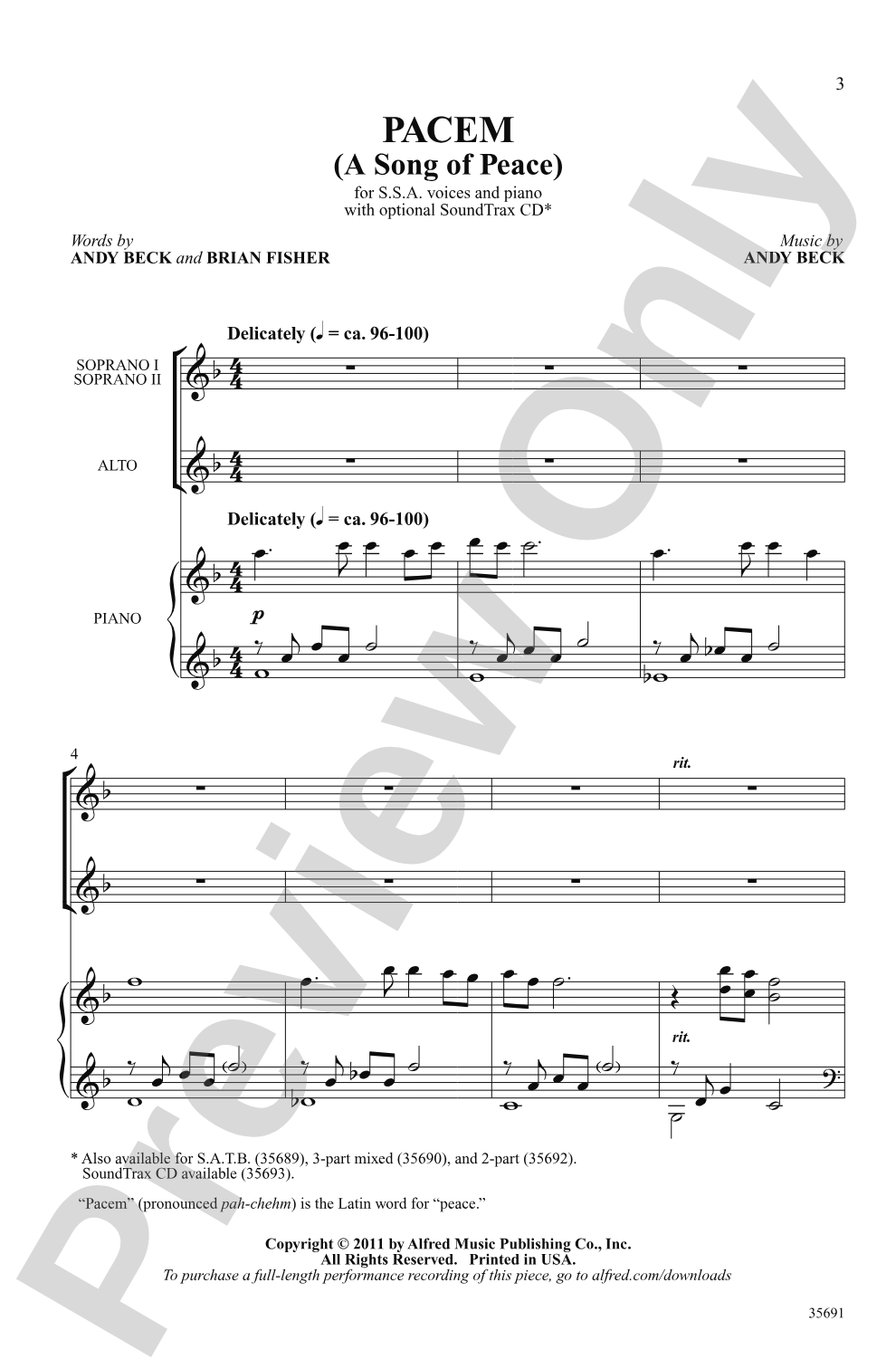
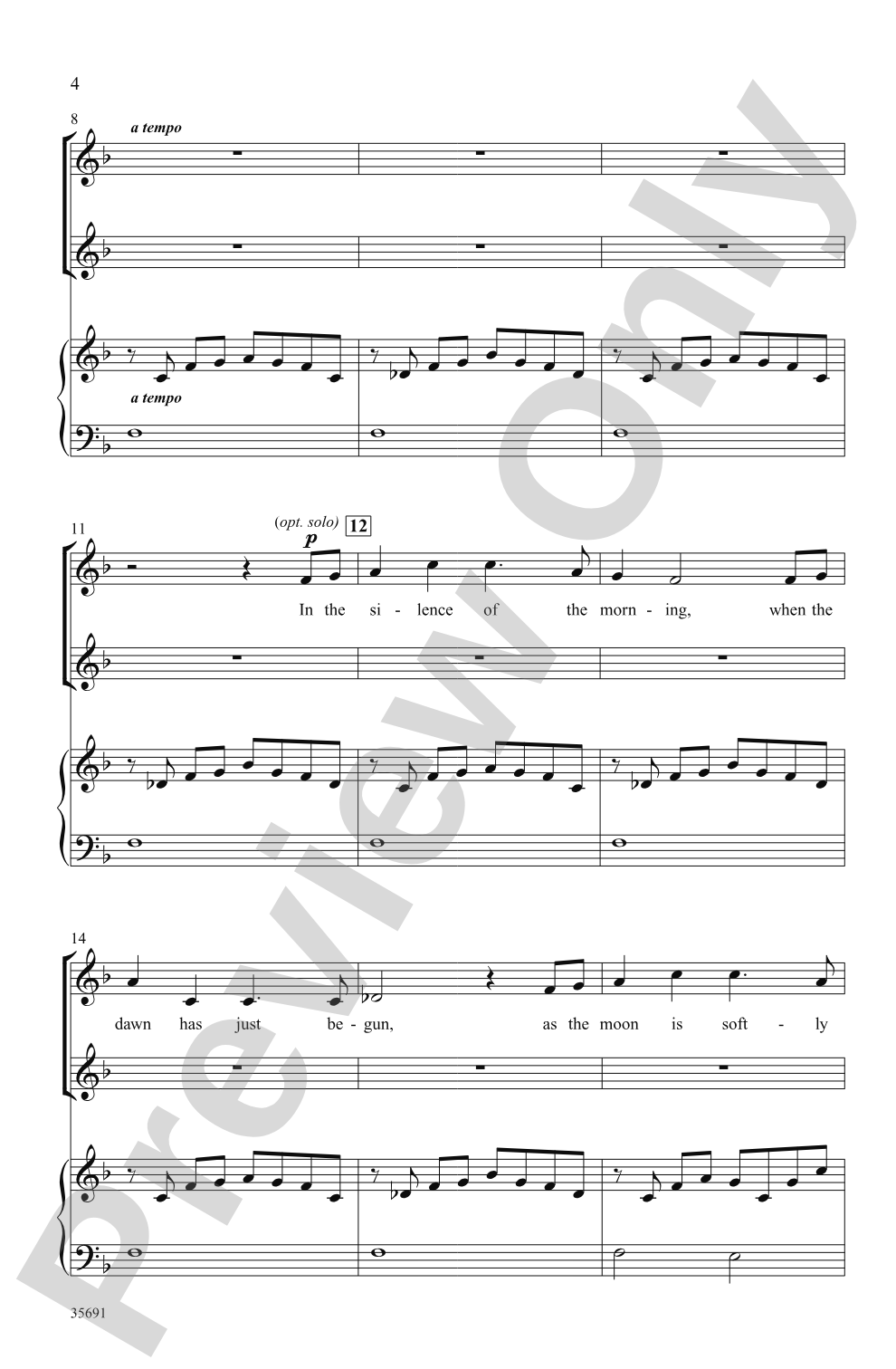
Simple, sincere, and effective, this universal peace song refers to the sounds of nature as a guide to finding our own harmony. The English text includes one Latin word and presents a timeless, important message. "Can you hear the song? . . . Will you sing along?"


Pacem: SSA Choral Octavo isn't in MakeMusic Cloud just yet...but it could be. Let us know you'd like to see it, and you'll help shape what comes next. In the meantime, start a free trial and dive into thousands of interactive titles your students can play along with today.
Request This Title
Tell us you want it.
Start Your Free Trial
Explore everything that's ready to play right now.
Sample Audio
1
Audio File
--:--
0:00
0:00
Sample Video
No sample videos found.
Additional Details
Series:
Alfred Choral Designs
Publisher:
Alfred Music
Page Count:
12
SKU:
00-PO-0001038
More about this title
About the Composer: Andy Beck

Andy Beck directs choral publications at Alfred Music and has composed and arranged over 450 works for singers of all ages. His output spans choral octavos, vocal resources, children's musicals, and sight-singing curricula including Sing at First Sight and Vocalize! 45 Vocal Warm-Ups That Teach Technique. His music reaches classrooms and concert halls globally, and he remains active as a guest conductor, clinician, and adjudicator for honor choirs and all-state ensembles throughout the United States.
Beyond his work as a publisher and composer, Beck is an accomplished tenor who performs with the North Carolina Master Chorale Chamber Choir and has contributed as a studio singer to Alfred Music since 1992. He holds degrees in Music Education from Ithaca College and Northwest Missouri State University. His dual commitment to choral artistry and music literacy shapes every publication he shepherds through Alfred's catalog.
Why we love this
Beck writes music that trusts singers to feel something genuine without overwhelming them technically. Pacem uses imagery from the natural world to frame an accessible peace message, making it ideal for singers who respond to concrete, poetic language rather than abstract concepts. The single Latin word and simple English text work together to create something both immediate and memorable.
What to expect
Pacem unfolds with a gentle, inviting quality. The text moves naturally between observing the world around us and the question of whether we'll join in the song, creating a sense of discovery rather than proclamation. The music respects the silence between ideas and trusts the listener to complete the musical thought.
Who it's for
This piece works well for developing and intermediate SSA ensembles, middle school through adult community choirs, and any group seeking meaningful concert material that connects singers emotionally without demanding advanced technique. It's equally at home in a peace-themed concert, a spring program, or a show-and-tell performance celebrating simple beauty.
How to get the most out of it
- Bring out the natural imagery in rehearsal by asking singers what they hear in the text: birdsong, water, wind. Let them discover how their voice can reflect these sounds without losing clarity.
- Balance the SSA voicing so the alto line has presence even when it sits below the sopranos. This piece depends on harmonic fullness, not soprano dominance.
- Use the recorded accompaniment in early rehearsals to establish the harmonic context and tempo, then work toward independence as voices gain security.
How to use it
Place this late in a concert to settle an audience after more energetic pieces, or open the second half with it to shift the emotional landscape. It pairs beautifully with other nature-inspired or socially conscious choral works, or stand alone as a meaningful benediction-style moment.
Skills your students will build
- Sustained phrase singing across simple harmonic progressions
- Clarity and blend in SSA voicing with independent alto lines
- Interpretive choices based on poetic text imagery
- Ensemble balance and dynamic control in intimate settings