
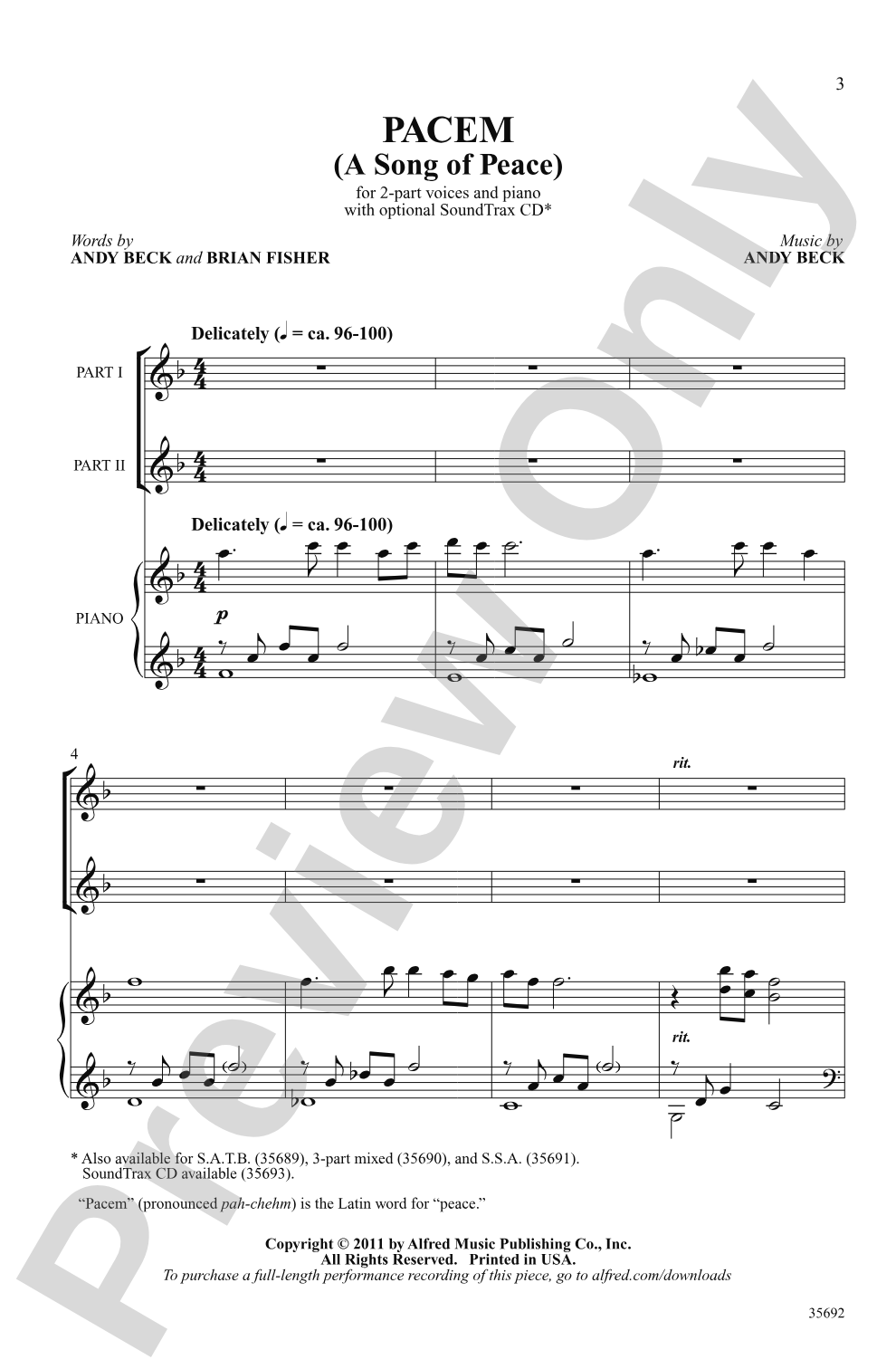
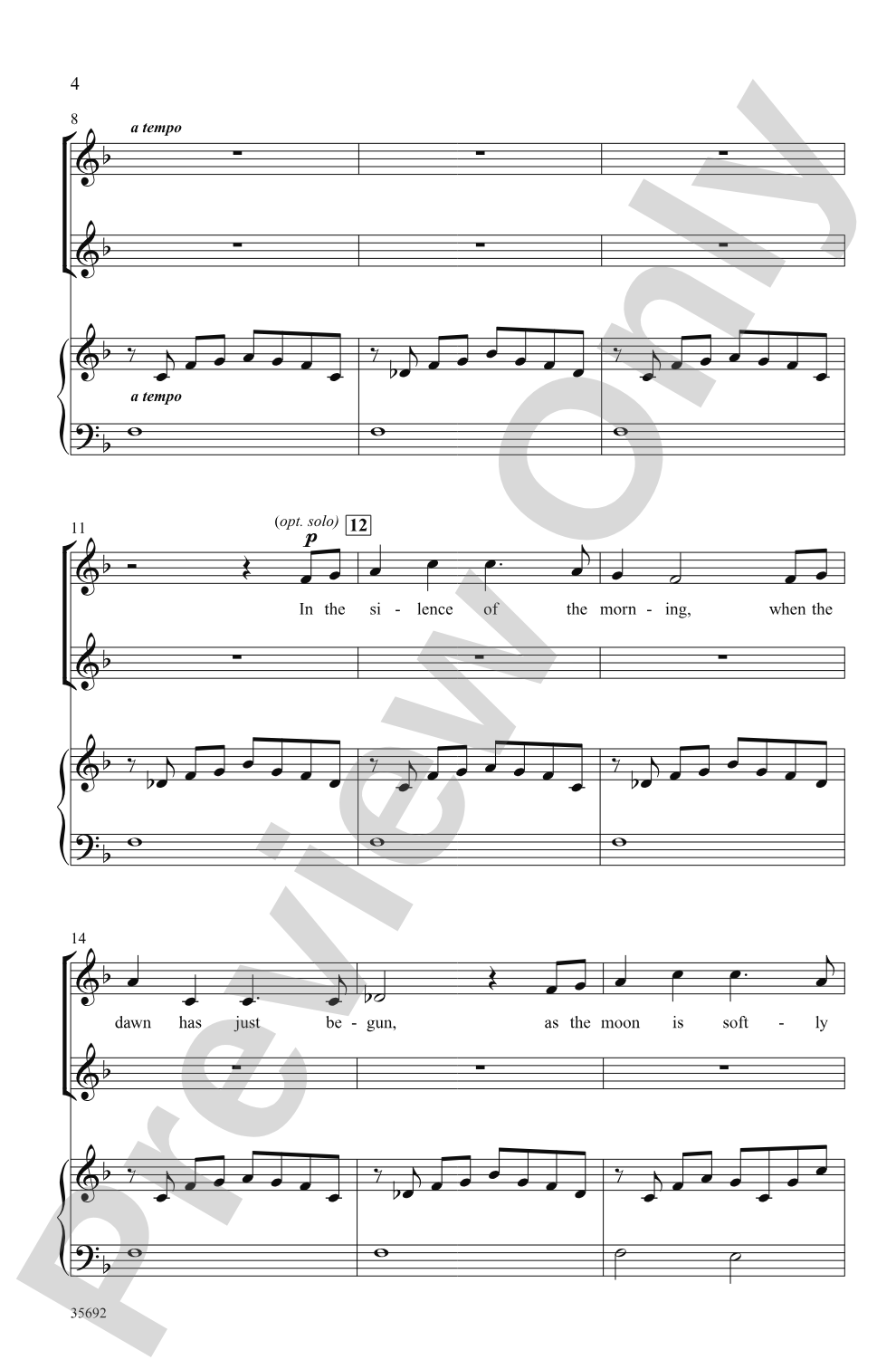

Pacem: 2-Part Choral Octavo
A Song of Peace
Words by Andy Beck and Brian Fisher, music by Andy Beck
Item: 00-PO-0000947
$2.25
Minimum order quantity: 20 copies
Pickup currently not available
Related Items
Pacem: SoundTrax Digital Audio Download |
$26.99
|
View | |
Pacem: SATB Choral Octavo |
$1.80
|
View | |
Pacem: SAB Choral Octavo |
$1.80
|
View | |
Pacem: SSA Choral Octavo |
$1.80
|
View | |
Pacem: SATB Choral Octavo |
$1.80
|
View | |
Pacem: SAB Choral Octavo |
$1.80
|
View | |
Pacem: SSA Choral Octavo |
$1.80
|
View | |
Pacem: 2-Part Choral Octavo |
$2.25
|
View | |
Pacem: Choral Octavo SoundTrax CD |
$26.99
|
View |
Description
Simple, sincere, and effective, this universal peace song refers to the sounds of nature as a guide to finding our own harmony. The English text includes one Latin word and presents a timeless, important message. "Can you hear the song? . . . Will you sing along?"


Pacem: 2-Part Choral Octavo isn't in MakeMusic Cloud just yet...but it could be. Let us know you'd like to see it, and you'll help shape what comes next. In the meantime, start a free trial and dive into thousands of interactive titles your students can play along with today.
Request This Title
Tell us you want it.
Start Your Free Trial
Explore everything that's ready to play right now.
Sample Audio
1
Audio File
--:--
0:00
0:00
Sample Video
No sample videos found.
Additional Details
Series:
Alfred Archive Edition: Alfred Choral Designs
Publisher:
Alfred Music
Page Count:
12
SKU:
00-PO-0000947
More about this title
About the Composer: Andy Beck

Andy Beck directs choral publications at Alfred Music and has composed and arranged more than 450 choral works now in active repertoire. His instructional resources for singing fundamentals (Sing at First Sight, Foundations in Choral Sight Singing, and Vocalize! 45 Vocal Warm-Ups That Teach Technique) have become standard tools in music classrooms across North America. His compositions are performed regularly by choirs worldwide, a fact confirmed by the steady stream of recordings posted online from ensembles of every age and skill level.
Beck holds degrees in Music Education from Ithaca College (bachelor's) and Northwest Missouri State University (master's). He serves regularly as a guest conductor, clinician, and adjudicator at state festivals and honor choirs throughout the United States. A tenor himself, he performs with the North Carolina Master Chorale Chamber Choir and has contributed studio vocals to Alfred Music recordings since 1992. His dual commitment to composition and music education shapes every piece he writes.
Why we love this
Beck's gift for creating pieces that are musically meaningful without relying on complexity shines here. The integration of nature imagery with an accessible, singable melody and the inclusive message make this a piece that singers genuinely want to perform and audiences genuinely want to hear. It works equally well as a concert opener, an assembly performance, or a standalone moment that lands with quiet impact.
What to expect
The music unfolds with quiet clarity and openness, inviting rather than demanding. There's something meditative in its simplicity, yet the melody carries genuine conviction. Singers experience the satisfaction of creating beauty together without struggling against complex harmonies or ranges.
Who it's for
This piece suits emerging choral singers, younger ensembles, or upper elementary/middle school programs where singers are developing confidence in part singing. It also works beautifully for community choirs, intergenerational singing groups, and adult singers who value repertoire with both accessibility and meaning.
How to get the most out of it
- Encourage singers to visualize the natural sounds referenced in the text. This musical imagery transforms mechanical phrase work into something singers connect with emotionally.
- Shape the single Latin word with gentle emphasis to highlight the thematic bridge between nature's language and human harmony.
- Use the recorded accompaniment to establish a steady, supportive foundation that lets singers focus on blend and intonation in a 2-part texture.
How to use it
This piece excels as a concert centerpiece when programming calls for something reflective and timely. Its universal message about peace and interconnectedness pairs thoughtfully with other nature-inspired repertoire or with pieces exploring themes of unity and environmental awareness. It also serves well as a warm-up program opener that settles an audience and grounds a concert in purpose.
Skills your students will build
- Maintaining blend and intonation in 2-part voicing
- Text interpretation and emotional connection to lyrical content
- Following a conductor while singing a simple but expressive melody
- Sustaining pitches with control through longer phrases