
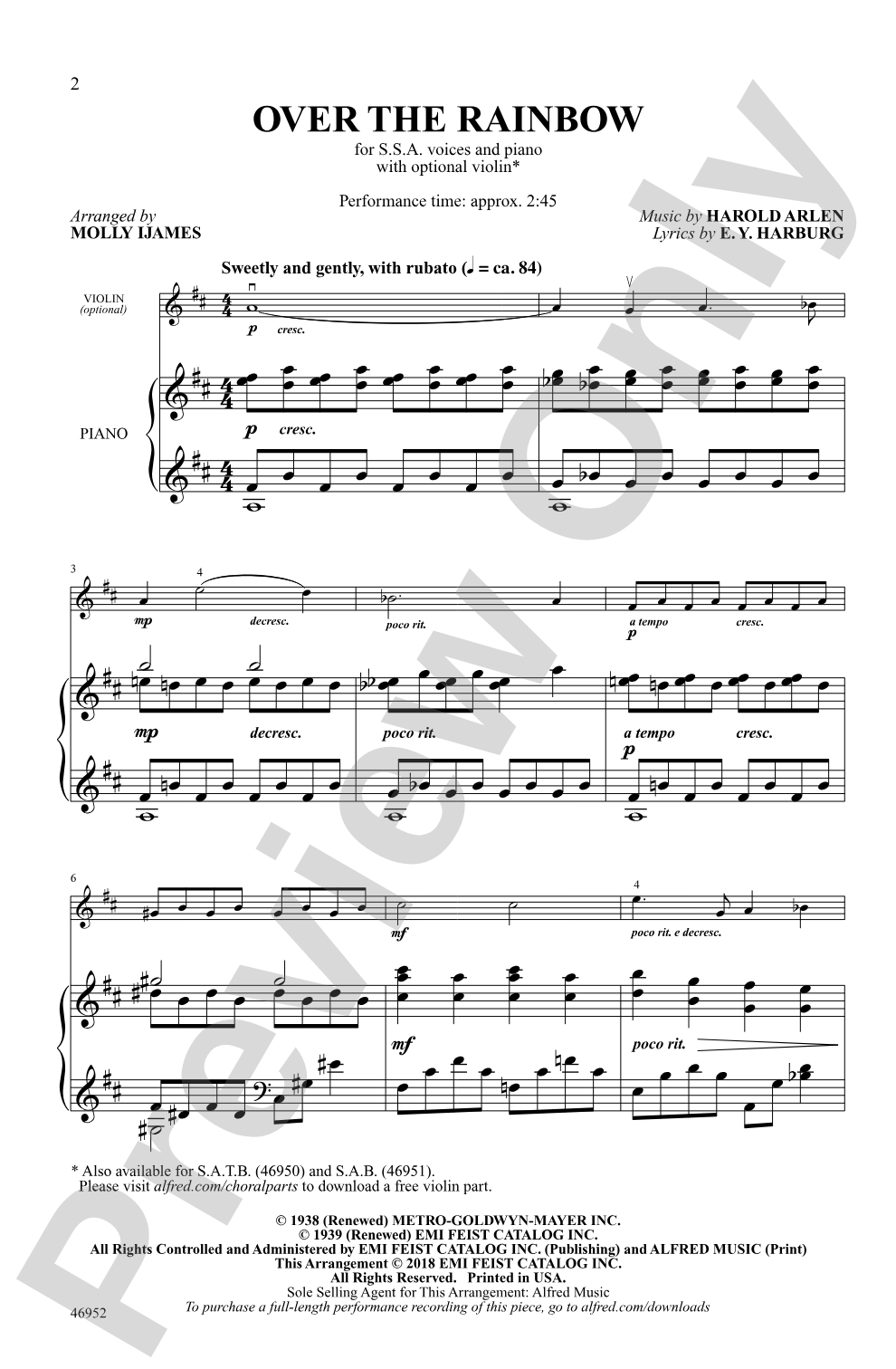
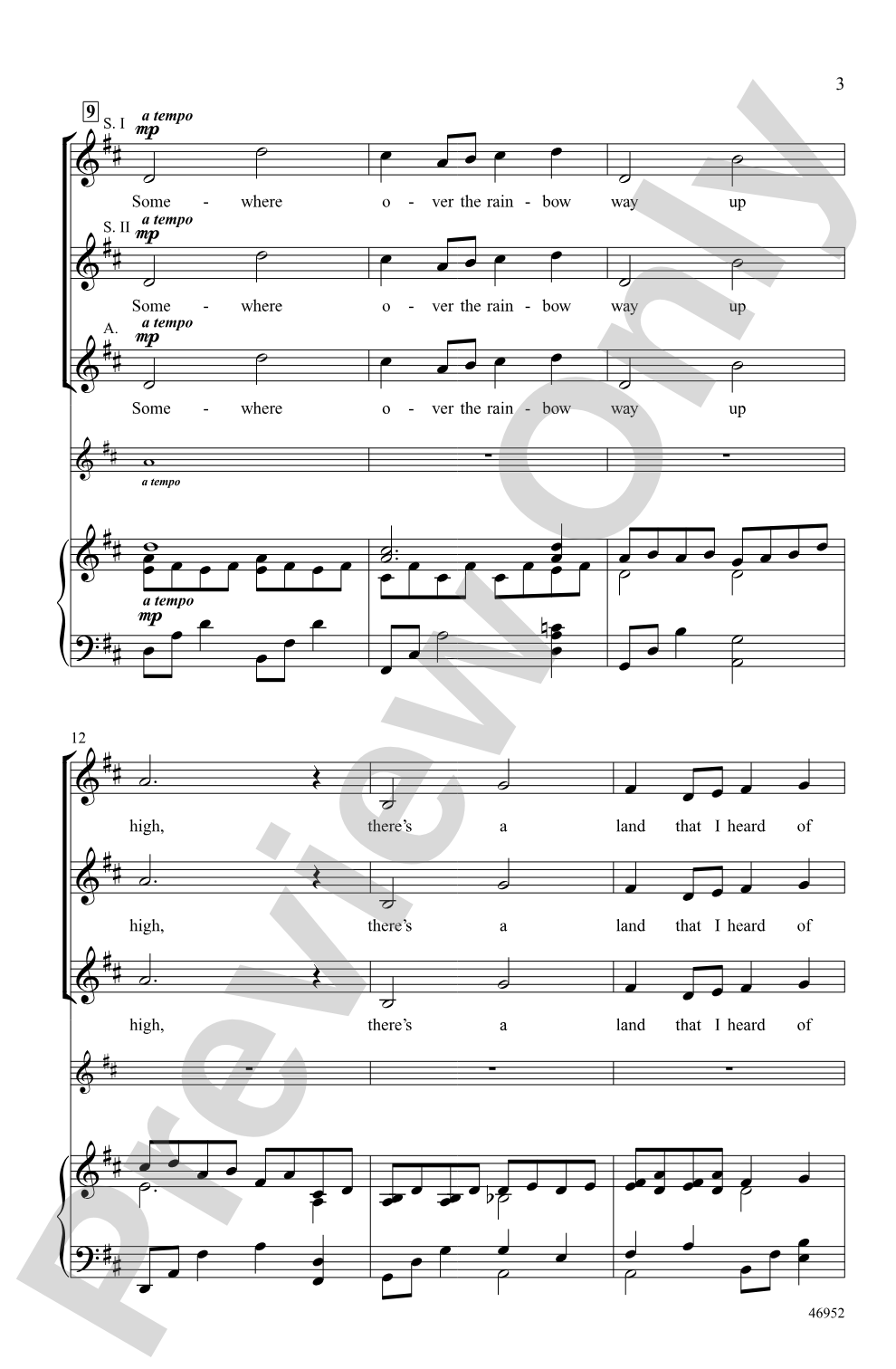

Over the Rainbow: SSA Choral Octavo
Music by Harold Arlen, lyrics by E. Y. Harburg / arr. Molly Ijames
Item: 00-PO-0005817
$2.10
Minimum order quantity: 20 copies
One moment…
Description
One of the most beautiful ballads of all time arranged for today's choirs. An optional violin part soars over this innovative, highly chromatic approach to the beloved Wizard of Oz song. It captures all the magic of the original while challenging singers with a refreshing contemporary harmonization.


Over the Rainbow: SSA Choral Octavo isn't in MakeMusic Cloud just yet...but it could be. Let us know you'd like to see it, and you'll help shape what comes next. In the meantime, start a free trial and dive into thousands of interactive titles your students can play along with today.
Request This Title
Tell us you want it.
Start Your Free Trial
Explore everything that's ready to play right now.
Sample Audio
1
Audio File
--:--
0:00
0:00
Sample Video
No sample videos found.
Additional Details
Series:
Alfred Pop Choral Series
Publisher:
Alfred Music
Page Count:
12
SKU:
00-PO-0005817
More about this title
About the Composer: Harold Arlen
Harold Arlen (1905-1986) composed some of the most enduring melodies in American musical theater. His gift for writing singable, emotionally direct lines made him a favorite among lyricists, most notably E.Y. Harburg, with whom he created the score for The Wizard of Oz. Arlen's harmonic language ranged from straightforward to surprisingly sophisticated, and his melodies have remained central to the Great American Songbook for nearly a century.
For music educators, Arlen's work offers a bridge between accessibility and artistic depth. His songs teach singers how to serve a lyric, shape a phrase, and inhabit a melody that already lives in the cultural memory of their audiences. Over the Rainbow, in particular, demonstrates his ability to write a line that feels inevitable once you hear it.
Why we love this
Molly Ijames strips away sentimentality without losing warmth, replacing predictable harmony with chromatic sophistication that keeps this familiar song fresh for experienced singers. The optional violin part adds textural interest without overshadowing the voices, and the SSA voicing makes it accessible to developing ensembles while the contemporary approach rewards advanced singers who can navigate the harmonic landscape.
What to expect
The familiar melody floats above unexpected harmonic colors, creating a sense of longing and sophistication. There's an emotional directness to the song itself that the arrangement honors while surrounding it with chromatic warmth and complexity. It feels both timeless and distinctly contemporary.
Who it's for
This arrangement serves choirs with singers who have some experience reading accidentals and balancing independent lines. Advanced high school choirs, college singers, and adult ensembles will find the harmonic language rewarding. Directors looking to program a universally recognized song that doesn't sound like a nostalgia piece will find exactly what they need here.
How to get the most out of it
- Approach the chromatic harmony as an opportunity to clarify voice leading rather than pile on complexity. Each singer should know exactly which note they're supporting or contrasting at every moment.
- If you include the violin, let it breathe independently in the introduction and key moments rather than doubling the soprano line throughout. This arrangement writes it as a true countermelody.
- The emotional arc belongs to the text and melody, not the harmony. Resist the urge to make the chromatic passages precious or self-conscious. Sing through them with the same directness Arlen himself demanded.
How to use it
This works beautifully as a centerpiece for a pops concert, a bridge between classical and contemporary repertoire, or a standalone feature that lets audiences hear a beloved song through fresh ears. The arrangement's sophistication means it pairs well with other art songs and contemporary choral writing rather than traditional show tunes.
Skills your students will build
- Reading and singing chromatic voice leading
- Balancing independent melodic lines within an SSA texture
- Maintaining phrase shape through extended harmonic ambiguity
- Interpreting a text-driven melody with contemporary harmonic support