
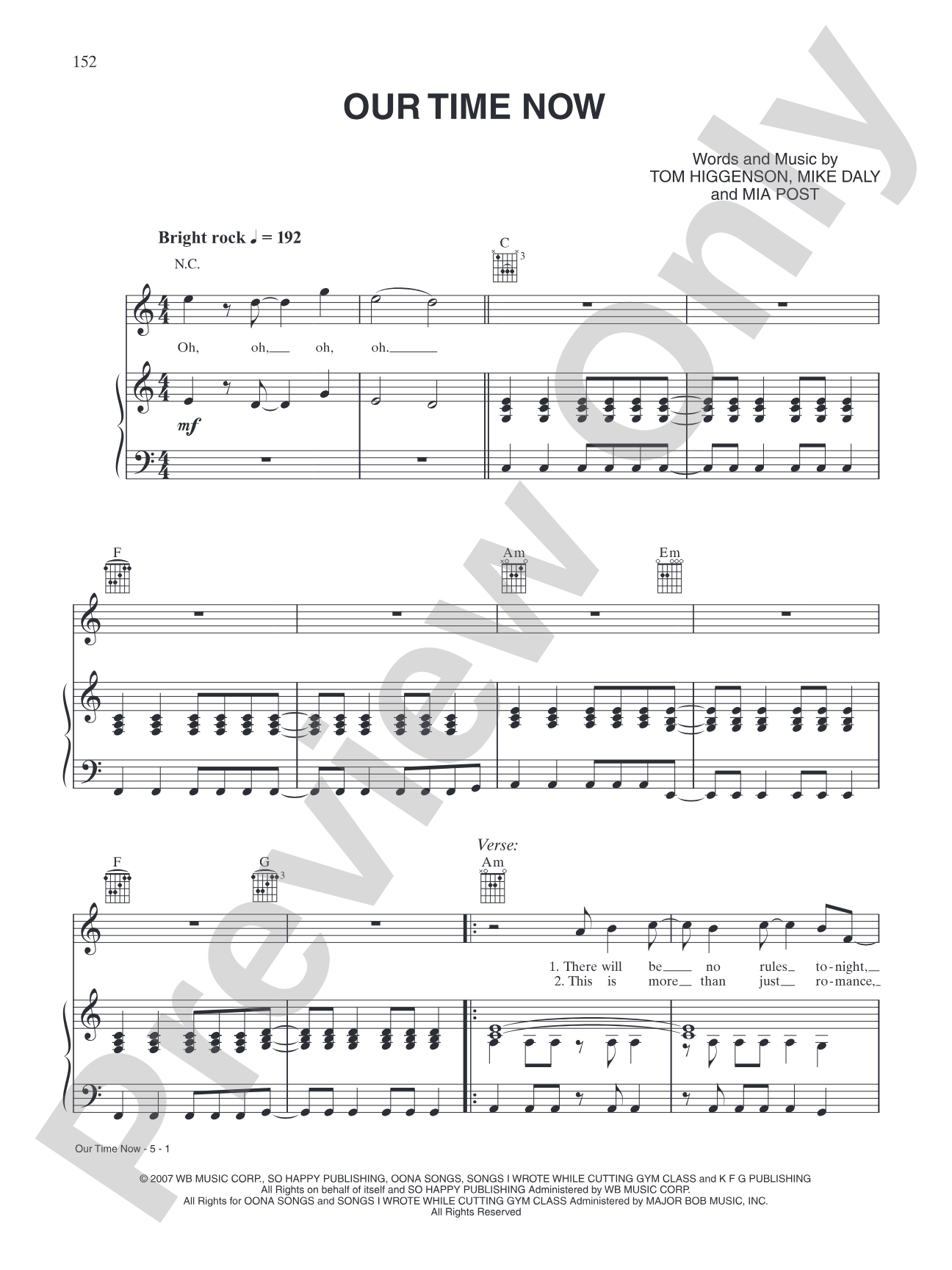

Our Time Now: Piano/Vocal/Chords
Plain White T's
Item: 00-PS-0010937
$4.99
One moment…
Related Items
Irrational Anthem: Piano/Vocal/Chords |
$5.99
|
View | |
Boomerang: Piano/Vocal/Chords |
$4.99
|
View | |
Welcome to Mystery: Piano/Vocal/Chords |
$4.99
|
View | |
Body Parts: Piano/Vocal/Chords |
$4.99
|
View | |
Map of the World: Piano/Vocal/Chords |
$5.99
|
View | |
Last Breath: Piano/Vocal/Chords |
$5.99
|
View | |
Killer: Piano/Vocal/Chords |
$4.99
|
View | |
Curque Dans La Rue: Piano/Vocal/Chords |
$9.99
|
View | |
Broken Record: Piano/Vocal/Chords |
$5.99
|
View | |
Our Song: Piano/Vocal/Chords |
$5.99
|
View | |
Airplane: Piano/Vocal/Chords |
$4.99
|
View | |
Make It Up As You Go: Piano/Vocal/Chords |
$5.99
|
View | |
Wonders of the Younger: Piano/Vocal/Chords |
$5.99
|
View |
Description
This first-ever piano/vocal/guitar Plain White T's songbook features sheet music for "Rhythm of Love" and all of the songs from their 2010 album Wonders of the Younger, PLUS three of their biggest hits from past albums, including No. 1 single "Hey There Delilah." An officially licensed collectible, this item makes a perfect gift for any PWT's fan! Contents: 1, 2, 3, 4 * Hey There Delilah * Our Time Now * Irrational Anthem * Boomerang * Welcome to Mystery * Rhythm of Love * Map of the World * Killer * Last Breath * Broken Record * Our Song * Airplane * Cirque dans la Rue * Body Parts * Make It Up As You Go * Wonders of the Younger.


Our Time Now: Piano/Vocal/Chords isn't in MakeMusic Cloud just yet...but it could be. Let us know you'd like to see it, and you'll help shape what comes next. In the meantime, start a free trial and dive into thousands of interactive titles your students can play along with today.
Request This Title
Tell us you want it.
Start Your Free Trial
Explore everything that's ready to play right now.
Sample Audio
No sample audio found.
Sample Video
No sample videos found.
Additional Details
Publisher:
Alfred Music
Page Count:
116
SKU:
00-PS-0010937
More about this title
About the Composer: Tom Higgenson
Tom Higgenson is the lead vocalist and primary songwriter for Plain White T's, the pop-rock band that emerged from the Chicago music scene in the early 2000s. His songwriting balances accessible pop melodies with introspective, relatable lyrics that capture everyday moments and emotions, earning the band a devoted following and mainstream success across multiple albums.
Why we love this
This collection spans the band's discography across a decade, giving singers and pianists genuine career context for one of pop-rock's most straightforward and emotionally direct songwriters. The mix of acoustic-driven hits like "Hey There Delilah" alongside the fuller arrangements from Wonders of the Younger offers real variety in texture and performance approach within a single resource.
What to expect
Honest, uncluttered pop music that trades technical showmanship for genuine emotional directness. These songs live in quiet moments and introspective spaces, with melodies that stick because they feel inevitable rather than clever.
Who it's for
Singers performing in coffeehouse, youth group, or recital settings will find accessible originals that sit well in untrained and trained voices alike. Pianists and guitarists looking to expand their contemporary pop repertoire beyond covers will appreciate having official transcriptions of songs that define early 2010s alternative pop.
How to get the most out of it
- Balance the vocal melody against piano accompaniment so lyrics remain clear; these songs reward lyrical storytelling over instrumental complexity.
- Pay attention to the rhythmic pocket in tracks like "Our Time Now" and "Boomerang," where a steady, almost spoken-word delivery works better than oversung phrasing.
- Use guitar chord voicings as a guide for piano texture; the original arrangements often lean on jangly, open guitar sonorities that translate well to sparse, high-register piano playing.
- Let the emotional restraint of songs like "Hey There Delilah" breathe; understatement is the arrangement's strength, not a limitation.
How to use it
Program individual songs in recitals or coffeehouse concerts where contemporary pop songwriting fits your venue and audience. The album-spanning selection works well as a teaching resource for understanding how a single artist's voice develops across projects, or as material for young singers building confidence with songs written for the human voice rather than engineered production.
Skills your students will build
- Performing conversational, lyric-driven melody in pop-rock idiom
- Interpreting chord symbols and translating them between piano and guitar voicings
- Sustaining emotional clarity in minimally arranged acoustic contexts
- Reading and executing rhythmic subtlety in contemporary pop (syncopation and rhythmic restraint rather than complexity)