
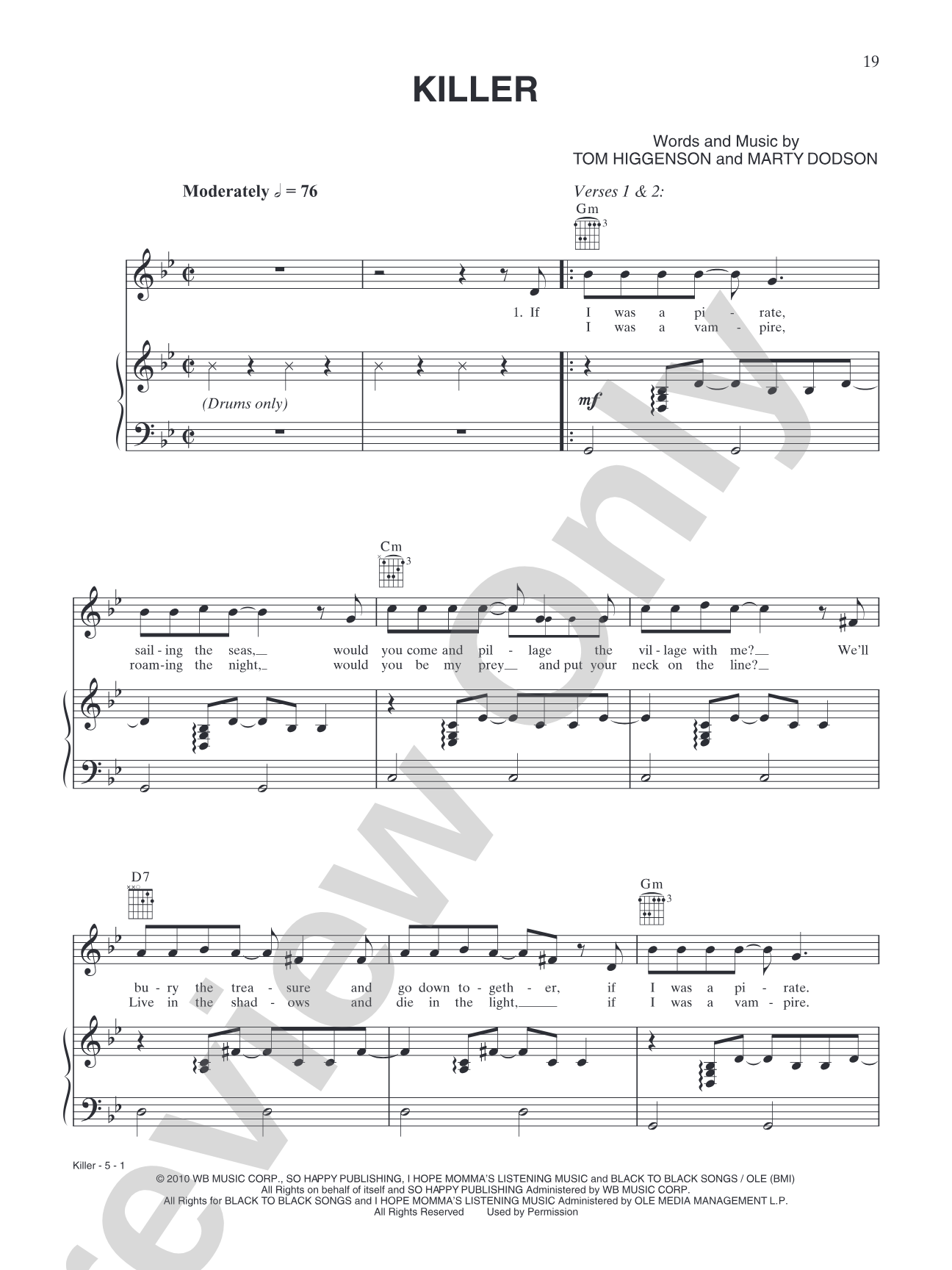

Killer: Piano/Vocal/Chords
Plain White T's
Item: 00-PS-0013261
$4.99
Pickup currently not available
Related Items
Our Time Now: Piano/Vocal/Chords |
$4.99
|
View | |
Irrational Anthem: Piano/Vocal/Chords |
$5.99
|
View | |
Boomerang: Piano/Vocal/Chords |
$4.99
|
View | |
Welcome to Mystery: Piano/Vocal/Chords |
$4.99
|
View | |
Body Parts: Piano/Vocal/Chords |
$4.99
|
View | |
Map of the World: Piano/Vocal/Chords |
$5.99
|
View | |
Last Breath: Piano/Vocal/Chords |
$5.99
|
View | |
Curque Dans La Rue: Piano/Vocal/Chords |
$9.99
|
View | |
Broken Record: Piano/Vocal/Chords |
$5.99
|
View | |
Our Song: Piano/Vocal/Chords |
$5.99
|
View | |
Airplane: Piano/Vocal/Chords |
$4.99
|
View | |
Make It Up As You Go: Piano/Vocal/Chords |
$5.99
|
View | |
Wonders of the Younger: Piano/Vocal/Chords |
$5.99
|
View |
Description
This first-ever piano/vocal/guitar Plain White T's songbook features sheet music for "Rhythm of Love" and all of the songs from their 2010 album Wonders of the Younger, PLUS three of their biggest hits from past albums, including No. 1 single "Hey There Delilah." An officially licensed collectible, this item makes a perfect gift for any PWT's fan! Contents: 1, 2, 3, 4 * Hey There Delilah * Our Time Now * Irrational Anthem * Boomerang * Welcome to Mystery * Rhythm of Love * Map of the World * Killer * Last Breath * Broken Record * Our Song * Airplane * Cirque dans la Rue * Body Parts * Make It Up As You Go * Wonders of the Younger.


Killer: Piano/Vocal/Chords isn't in MakeMusic Cloud just yet...but it could be. Let us know you'd like to see it, and you'll help shape what comes next. In the meantime, start a free trial and dive into thousands of interactive titles your students can play along with today.
Request This Title
Tell us you want it.
Start Your Free Trial
Explore everything that's ready to play right now.
Sample Audio
No sample audio found.
Sample Video
No sample videos found.
Additional Details
Publisher:
Alfred Music
Page Count:
116
SKU:
00-PS-0013261
More about this title
About the Composer: Tom Higgenson
Tom Higgenson formed Plain White T's in the early 2000s and has been the band's primary songwriter and frontman throughout their career. His gift for crafting memorable melodies paired with introspective and often humorous lyrics has defined the band's sound across multiple albums and earned them a devoted following in the pop-rock landscape.
Why we love this
This songbook captures the accessible, singable quality that made Plain White T's anthems resonate with so many listeners. The mix of chart hits like "Hey There Delilah" alongside deeper cuts from Wonders of the Younger gives pianists and singers real variety in tone and arrangement, from intimate acoustic moments to more upbeat pop energy.
What to expect
These songs balance sincerity with wit, moving from the quiet introspection of "Hey There Delilah" to the rhythmic pop hooks of other tracks. The collection spans different moods within the band's wheelhouse: some moments feel intimate and reflective, others energetic and anthemic.
Who it's for
Pianists, guitarists, and singers who grew up with or admire Plain White T's catalog will find reliable, playable transcriptions of fan favorites. This songbook also appeals to musicians exploring contemporary pop songwriting and arranging, offering straightforward harmonic language and singable melodies worth studying.
How to get the most out of it
- Study the chord changes carefully; Plain White T's songs often use straightforward progressions that give you room to voice chords creatively on guitar or add your own harmonic color at the piano.
- Pay attention to dynamics and phrasing in the vocal line. These songs thrive on conversational delivery, so avoid over-singing; let the lyrics land naturally.
- Use the piano/vocal/guitar layout to find the best split between instruments for your setting. A solo pianist might play the full arrangement, while a guitarist and vocalist might share responsibilities differently.
- Reference recordings for groove and feel, especially on tracks with a more contemporary pop production; the sheet music captures the song structure, but the band's interpretation informs how the rhythms breathe.
How to use it
Slot individual songs into solo recitals, student showcase concerts, or informal performance settings where contemporary music feels at home. The range of tempos and styles within the collection also makes it useful for mixed-level student performers, with simpler songs accessible to developing musicians and deeper cuts rewarding for more experienced players.
Skills your students will build
- Interpreting contemporary pop melodies with conversational phrasing
- Voicing guitar chords in various inversions and positions
- Coordinating piano, guitar, and vocal lines in a fixed arrangement
- Reading lead sheets and chord charts
- Understanding modern pop song structure and harmonic progressions