
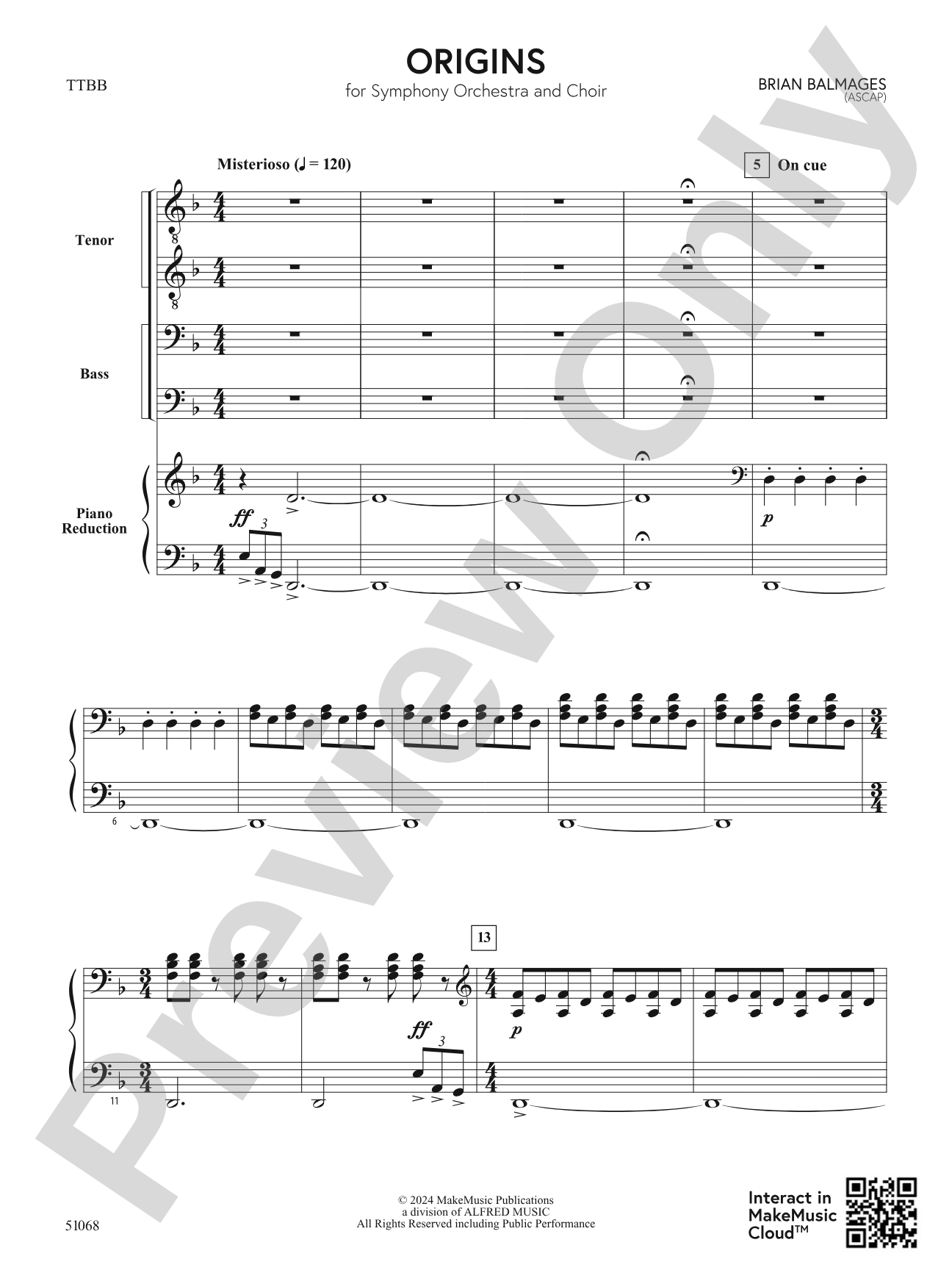
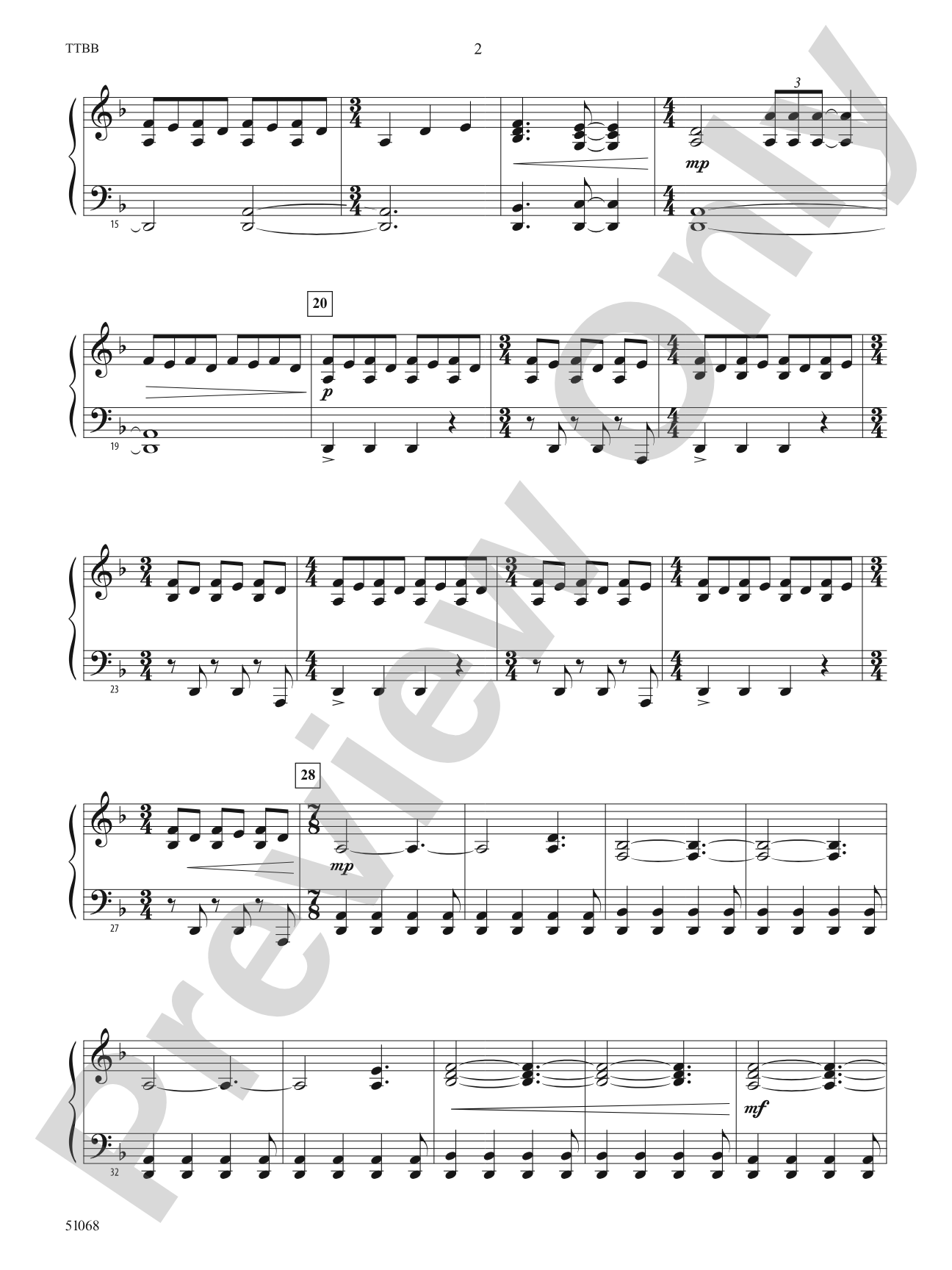
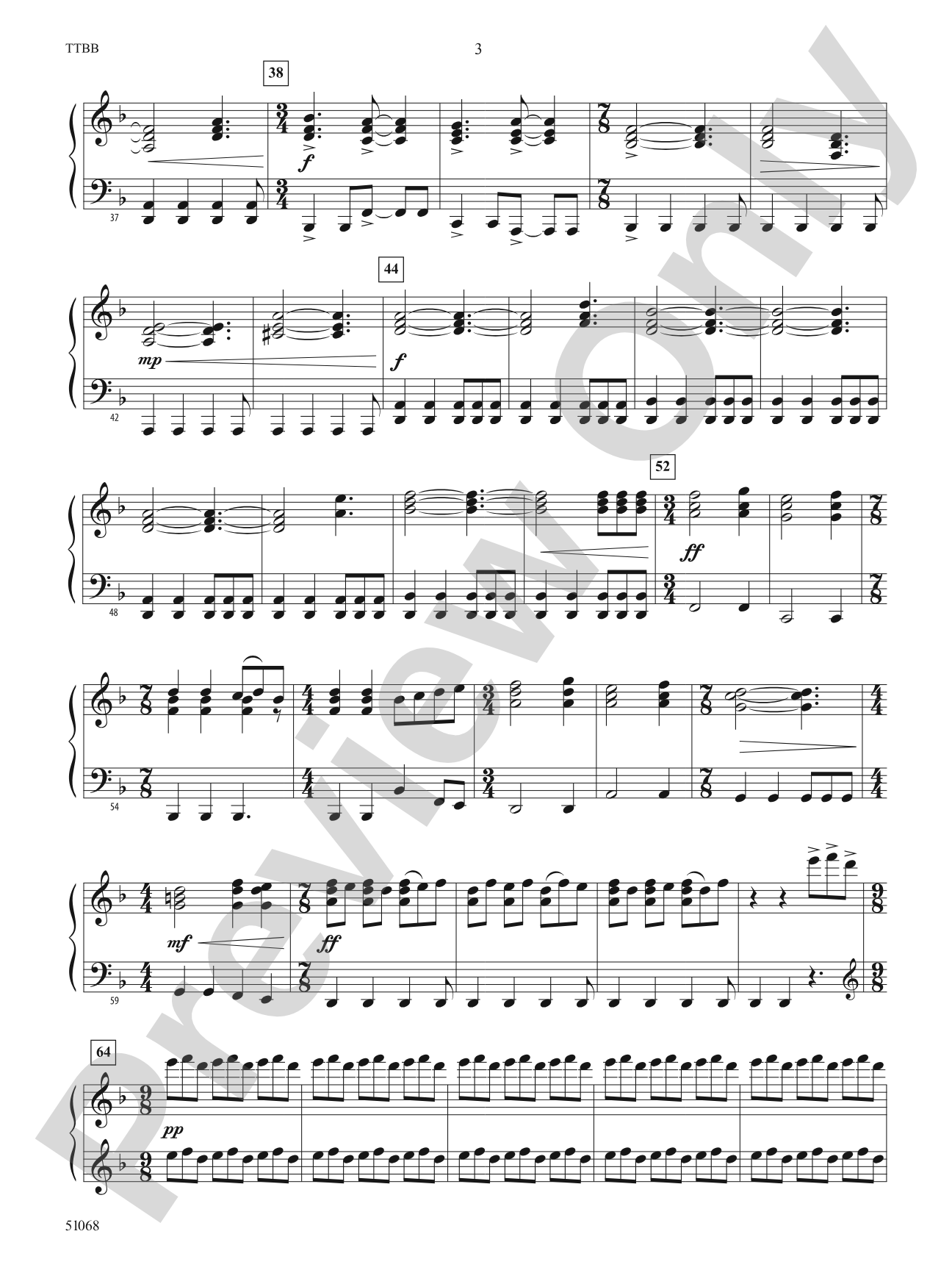

Origins: Full Orchestra T(T)BB Choral Octavo
By Brian Balmages
Grade: 4
Item: 00-PO-0007317
$2.00
Minimum order quantity: 20 copies
Pickup currently not available
Description
This cinematic-inspired work by Brian Balmages will bring down the house in grand fashion! This is the optional TTBB version with didgeridoo and wordless choir. Not just a piece, but an experience! (5:45)
00-51041 - Full Orchestra


00-51041 - Full Orchestra
Discover MakeMusic Cloud: thousands of interactive titles your students can play along with today.
Sample Audio
No sample audio found.
Sample Video
No sample videos found.
Additional Details
Series:
MakeMusic Symphony Orchestra
SKU:
00-PO-0007317
More about this title
About the Composer: Brian Balmages

Brian Balmages composes across orchestral, band, and chamber idioms with equal fluency, earning recognition from the American School Band Directors Association (A. Austin Harding Award) and the American Bandmasters Association. His works have appeared on stages ranging from Carnegie Hall and the Kennedy Center to the Sydney Opera House and Toronto Centre for the Arts, performed by ensembles spanning from professional orchestras to elementary school groups.
Beyond the page, Balmages maintains an active conducting calendar, guesting with all-state and regional ensembles worldwide while serving as Director of MakeMusic Publications and Digital Education. His 2020 NBA William D. Revelli Composition Contest win for Love and Light, along with commissions from James Madison University and the University of Miami, underscore his standing in both academic and professional circles.
Why we love this
Origins grabs an orchestra from the opening moment and refuses to let go. The wordless TTBB choir layered with didgeridoo creates textural depth that Grade 4 students can execute without getting bogged down in text underlay, freeing them to focus on ensemble blend and rhythmic precision. At nearly six minutes, this programmatic work sustains dramatic momentum across movements, giving your group a showcase piece that feels genuinely cinematic without requiring a pit orchestra.
What to expect
Origins unfolds like a film score, sweeping through cinematic landscapes with orchestral color and spacious choral writing that lets each moment breathe. The didgeridoo grounds the soundworld in something elemental and primal, while the choir floats above as wordless harmony, creating an almost mythic quality.
Who it's for
Orchestras at the Grade 4 level looking for a full-length contest or festival work with substantial choir involvement. Directors seeking a programmatic vehicle that showcases both instrumental and vocal sections without requiring soloists or complicated staging.
How to get the most out of it
- Balance the didgeridoo carefully against the choir and orchestra; its low register can muddy the ensemble if it overpowers the harmonic foundation. Rehearse first with just the percussion section to establish how much independence it needs.
- The wordless writing creates an opportunity to drill intonation throughout the choir section without text pronunciation getting in the way. Use a neutral vowel and lock the tuning across both parts early.
- Shape the orchestral interludes between choral sections as complete musical statements rather than transitions. Let the momentum build naturally so the piece feels like a continuous arc rather than discrete segments.
How to use it
Reserve this for a concert finale or the centerpiece of a concert built around world music and programmatic works. Its five-minute-plus duration and dramatic arc make it ideal for competition schedules, where it can anchor your orchestra's set and leave judges with a memorable closing statement.
Skills your students will build
- Listening for balance between choir, orchestral textures, and standalone instrumental colors
- Sustaining ensemble cohesion across extended programmatic structures
- Blending wordless choral lines without relying on text to anchor phrasing
- Responding to large-scale dynamic and tempo changes that mirror cinematic storytelling