
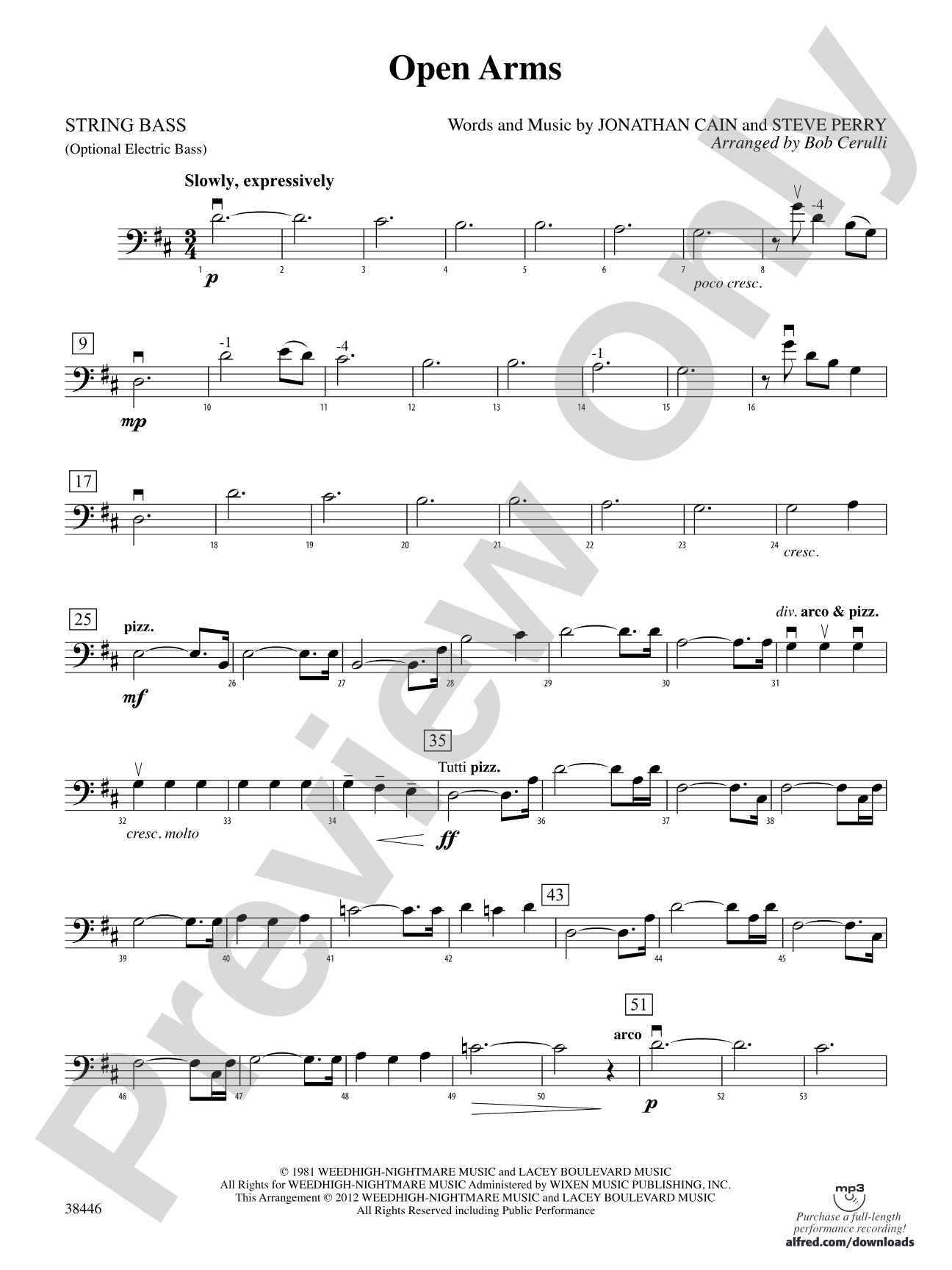

Open Arms: String Bass
As performed by Journey
Words and music by Jonathan Cain and Steve Perry / arr. Bob Cerulli
Grade: 3.5
Item: 00-PC-0015503_SB
$5.99
Pickup currently not available
Description
One of Journey's most famous love songs, this rock ballad is perfectly set for strings. Keep the steady rock beat but also enjoy the warm lyrical quality of the piece.


Don't just read it, hear it, play along with it, and watch your students grow with it. In MakeMusic Cloud, Open Arms: String Bass comes alive with professional accompaniment, adjustable tempo, and built-in practice tools that turn solo practice into real progress.
Open in the Player
Jump straight in and assign it today.
Start Your Free Trial
Open this title and explore the full library in minutes.
Sample Audio
1
Audio File
--:--
0:00
0:00
Sample Video
No sample videos found.
Additional Details
Series:
Pop Concert String Orchestra
Publisher:
Alfred Music
Page Count:
124
SKU:
00-PC-0015503_SB
More about this title
About the Composer: Jonathan Cain
Jonathan Cain joined Journey in 1980 as keyboardist and became one of the band's primary songwriters during their most commercially successful period. His ability to craft memorable melodies with emotional depth shaped some of rock music's most enduring anthems, including "Open Arms," which he co-wrote with vocalist Steve Perry. Cain's work demonstrates how strong harmonic sensibility and accessibility can coexist with genuine artistic expression.
For music educators, Cain's compositions offer an invaluable resource: rock songs with clear melodic lines, functional harmony, and emotional content that engages student musicians. His arrangements in the string orchestra idiom preserve the integrity of the original while creating orchestral textures that develop musicians' understanding of how melody and harmony work together across a full ensemble.
Why we love this
Bob Cerulli's arrangement captures what makes this ballad so affecting without sacrificing the rock aesthetic that gives it its contemporary edge. The orchestration allows violins to sing the primary melody while maintaining steady rhythmic foundation, creating an ideal scenario for string players to develop lyrical phrasing within a familiar, engaging context. Directors get a piece that connects with audiences immediately while offering genuine musical substance.
What to expect
Warmth emerges immediately as the melody unfolds over steady harmonic support. The piece balances rock's forward momentum with the lyrical, singing quality that made the original recording so memorable, creating space for string players to discover how meaningful phrasing develops from attentive listening and musical intention. There's an accessibility here that doesn't underestimate the emotional content of the music itself.
Who it's for
This score and parts set serves string orchestras at the upper-intermediate level looking for repertoire that bridges classical training with contemporary music. Directors programming pop-rock repertoire for winter or spring concerts will find a piece that captivates student musicians and audiences alike. It works equally well for orchestras seeking high-engagement concert material or as a change-of-pace selection in a traditional classical program.
How to get the most out of it
- Establish the steady rock pulse before rehearsal begins; this piece demands consistent quarter-note momentum underneath the expressive melody lines, much like a working metronome.
- Balance the violins' lyrical line against the accompaniment voices by checking section blend during full run-throughs rather than isolated sectional work.
- Shape phrase endings with slight tempo flexibility to emphasize the song's emotional peaks without losing the underlying rhythmic integrity.
- Encourage vibrato across the string sections during sustained melody passages to enhance the warmth and fullness the arrangement aims for.
How to use it
Program this as a standalone concert feature or pair it with other pop-rock arrangements to create a dedicated contemporary segment in your concert. It functions beautifully as a spring concert closer or as a bridge piece between a traditional orchestral opening and more experimental repertoire. The piece also serves effectively as a morale booster during intensive rehearsal periods, offering musicians a chance to play something immediately satisfying while building legitimate orchestral skills.
Skills your students will build
- Phrasing and shaping melody lines within steady rhythmic frameworks
- Balancing independence in accompanying voices while supporting primary melodic material
- Coordinating rhythmic precision in rock-based meter with expressive string techniques
- Reading and executing straightforward functional harmony in a contemporary context
- Building vibrato control and tone production in ensemble settings