
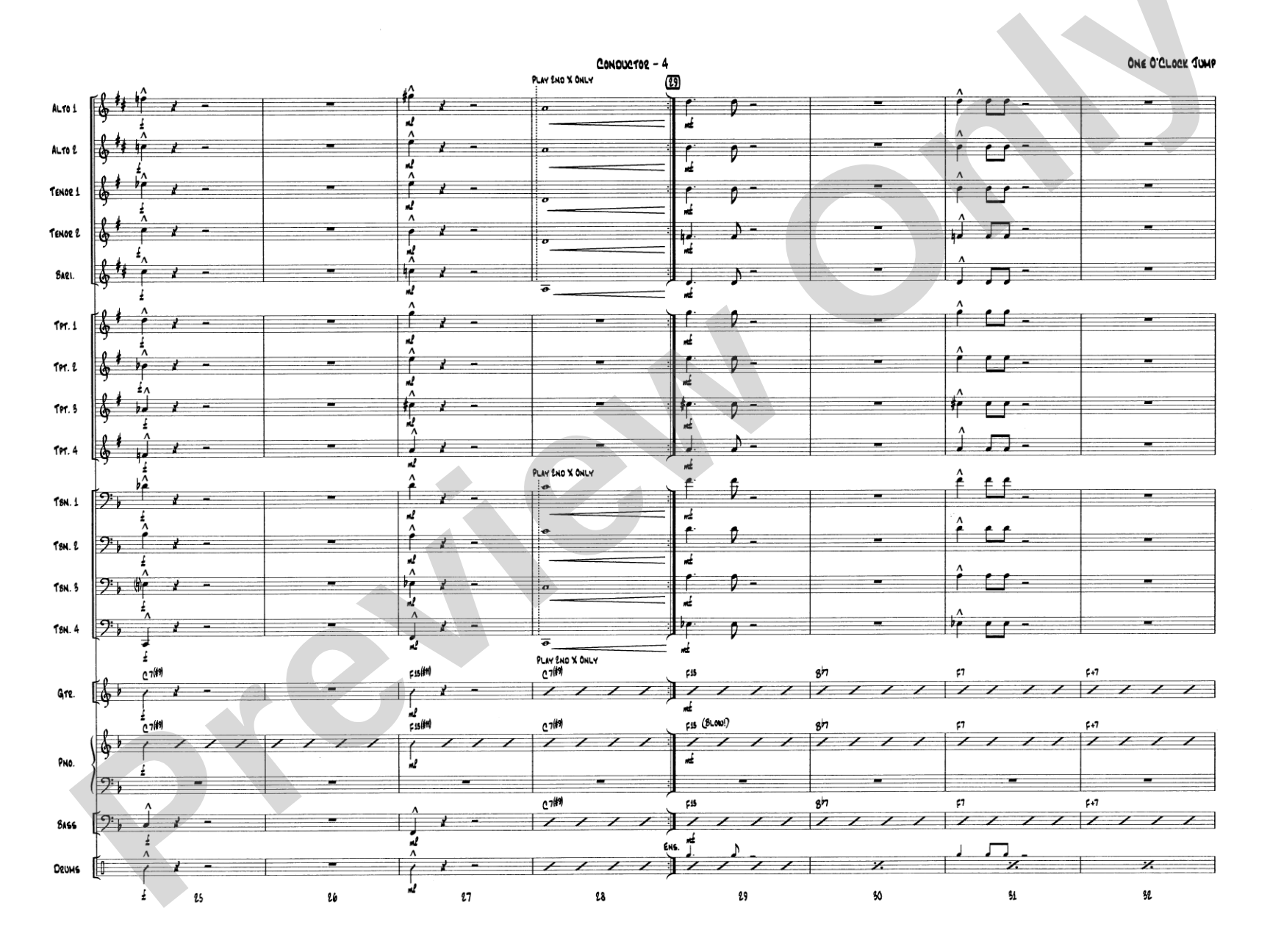
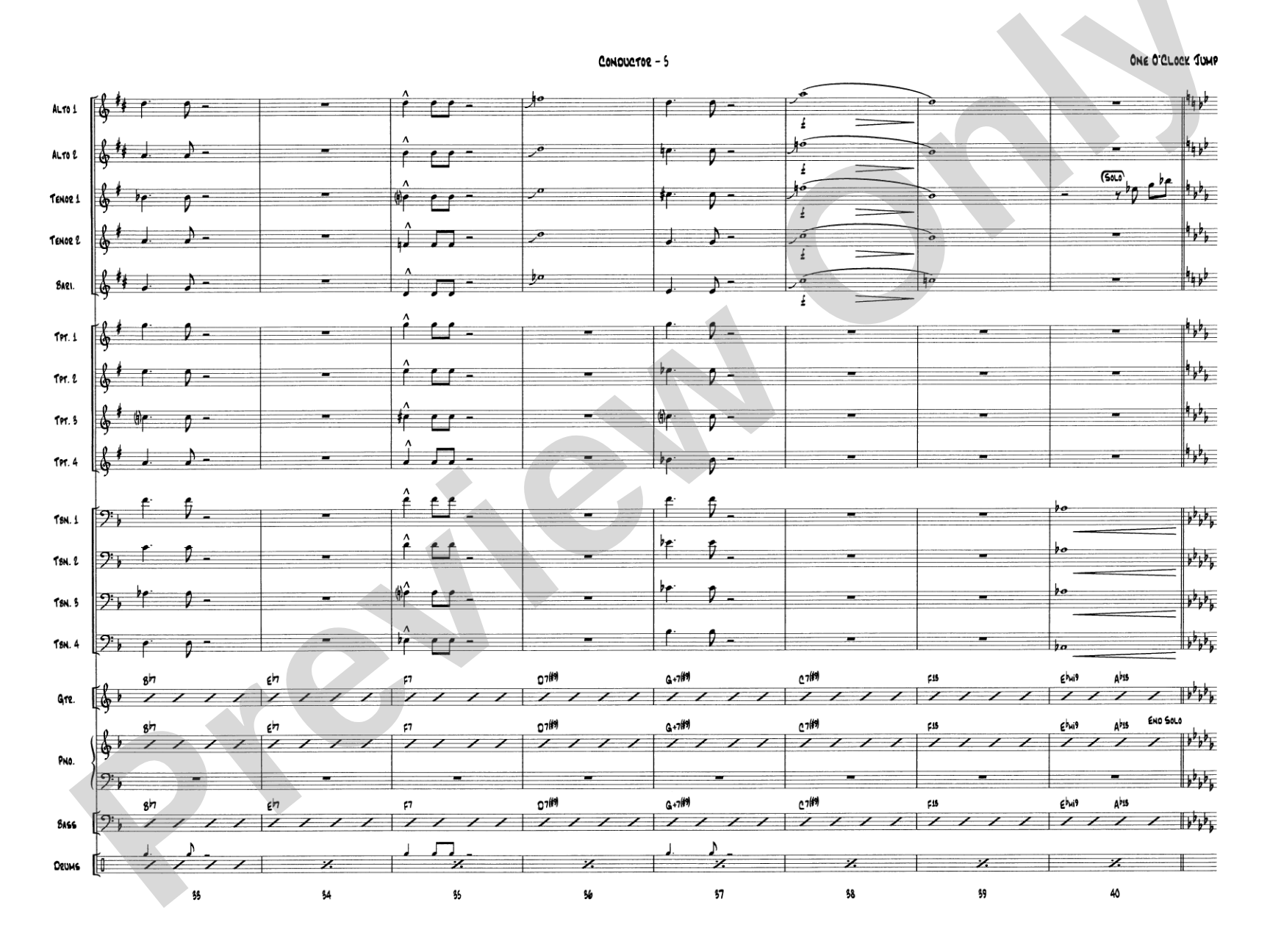
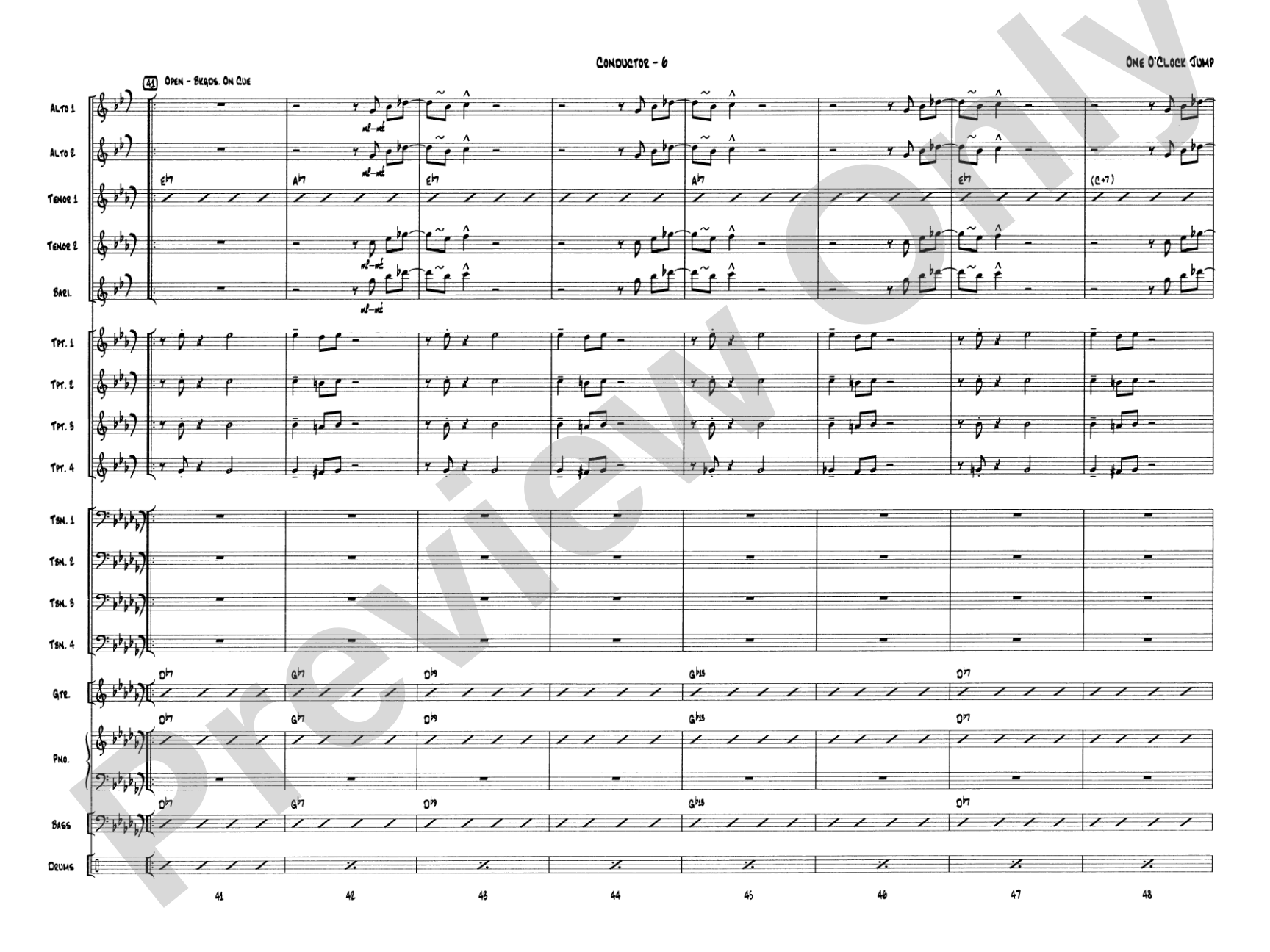
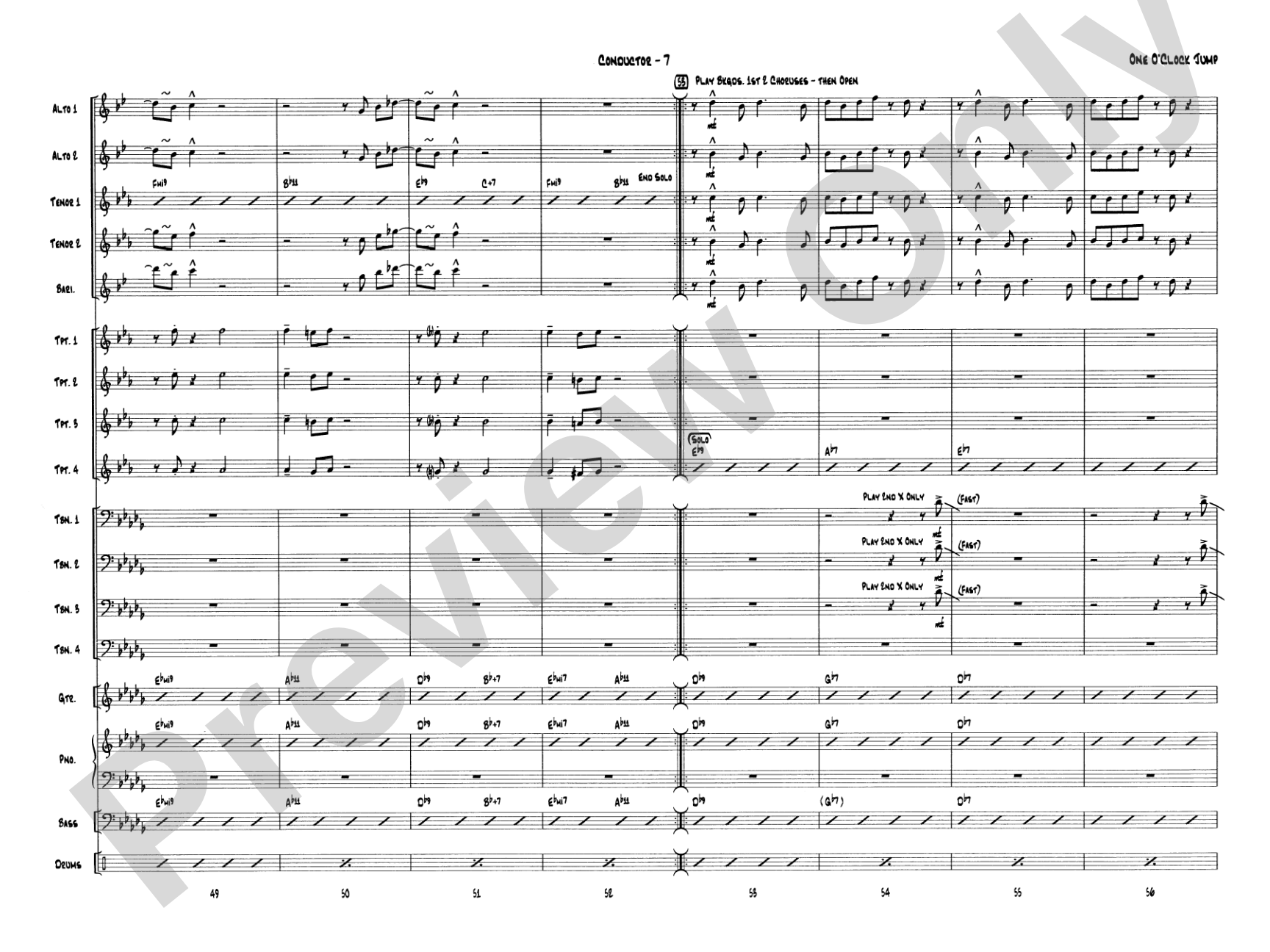
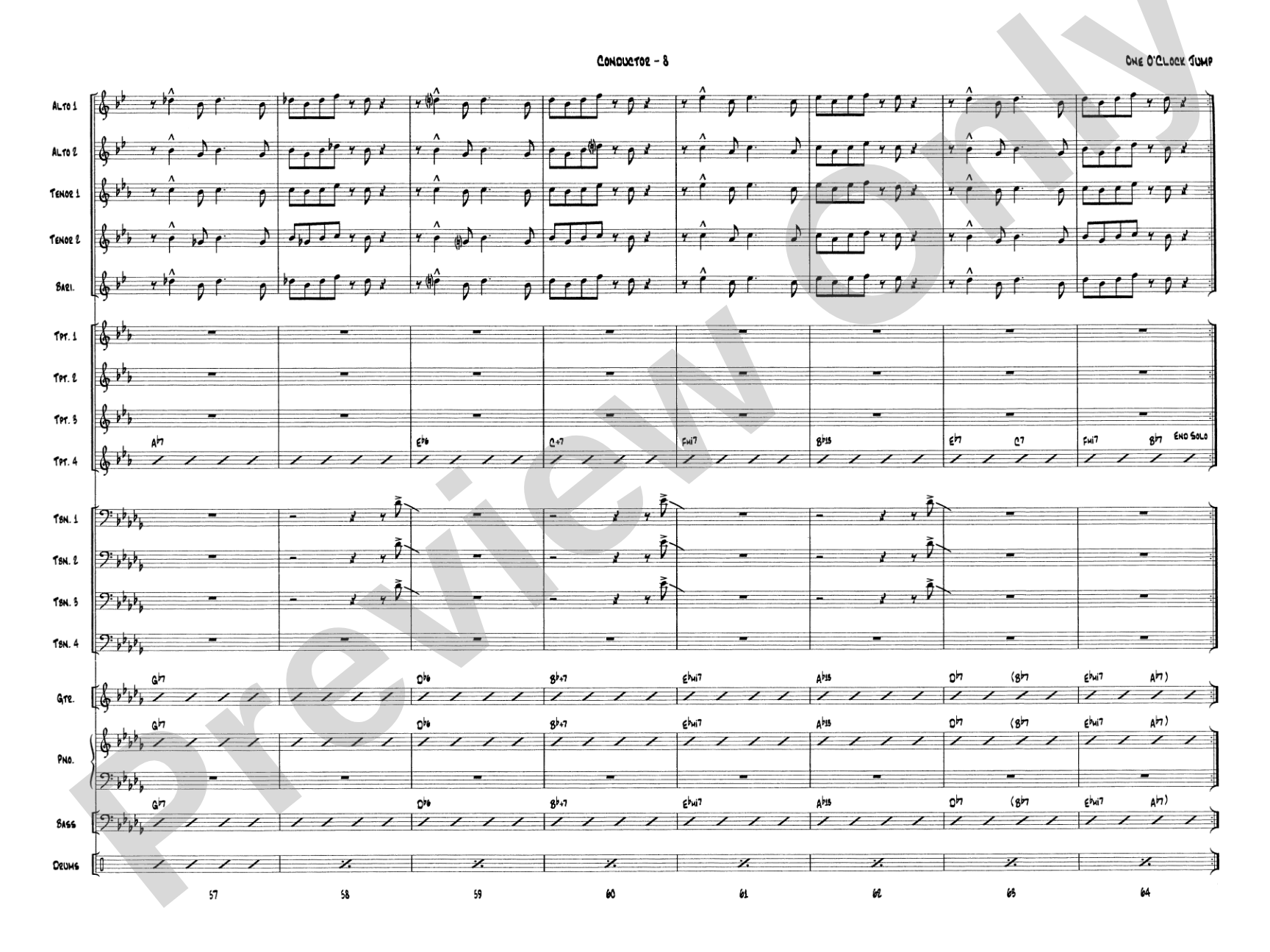
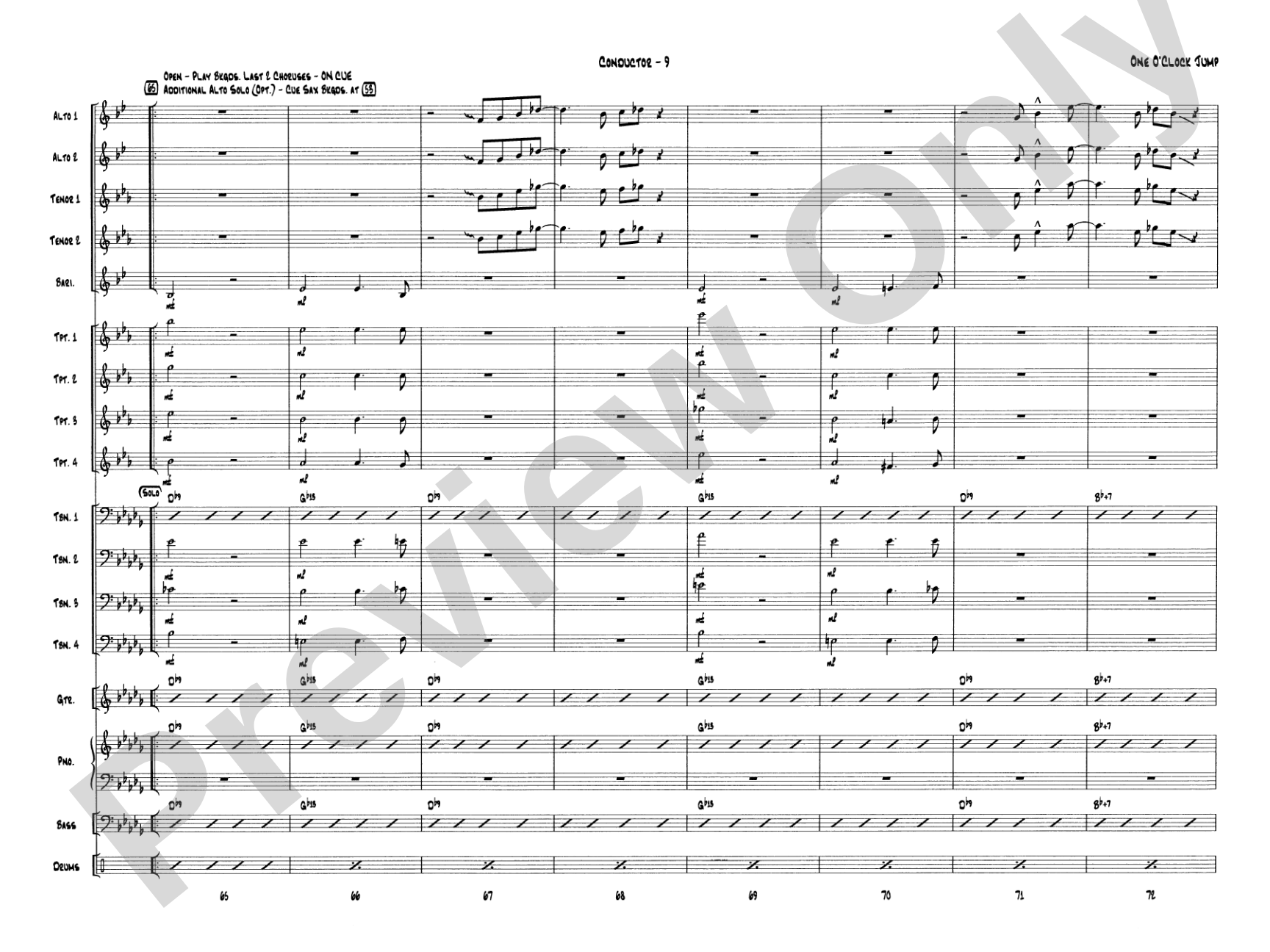
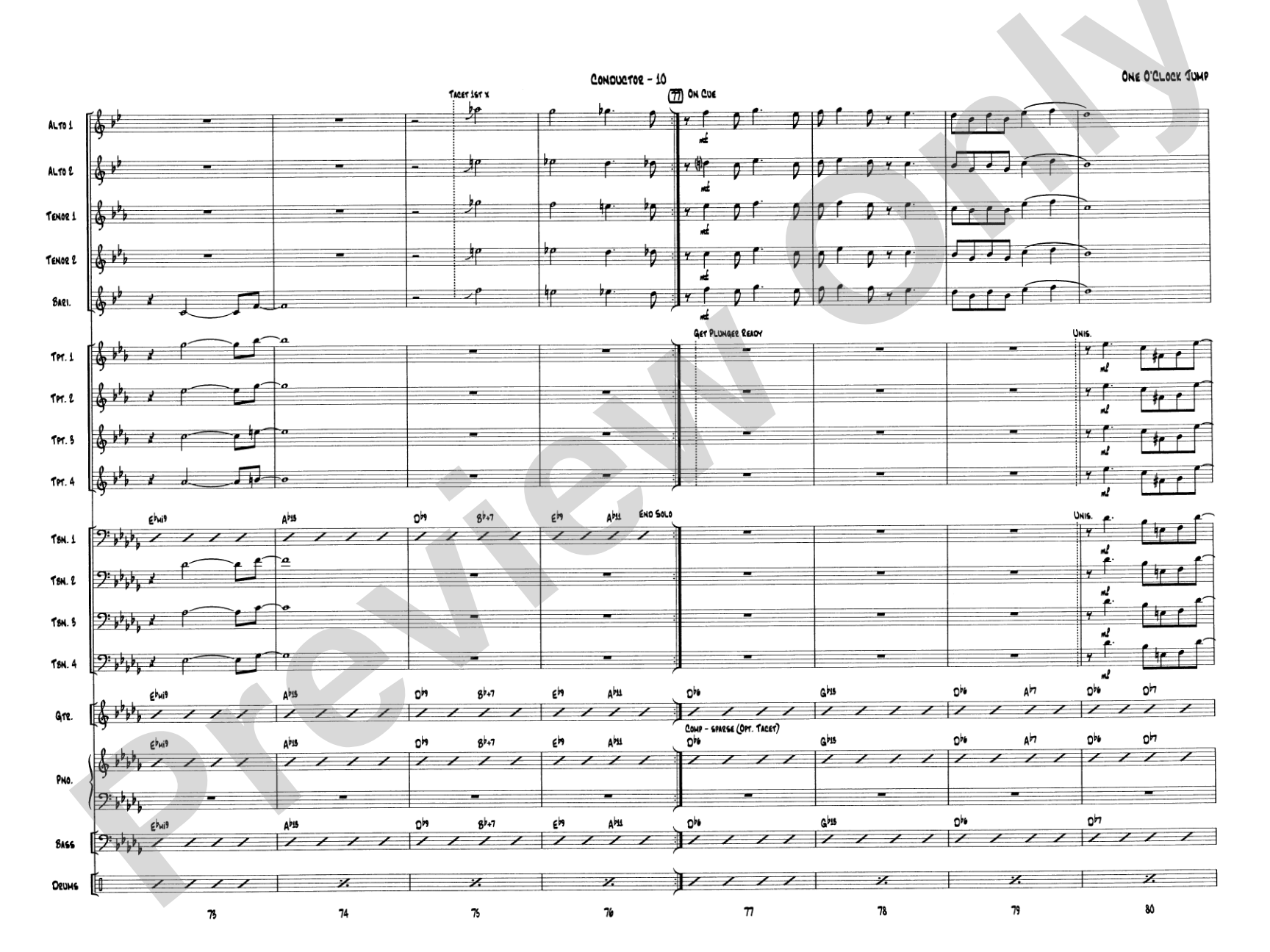
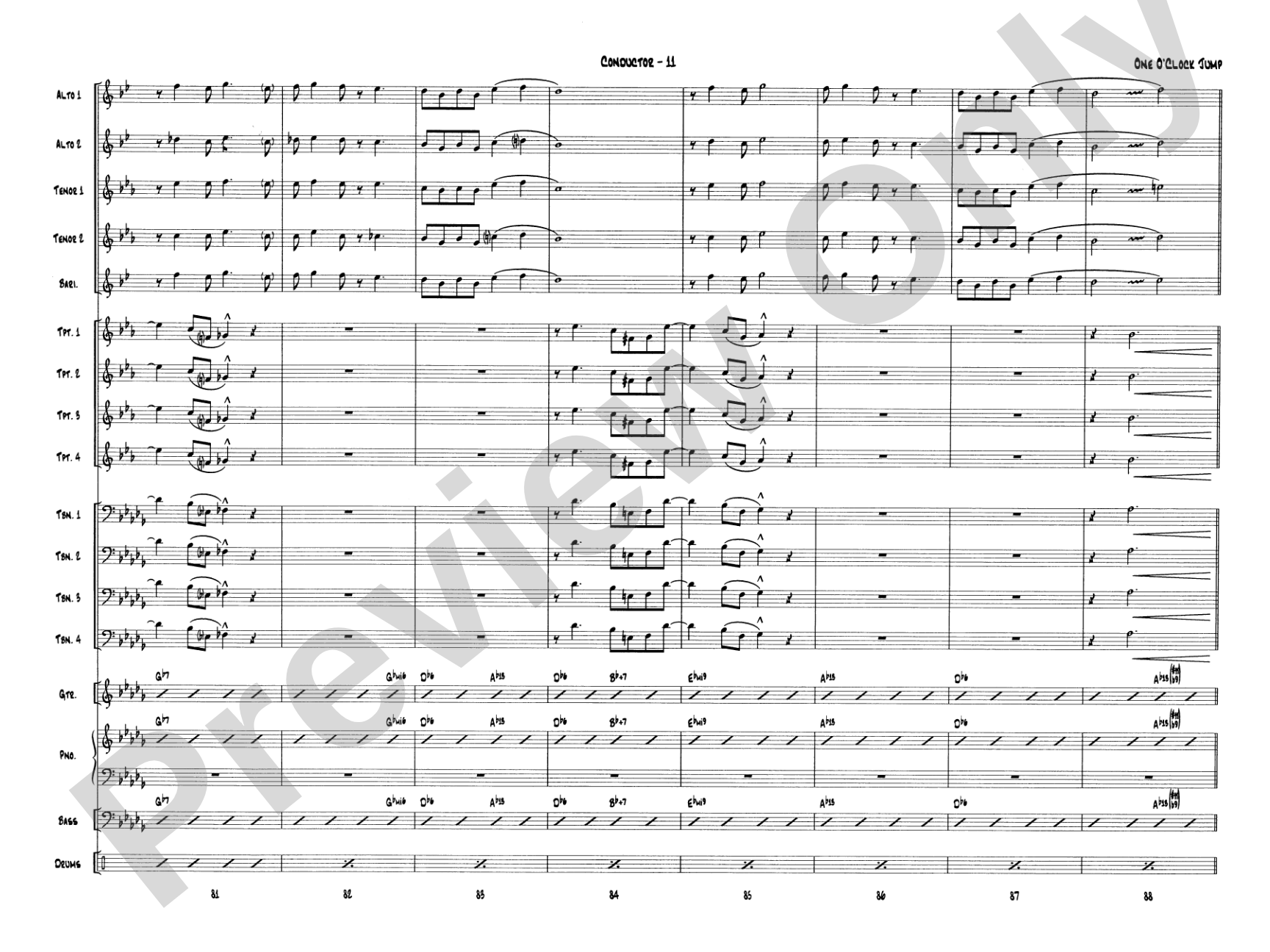
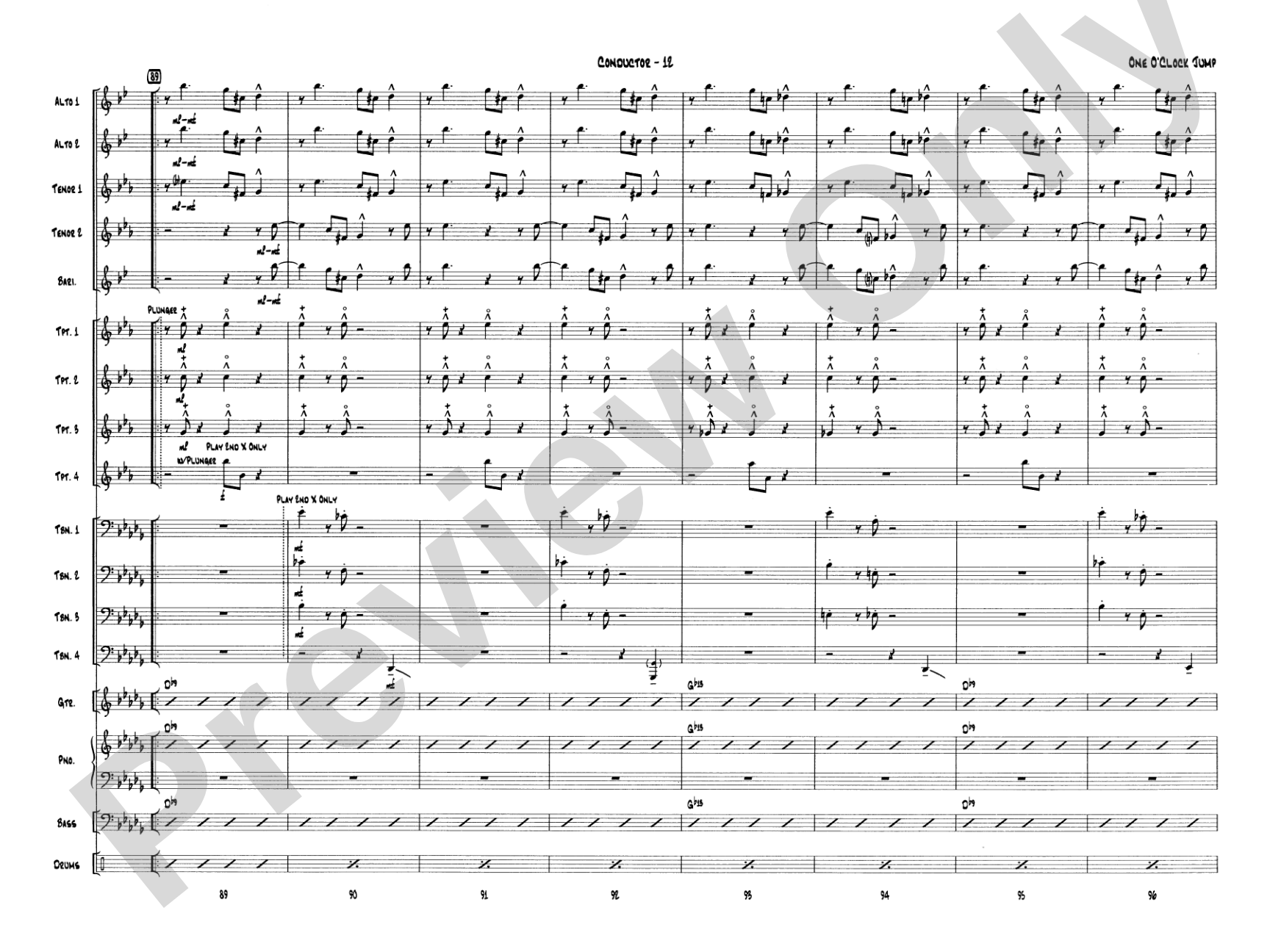
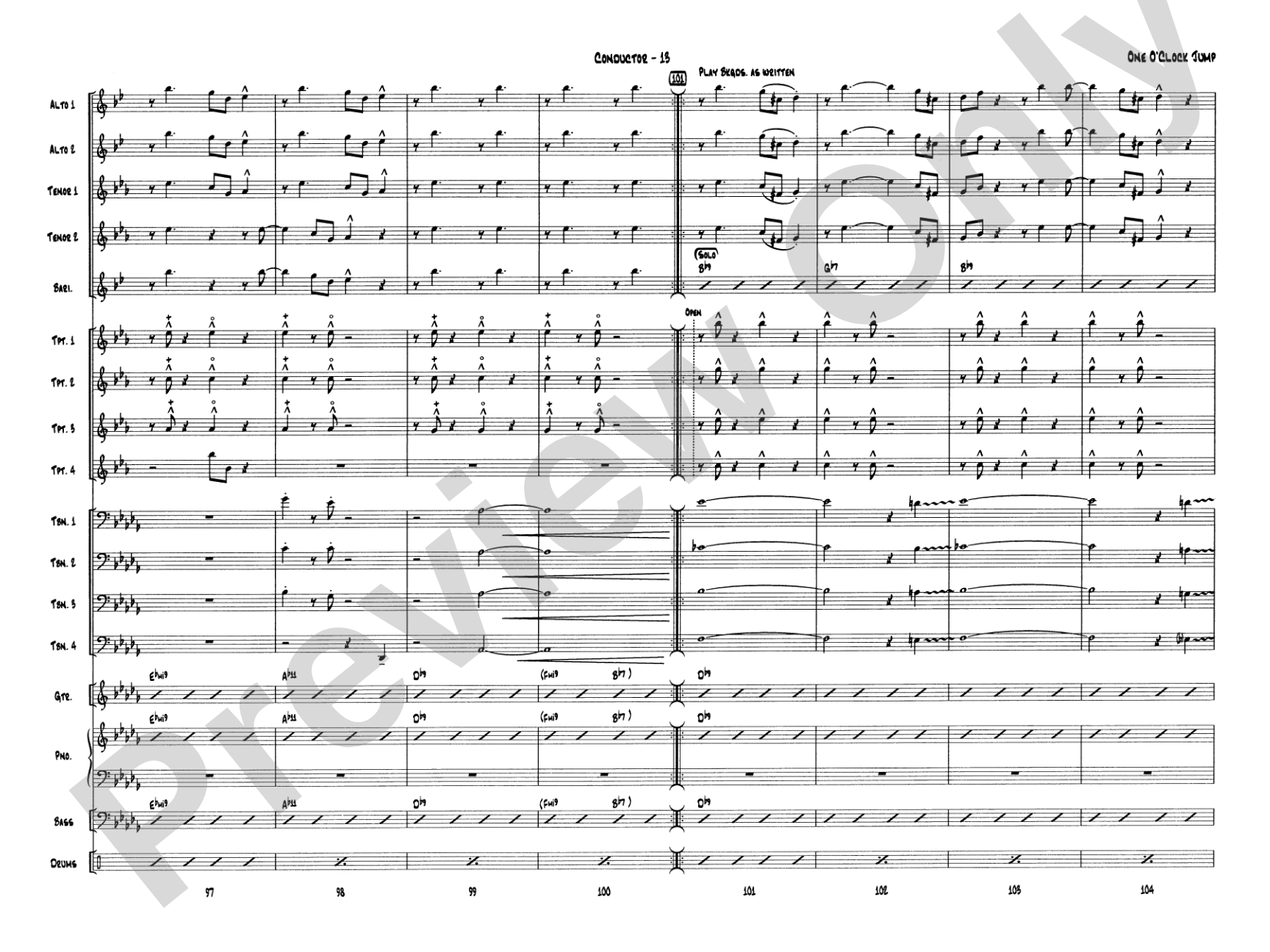
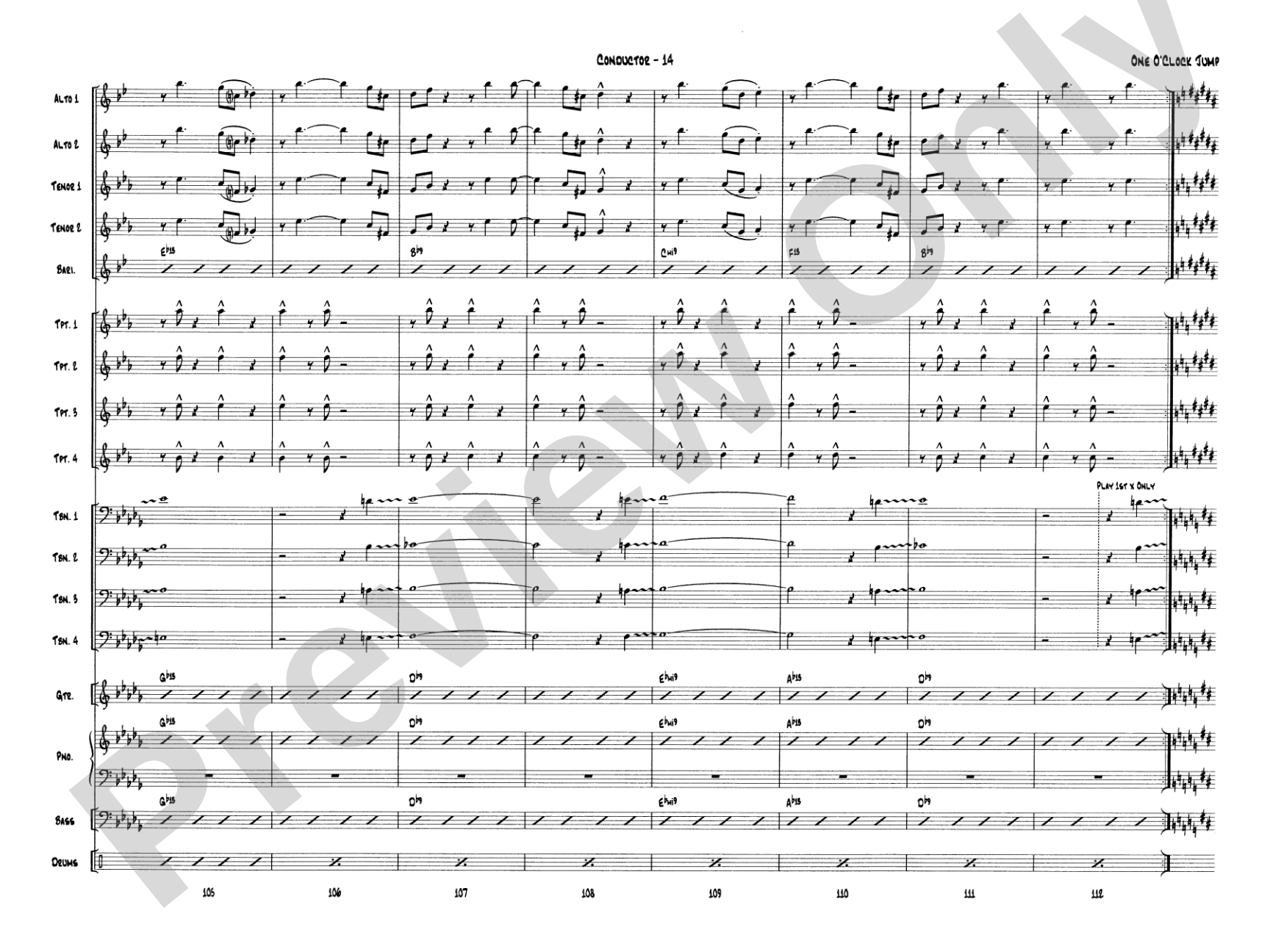
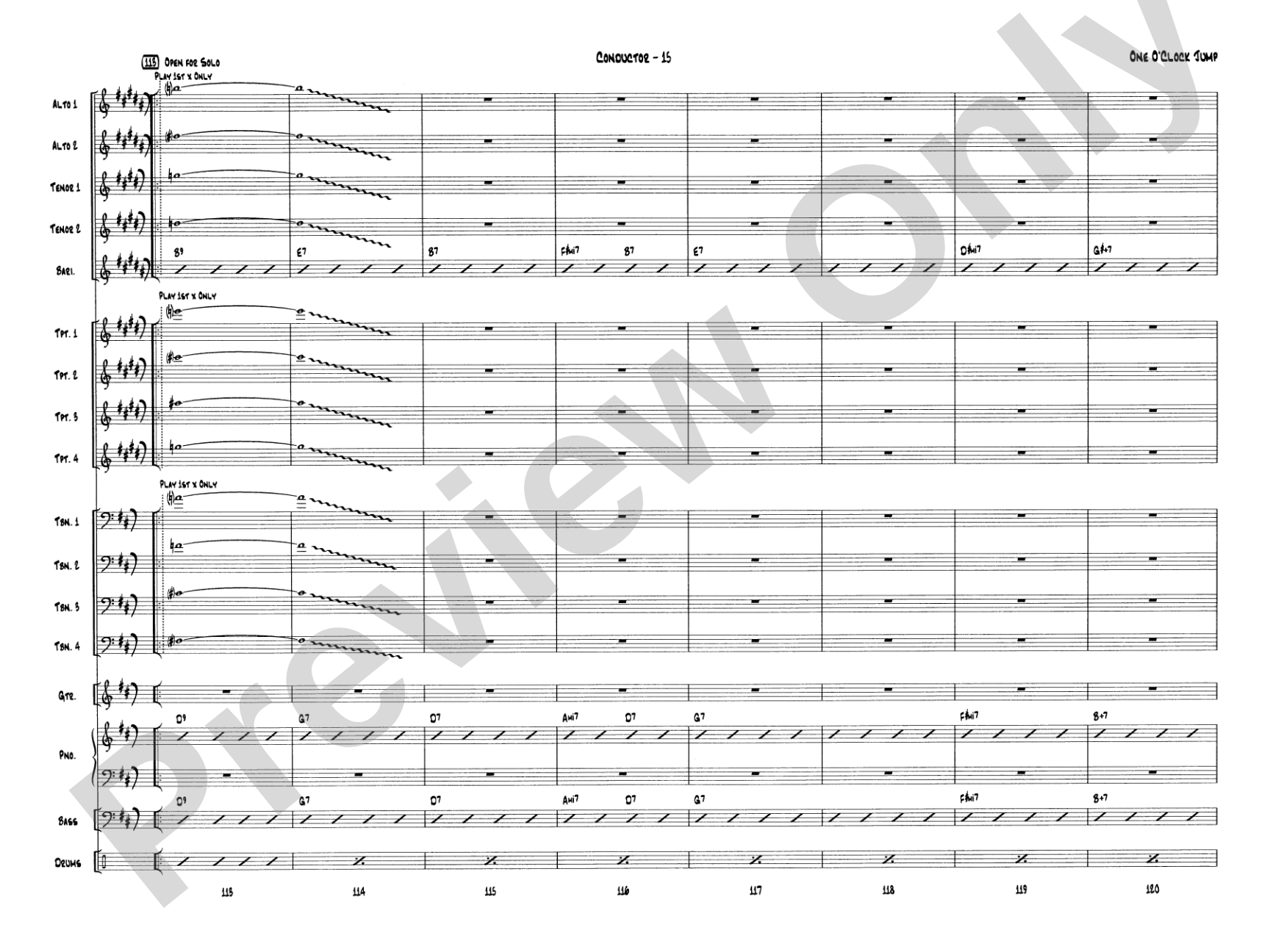
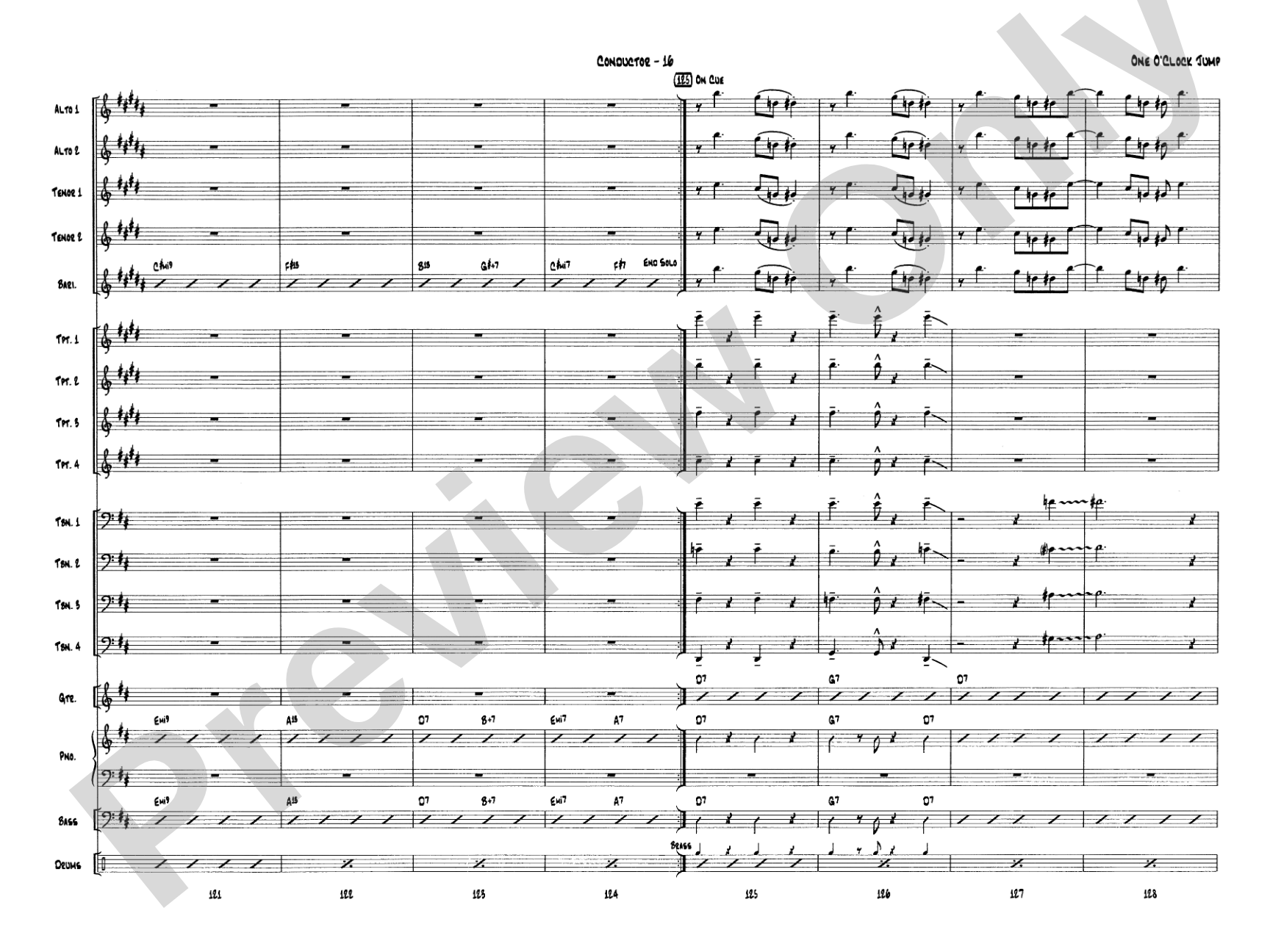
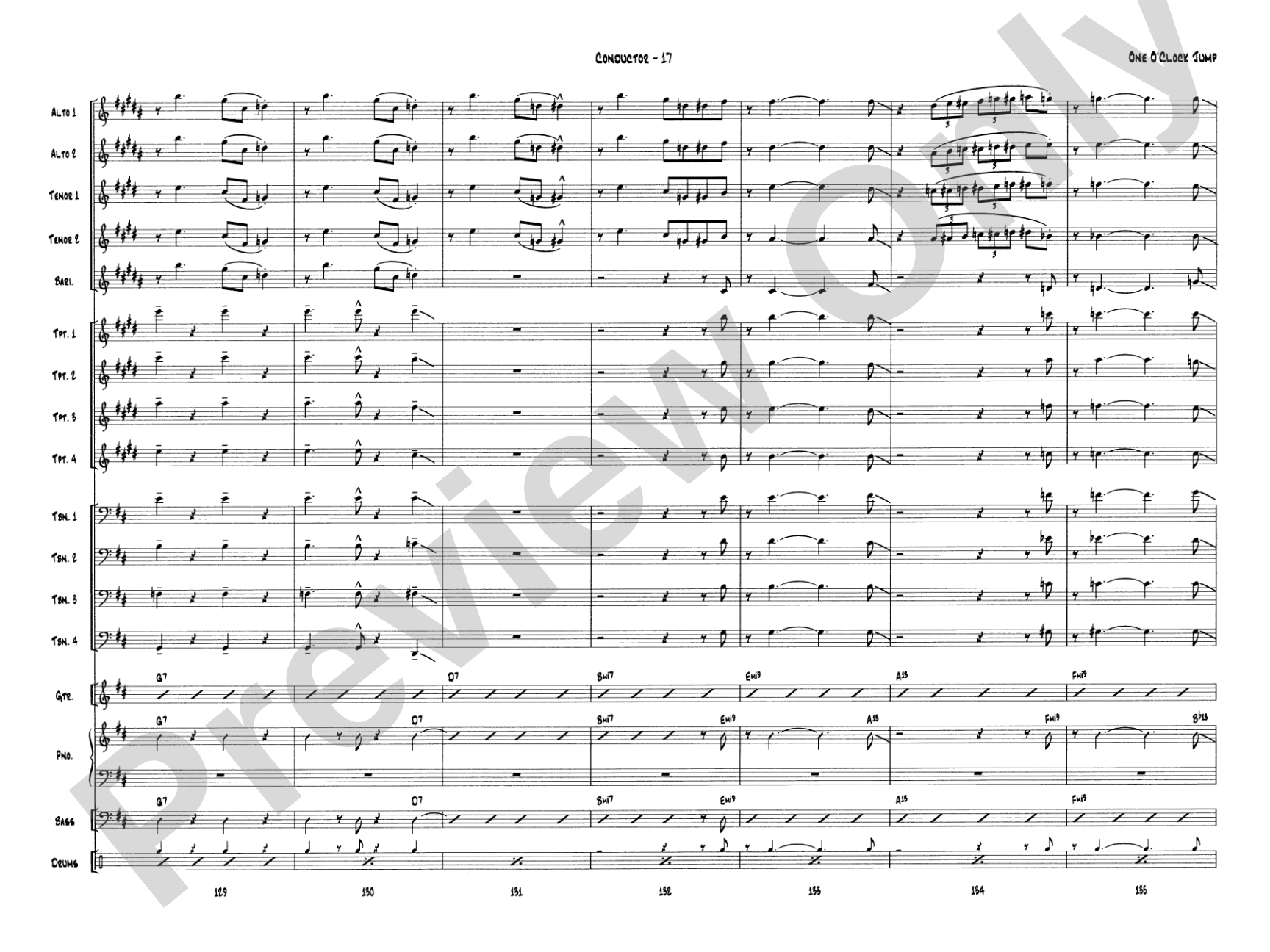
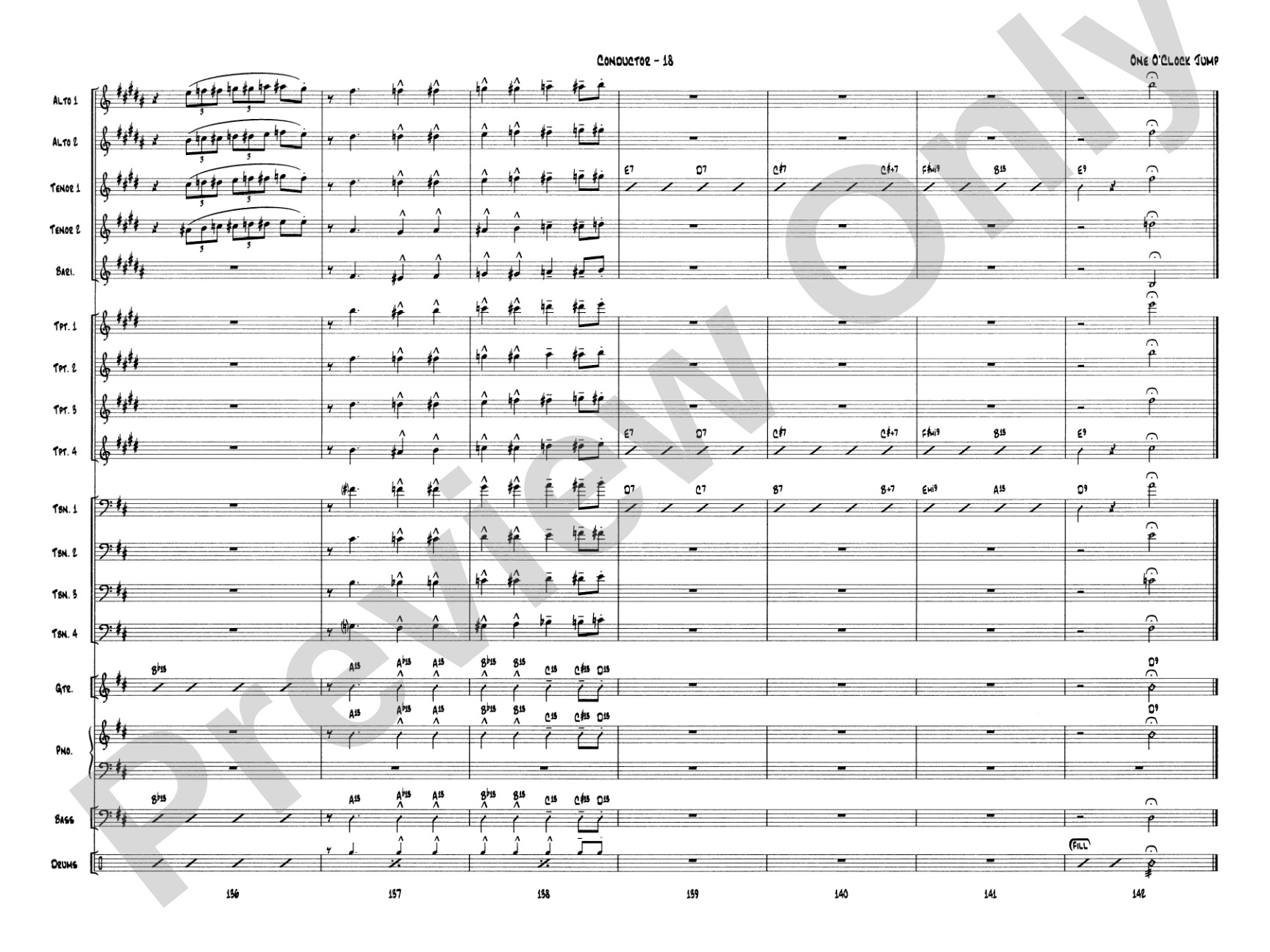


One O'Clock Jump: Jazz Ensemble Conductor Score & Parts
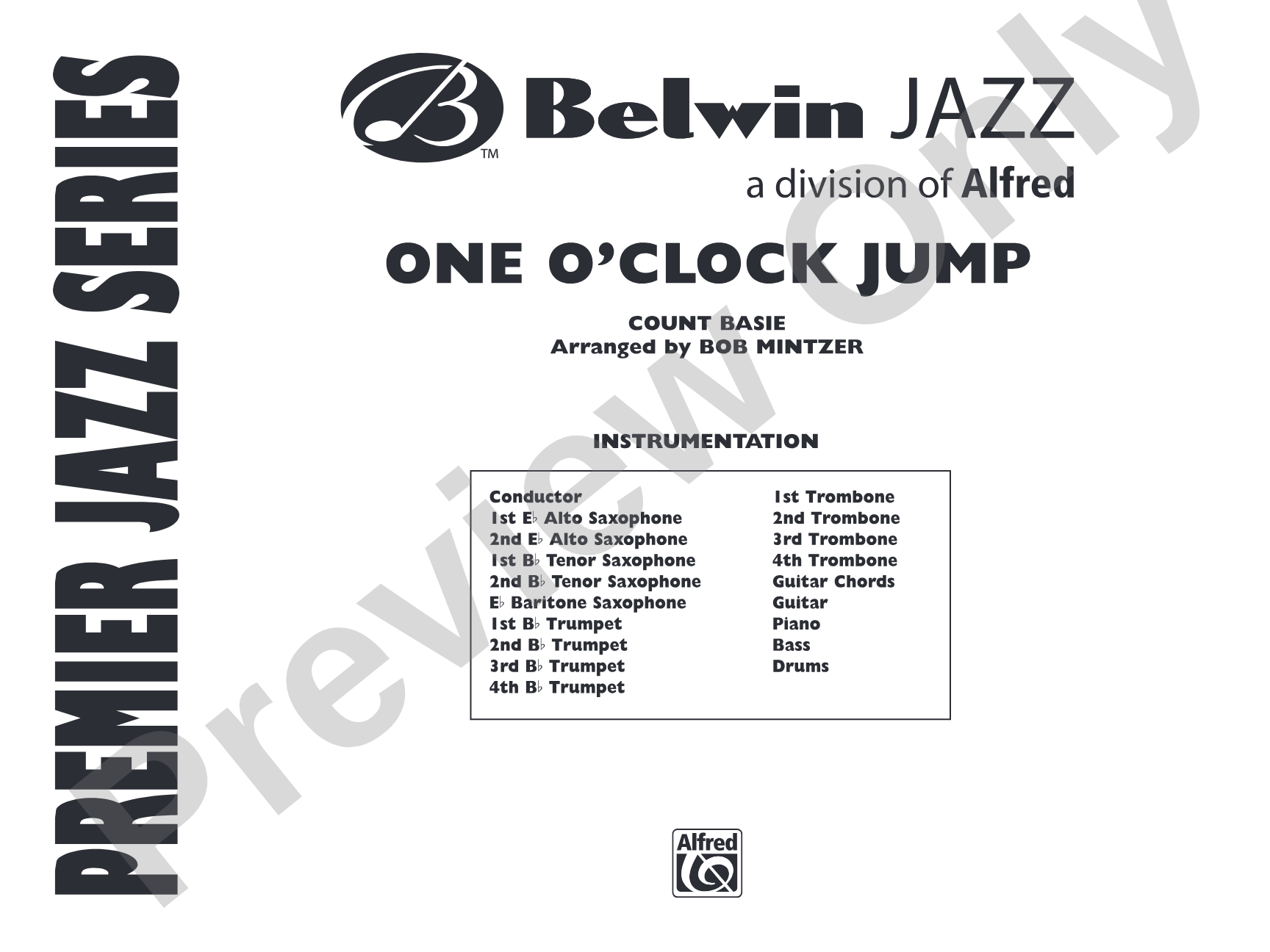
By Count Basie / arr. Bob Mintzer
Grade: 4.5 (Medium Advanced / Difficult)
Item: 00-PK-0002486

$60.00
One moment…
Related Items
One O'Clock Jump: Jazz Ensemble Conductor Score |
$10.00
|
View |
Description
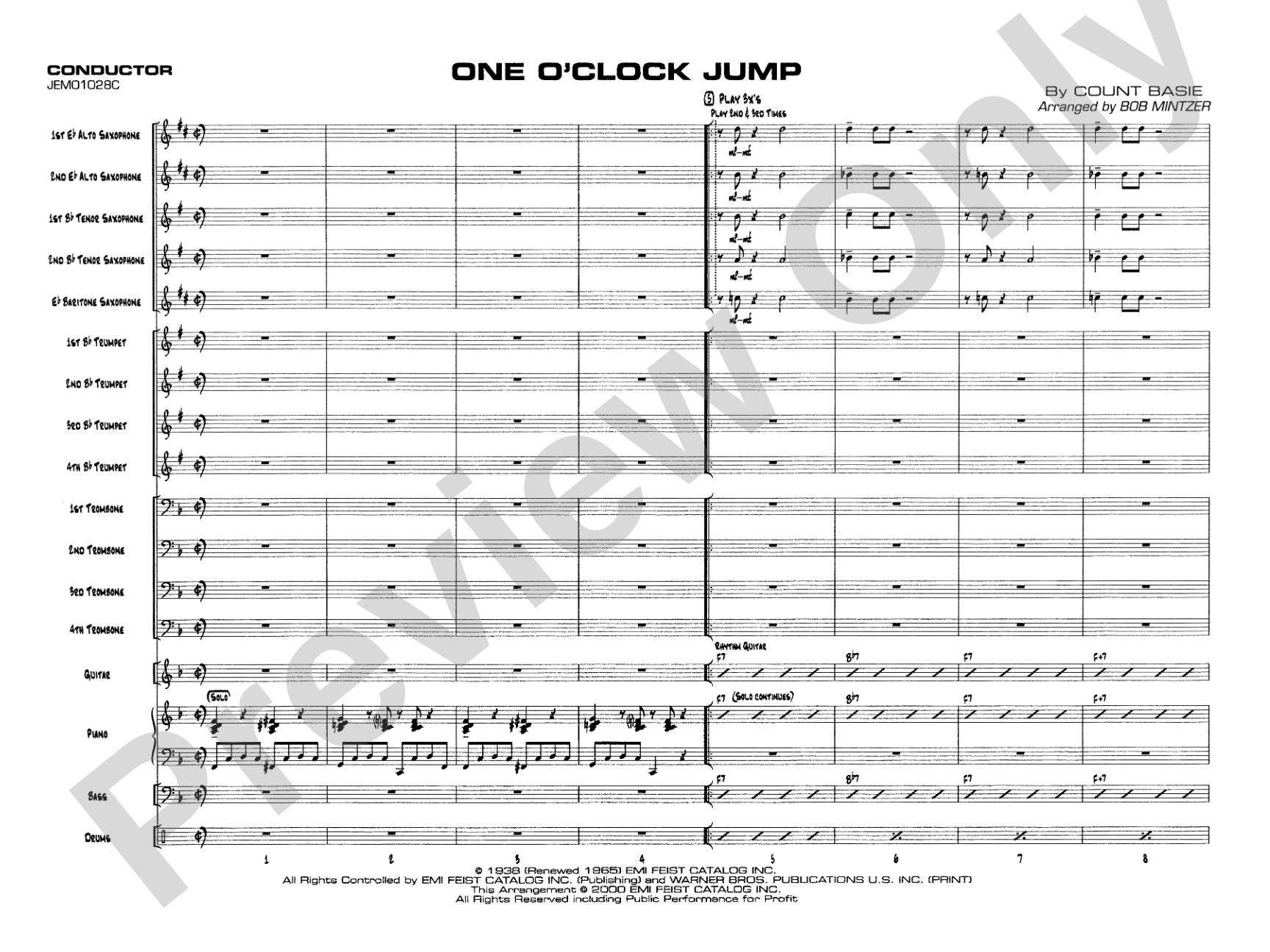
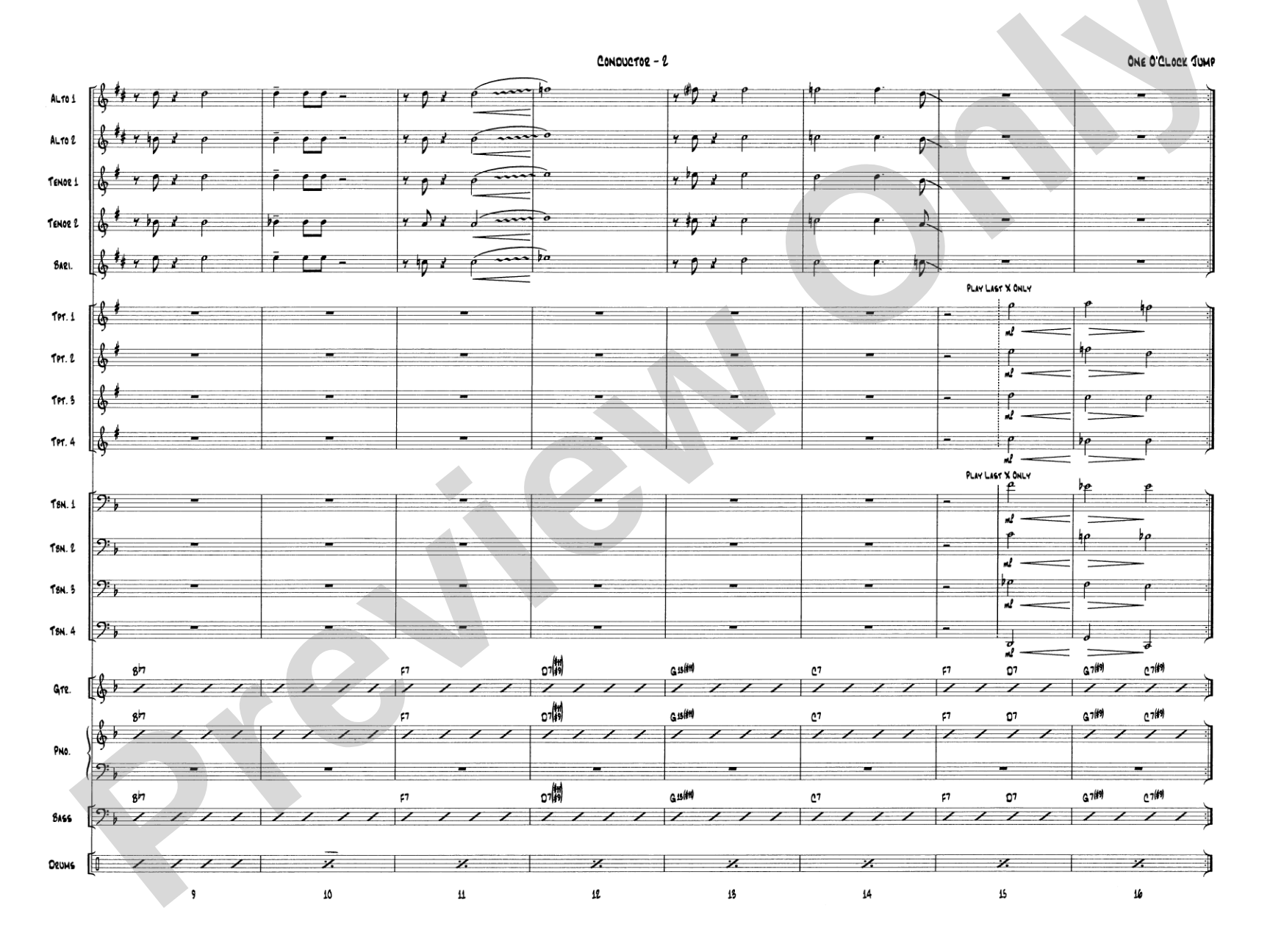
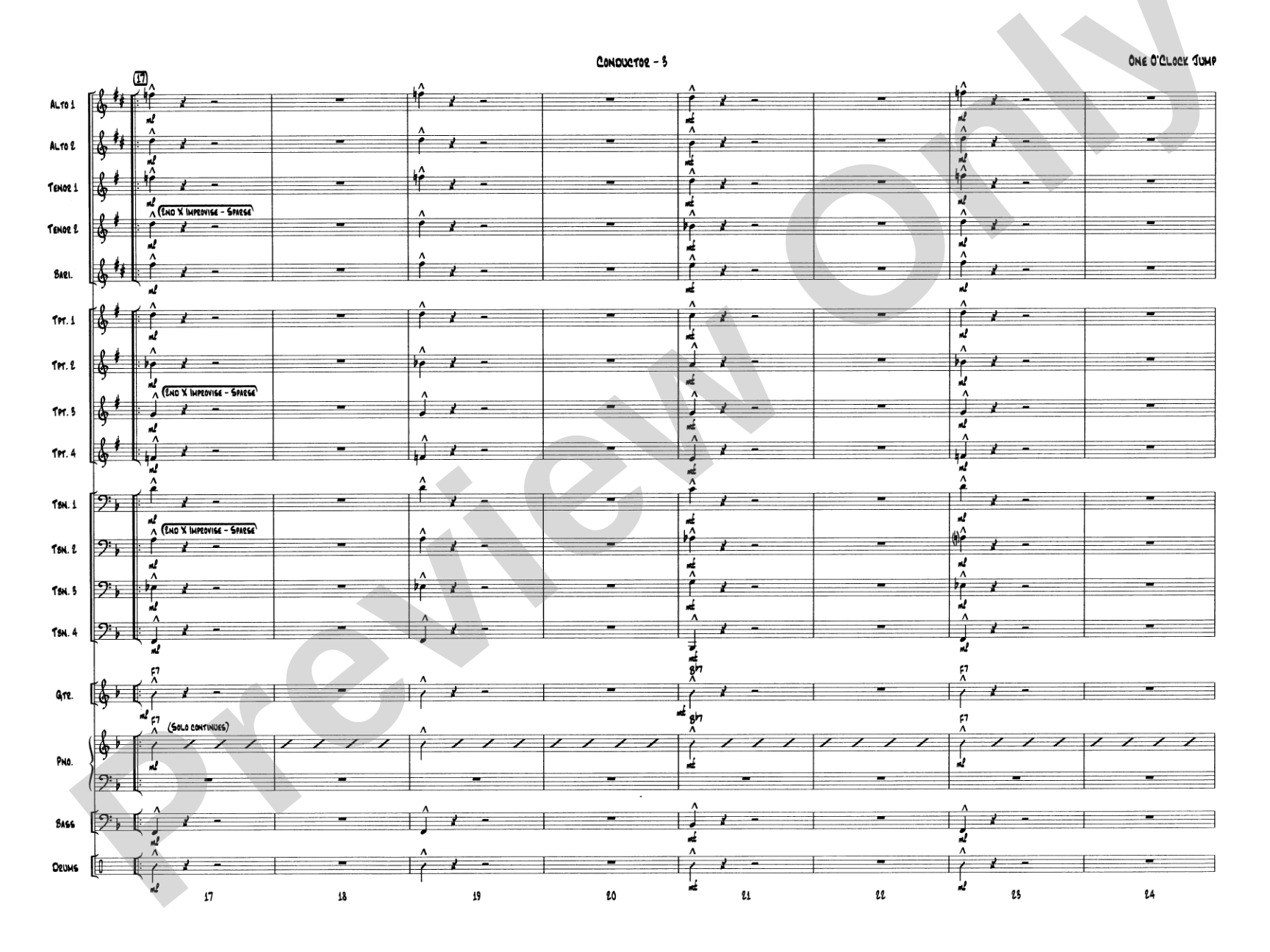
Bob Mintzer paying tribute to Count Basie---you can't beat that combination! From Bob Mintzer's Big Band's newest CD Homage to Count Basie, this is an outstanding arrangement that is fresh sounding yet still has the traditional feel and character of Basie. Solos for piano, tenor, trumpet, trombone, alto, and baritone sax will keep your band creative. Musicians will devour this one, the audience will recognize it and appreciate the Mintzer touch. Superb festival and concert material!


Don't just read it, hear it, play along with it, and watch your students grow with it. In MakeMusic Cloud, One O'Clock Jump: Jazz Ensemble Conductor Score & Parts comes alive with professional accompaniment, adjustable tempo, and built-in practice tools that turn solo practice into real progress.
Open in the Player
Jump straight in and assign it today.
Start Your Free Trial
Open this title and explore the full library in minutes.
Sample Audio
1
Audio File
--:--
0:00
0:00
Sample Video
Additional Details
Series:
Premier Jazz Series
Publisher:
Alfred Music
Page Count:
51
SKU:
00-PK-0002486
More about this title
About the Composer: Count Basie
Count Basie (1904-1984) led one of the most influential big bands in jazz history, shaping the sound of swing through economical, blues-based piano playing and a rhythm section that became the gold standard for the era. His compositions and arrangements prioritized groove and ensemble cohesion over individual virtuosity, making his music both accessible and endlessly swingable for musicians at all levels.
Why we love this
Bob Mintzer's arrangement strips away none of the original's infectious groove while injecting contemporary harmonic and orchestral sophistication. The solo section roster (piano, tenor, trumpet, trombone, alto, and baritone sax) creates natural opportunities for every section to shine, and the writing sits perfectly for bands that can handle medium-advanced jazz vocabulary without demanding superhuman chops.
What to expect
Strutting, relaxed confidence. The piece swings hard from the opening, with punchy ensemble figures giving way to solo opportunities that feel earned and natural rather than bolted-on. Mintzer's orchestration keeps the Basie DNA intact while adding a modern sheen that makes the arrangement feel alive without overshadowing the classic tune.
Who it's for
Jazz ensembles at the high school and early college level with strong section leaders and soloists comfortable taking improvised chorus breaks. Repertoire-savvy audiences will recognize the Basie lineage, making this a smart choice for concert and festival programming where you want immediate audience engagement.
How to get the most out of it
- Keep the rhythm section locked on the swing eighth-note feel; this piece lives or dies by the groove, not by rush or precision alone.
- Balance the solos so that each voice commands attention without overwhelming the ensemble; Mintzer's voicings underneath the soloists deserve to be heard.
- Let the ensemble sections breathe rhythmically; the written hits and figures only land with maximum impact if the ensemble isn't forcing the tempo between them.
- Use the score to shape dynamics during the soli passages; even small adjustments in background texture will clarify which solo voice is featured.
How to use it
Slot this into a concert alongside a ballad or a more contemporary jazz composition to showcase your ensemble's range within a single set. The tune's recognition factor makes it an excellent finale or showpiece for jazz festivals, and its moderate difficulty relative to its impact makes it a smart repertoire choice for bands building toward more ambitious big band literature.
Skills your students will build
- Blues harmony and comping changes
- Swing eighth-note articulation and phrasing
- Improvisation over traditional jazz changes
- Ensemble balance and section independence during soli
- Reading and executing syncopated big band figures