One Fine Day Cover Image

One Fine Day: 2-Part Choral Octavo

$2.25 USD
Sale price  $2.25 USD Regular price 
Skip to product information
One Fine Day Cover Image

One Fine Day: 2-Part Choral Octavo

Music by Mary Donnelly and George L. O. Strid

Item: 00-4771

makemusic Cloud badge

Need it now?

Buy Digital Version
$2.25
Shipped

One moment…

Description
Another fine choral work for young choirs by Mary Donnelly and George Strid. 'One fine day all men will live as brothers.' It's a message song that's fun to sing . . . and both voice parts get to sing the melody. Well-crafted part writing make One Fine Day an exemplary choice for young choirs.

Don't just read it, hear it, play along with it, and watch your students grow with it. In MakeMusic Cloud, One Fine Day: 2-Part Choral Octavo comes alive with professional accompaniment, adjustable tempo, and built-in practice tools that turn solo practice into real progress.

Sample Pages

Sample Audio
No sample audio found.
Sample Video
Additional Details
Series: Alfred Archive Edition: Alfred Choral Designs
Publisher: Alfred Music
Page Count: 8
UPC: 038081004761
SKU: 00-4771

More about this title

About the Composer: Mary Donnelly
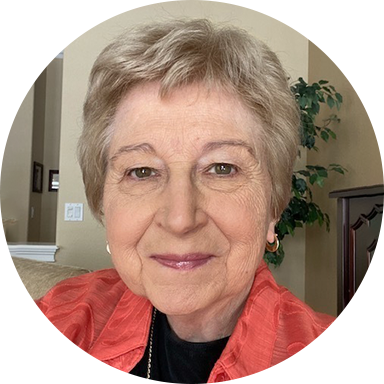
Mary Donnelly

Mary Donnelly grew up in Reno, Nevada, and studied English and French at the University of Nevada before discovering her passion for music education. While still an undergraduate, she co-founded two children's choruses, an experience that prompted her to pursue formal music training. She earned a Master's Degree in Education from Lesley College in Cambridge, Massachusetts, focusing on arts integration across the curriculum. Over thirty years, she taught general music and choir in the Washoe County School District, retiring as an active educator and current member of ACDA, NEA, and ASCAP.

In 1985, Donnelly began a prolific creative partnership with George Strid when their principal asked them to compose a musical for a sixth-grade Reading Week assignment. That first collaboration, The Million Dollar Mystery, launched a writing team that has since created over two hundred songs and twenty-five musicals. Their work is known for accessibility, strong pedagogy, and genuine joy in singing.

Why we love this

Donnelly and Strid have crafted a piece that refuses to feel preachy despite its earnest message. The melody is genuinely singable, the part writing gives both voice parts real melodic interest rather than relegating one to harmony, and the whole piece has a lightness that makes it rewarding for young singers to perform and audiences to hear.

What to expect

Hopeful and optimistic without naiveté. The melody sits comfortably in the voice and moves with a natural lilt that feels almost conversational. There's warmth here, a sense of possibility, and genuine sincerity beneath what could otherwise be a message song cliché.

Who it's for

Young choirs (middle school through early high school) looking for accessible repertoire with substance. The two-part writing removes technical barriers while maintaining musical integrity, making it ideal for developing ensembles and those new to part singing.

How to get the most out of it

  • Balance the voice parts so each melodic line comes through clearly; resist the urge to let one part dominate just because it carries the main text
  • Shape the phrase with a gentle rise toward the message at the core, then ease back down; this prevents the song from feeling heavy-handed
  • Use the recorded accompaniment to lock in rhythmic precision without sacrificing the natural phrasing of the lyrics
  • Encourage singers to connect emotionally to the text without overselling it; sincerity reads better than earnestness in a young choir

How to use it

Program this for spring concerts, particularly around Earth Day or community service themes. Its accessible nature makes it an excellent anchor for a set exploring social values and activism, and the eight-page format allows it to stand alone or pair with other short works on a concert.

Skills your students will build

  • Sustaining independent melodic lines while listening to another part
  • Phrasing text naturally while maintaining musical shape
  • Balancing individual expression with choral blend
  • Reading and performing two-part harmony at an accessible level

You May Also Like
