

One Can Hear the Falling Snow: SSA Choral Octavo
Words and music by Greg Gilpin
Item: 00-PO-0006363
$2.05
Minimum order quantity: 20 copies
Pickup currently not available
Related Items
One Can Hear the Falling Snow: PianoTrax Digital Audio Download |
$9.99
|
View | |
One Can Hear the Falling Snow: SATB Choral Octavo |
$2.05
|
View | |
One Can Hear the Falling Snow: SAB Choral Octavo |
$2.05
|
View | |
One Can Hear the Falling Snow: SATB Choral Octavo |
$2.05
|
View | |
One Can Hear the Falling Snow: SAB Choral Octavo |
$2.05
|
View | |
One Can Hear the Falling Snow: SSA Choral Octavo |
$2.05
|
View |
Description
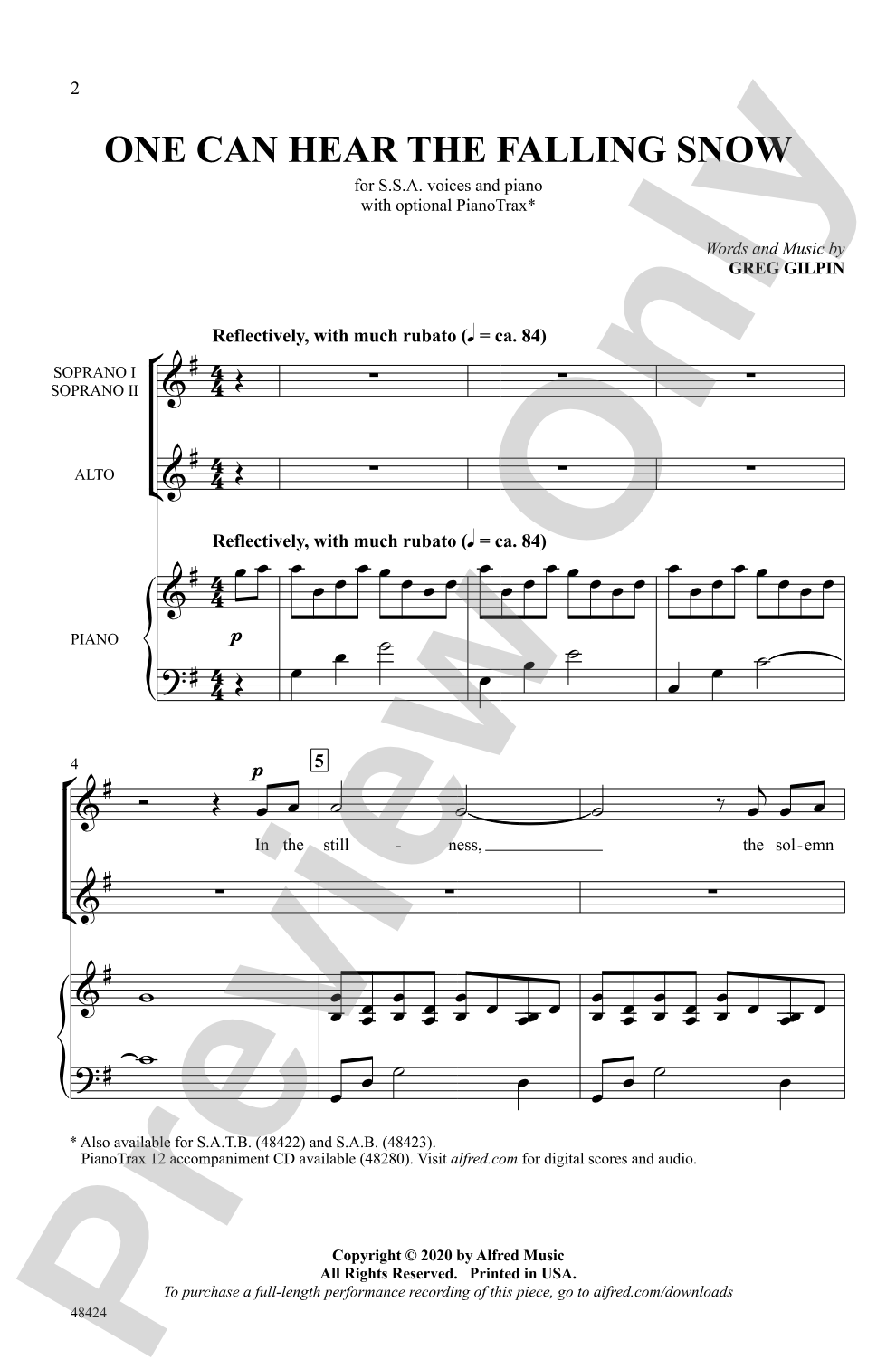
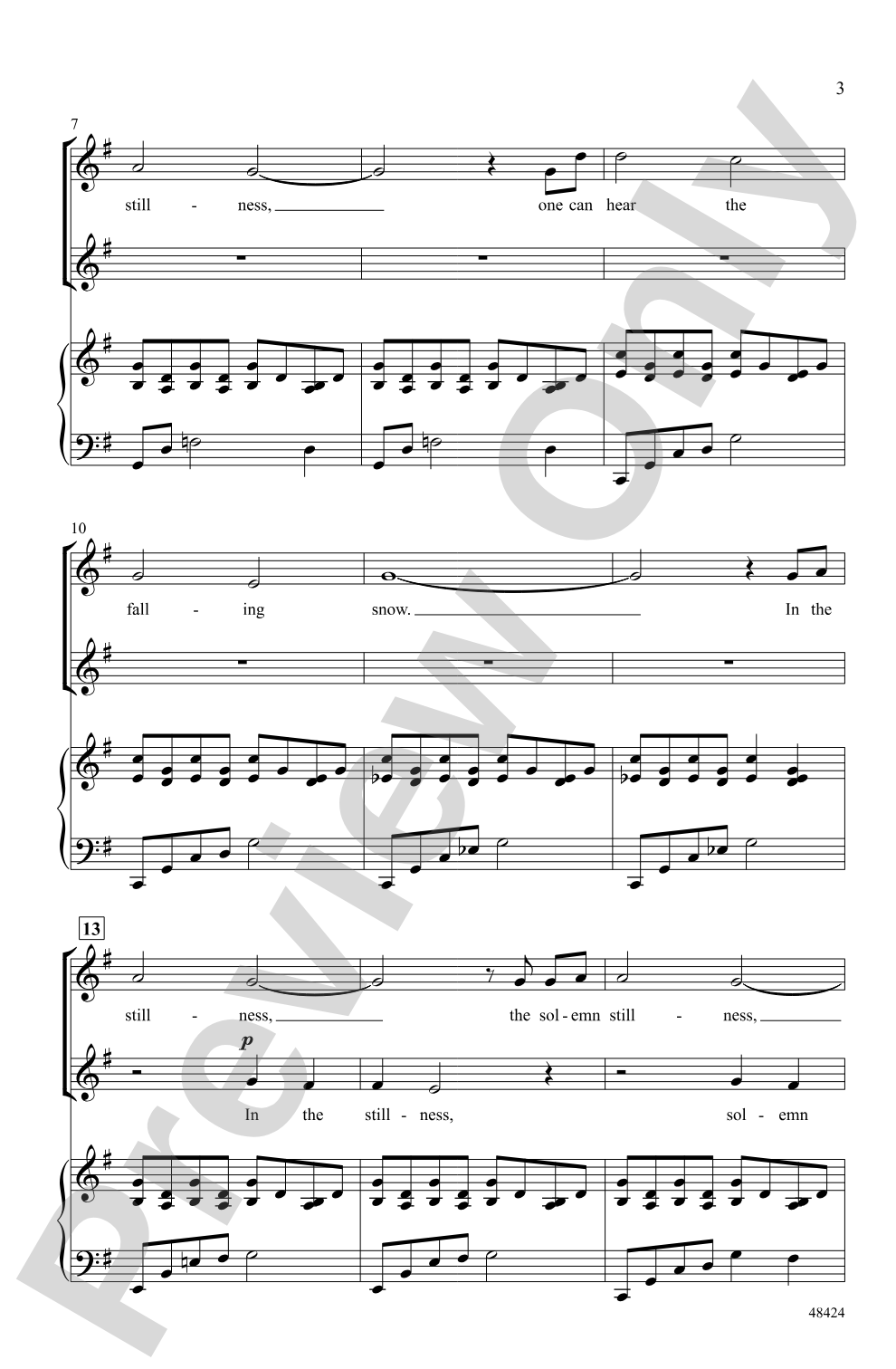
Few things are as tranquil as snowfall lit by the silvery moon. An evocative original text captures all the nuances of just such a moment, while the subtle movement of rich chords conveys a deep sense of wonder. "In the stillness, . . . 'neath the moonlight, . . . one can hear the falling snow."


One Can Hear the Falling Snow: SSA Choral Octavo isn't in MakeMusic Cloud just yet...but it could be. Let us know you'd like to see it, and you'll help shape what comes next. In the meantime, start a free trial and dive into thousands of interactive titles your students can play along with today.
Request This Title
Tell us you want it.
Start Your Free Trial
Explore everything that's ready to play right now.
Sample Audio
1
Audio File
--:--
0:00
0:00
Sample Video
No sample videos found.
Additional Details
Series:
Alfred Choral Designs
Publisher:
Alfred Music
Page Count:
12
SKU:
00-PO-0006363
More about this title
About the Composer: Greg Gilpin

Greg Gilpin is an ASCAP award-winning composer and conductor whose work spans concert halls from Carnegie Hall and Lincoln Center in New York to the Sydney Opera House, Royal Festival Hall in London, and venues across Iceland. He serves as Director of Educational Choral Publications for Shawnee Press and has established himself as a leading voice in contemporary choral music through both his original compositions and thoughtful arrangements.
Beyond the concert stage, Gilpin has expanded his creative reach into film scoring (earning Best Score recognition for the short film "Rosie's Rescue" in 2021) and collaborative projects with acclaimed artists like opera singer Angela Brown. He remains active in ACDA, NAfME, and Phi Mu Alpha Sinfonia, bringing decades of teaching and conducting experience to his work as a composer and educator.
Why we love this
Gilpin's gift for setting poetic text shines in every phrase here. The original lyric captures a specific moment of winter stillness with enough concrete imagery that singers understand the emotional landscape they're painting, while the harmonic writing remains sophisticated without becoming burdensome. This is the kind of piece that feels fresh in a winter concert without relying on carols or familiar arrangements.
What to expect
Tranquil and immersive, with a sense of hushed wonder that draws listeners into a moonlit winter night. The harmonic language feels contemporary yet warmly consonant, creating an atmosphere where silence and sound hold equal weight. Singers should feel they are creating a visual and emotional landscape, not simply executing notes.
Who it's for
Treble choirs and mixed ensembles with strong upper voices looking for accessible yet artful seasonal literature. The 12-page score is appropriate for high school, college, and community choirs seeking something beyond the typical holiday canon.
How to get the most out of it
- Explore the dynamic shape of each phrase as a complete breath; the subtle chord movement should feel inevitable rather than static, so resist holding notes at full volume and instead shape toward the natural resting points.
- The recorded accompaniment can anchor intonation, but consider a rehearsal or two without it so singers feel ownership of the harmonic progression and the blending challenges inherent in SSA voicing.
- Attend to the text's sibilants carefully, especially on words like "stillness" and "snow." These consonants easily clutter the texture, so mark them lightly and think of them as fleeting rather than sustained.
How to use it
This works beautifully as a closer or heart-of-the-concert moment in a winter or holiday concert, especially alongside contrasting energy rather than stacked with other quiet pieces. It also pairs effectively with instrumental accompaniment if your ensemble has access to strings or harp, opening possibilities beyond the printed score.
Skills your students will build
- Balancing individual vocal line integrity within a choral blend
- Sustaining intonation across slowly moving harmonic changes
- Interpreting poetic text to shape musical phrasing
- Reading and executing SSA voicing with textural awareness