

On the Atchison, Topeka and the Santa Fe: SAB Choral Octavo
Music by Harry Warren, lyrics by Johnny Mercer / arr. Jay Althouse
Item: 00-PO-0001592
$2.00
Minimum order quantity: 20 copies
One moment…
Related Items
On the Atchison, Topeka and the Santa Fe: SoundTrax Digital Audio Download |
$27.99
|
View | |
On the Atchison, Topeka and the Santa Fe: SATB Choral Octavo |
$2.00
|
View | |
On the Atchison, Topeka and the Santa Fe: SSA Choral Octavo |
$2.00
|
View | |
On the Atchison, Topeka and the Santa Fe: Choral SoundPax |
$35.00
|
View | |
On the Atchison, Topeka and the Santa Fe: SATB Choral Octavo |
$2.00
|
View | |
On the Atchison, Topeka and the Santa Fe: SAB Choral Octavo |
$2.00
|
View | |
On the Atchison, Topeka and the Santa Fe: SSA Choral Octavo |
$2.00
|
View | |
On the Atchison, Topeka and the Santa Fe: Choral Octavo SoundTrax CD |
$27.99
|
View | |
On the Atchison, Topeka and the Santa Fe: Choral SoundPax |
$35.00
|
View |
Description
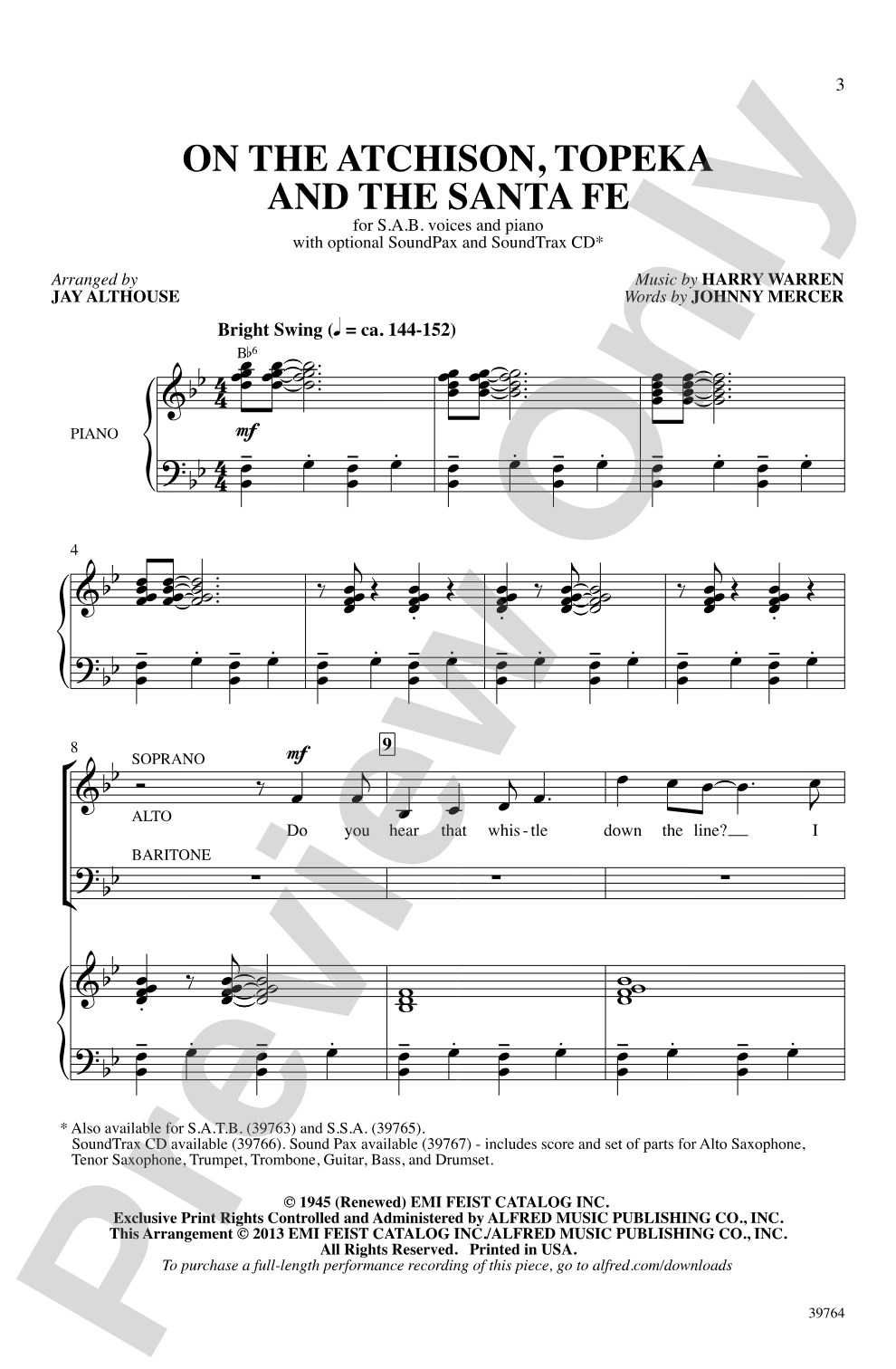
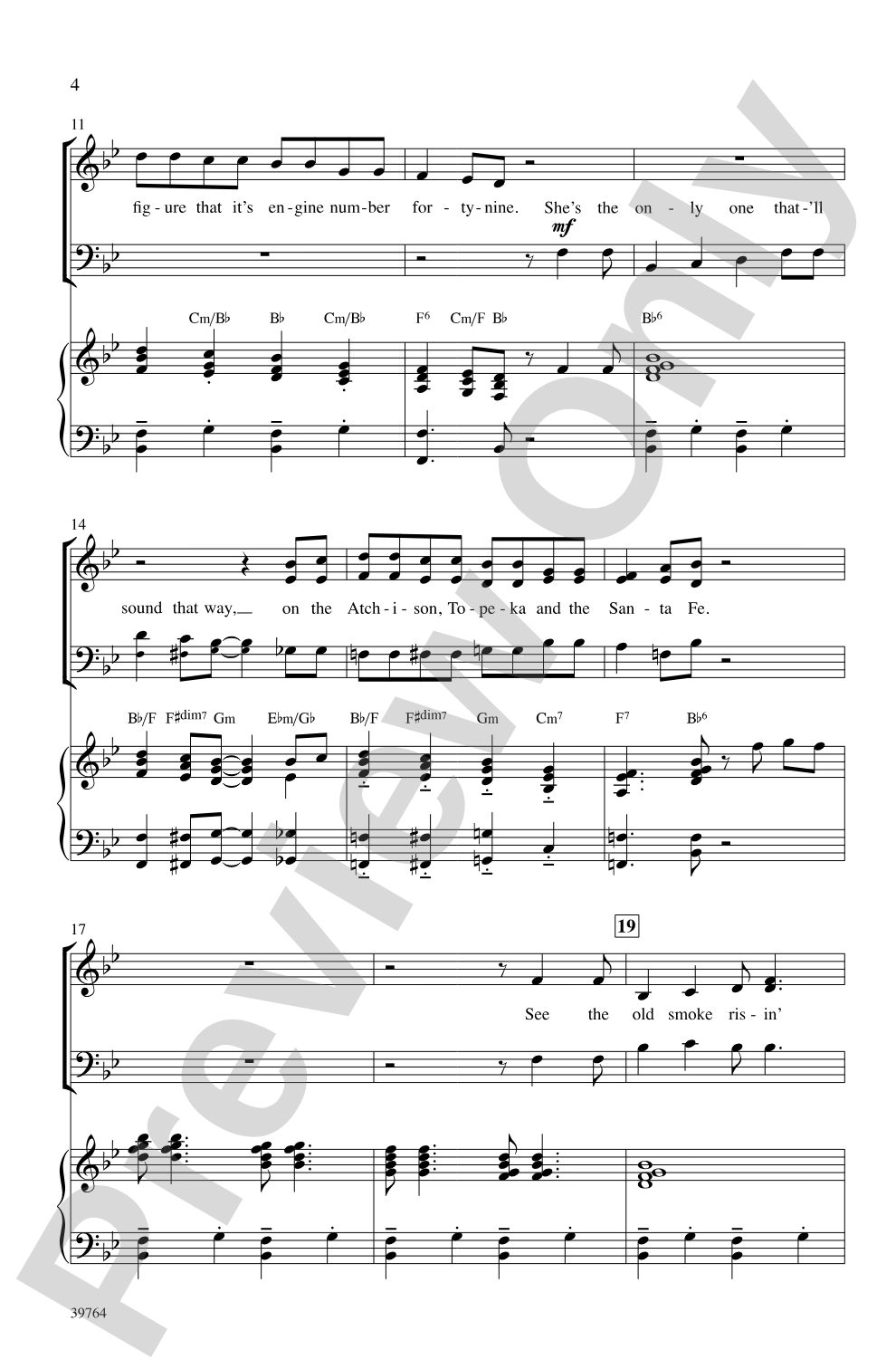
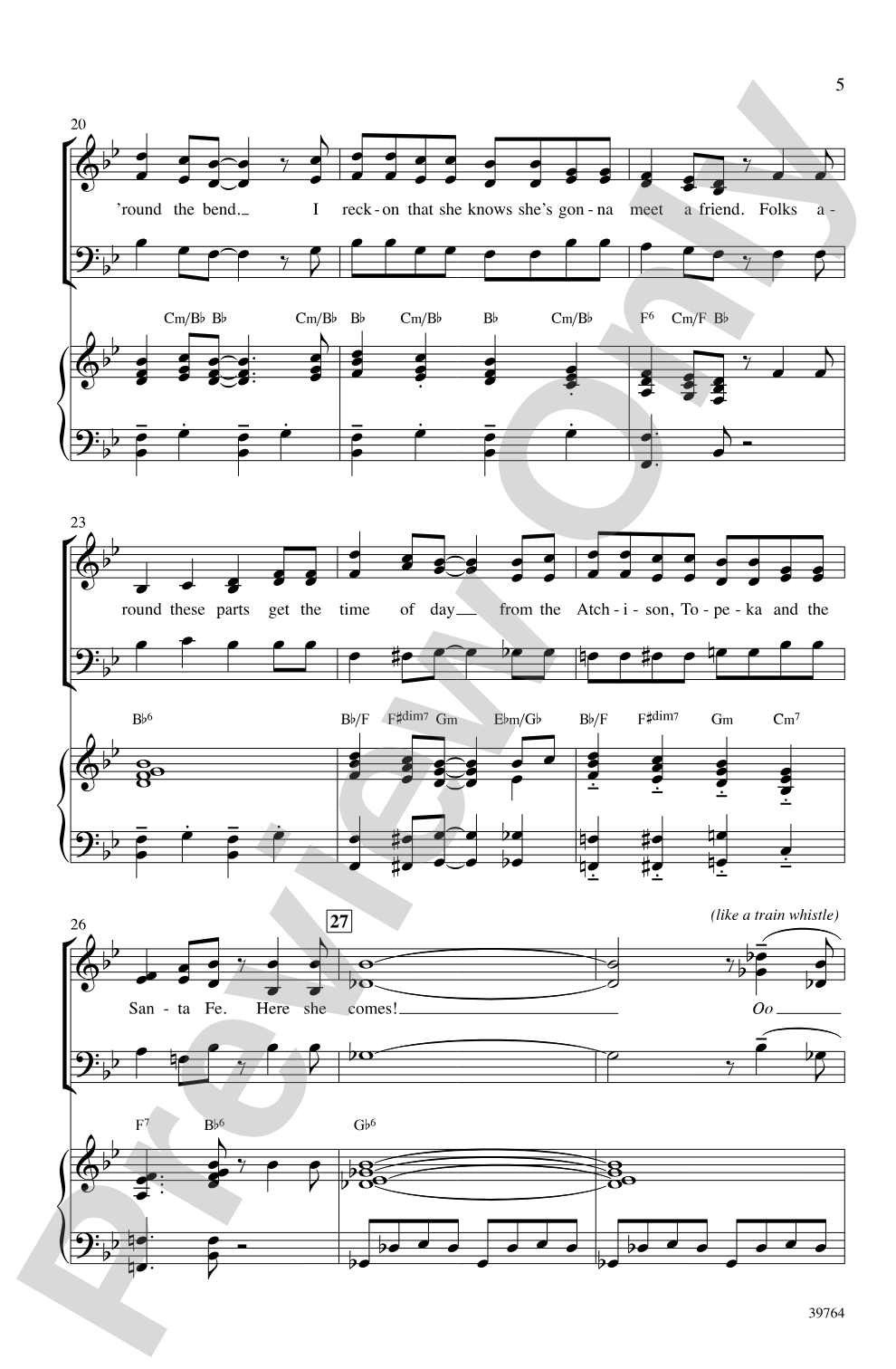
Here's one of the great, swingin' "train songs" from the 1940s. Jay's arrangement features a tight, rhythmic "chug-a, chug-a, oo-woo" section straight from the lyricist Johnny Mercer's own hit recording with The Pied Pipers.


On the Atchison, Topeka and the Santa Fe: SAB Choral Octavo isn't in MakeMusic Cloud just yet...but it could be. Let us know you'd like to see it, and you'll help shape what comes next. In the meantime, start a free trial and dive into thousands of interactive titles your students can play along with today.
Request This Title
Tell us you want it.
Start Your Free Trial
Explore everything that's ready to play right now.
Sample Audio
1
Audio File
--:--
0:00
0:00
Sample Video
No sample videos found.
Additional Details
Series:
Alfred Pop Choral Series
Publisher:
Alfred Music
Page Count:
16
SKU:
00-PO-0001592
More about this title
About the Composer: Harry Warren
Harry Warren (1893-1981) composed some of the most enduring popular songs of the 20th century, with a gift for memorable melodies and sophisticated harmonic language that elevated the standards of American song. His work in film musicals during the 1930s and 1940s established him as one of Hollywood's most prolific and successful composers, creating songs that became jazz standards and remain central to the American songbook.
Warren's catalog includes "42nd Street," "Lullaby of Broadway," and "That's Amore," songs that have been recorded hundreds of times by artists across every genre. For choral arrangers and directors, Warren's melodies offer natural singability combined with harmonic richness that rewards careful musical interpretation.
Why we love this
Arrangers Jay Althouse captures the infectious swing and energy of Warren's original without overwhelming a three-part mixed ensemble. The famous "chug-a, chug-a, oo-woo" section becomes a rhythmic anchor that holds audiences immediately; this detail from Mercer's Pied Pipers recording gives students something vivid to latch onto musically and dramatically.
What to expect
Bright, propulsive, and playful, with the unmistakable rhythm of a steam locomotive propelling the musical narrative forward. The piece captures the optimism and forward momentum of 1940s American popular music, buoyed by the infectious groove that Mercer and Warren built into the original.
Who it's for
Choirs at the intermediate level and above who want an accessible entry into swing-era repertoire. The SAB voicing makes it workable for ensembles with younger singers or developing singers, while the arrangement's authenticity appeals to more advanced groups seeking genuine popular music literature.
How to get the most out of it
- Lock the rhythmic "chug-a, chug-a, oo-woo" section with precision across all three parts; this unison moment carries the groove of the entire piece and sets up the swing feel that follows.
- Balance the soprano line in the main melodic sections so it carries clearly without overwhelming the alto and baritone parts, which provide essential harmonic support.
- Approach the syncopated rhythms with a light, bouncy articulation rather than a heavy one; the 1940s swing style demands energy without weight.
- Use the recorded accompaniment to internalize the swing tempo and phrasing before rehearsing unaccompanied sections.
How to use it
This works exceptionally well in a concert celebrating American song or pairing well with other standards-based repertoire from the Great American Songbook. Its theatrical energy and comic timing also make it ideal for a cabaret-style concert or a pops program that values accessibility without sacrificing musicality.
Skills your students will build
- Singing syncopated rhythms with accuracy and style
- Maintaining groove and pulse in a swing idiom
- Balancing three-part harmony with clear top-line melody
- Interpreting period-appropriate articulation and phrasing in popular music
- Ensemble precision in rhythmic unison sections