
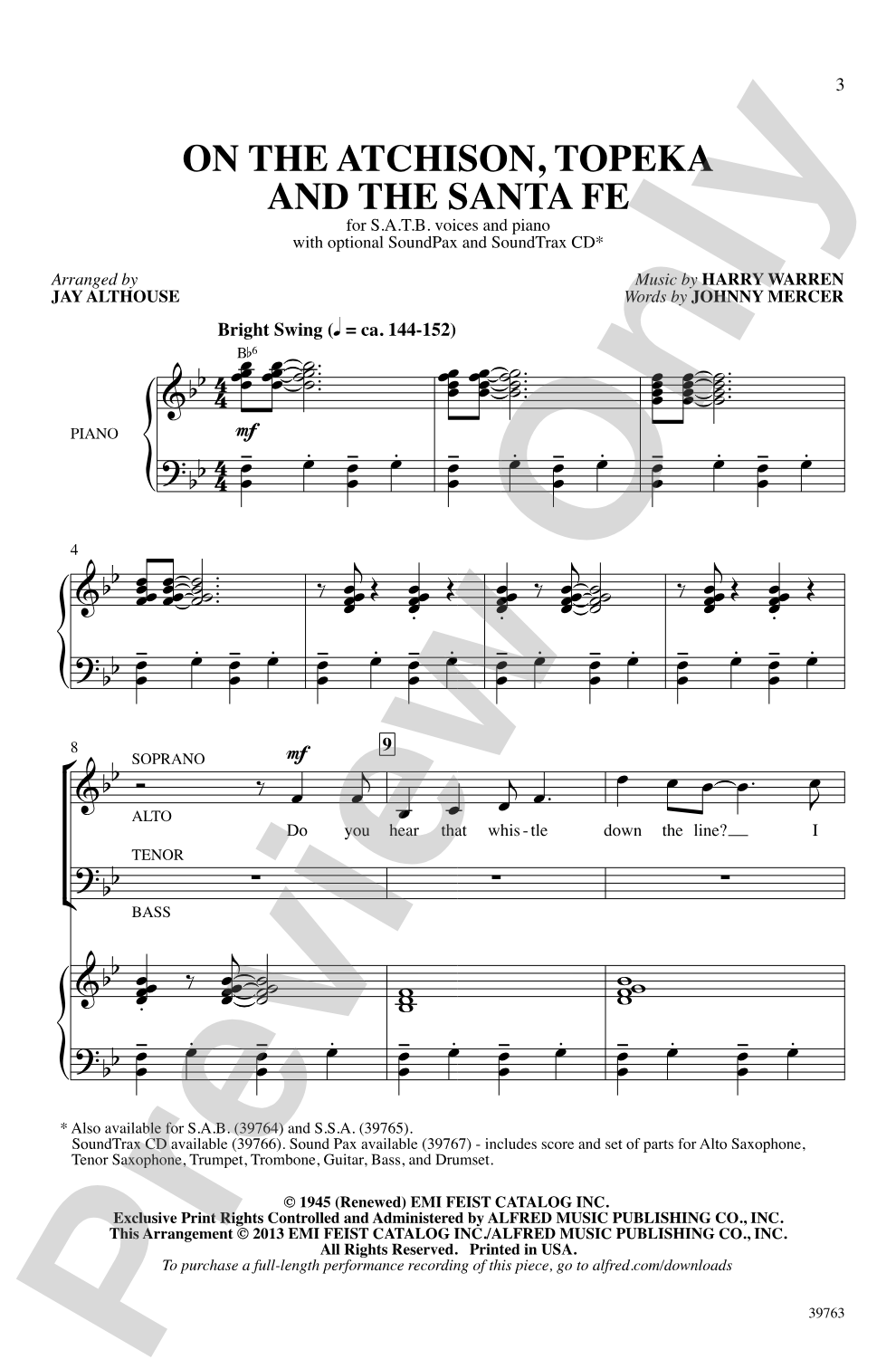

On the Atchison, Topeka and the Santa Fe: SATB Choral Octavo
Music by Harry Warren, lyrics by Johnny Mercer / arr. Jay Althouse
Item: 00-PO-0001591
$2.00
Minimum order quantity: 20 copies
One moment…
Related Items
On the Atchison, Topeka and the Santa Fe: SoundTrax Digital Audio Download |
$27.99
|
View | |
On the Atchison, Topeka and the Santa Fe: SAB Choral Octavo |
$2.00
|
View | |
On the Atchison, Topeka and the Santa Fe: SSA Choral Octavo |
$2.00
|
View | |
On the Atchison, Topeka and the Santa Fe: Choral SoundPax |
$35.00
|
View | |
On the Atchison, Topeka and the Santa Fe: SATB Choral Octavo |
$2.00
|
View | |
On the Atchison, Topeka and the Santa Fe: SAB Choral Octavo |
$2.00
|
View | |
On the Atchison, Topeka and the Santa Fe: SSA Choral Octavo |
$2.00
|
View | |
On the Atchison, Topeka and the Santa Fe: Choral Octavo SoundTrax CD |
$27.99
|
View | |
On the Atchison, Topeka and the Santa Fe: Choral SoundPax |
$35.00
|
View |
Description
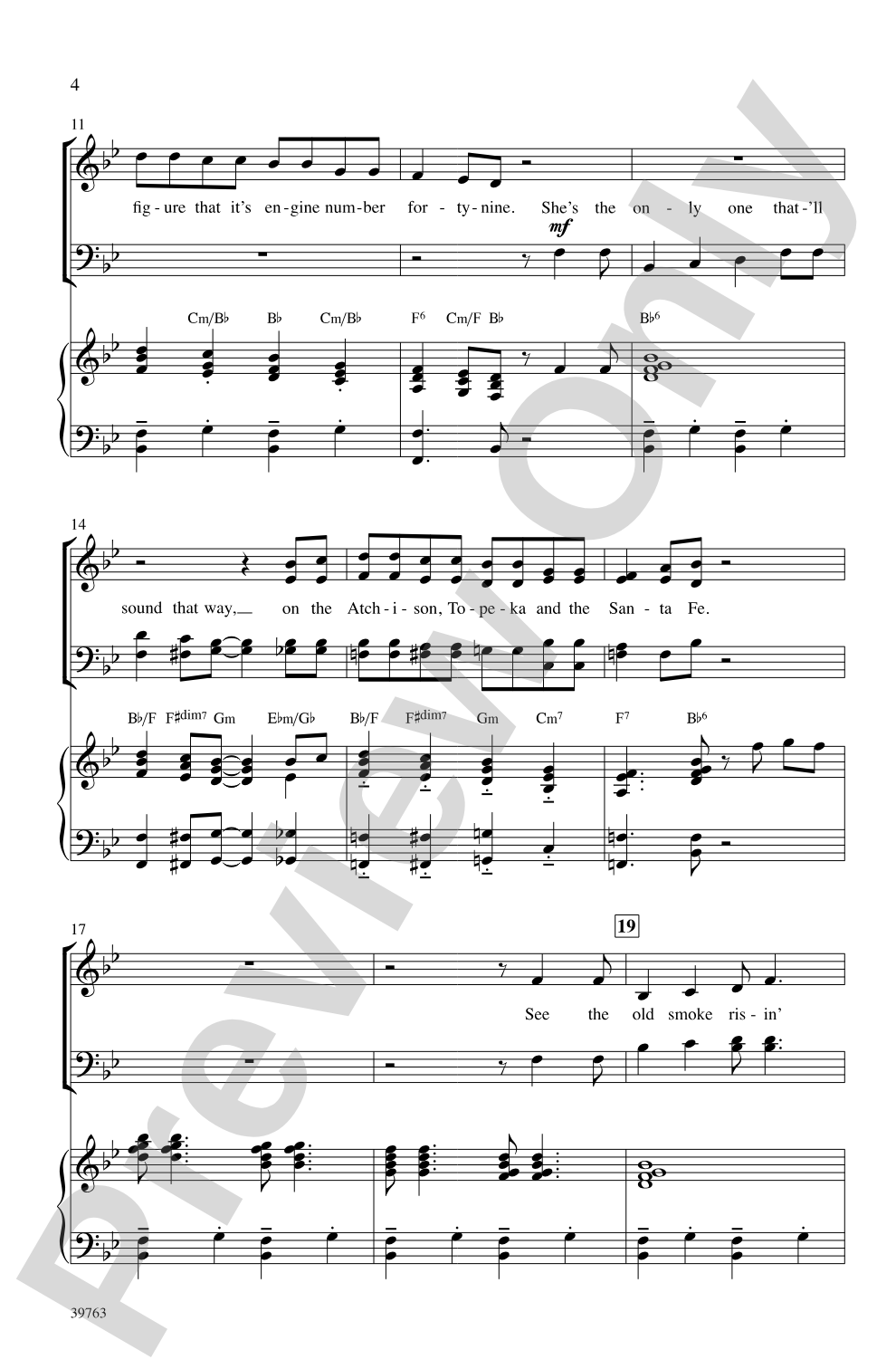
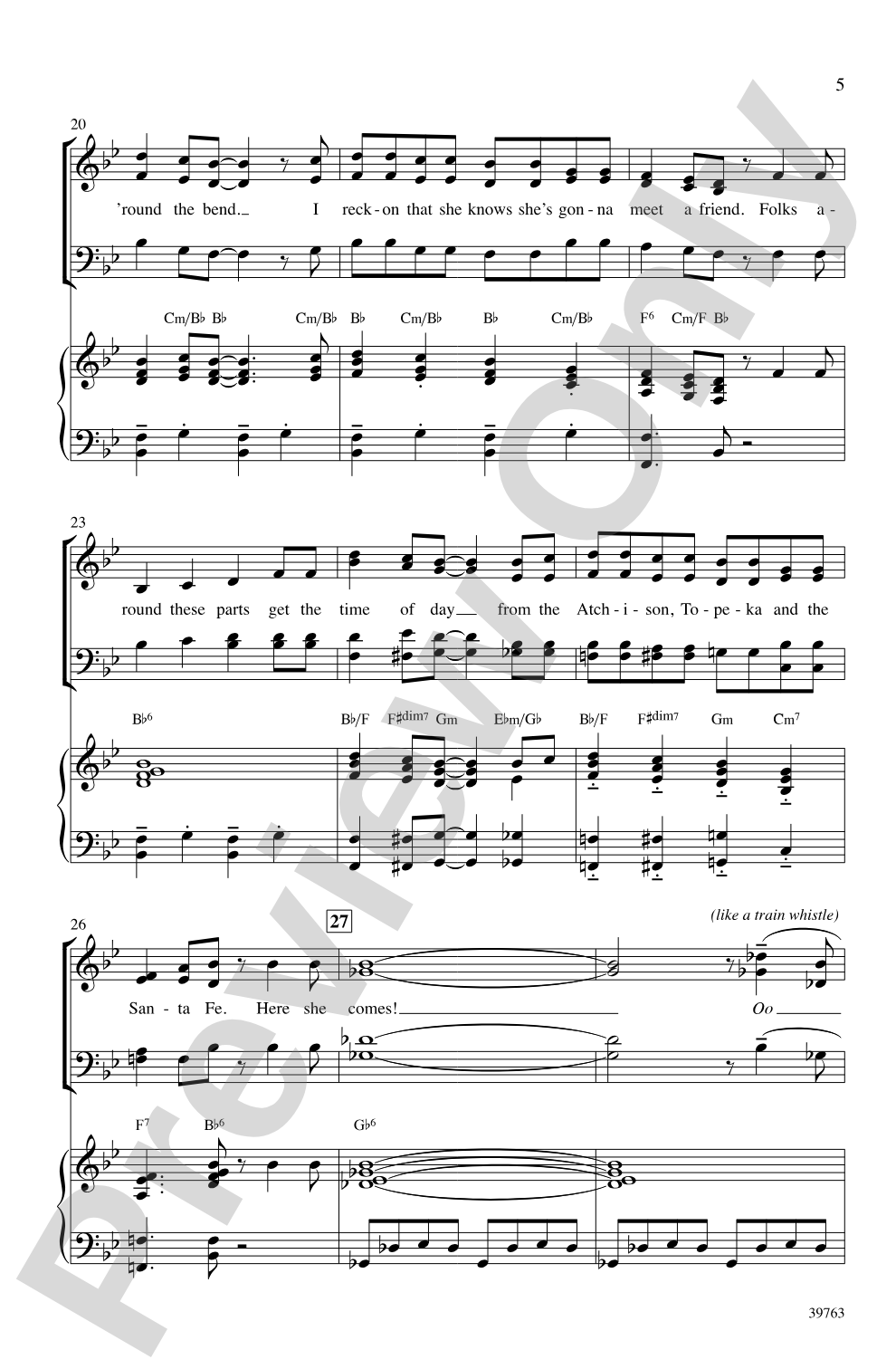
Here's one of the great, swingin' "train songs" from the 1940s. Jay's arrangement features a tight, rhythmic "chug-a, chug-a, oo-woo" section straight from the lyricist Johnny Mercer's own hit recording with The Pied Pipers.


On the Atchison, Topeka and the Santa Fe: SATB Choral Octavo isn't in MakeMusic Cloud just yet...but it could be. Let us know you'd like to see it, and you'll help shape what comes next. In the meantime, start a free trial and dive into thousands of interactive titles your students can play along with today.
Request This Title
Tell us you want it.
Start Your Free Trial
Explore everything that's ready to play right now.
Sample Audio
1
Audio File
--:--
0:00
0:00
Sample Video
No sample videos found.
Additional Details
Series:
Alfred Pop Choral Series
Publisher:
Alfred Music
Page Count:
16
SKU:
00-PO-0001591
More about this title
About the Composer: Harry Warren
Harry Warren (1893-1981) composed over 800 songs across a career that spanned vaudeville, Broadway, and Hollywood's golden age. His gift for memorable melodies and rhythmic sophistication made him one of the most prolific and successful composers of the 20th century, with eleven Academy Award nominations and three wins.
Warren's work defined the sound of American popular music in the 1930s and 1940s. His collaborations with lyricists like Johnny Mercer produced standards that remain essential to the choral and vocal repertoire, balancing accessibility with genuine compositional craft.
Why we love this
Jay Althouse's arrangement captures the infectious energy of the original recording while making it genuinely singable for mixed voices. The "chug-a, chug-a, oo-woo" rhythmic hook is instantly engaging for singers and audiences alike, and the 16-page score offers enough textural variety to keep rehearsals focused and performances entertaining without overwhelming a developing choir.
What to expect
A joyride in sound. The persistent rhythmic propulsion creates momentum that carries singers and listeners along, while the period style evokes the optimism and showmanship of mid-century popular music. It's a piece that makes choirs smile while they're singing it.
Who it's for
Mixed choirs at intermediate level and above who want a crowd-pleasing number with built-in historical charm. Directors programming pop, American standards, or lighter concert segments will find this engages both singers and audiences without requiring advanced vocal technique.
How to get the most out of it
- Lock the rhythm section (altos and tenors) into that signature "chug-a" pattern early in rehearsals. Use the recorded accompaniment to establish the groove before layering sopranos and basses.
- Articulate the consonants crisply on "chug" and "oo-woo" to punch the syncopation. Lazy diction will flatten the swing.
- Balance the melody line (sopranos) against the rhythmic accompaniment; the harmonic interest lies in the undergirding voices, not the top line.
- Lean into the 1940s vernacular with a slightly relaxed, almost vaudeville sensibility. This isn't stuffy; let your singers enjoy the character and period style.
How to use it
Slot this into a lighter set or a program celebrating American songwriting and vocal standards. It pairs well with other pop or jazz-influenced arrangements and works especially effectively as a closer or mid-program energizer that shifts the concert's mood upward.
Skills your students will build
- Rhythmic precision and syncopation in a swing-inflected style
- Ensemble cohesion through rhythmic unison and tight harmonic locking
- Stylistic interpretation and period-appropriate vocal character
- Balance between melodic and rhythmic textural layers