

On a Clear Day: SAB Choral Octavo
(You Can See Forever)
Words by Alan Jay Lerner, music by Burton Lane / arr. Kirby Shaw
Item: 00-PO-0007194
$2.45
Minimum order quantity: 20 copies
One moment…
Related Items
On a Clear Day: SATB Choral Octavo |
$2.45
|
View | |
On a Clear Day: SSA Choral Octavo |
$2.45
|
View | |
On a Clear Day: SoundTrax Digital Audio Download |
$29.99
|
View | |
On a Clear Day: Choral SoundPax |
$30.00
|
View | |
On a Clear Day: SATB Choral Octavo |
$2.45
|
View | |
On a Clear Day: SAB Choral Octavo |
$2.45
|
View | |
On a Clear Day: SSA Choral Octavo |
$2.45
|
View | |
On a Clear Day: Choral Octavo SoundTrax CD |
$29.99
|
View | |
On a Clear Day: Choral SoundPax |
$30.00
|
View |
Description
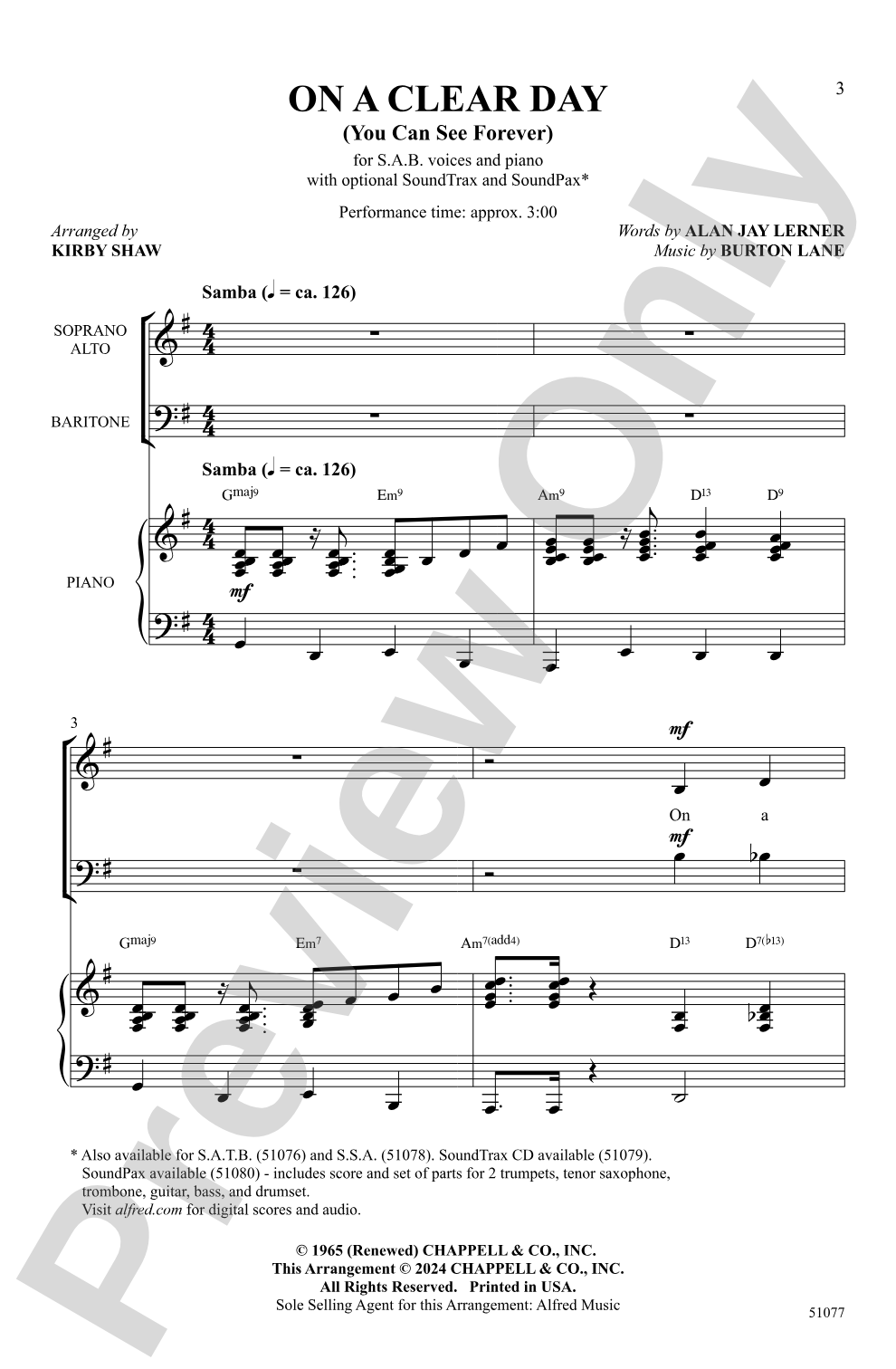
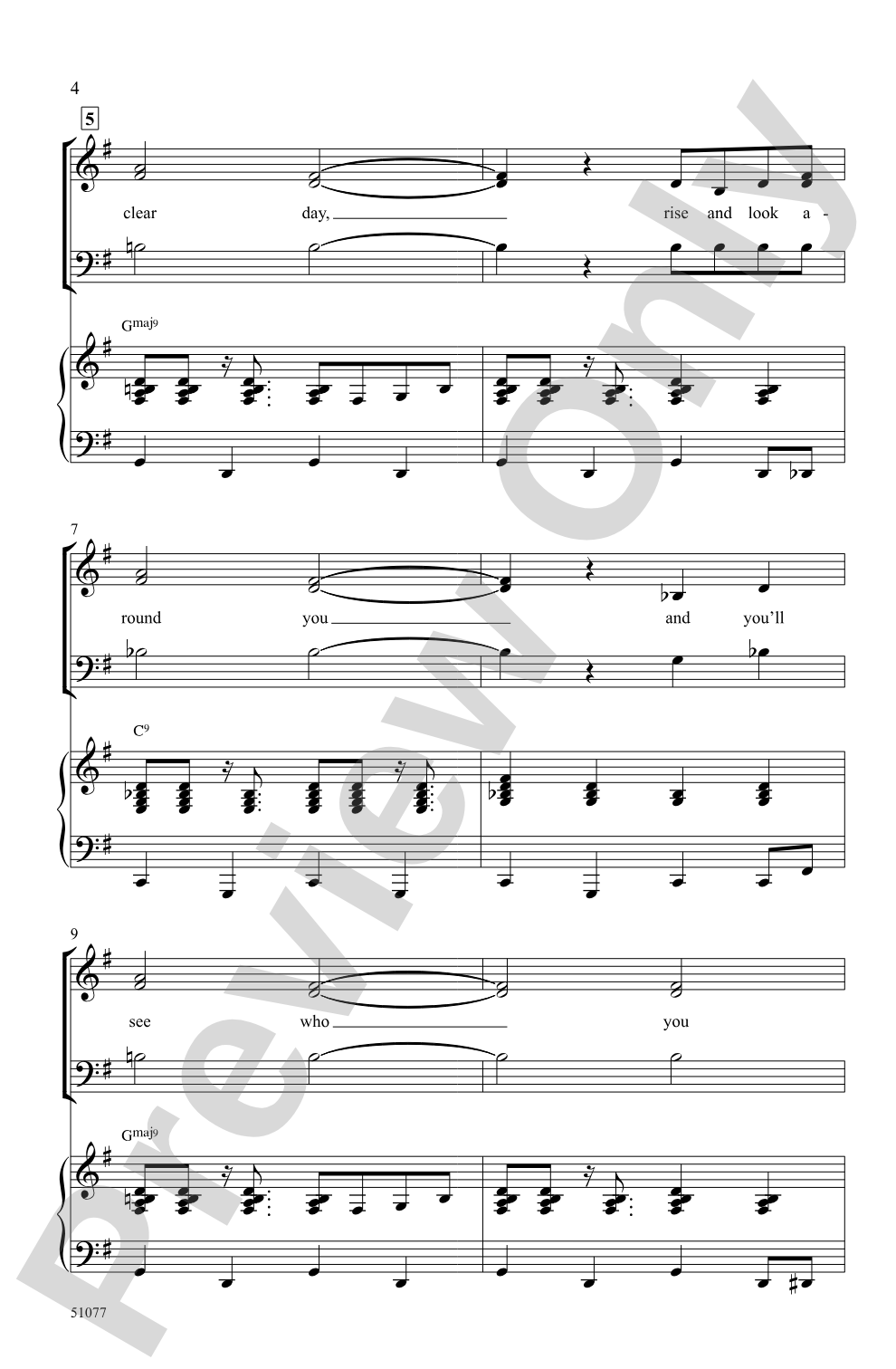
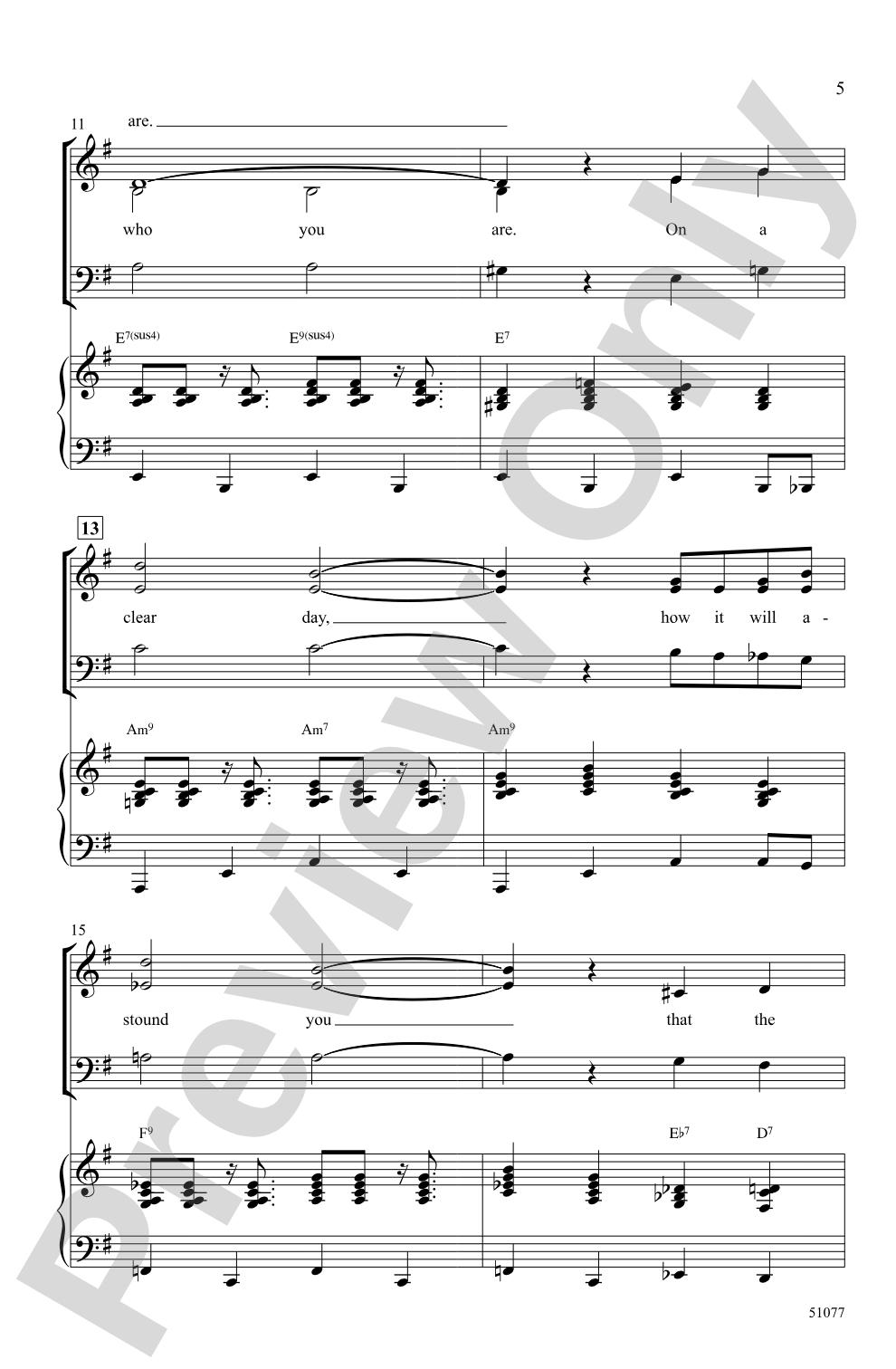
Kirby Shaw's samba treatment of this stage and screen standard is truly unique! Despite the brisk tempo, held notes lock in tight vocal jazz chords, and a few staggered entrances provide textural interest. After a signature add-on stacks the voices into three independent layers, the arrangement clears the way for a syncopated scat riff at the end of the coda. SoundPax includes four horns and rhythm.


Discover MakeMusic Cloud: thousands of interactive titles your students can play along with today.
Sample Audio
1
Audio File
--:--
0:00
0:00
Sample Video
Additional Details
Series:
Alfred Pop Choral Series
Publisher:
Alfred Music
Page Count:
16
SKU:
00-PO-0007194
More about this title
About the Composer: Burton Lane
Burton Lane (1912-1997) composed music for Broadway and Hollywood during the Golden Age of American musical theater. His songs appear in numerous stage and film productions, and his melodies are marked by sophisticated harmonies and memorable, singable lines that have endured for generations. Lane's work remains central to the Great American Songbook and continues to provide rich material for choral arrangers.
Kirby Shaw is an accomplished arranger and composer whose contributions to contemporary choral music span decades. His arrangements for Alfred Music and other publishers are known for their inventiveness, accessibility, and ability to bring fresh interpretations to familiar standards. Shaw's work balances sophistication with singability, making complex musical ideas available to high school and community choirs.
Why we love this
Kirby Shaw's samba reimagining transforms a beloved standard into something genuinely surprising without losing the melody's elegance. The arrangement proves that brisk tempos and tight jazz voicing can coexist in an SAB setting, giving your singers real harmonic material to lock into while the built-in textural contrasts keep the piece musically interesting from beginning to end.
What to expect
Warm and sophisticated, with a bright samba pulse that keeps the energy moving forward. The piece balances airy, open moments (where the staggered entrances create space) with lush harmonic passages, all while maintaining the inherent optimism and elegance of the original melody.
Who it's for
High school and community choirs seeking a contemporary take on a classic song will find this arrangement both accessible and musically substantial. The SAB voicing, combined with the recorded accompaniment and optional horn parts, makes it ideal for ensembles with developing jazz sensibilities and limited instrumental resources.
How to get the most out of it
- Lock the held notes as tight vocal jazz chords by rehearsing them without the text first; let singers hear and feel the harmonic color rather than rushing through the syllables.
- Shape the syncopated scat riff in the coda with rhythmic precision and energy; this is where the arrangement reveals its playful side, so commit to the groove.
- Use the recorded accompaniment to establish the samba feel and lock the ensemble into the brisk tempo, then gradually reduce your reliance on it as the parts solidify.
- Balance the three independent layers during the signature add-on section by having each voice part rehearse its line in isolation first, then build awareness of how the parts stack and interact.
How to use it
Program this on a spring or end-of-year concert alongside other Great American Songbook selections to showcase your choir's versatility in jazz and popular music idioms. The arrangement's theatrical roots and contemporary arranging style make it work equally well in a dedicated pops concert or as a contrast piece in a mixed program.
Skills your students will build
- Reading and sustaining jazz chords in close harmony
- Samba rhythm and syncopation
- Staggered entrances and rhythmic independence within a section
- Scat singing and rhythmic improvisation
- Blend and balance across three independent vocal layers