
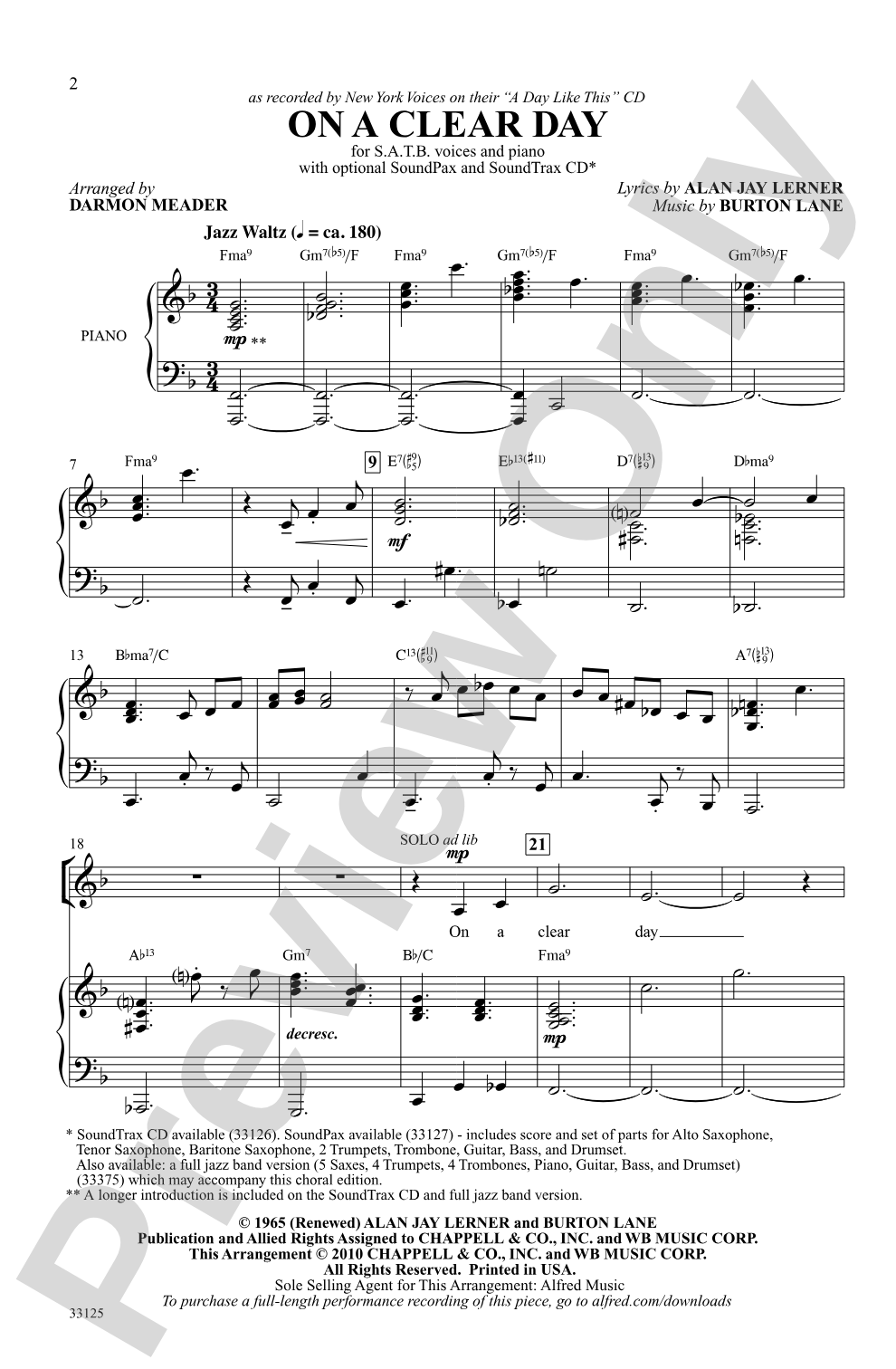
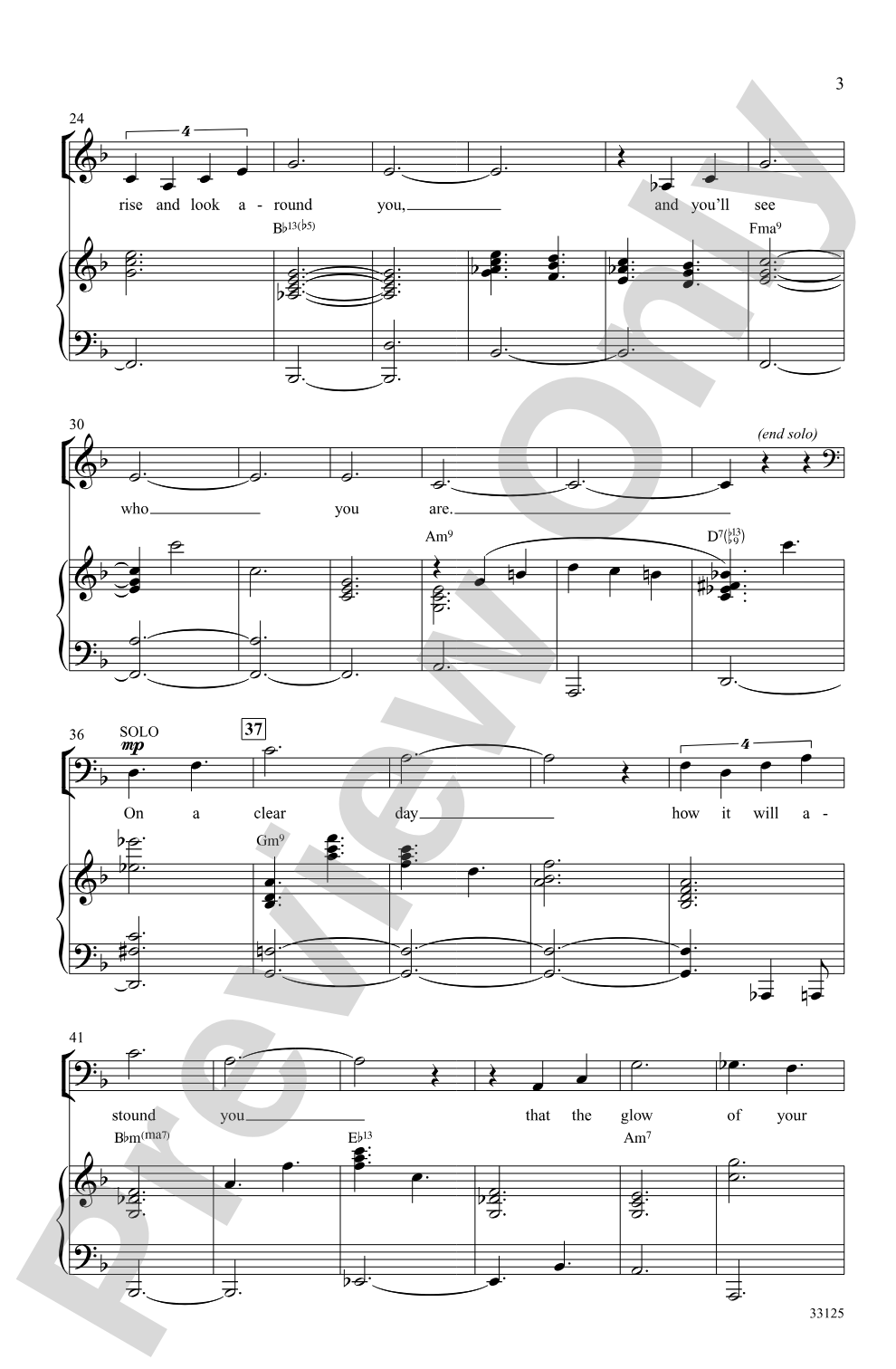
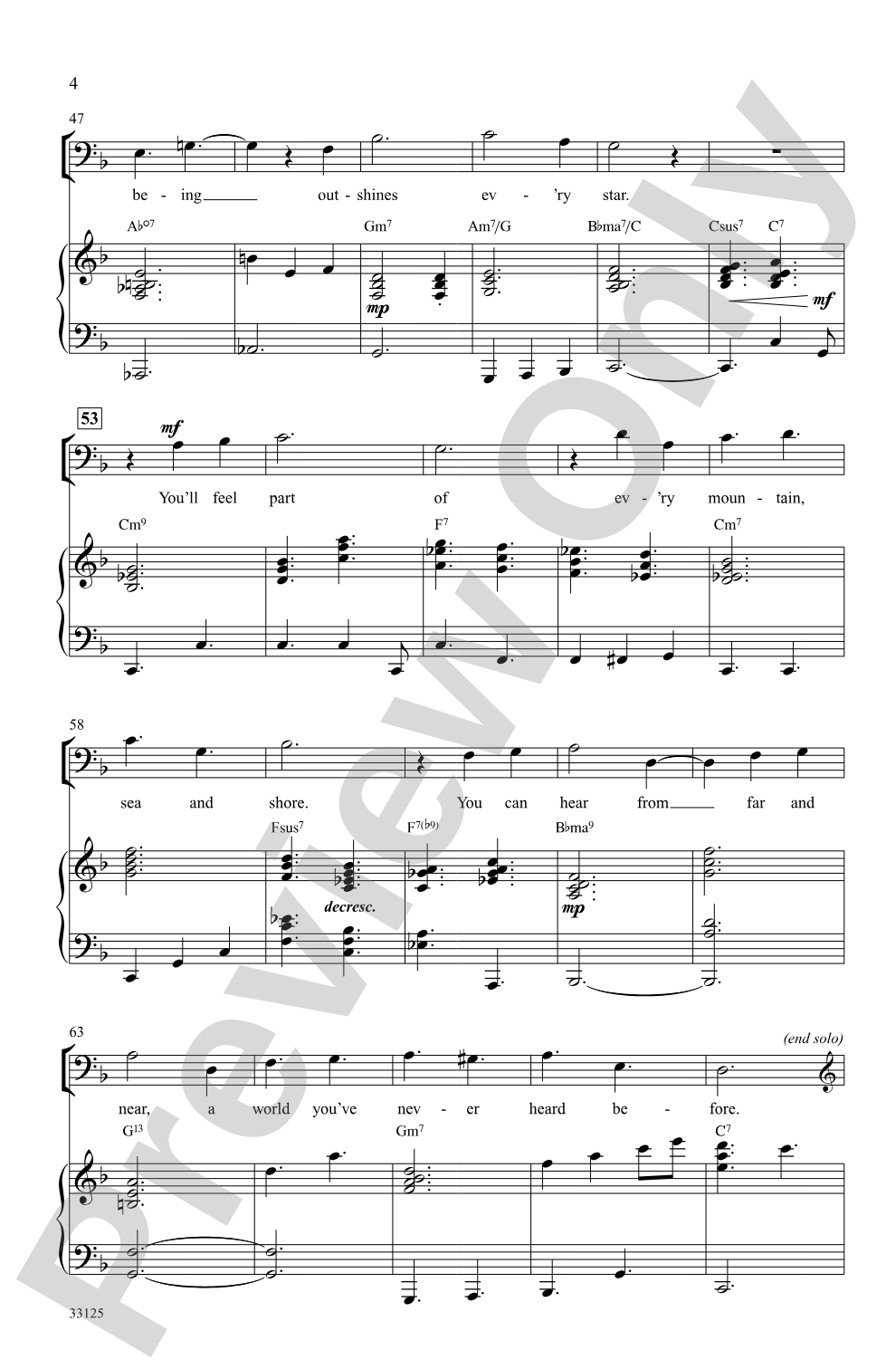
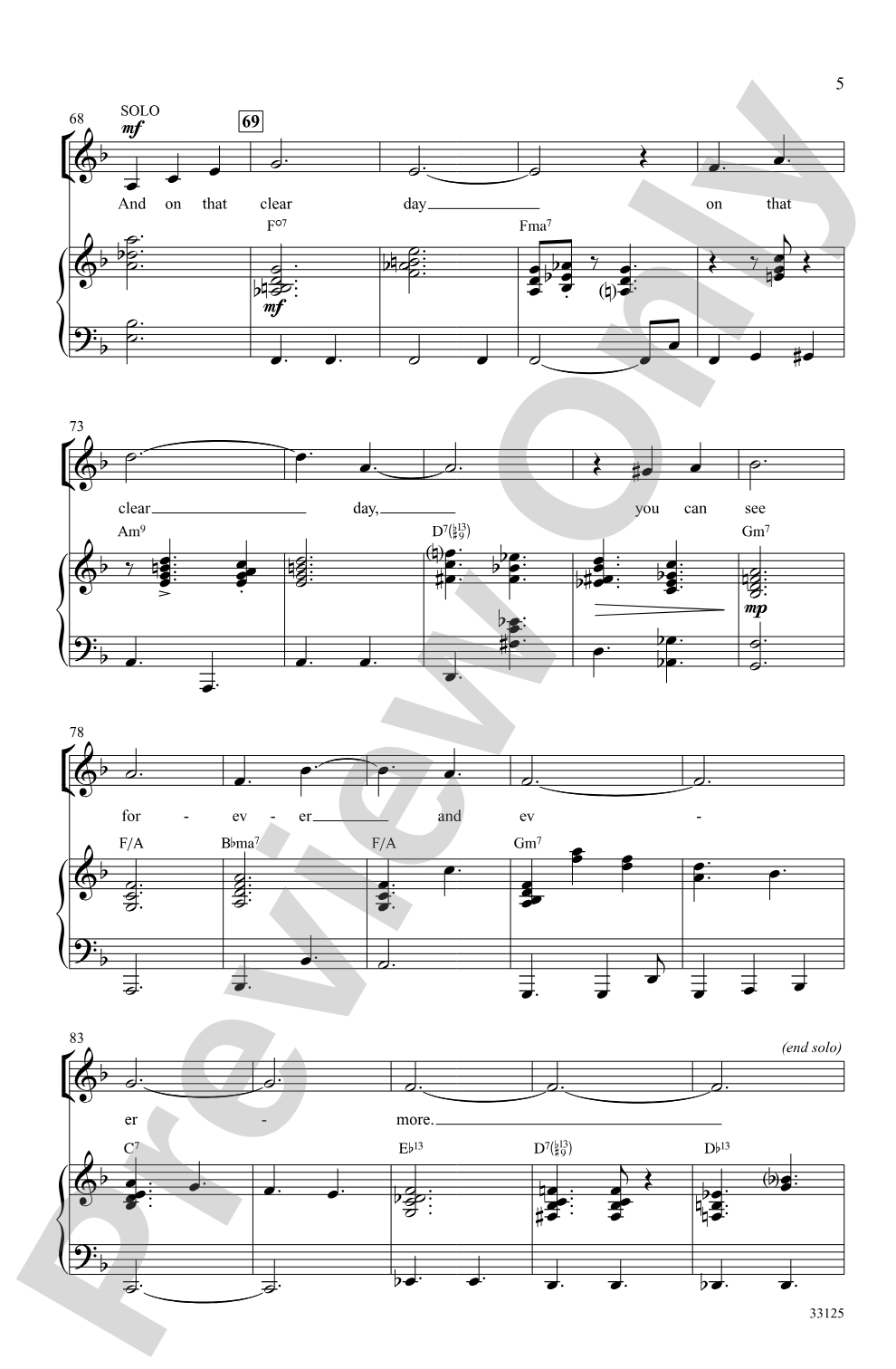

On a Clear Day: SATB Choral Octavo
As Recorded by New York Voices
Lyrics by Alan Jay Lerner, music by Burton Lane / arr. Darmon Meader
Item: 00-PO-0006605
$2.35
Minimum order quantity: 20 copies
One moment…
Description
Recorded by New York Voices on their album A Day Like This, this contemporary swing arrangement offers superb, challenging vocal jazz writing. Recording courtesy of MCGJazz.org.


Discover MakeMusic Cloud: thousands of interactive titles your students can play along with today.
Sample Audio
1
Audio File
--:--
0:00
0:00
Sample Video
No sample videos found.
Additional Details
Series:
Alfred Pop Choral Series
Publisher:
Alfred Music
Page Count:
20
SKU:
00-PO-0006605
More about this title
About the Composer: Burton Lane
Burton Lane (1912-1997) composed some of Broadway's most enduring melodies, with "On a Clear Day You Can See Forever" standing among his signature works. His gift for crafting sophisticated, singable lines made him a favorite among vocalists across genres, from musical theater to jazz interpreters.
Why we love this
Darmon Meader's arrangement captures the swagger of the New York Voices recording without sacrificing ensemble balance or accessibility. The swing voicings and rhythmic sophistication reward strong musicianship while remaining achievable for advanced high school and college choirs.
What to expect
Bright and propulsive, with the kind of optimism the title promises. The vocal lines have a conversational quality, like singers trading ideas over a swinging rhythm section. There's real joy in the harmonic movement, paired with just enough sophistication to keep experienced musicians engaged.
Who it's for
Advanced high school and college choirs with solid sight-reading skills and experience in contemporary vocal jazz. Directors programming concerts that bridge Broadway repertoire with modern jazz idioms will find this arrangement an excellent showcase for ensemble versatility.
How to get the most out of it
- Study the recorded version first to internalize the swing feel and articulation style; the groove sits differently than traditional choral swing, and hearing it shapes how your singers will approach the rhythmic independence.
- Mark the rhythmic hits in rehearsal with precision. The charm of this arrangement lives in crisp ensemble attacks and the spaces between phrases, not in legit legato singing.
- Let soloists breathe and own their moments. If you have section leaders who can float above the ensemble, this piece gives them genuine responsibility for the melodic narrative.
- Balance transparency against blend. The jazz harmonies need enough space to ring, but the four-part writing should still feel cohesive. Your rehearsal mix matters here.
How to use it
Pair this with other contemporary pop or jazz arrangements to anchor a full concert set, or use it as a standalone feature if your ensemble needs a high-energy closer. The 20-page score suggests a substantial piece; it earns its own moment rather than serving as filler.
Skills your students will build
- Swing articulation and phrasing in a contemporary jazz idiom
- Rhythmic independence within four-part harmony
- Reading jazz voicings and upper structure triads
- Balancing solo projection with ensemble cohesion
- Interpreting rhythmic notation in swing style (anticipations, syncopation)