
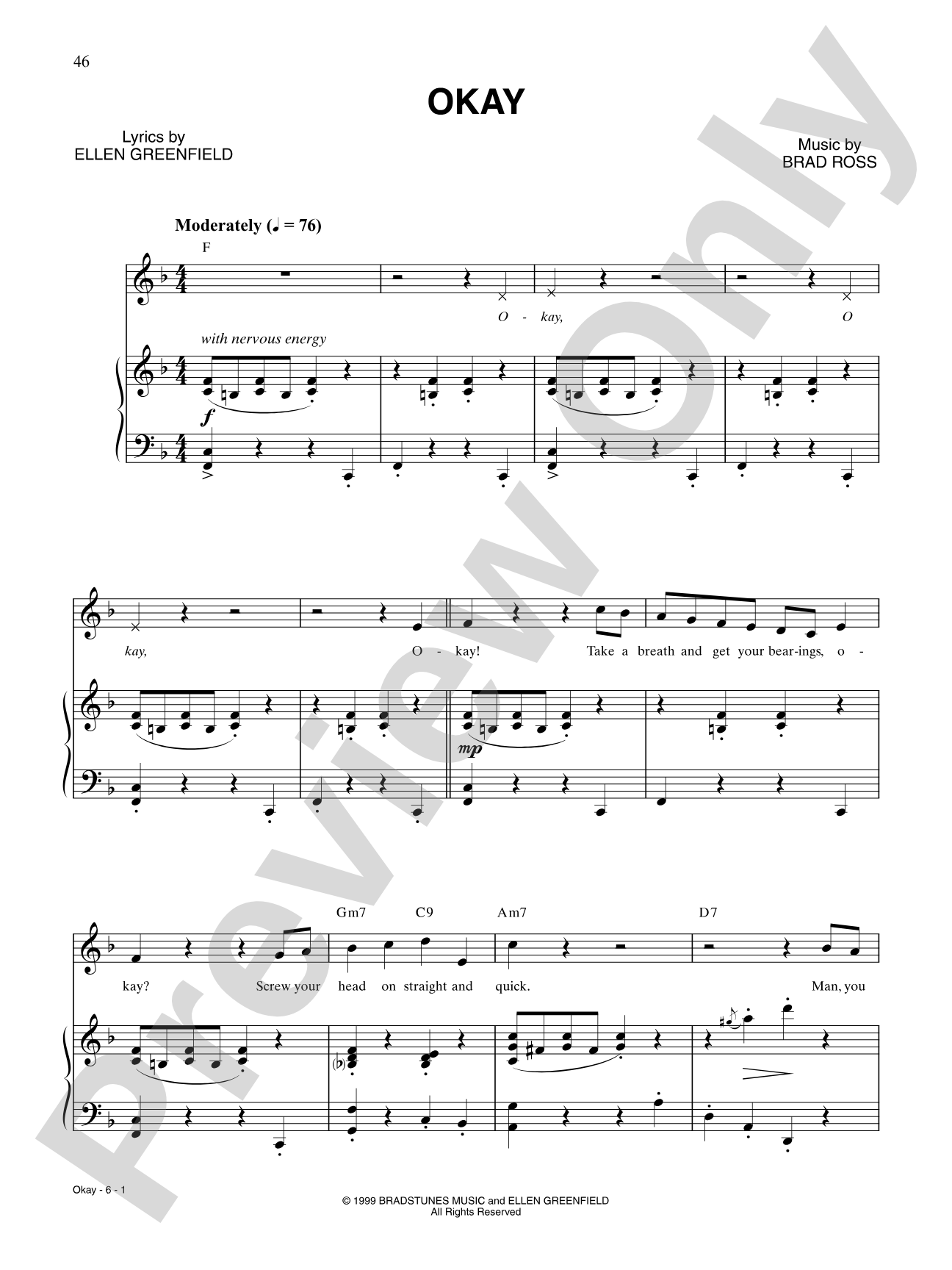
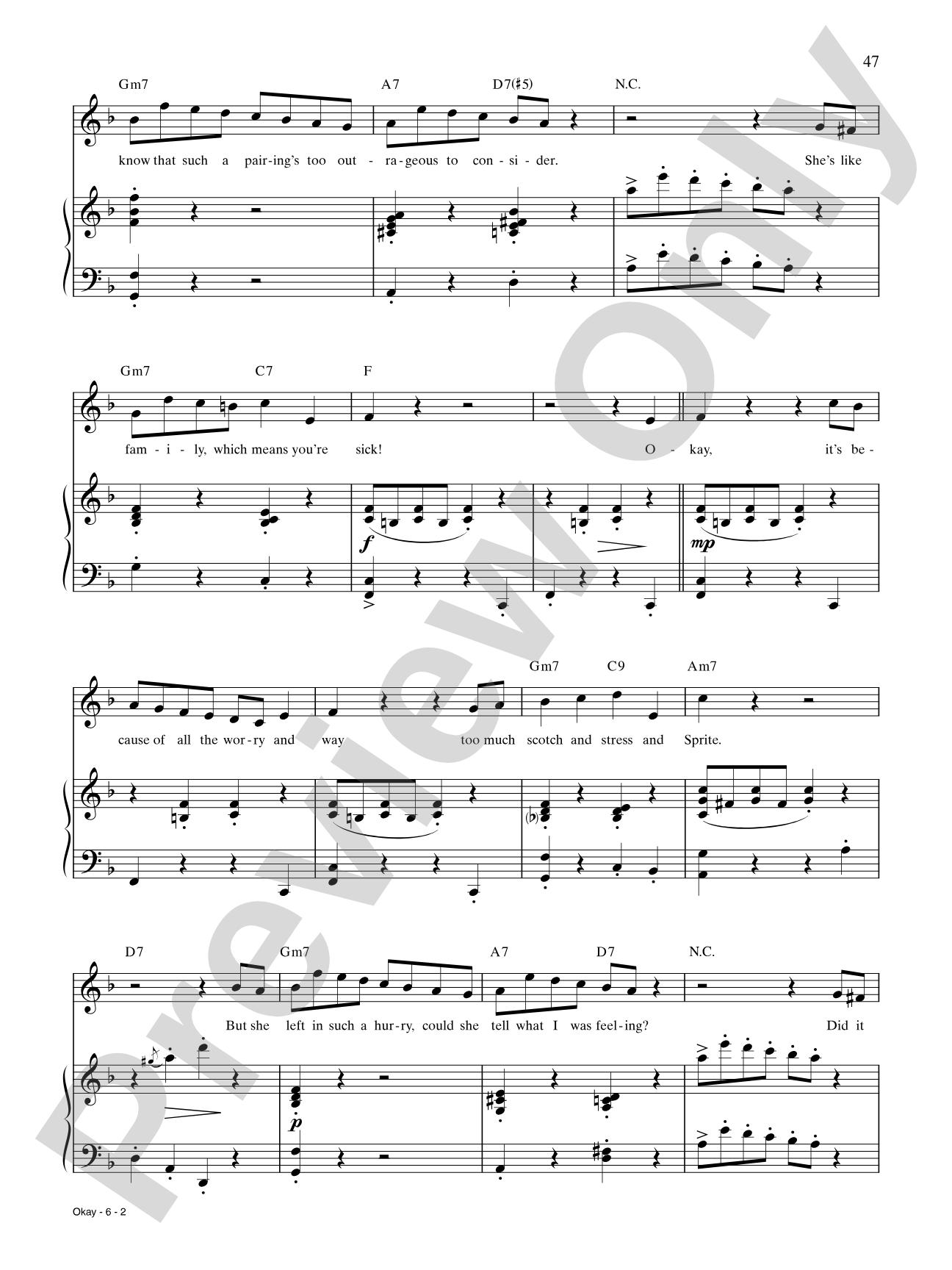

Okay: Piano/Vocal/Chords
Music by Brad Ross, lyrics by Ellen Greenfield and Hal Hackady
Item: 00-PS-0015528
$5.99
Pickup currently not available
Related Items
Little by Little: Piano/Vocal/Chords |
$5.99
|
View | |
Popcorn: Piano/Vocal/Chords |
$5.99
|
View | |
Rainbows: Piano/Vocal/Chords |
$5.99
|
View | |
I'm Not: Piano/Vocal/Chords |
$5.99
|
View | |
Nocturne: Piano/Vocal/Chords |
$5.99
|
View | |
Take the World Away: Piano/Vocal/Chords |
$4.99
|
View | |
Tell Me: Piano/Vocal/Chords |
$4.99
|
View | |
I Ought to Cry: Piano/Vocal/Chords |
$4.99
|
View | |
Is This Real?: Piano/Vocal/Chords |
$4.99
|
View | |
Little by Little: Piano/Vocal Selections: Piano/Vocal Book |
$12.99
|
View |
Description
Little by Little premiered off-Broadway at The York Theatre Company, starring Liz Larsen, Christiane Noll, and Darrin Baker, with direction by Annette Jolles. After the York production, an original cast recording was released, the show was licensed and published by Samuel French, and it's performed around the world. With music by Brad Ross and lyrics by Ellen Greenfield and Hal Hackady, songs from the show have become favorites among musical theatre vocalists for auditions, recitals, and performances. Brad Ross and Alfred Music are proud to present this first-ever Little By Little vocal selections folio. Titles: Little by Little * Popcorn * I'm Not * Rainbows * Nocturne * Take the World Away * Okay * Tell Me * I Ought to Cry * Is This Real?


Okay: Piano/Vocal/Chords isn't in MakeMusic Cloud just yet...but it could be. Let us know you'd like to see it, and you'll help shape what comes next. In the meantime, start a free trial and dive into thousands of interactive titles your students can play along with today.
Request This Title
Tell us you want it.
Start Your Free Trial
Explore everything that's ready to play right now.
Sample Audio
No sample audio found.
Sample Video
No sample videos found.
Additional Details
Publisher:
Alfred Music
Page Count:
64
SKU:
00-PS-0015528
More about this title
About the Composer: Brad Ross
Brad Ross is a composer whose work in musical theatre has earned recognition for its melodic sophistication and emotional directness. His score for Little by Little demonstrates a gift for writing songs that serve both character development and standalone performance, making the material equally valuable in the rehearsal studio and the recital hall.
Why we love this
This folio brings together ten songs from a show that has proven itself across multiple productions and countless auditions. The variety of styles and emotional registers within these selections means you can build a coherent recital program or pull individual pieces for audition prep without feeling like you're sampling from a novelty score. Ross's melodies are singable without being simplistic, and the piano parts offer real support without drowning out the voice.
What to expect
These songs capture the emotional specificity of a character-driven musical. Moments shift from intimate reflection to theatrical storytelling, with Ross's orchestrations (adapted here for piano) supporting both vulnerability and personality. The collection feels contemporary in its sensibility while rooted in the tradition of accessible, well-crafted musical theatre song.
Who it's for
Musical theatre singers preparing auditions or recital programs will find reliable, character-driven material that stands up to repeated performance. Pianists accompanying vocalists benefit from straightforward notation and idiomatically written keyboard parts that enhance rather than complicate the collaboration.
How to get the most out of it
- Anchor the accompaniment to the vocal line's phrasing rather than playing metronomically through chord changes; Ross's harmonies shift expressively beneath the melody.
- Pay attention to the emotional subtext of each song. 'Nocturne' and 'Rainbows' require a different interpretive approach than the more comedic numbers like 'Popcorn,' so mark your shifts in character preparation.
- Use the song titles as interpretive guideposts. 'Okay' functions differently than 'I Ought to Cry,' and the pianist should understand the dramatic arc each piece occupies in the show's story.
- Balance the piano's role as both accompanist and musical voice. In several songs, the keyboard carries melodic or harmonic material that deserves clarity even when the vocalist is singing over it.
How to use it
Build a complete recital around selections from this folio, or use individual pieces as audition material for roles requiring contemporary musical theatre style. The breadth of emotions across the ten songs makes this an efficient resource for singers developing a diverse audition book.
Skills your students will build
- Interpreting character through song choice and performance
- Collaborating with a pianist on balance, phrasing, and emotional coherence
- Reading and performing piano/vocal score notation
- Understanding how individual songs function within a larger dramatic context