
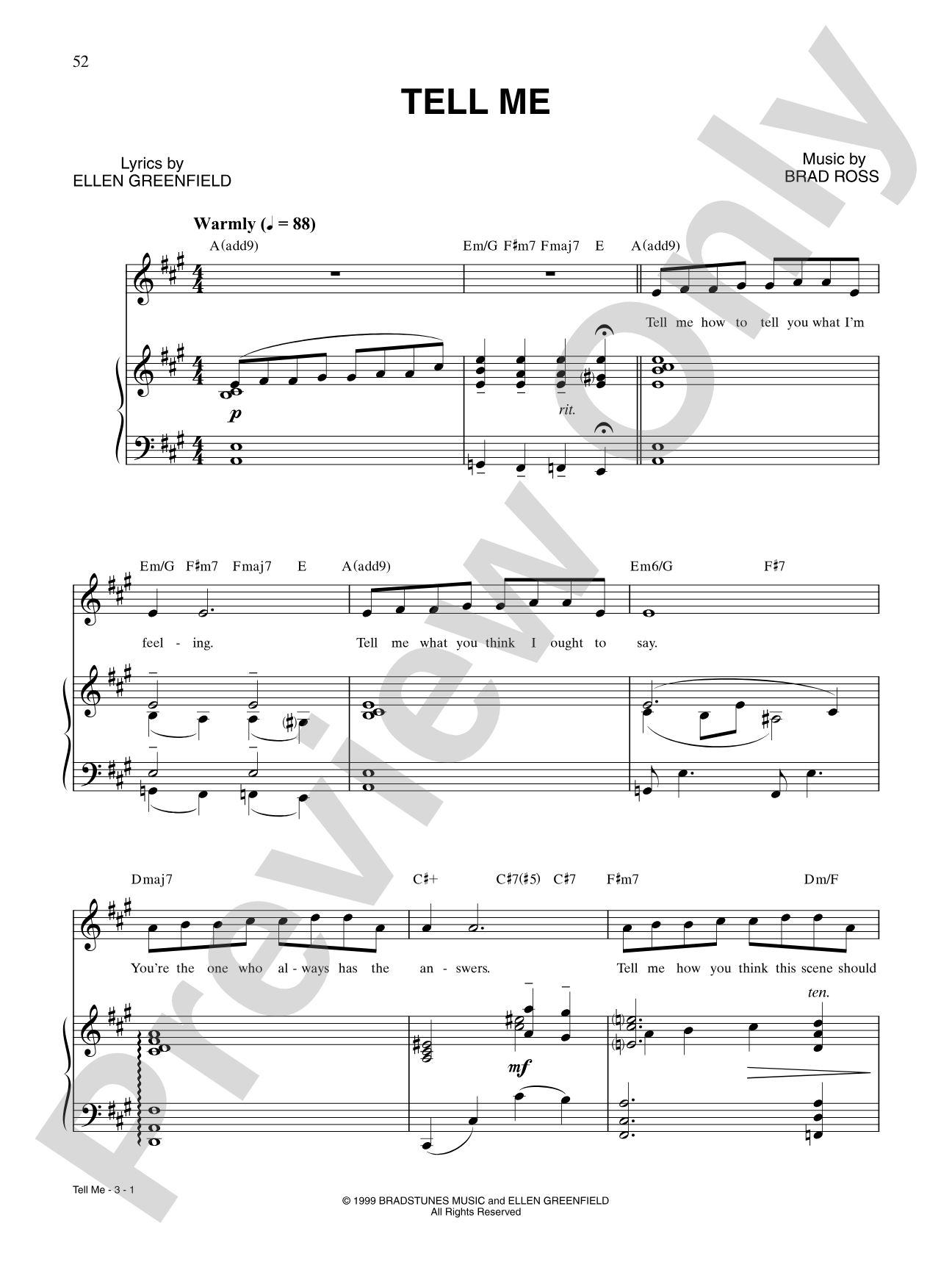

Tell Me: Piano/Vocal/Chords
Music by Brad Ross, lyrics by Ellen Greenfield and Hal Hackady
Item: 00-PS-0015529
$4.99
Pickup currently not available
Related Items
Little by Little: Piano/Vocal/Chords |
$5.99
|
View | |
Popcorn: Piano/Vocal/Chords |
$5.99
|
View | |
Rainbows: Piano/Vocal/Chords |
$5.99
|
View | |
I'm Not: Piano/Vocal/Chords |
$5.99
|
View | |
Nocturne: Piano/Vocal/Chords |
$5.99
|
View | |
Take the World Away: Piano/Vocal/Chords |
$4.99
|
View | |
Okay: Piano/Vocal/Chords |
$5.99
|
View | |
I Ought to Cry: Piano/Vocal/Chords |
$4.99
|
View | |
Is This Real?: Piano/Vocal/Chords |
$4.99
|
View | |
Little by Little: Piano/Vocal Selections: Piano/Vocal Book |
$12.99
|
View |
Description
Little by Little premiered off-Broadway at The York Theatre Company, starring Liz Larsen, Christiane Noll, and Darrin Baker, with direction by Annette Jolles. After the York production, an original cast recording was released, the show was licensed and published by Samuel French, and it's performed around the world. With music by Brad Ross and lyrics by Ellen Greenfield and Hal Hackady, songs from the show have become favorites among musical theatre vocalists for auditions, recitals, and performances. Brad Ross and Alfred Music are proud to present this first-ever Little By Little vocal selections folio. Titles: Little by Little * Popcorn * I'm Not * Rainbows * Nocturne * Take the World Away * Okay * Tell Me * I Ought to Cry * Is This Real?


Tell Me: Piano/Vocal/Chords isn't in MakeMusic Cloud just yet...but it could be. Let us know you'd like to see it, and you'll help shape what comes next. In the meantime, start a free trial and dive into thousands of interactive titles your students can play along with today.
Request This Title
Tell us you want it.
Start Your Free Trial
Explore everything that's ready to play right now.
Sample Audio
No sample audio found.
Sample Video
No sample videos found.
Additional Details
Publisher:
Alfred Music
Page Count:
64
SKU:
00-PS-0015529
More about this title
About the Composer: Brad Ross
Brad Ross is a composer whose work for musical theatre has reached audiences across stages from New York to regional and community theatres worldwide. His score for Little by Little showcases a gift for melody that serves the emotional arc of a story while remaining accessible to performers at various skill levels.
Why we love this
This collection gives singers genuinely singable material that works equally well in audition rooms and on stage. The songs sit comfortably for intermediate vocalists while offering enough musical substance to engage audiences and showcase a performer's expressiveness.
What to expect
These songs capture the emotional honesty of musical theatre storytelling. They move between moments of intimacy and theatrical flourish, with melodies that lodge in the memory and harmonies that support rather than overshadow the lyric.
Who it's for
Musical theatre singers preparing audition material, vocalists building recital programs, and accompanists looking for songs that balance accessibility with genuine musical interest. Directors of community theatre productions and school musicals will find performance-tested selections that audiences connect with immediately.
How to get the most out of it
- Treat the chord symbols as a guide for interpretation, not a rigid harmonic blueprint. Your accompanist may voice them differently, so listen closely and adjust your phrasing to match.
- These songs tell stories with specificity. Read the lyrics aloud as dialogue first to understand your character's emotional journey before adding the melody.
- The piano parts often carry thematic material. Work with your accompanist to let certain instrumental moments breathe rather than rushing to fill every space with vocal sound.
- Pay attention to how each song sits in your range. Some selections may work better when transposed; mark your preferred keys early so your accompanist can prepare the right edition.
How to use it
Weave individual selections into audition rotations and recital programs where they can stand alongside standards and contemporary musical theatre repertoire. Alternatively, perform several songs consecutively to give audiences a narrative journey through the show's world, or extract a single song as an encore that leaves singers feeling satisfied and heard.
Skills your students will build
- Interpreting chord symbols and collaborating with accompanists on harmonic choices
- Connecting lyrics to character intention and emotional arc
- Balancing legit singing technique with contemporary musical theatre style
- Negotiating ranges and considering transposition options for vocalists
- Understanding how piano accompaniment supports and frames vocal storytelling