
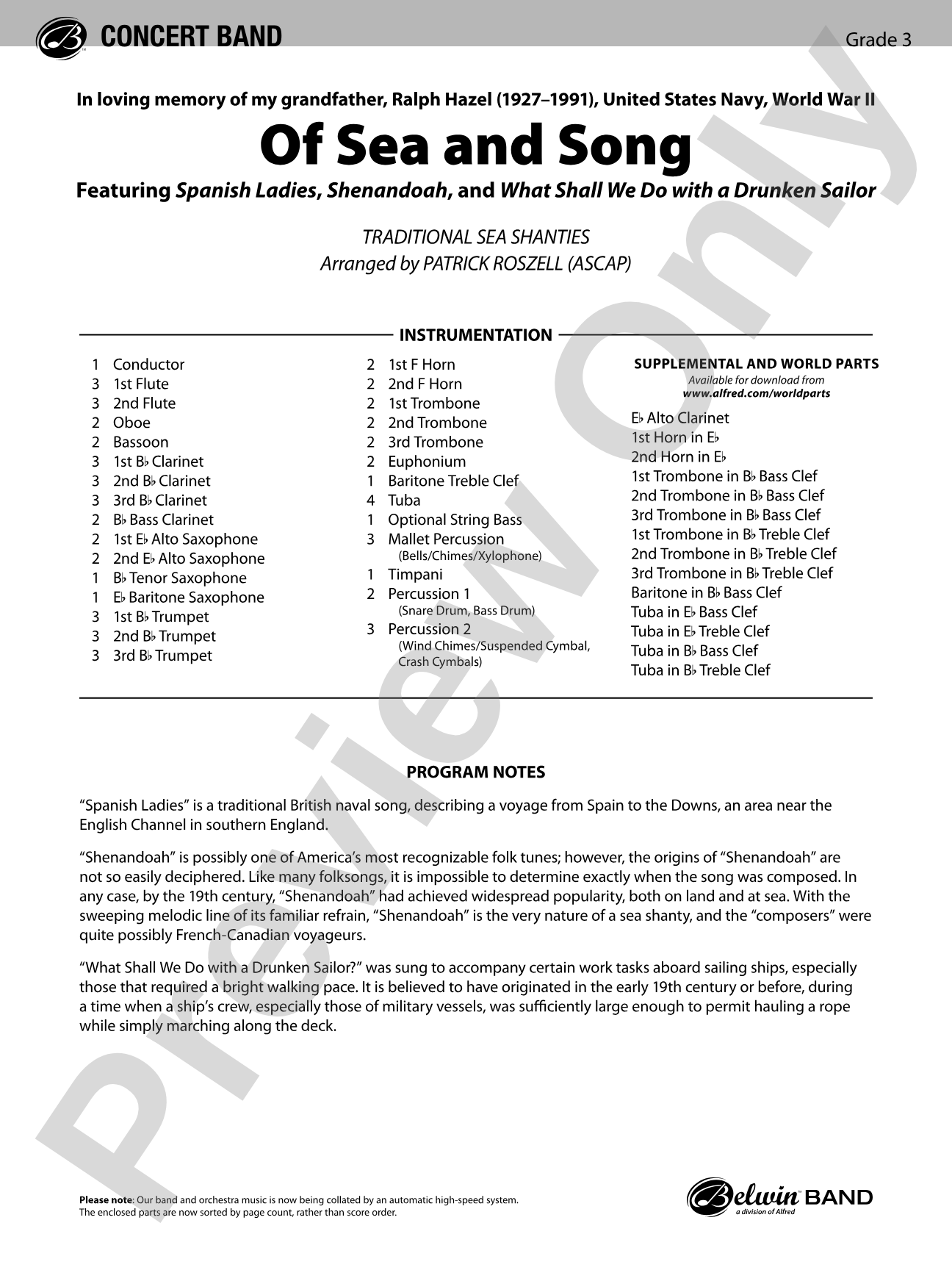
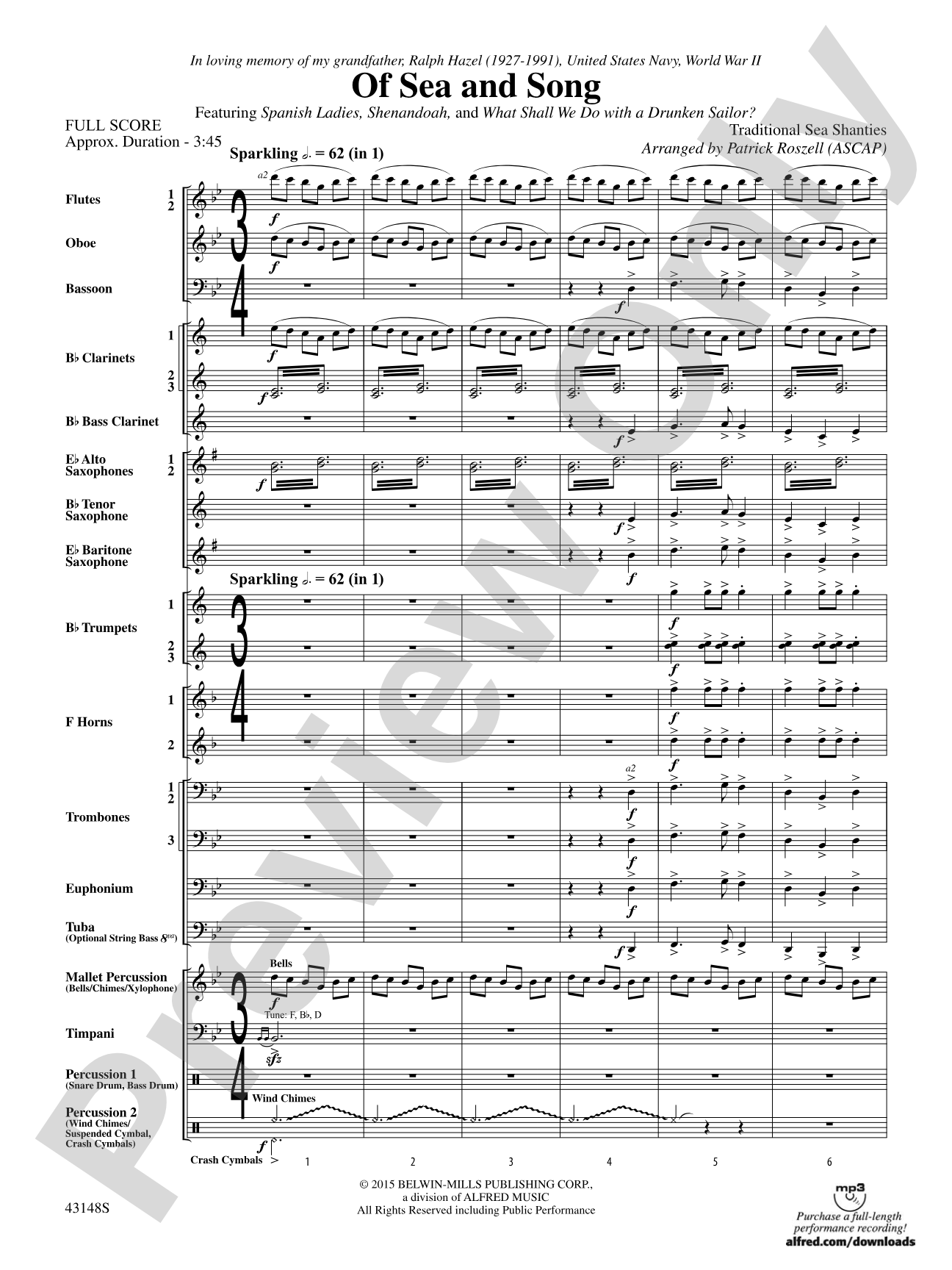
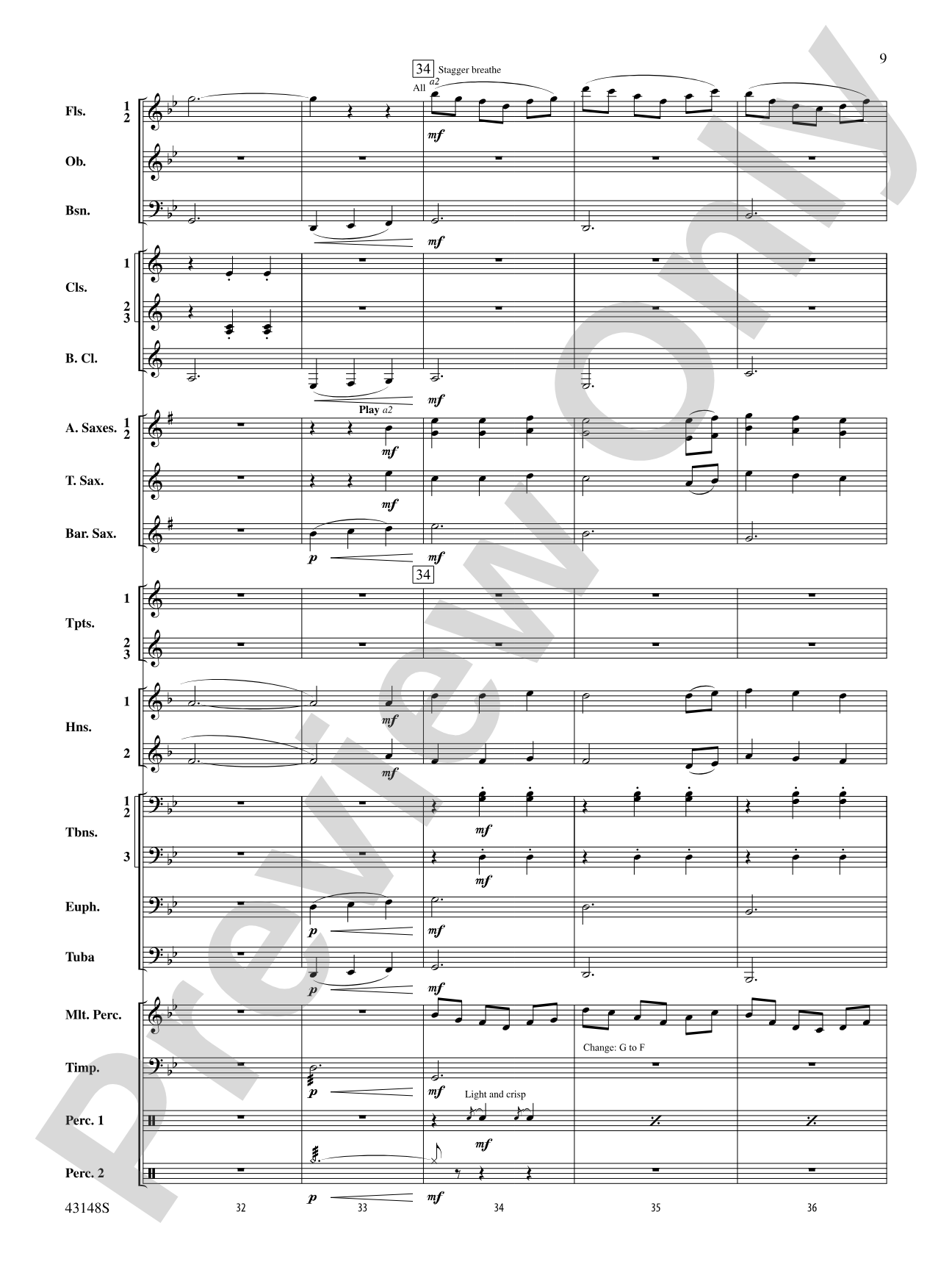
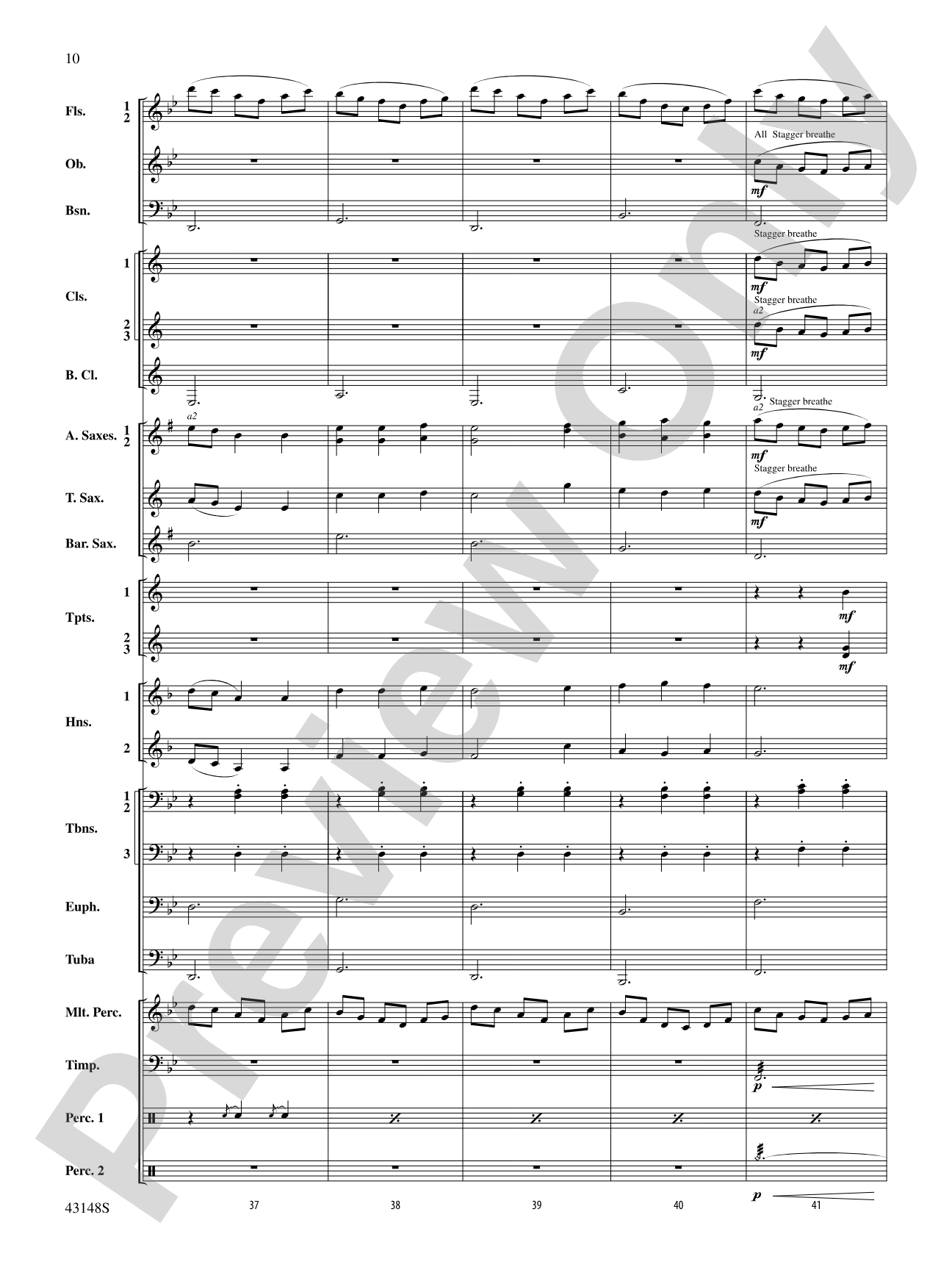
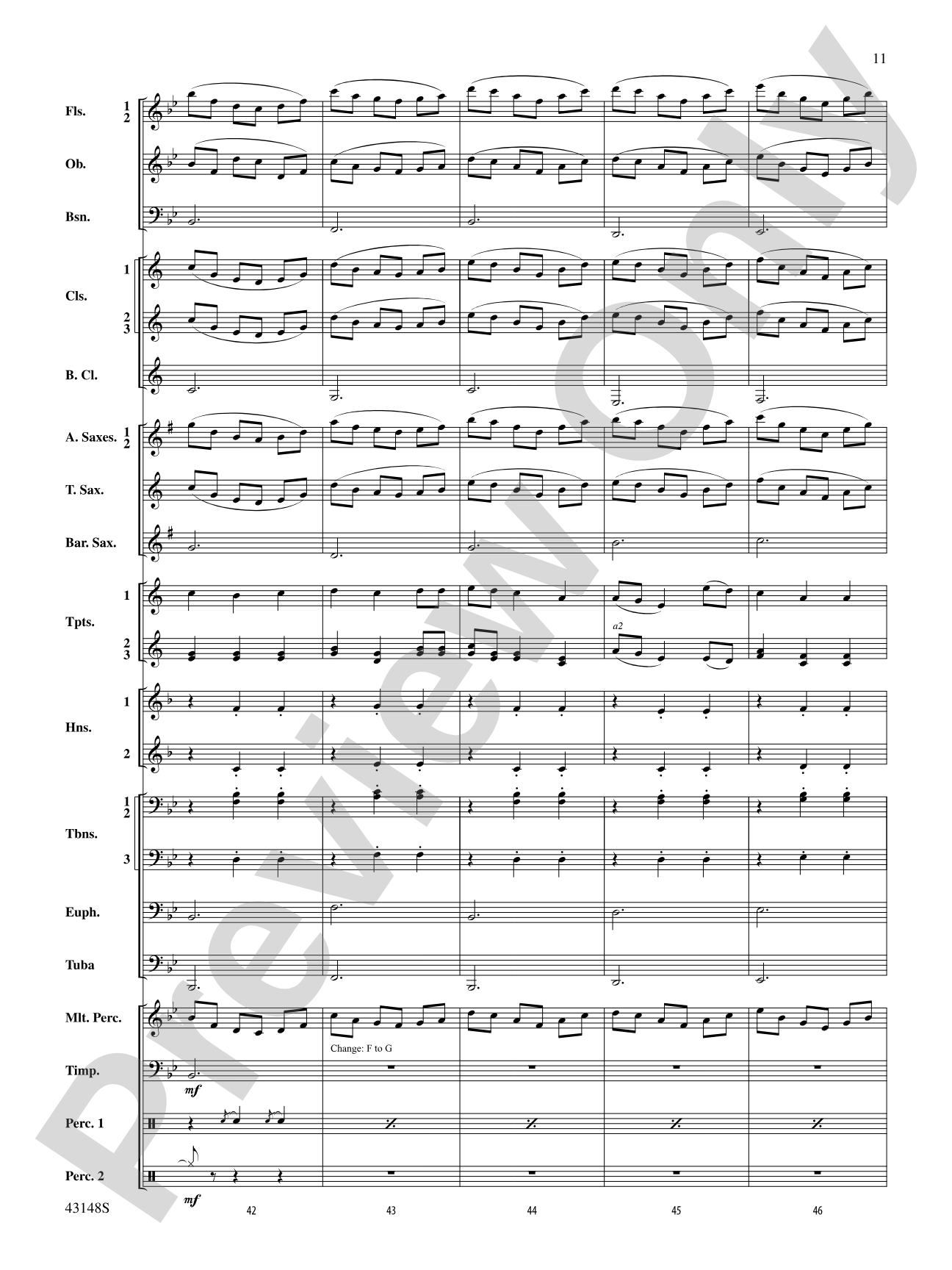
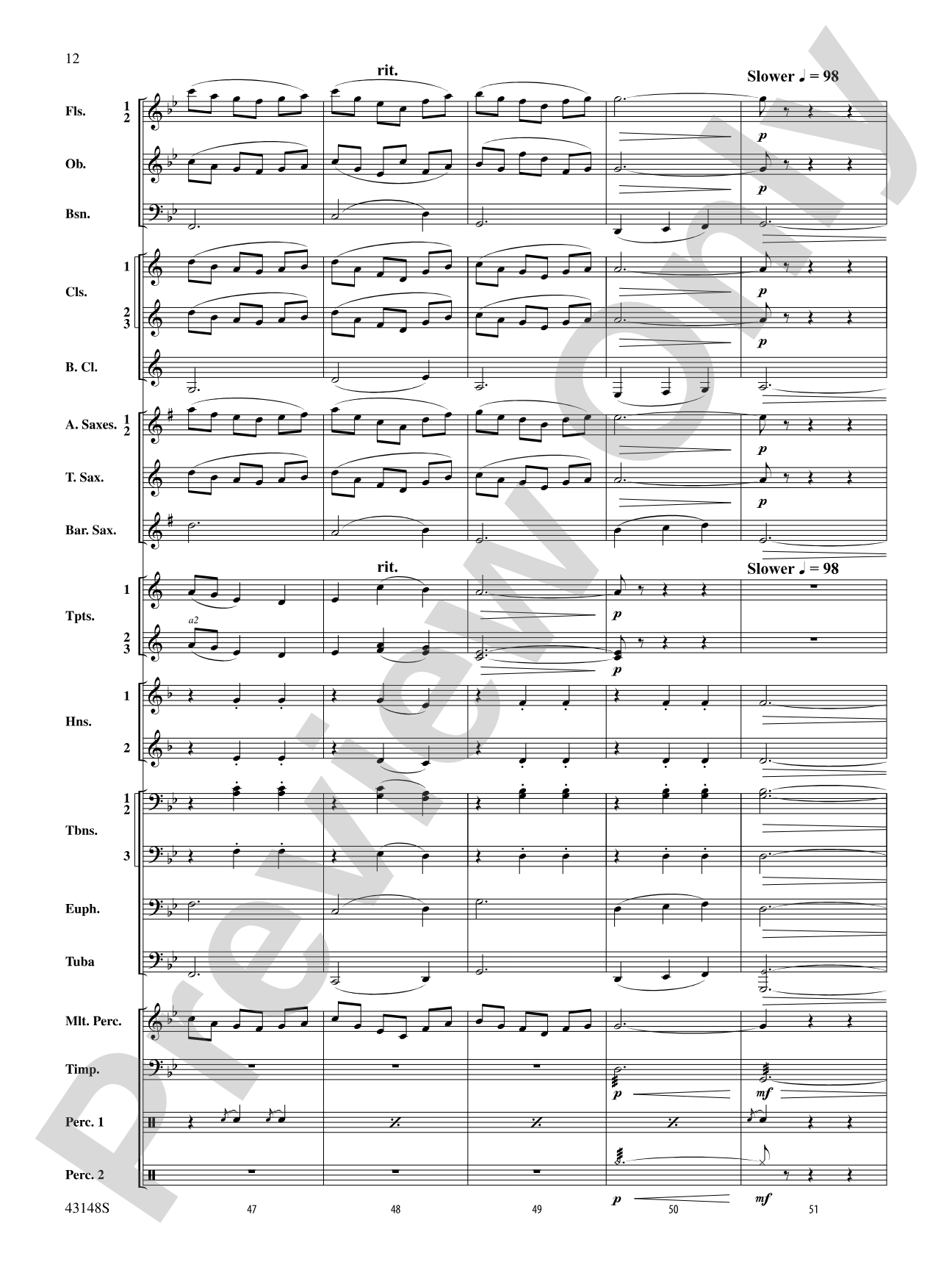
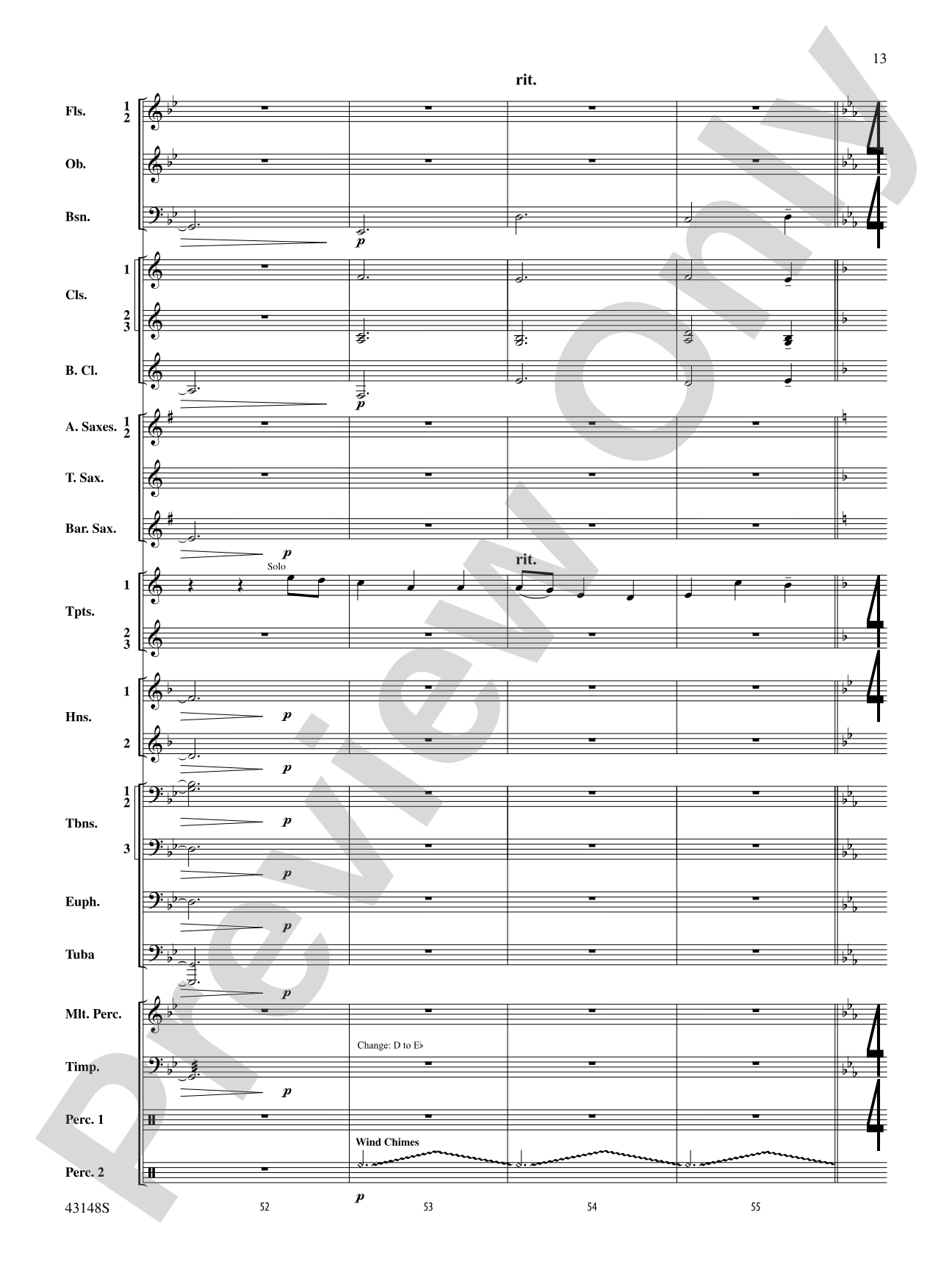
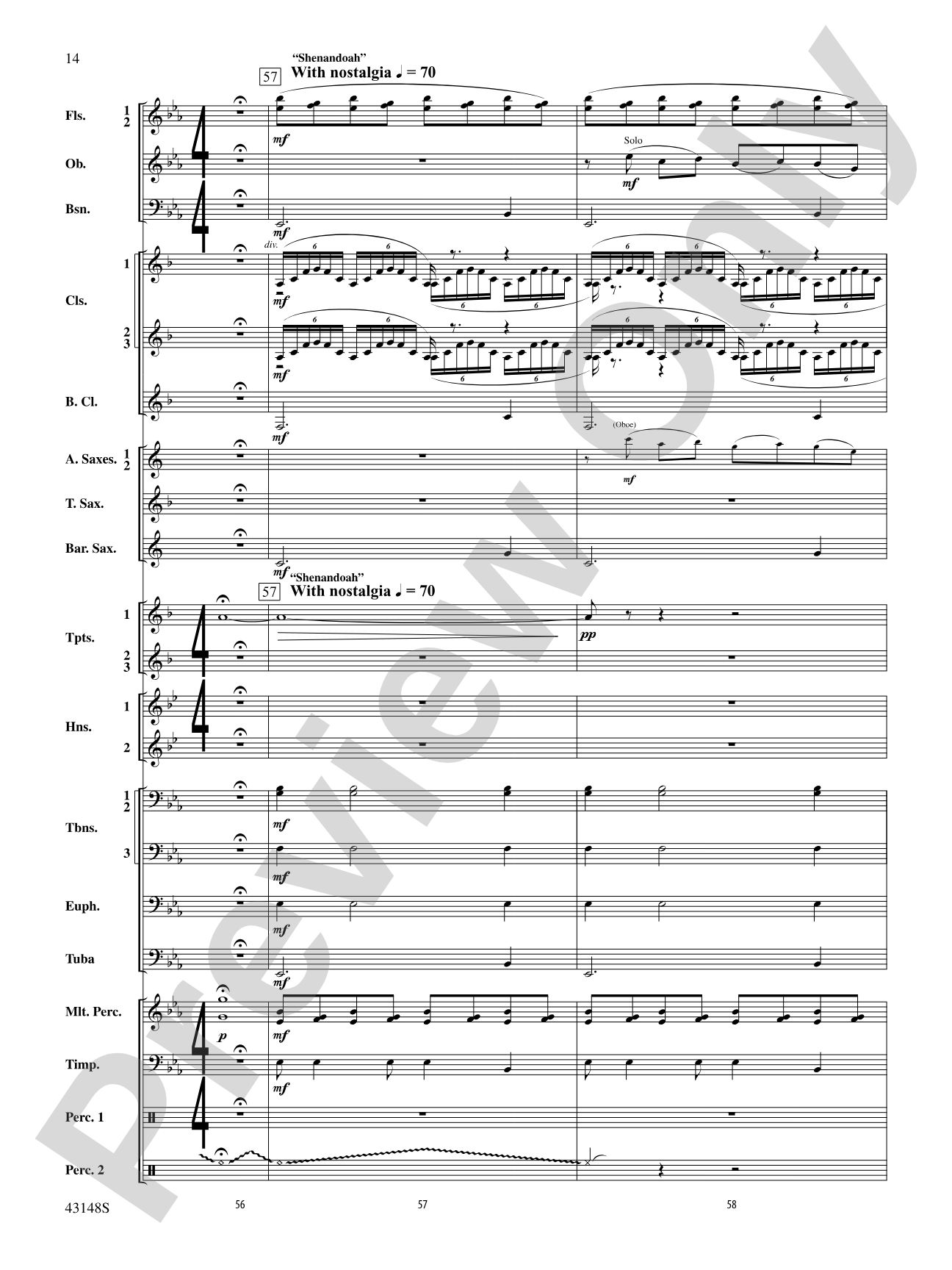
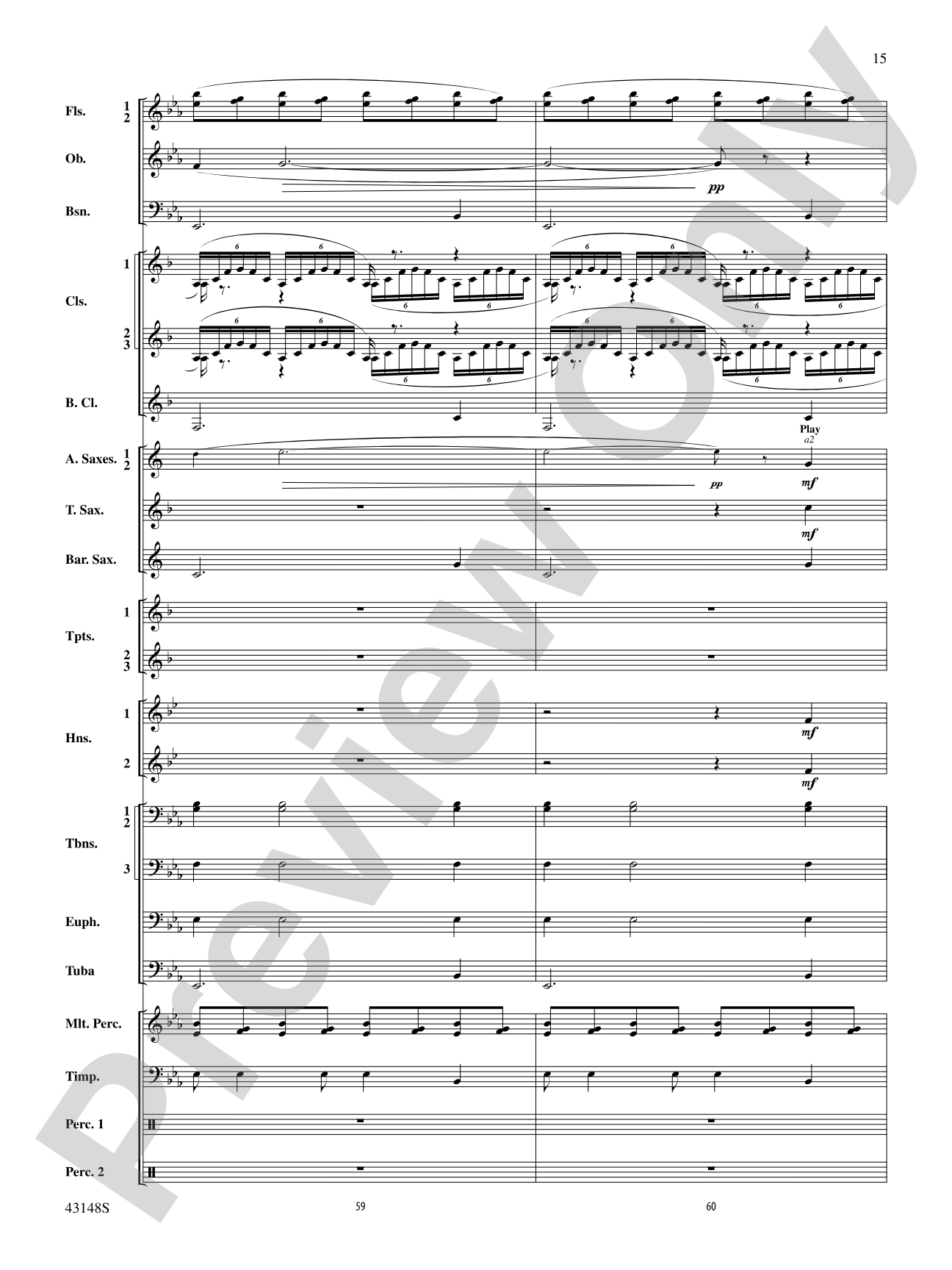
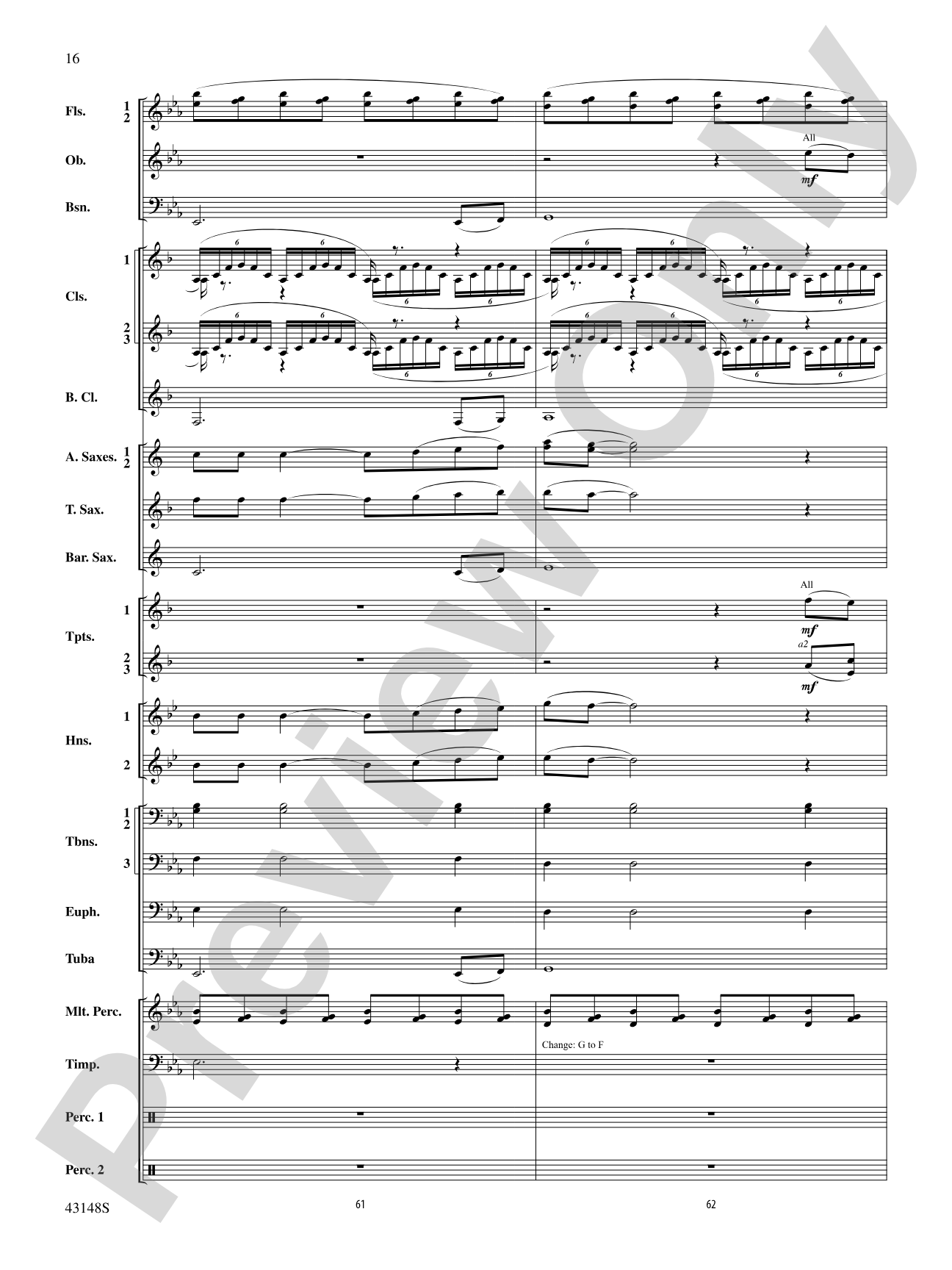
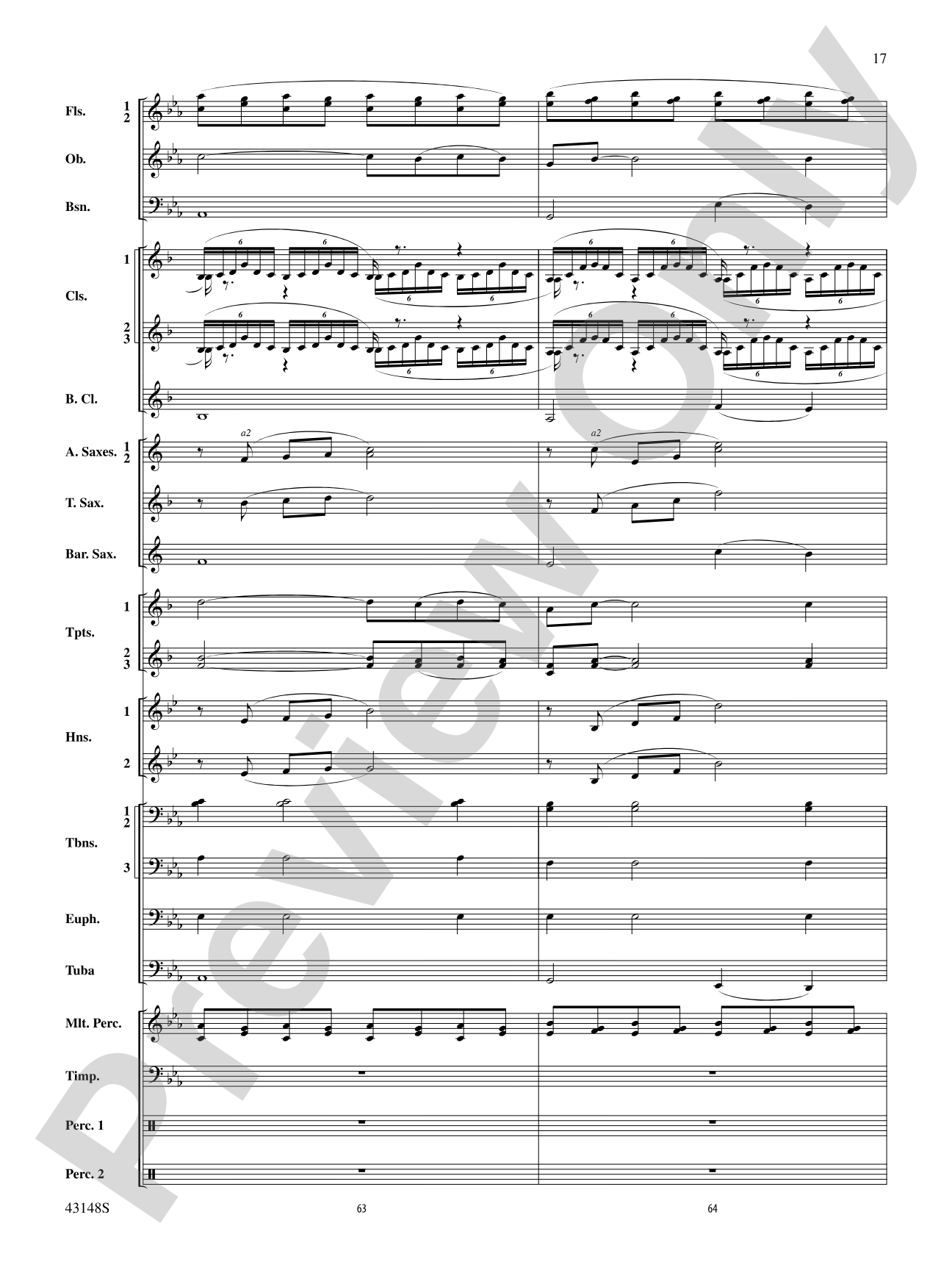
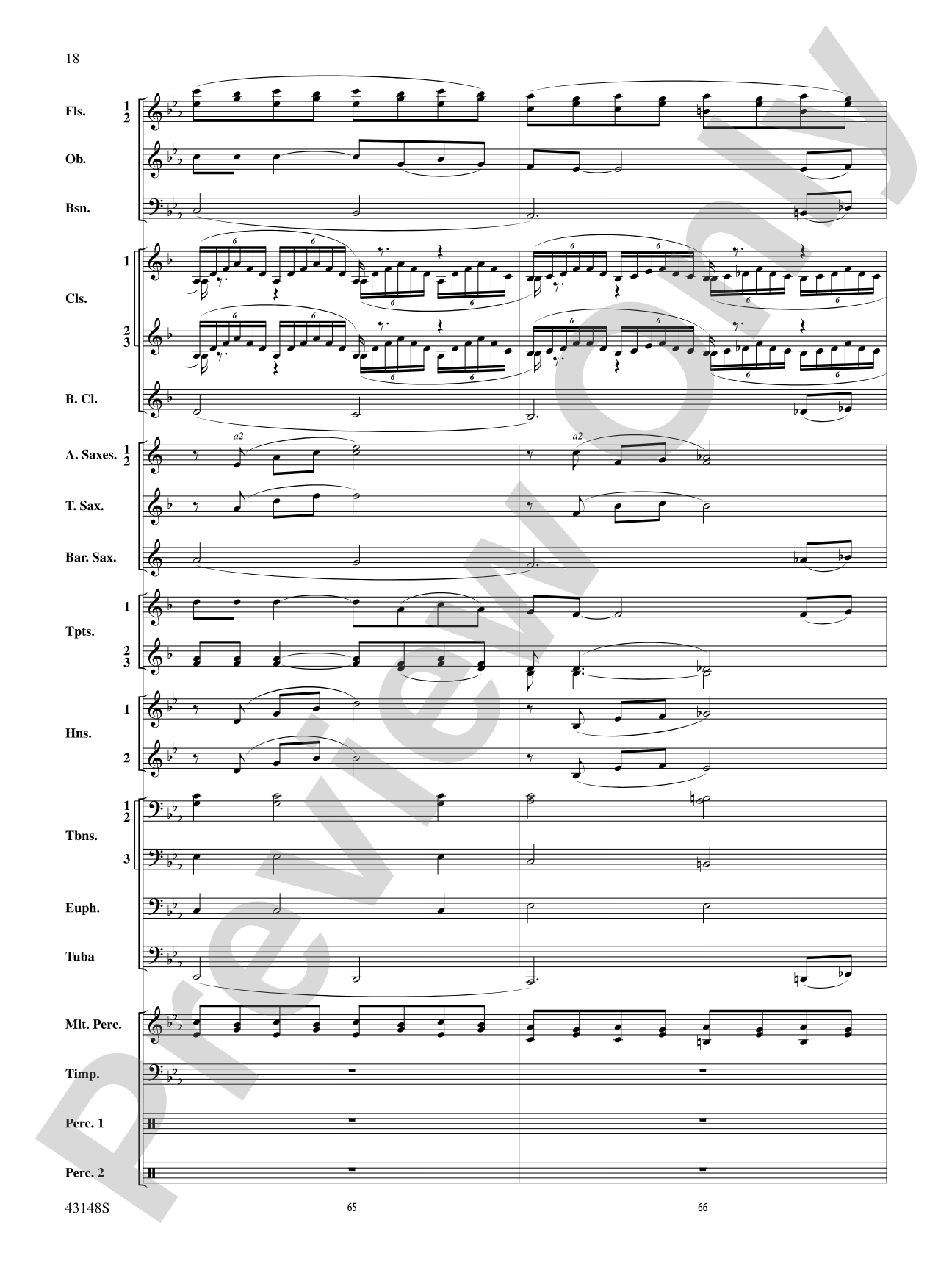
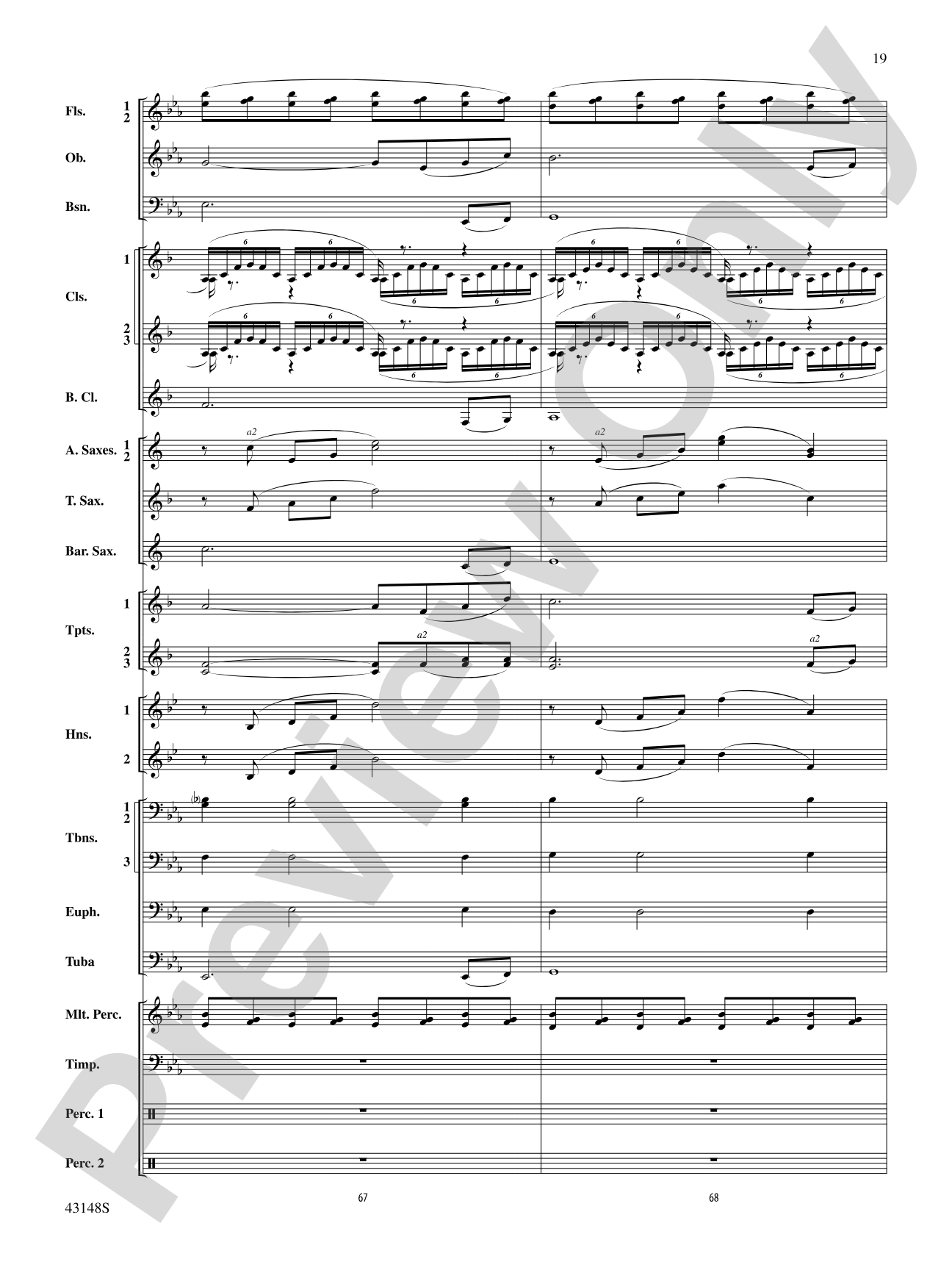
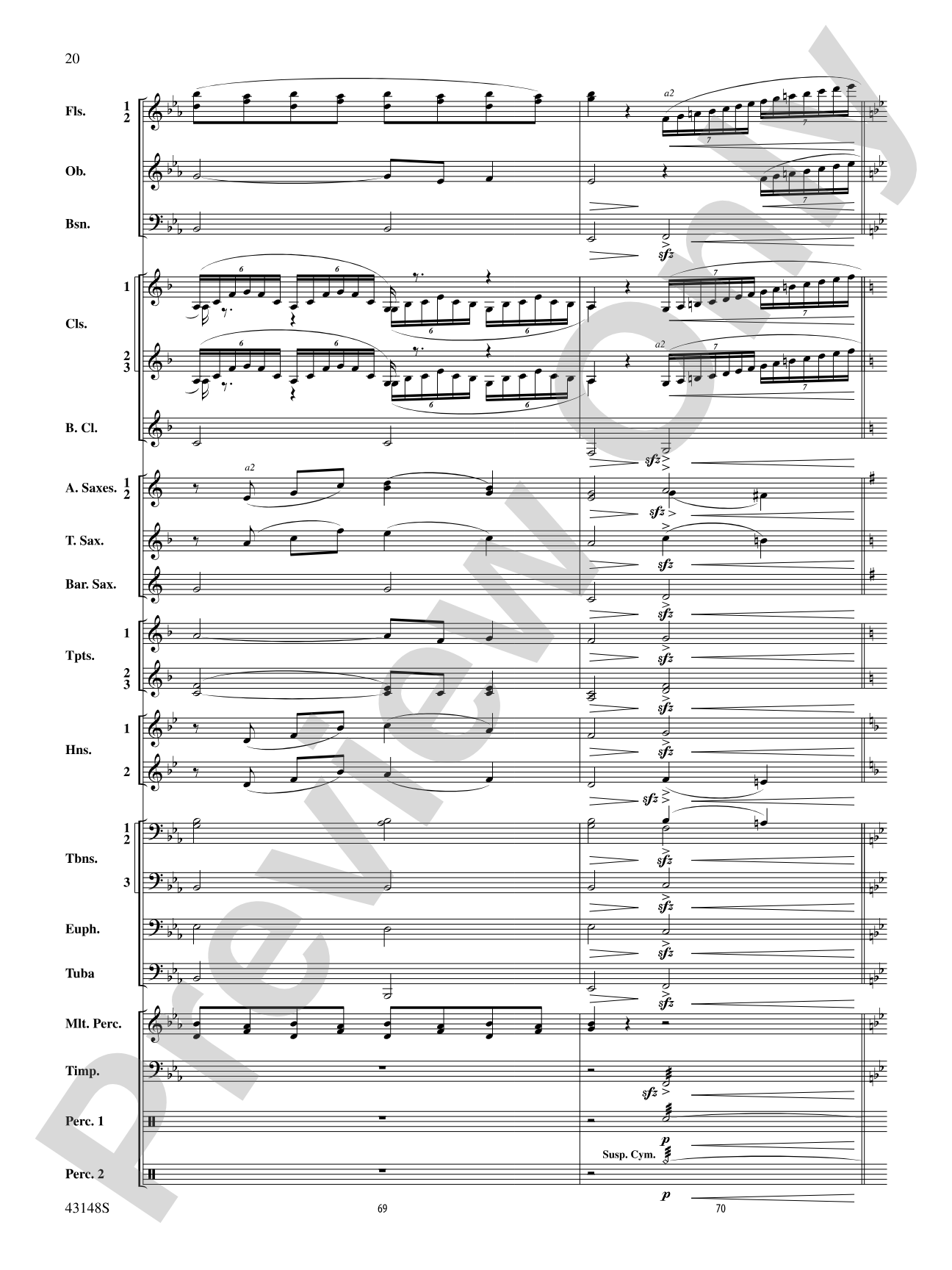
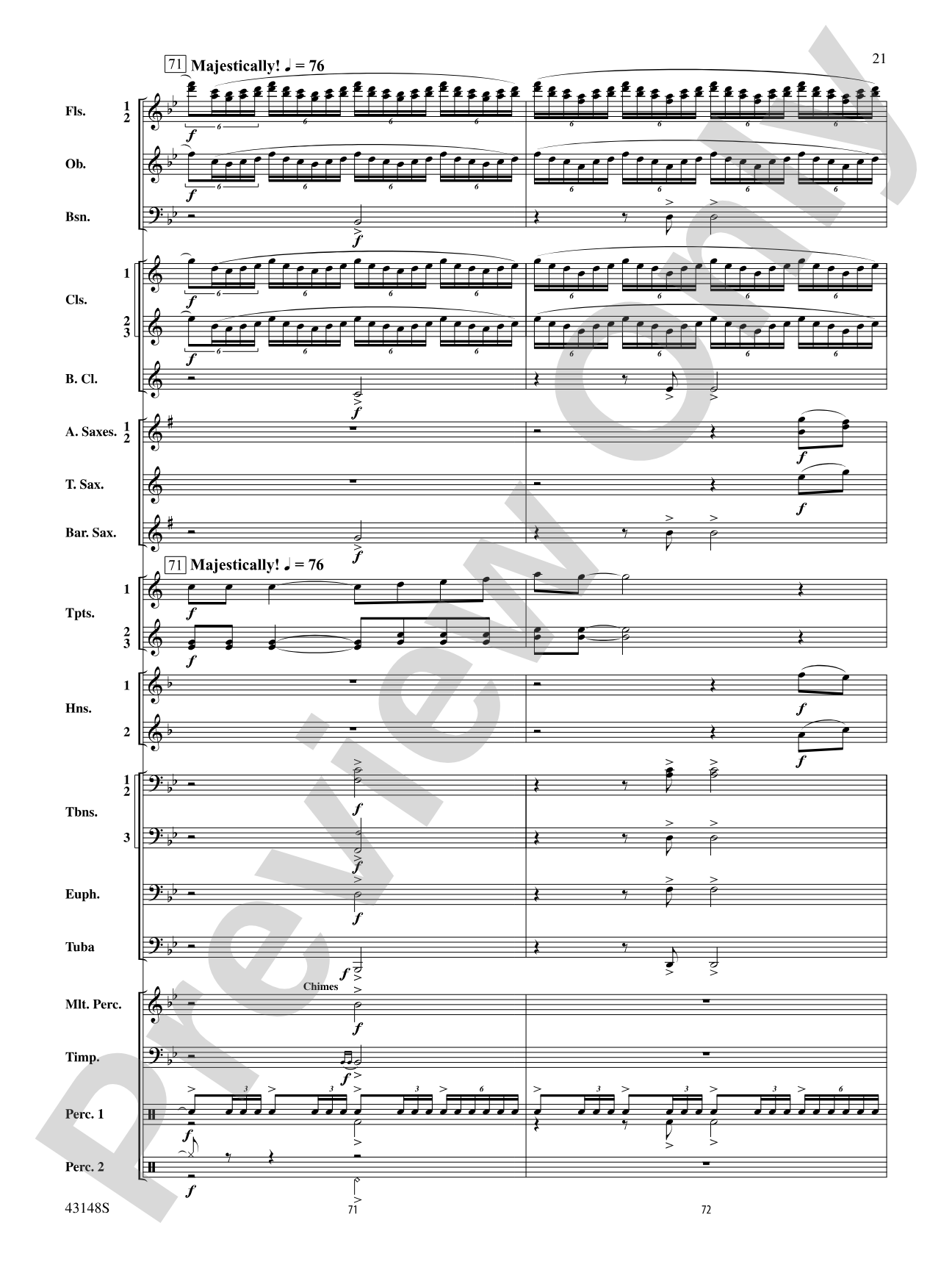
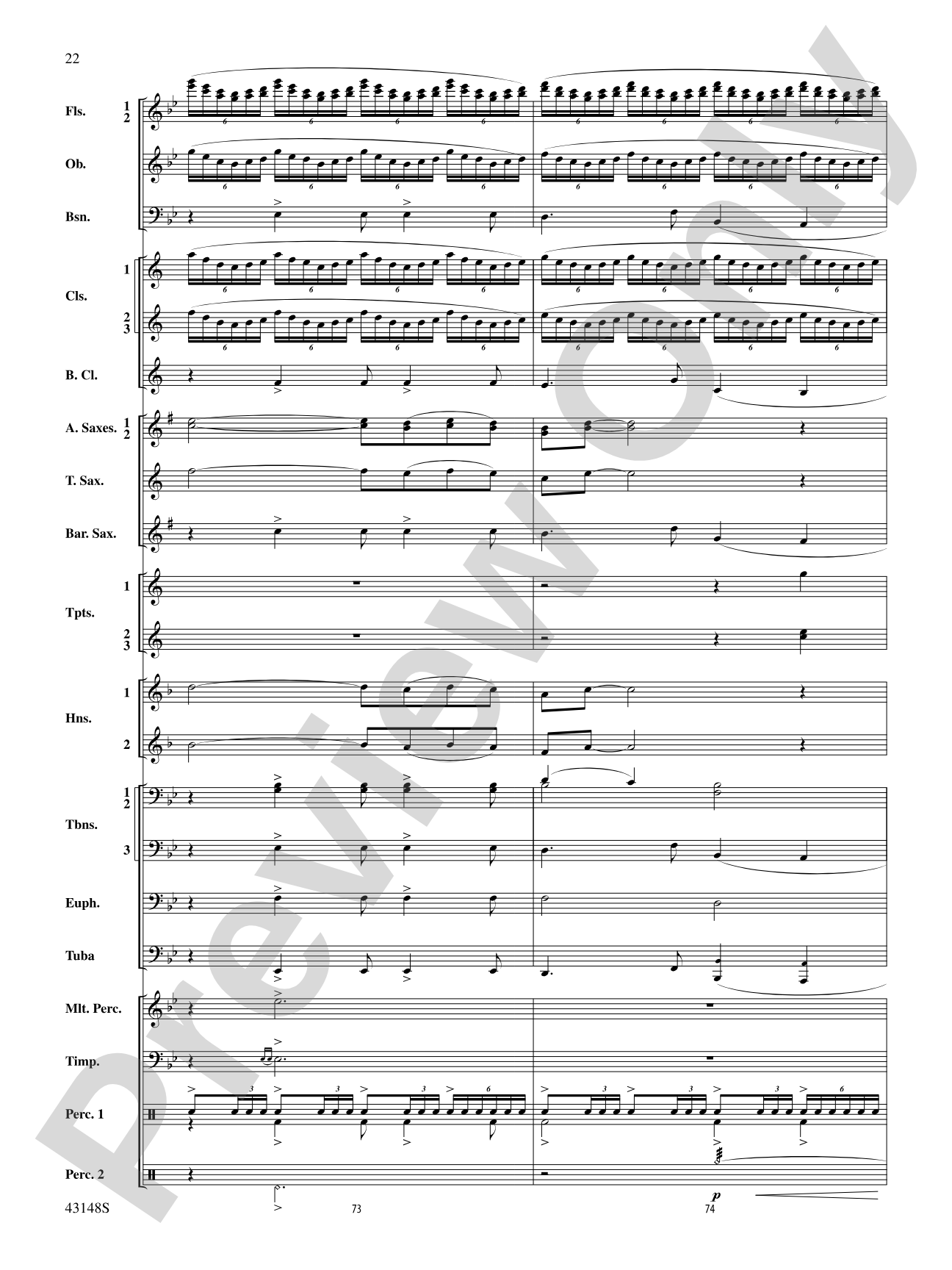
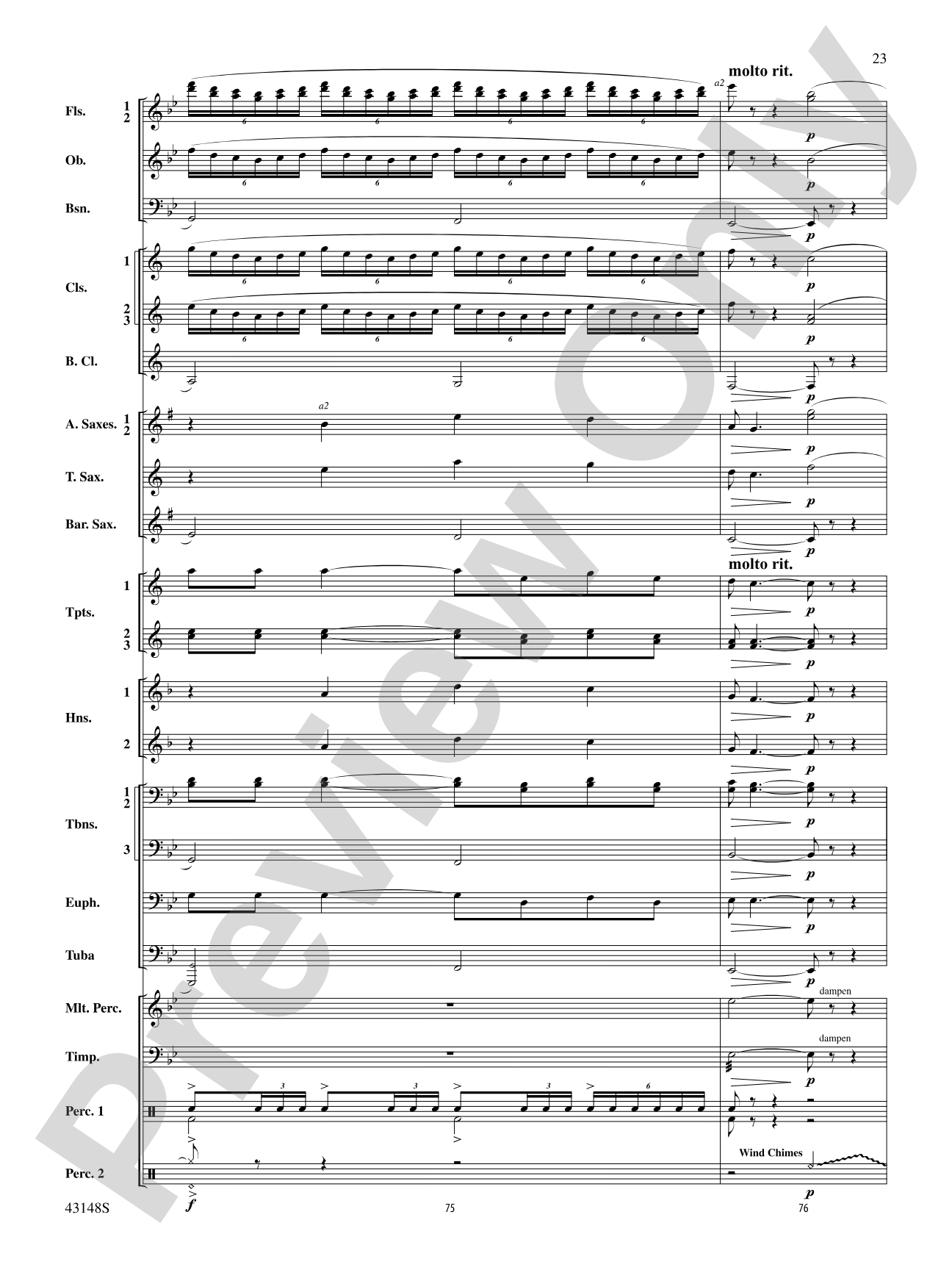
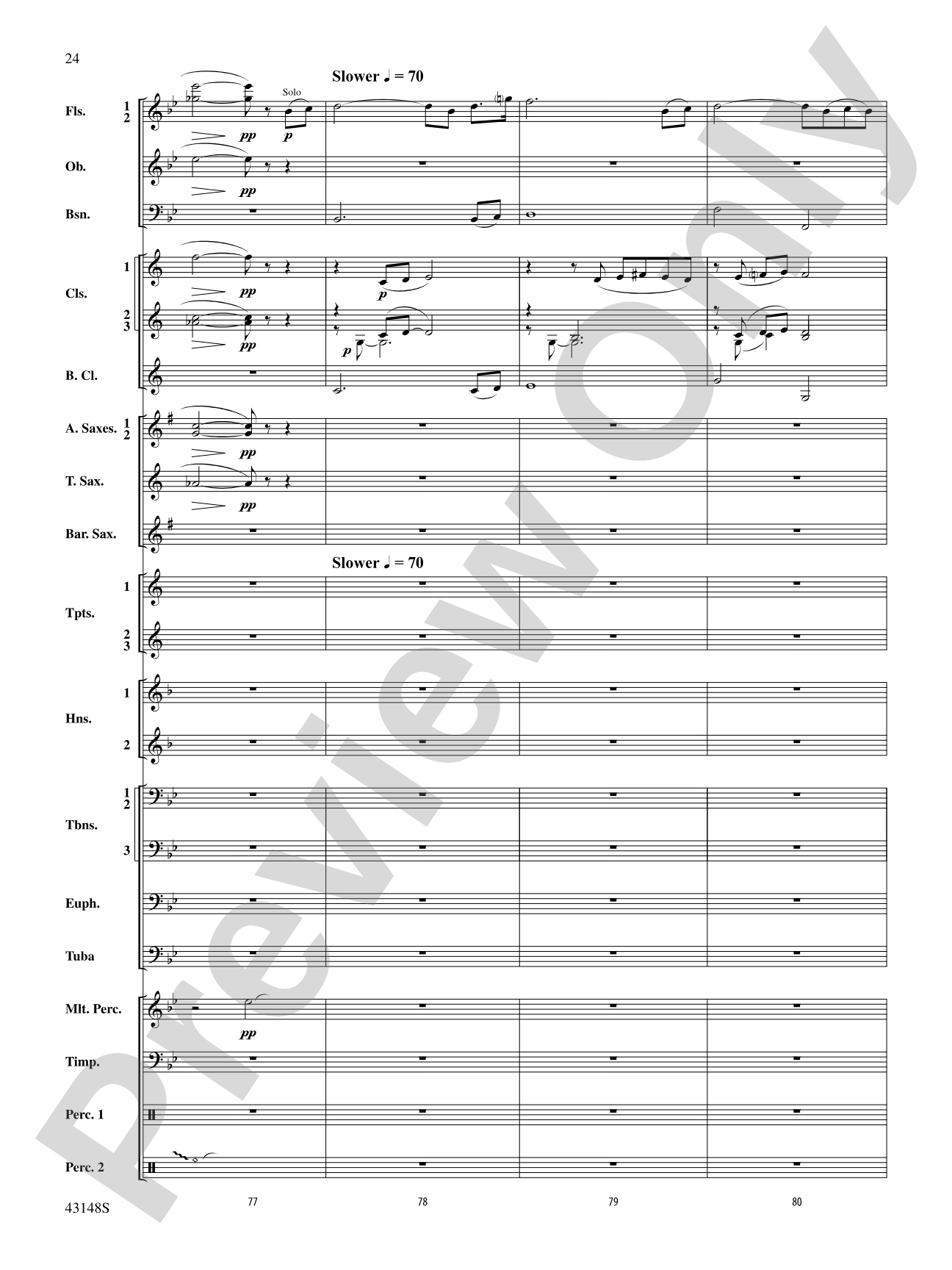
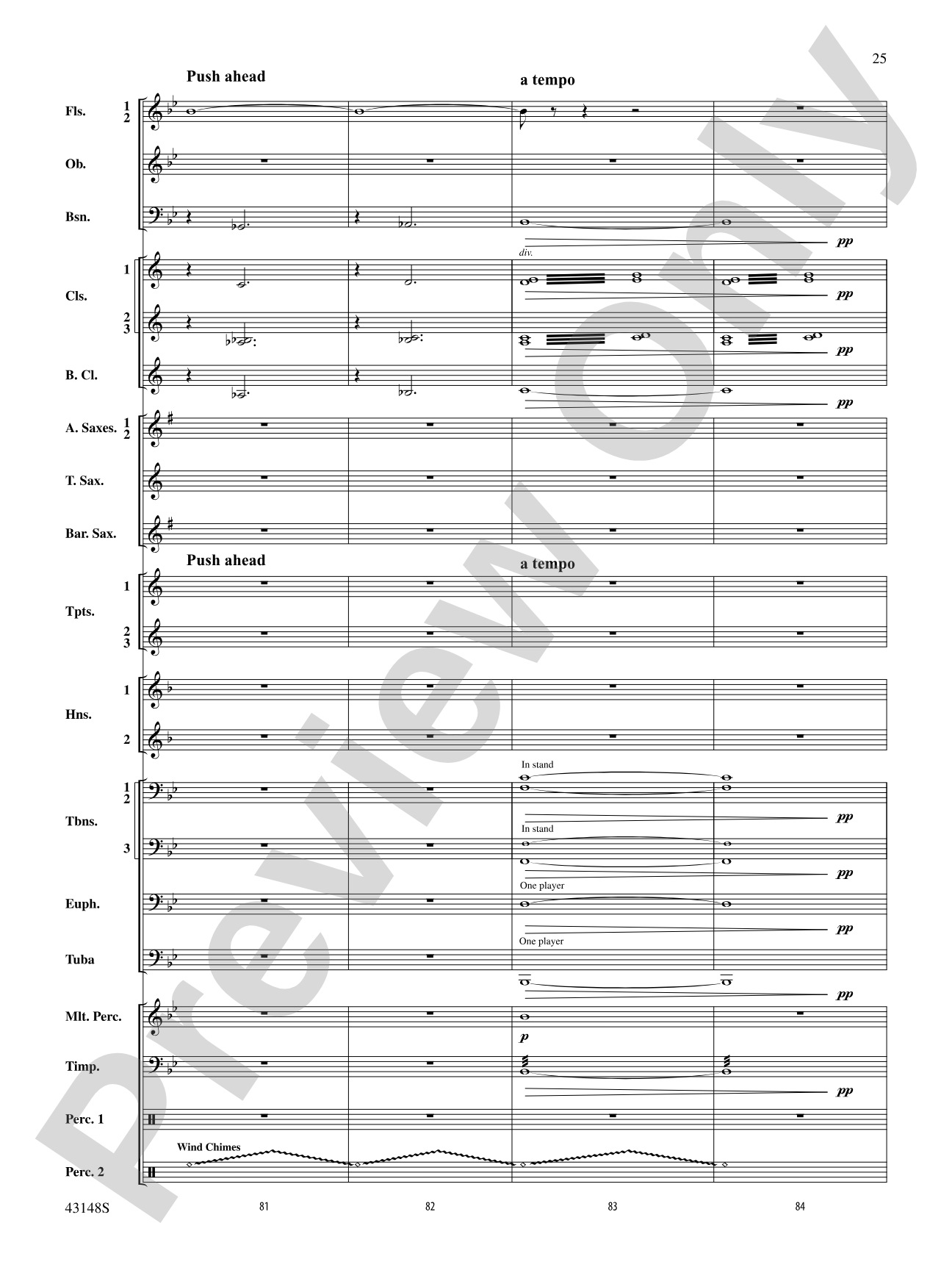
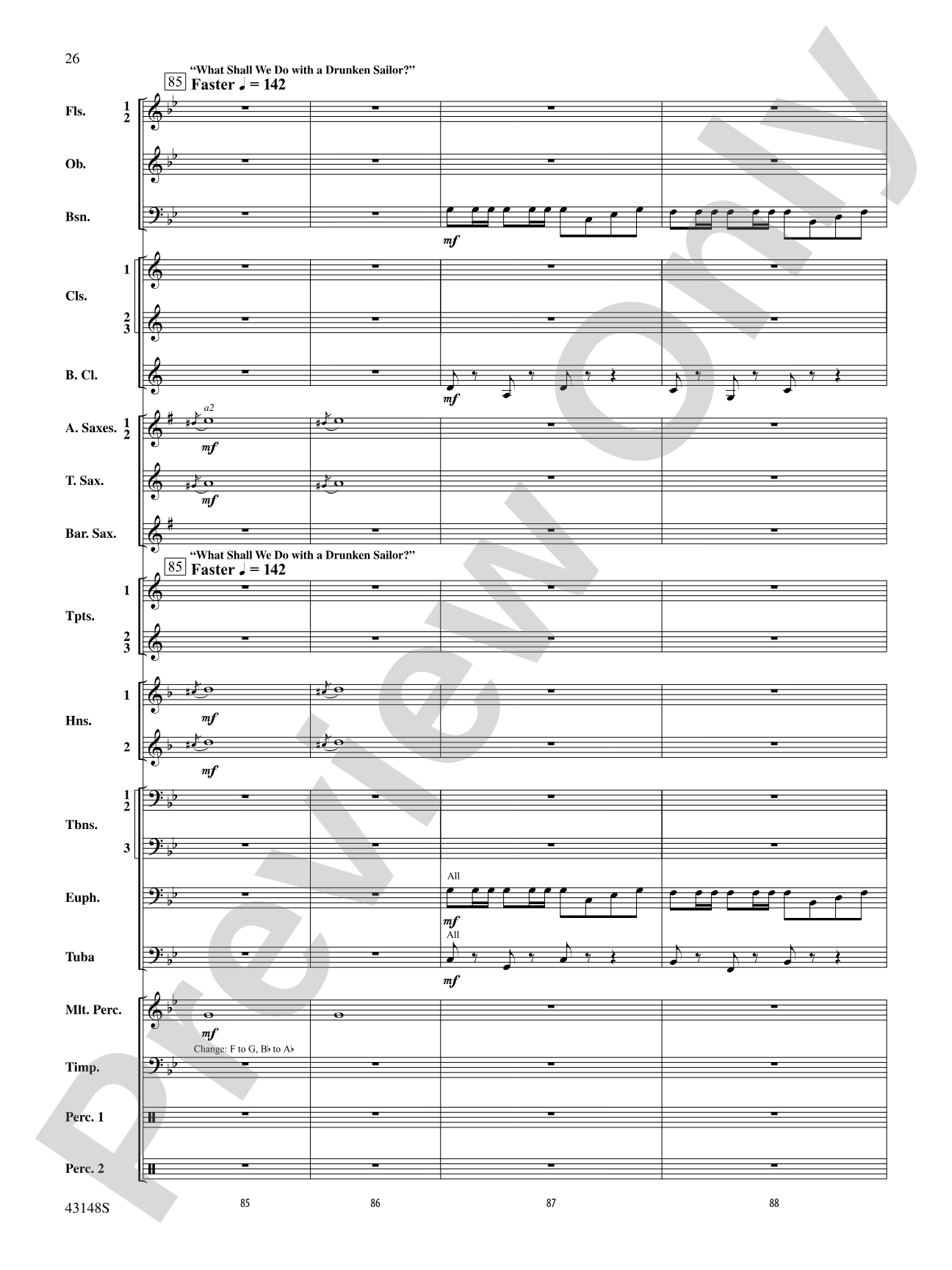
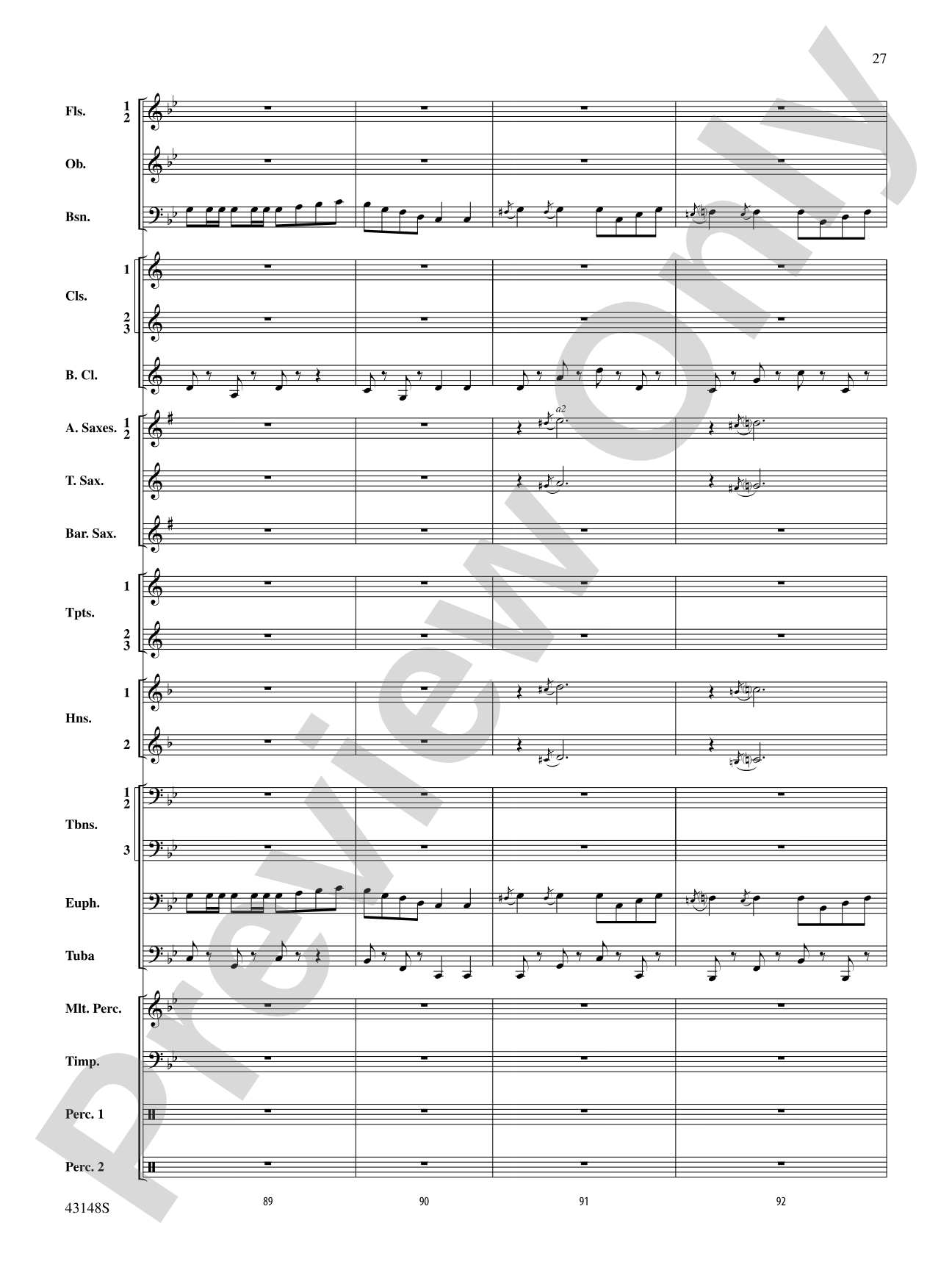
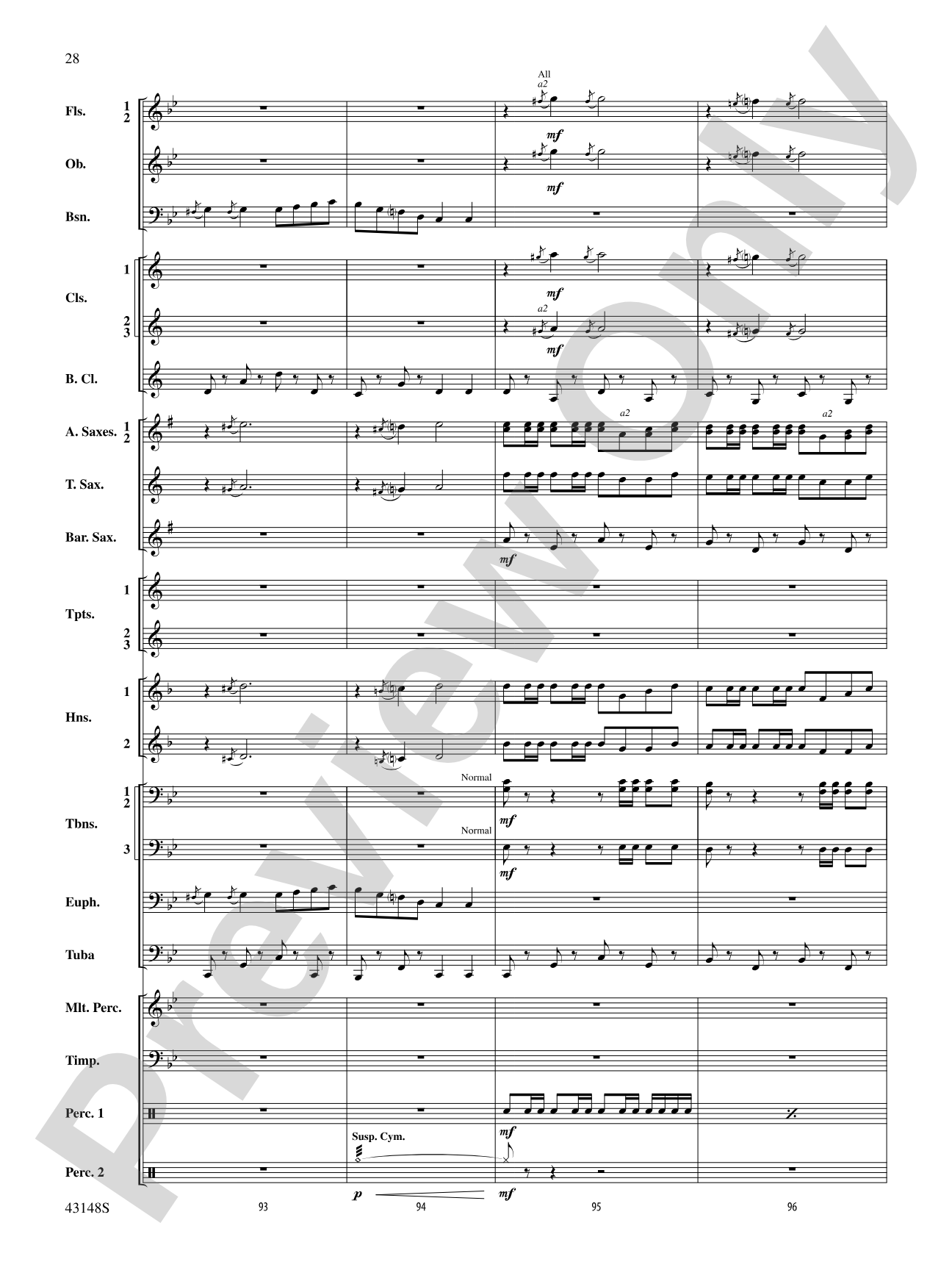
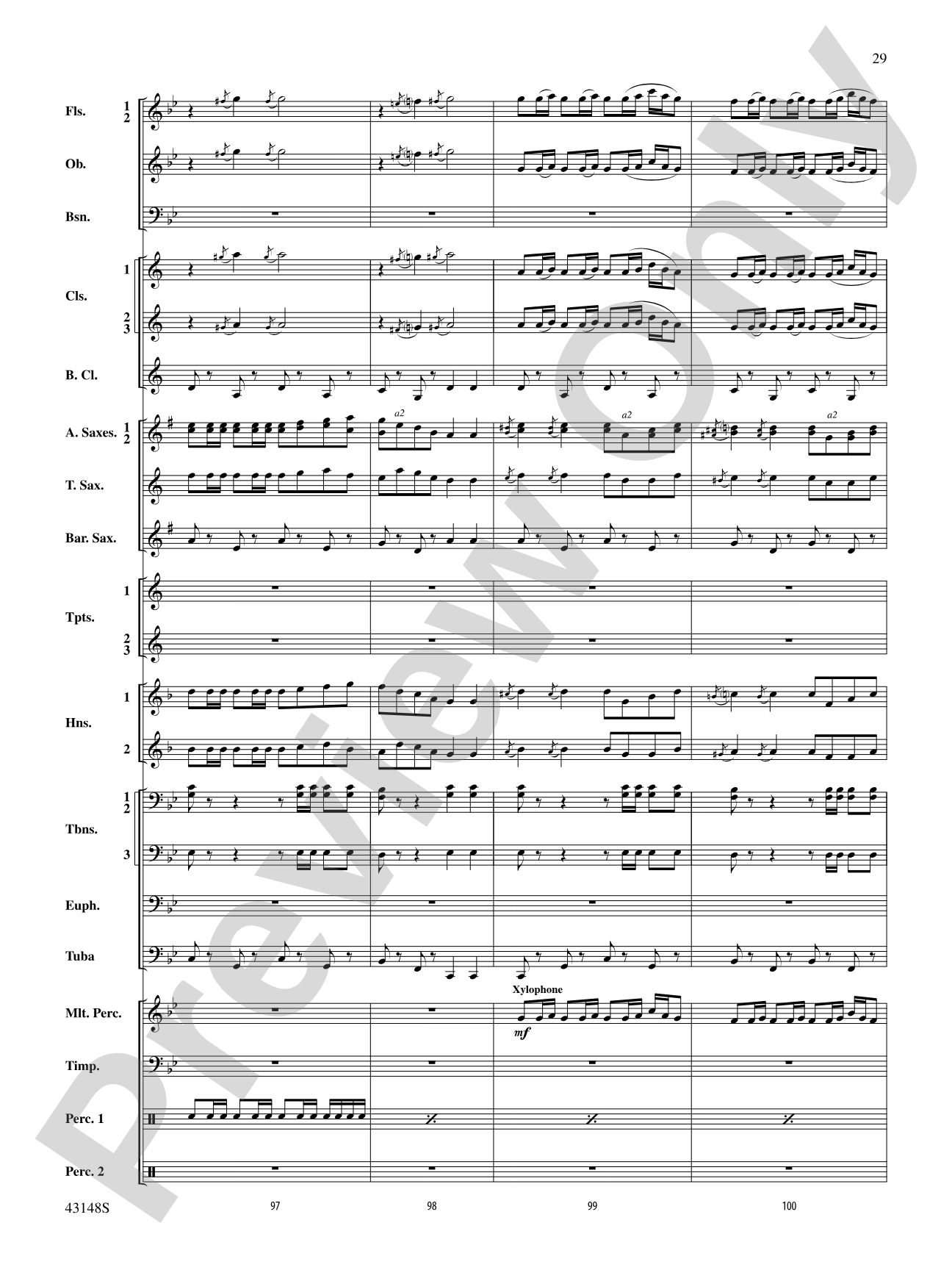
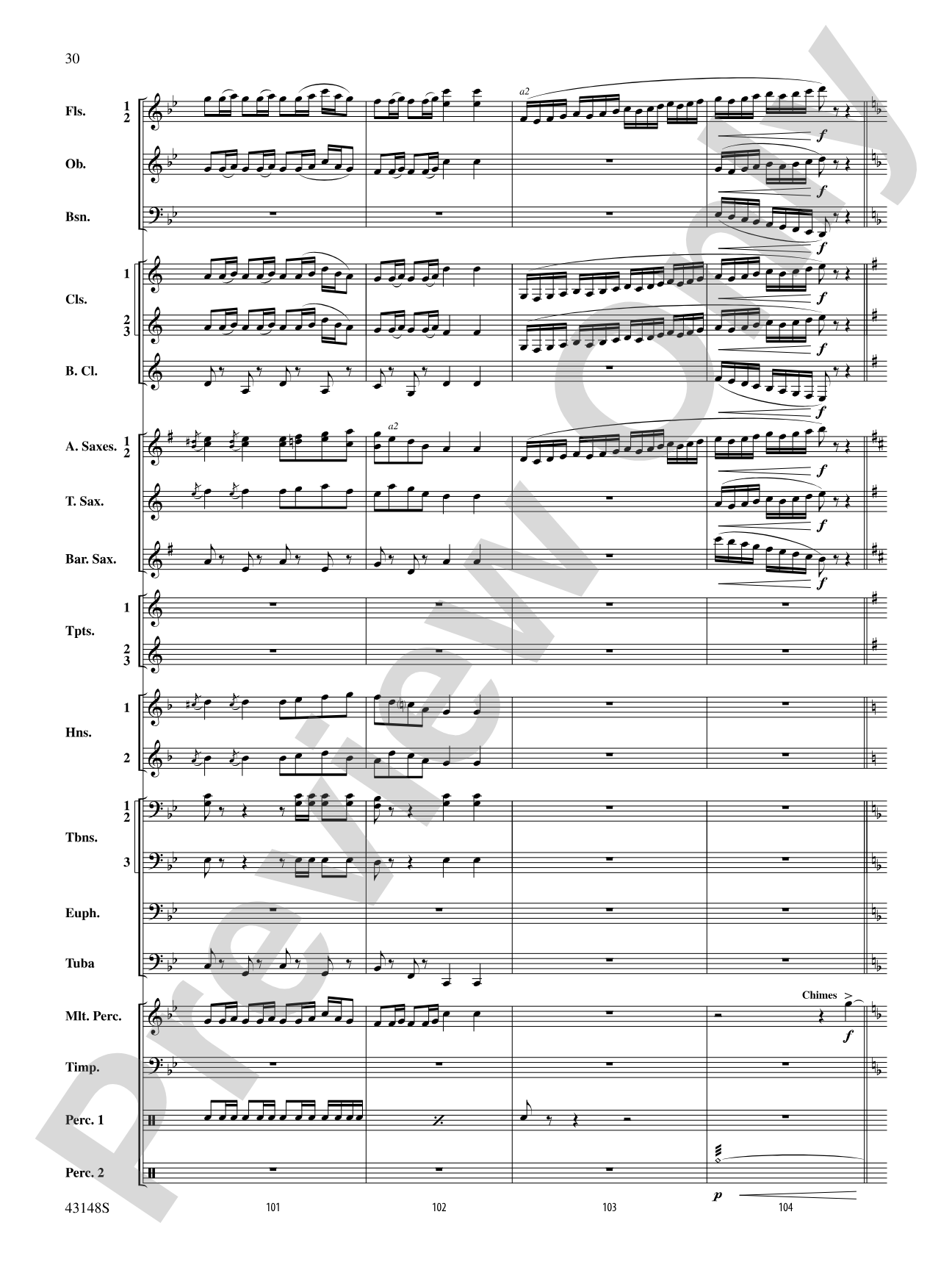
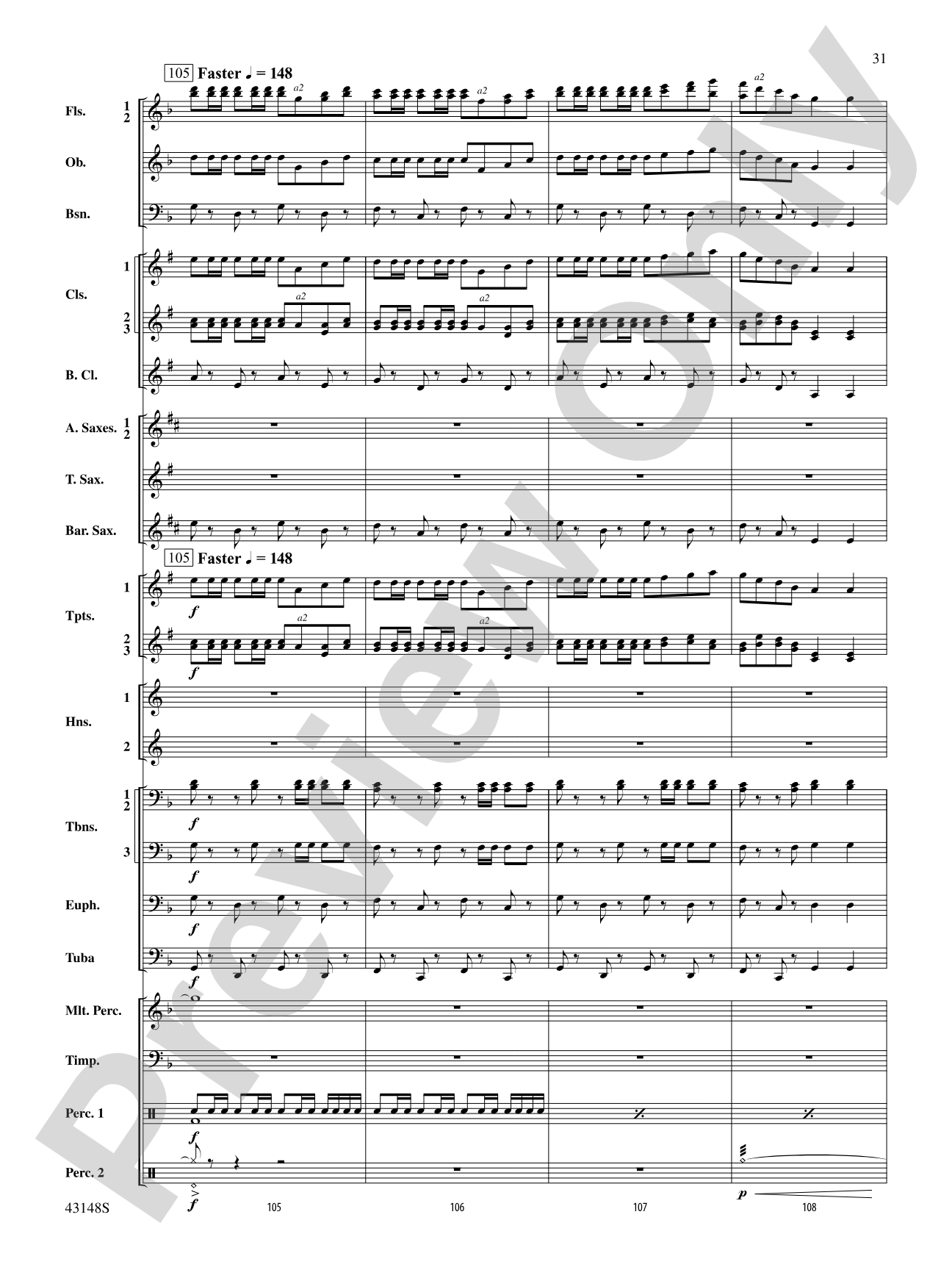
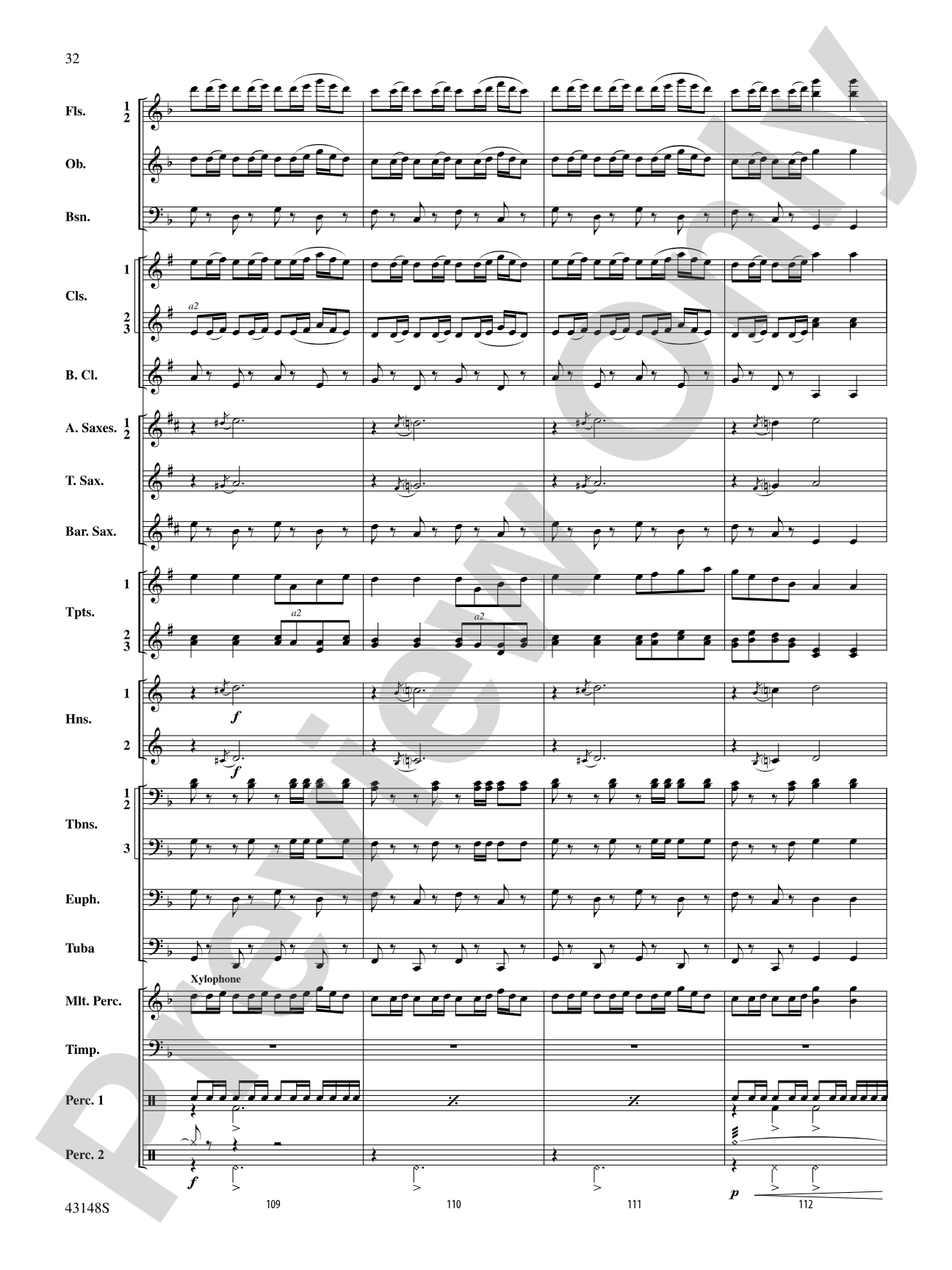
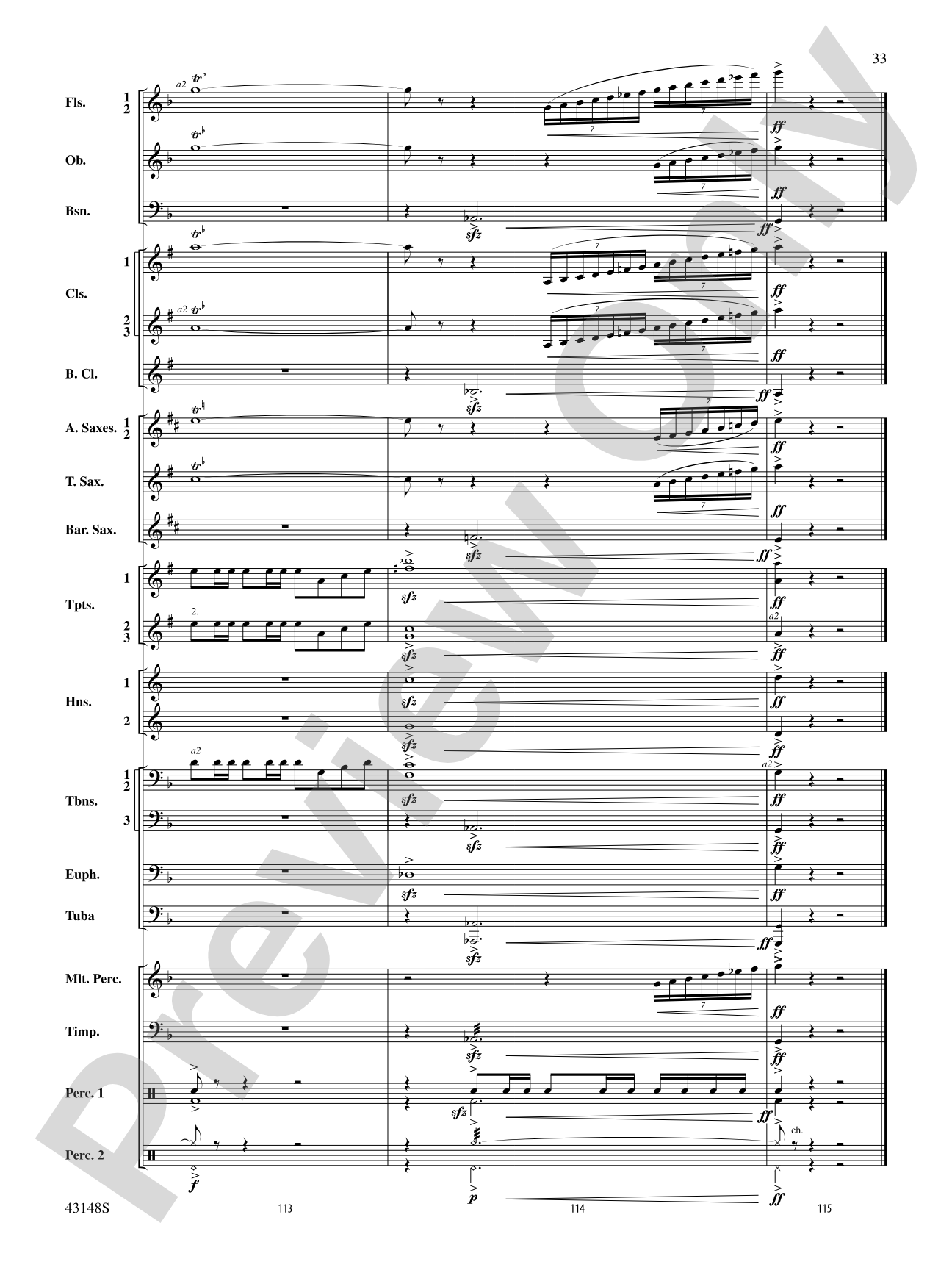

Of Sea and Song: Concert Band Conductor Score & Parts
Featuring: Spanish Ladies / Shenandoah / What Shall We Do with a Drunken Sailor?
Traditional Sea Shanties / arr. Patrick Roszell
Grade: 3 (Medium Easy)
Item: 00-PK-0006545

$67.00
Pickup currently not available
Buy Extra Parts (Digital PDF Download)
Parts Added to Cart!
Description
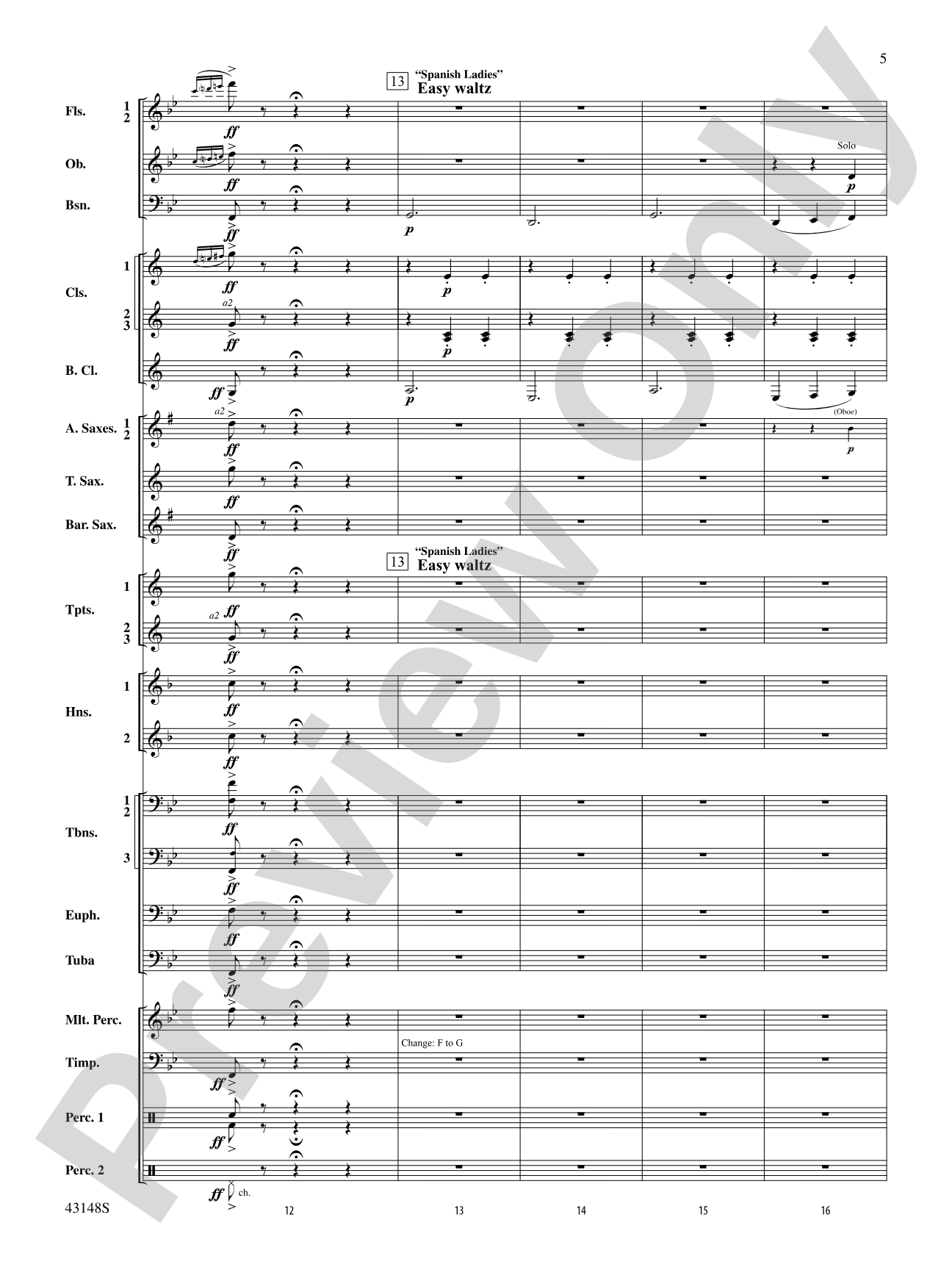
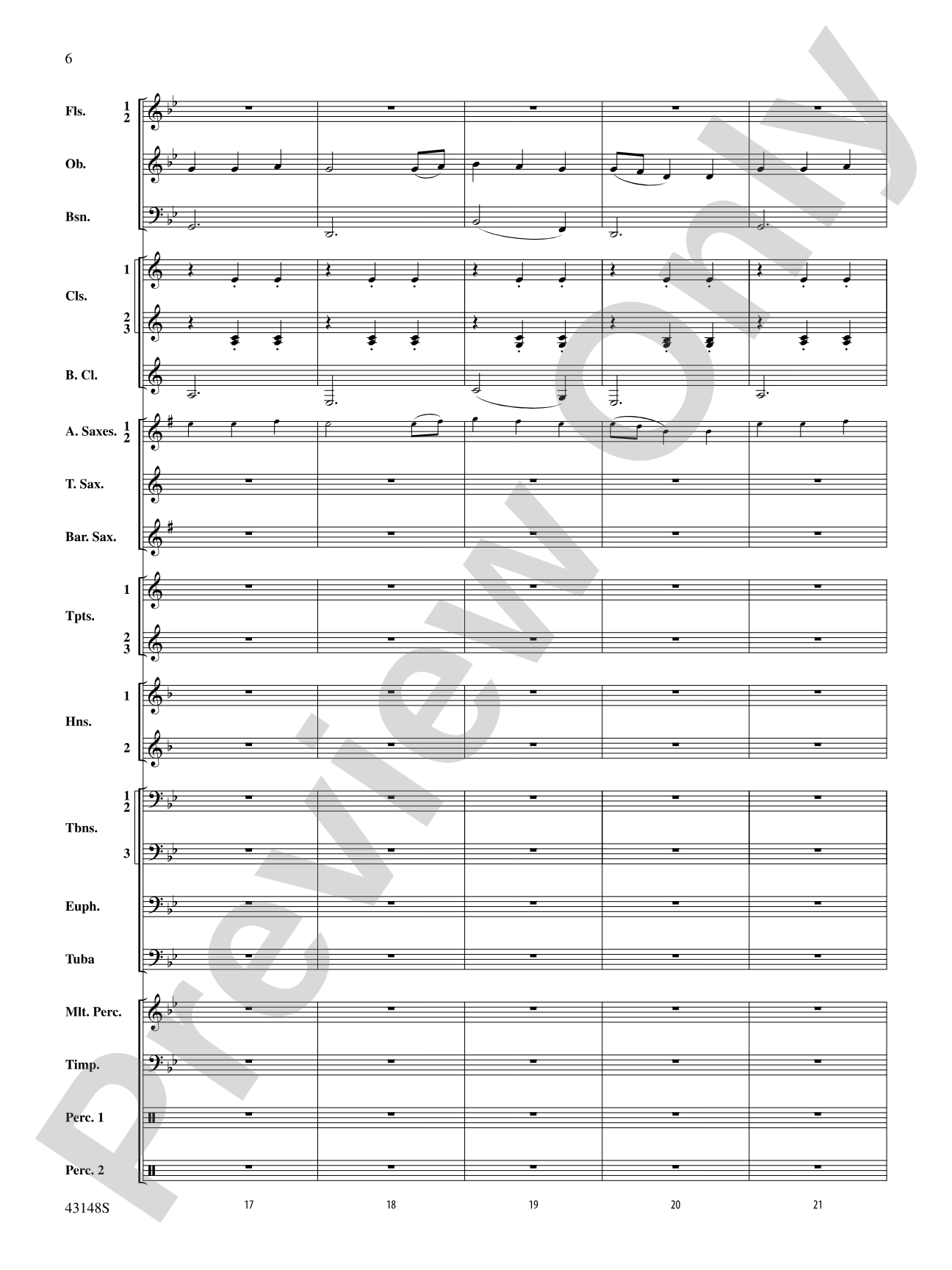
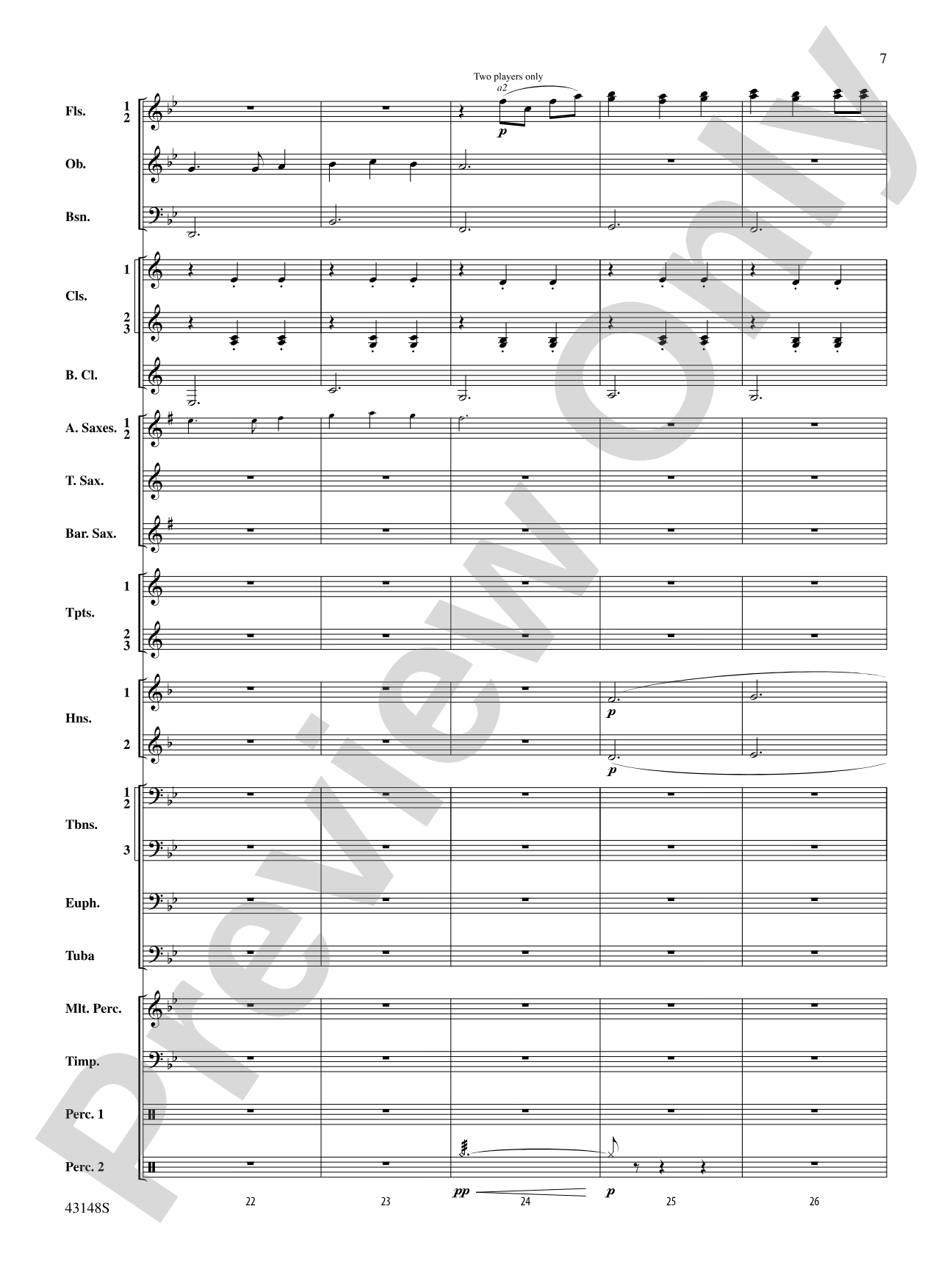
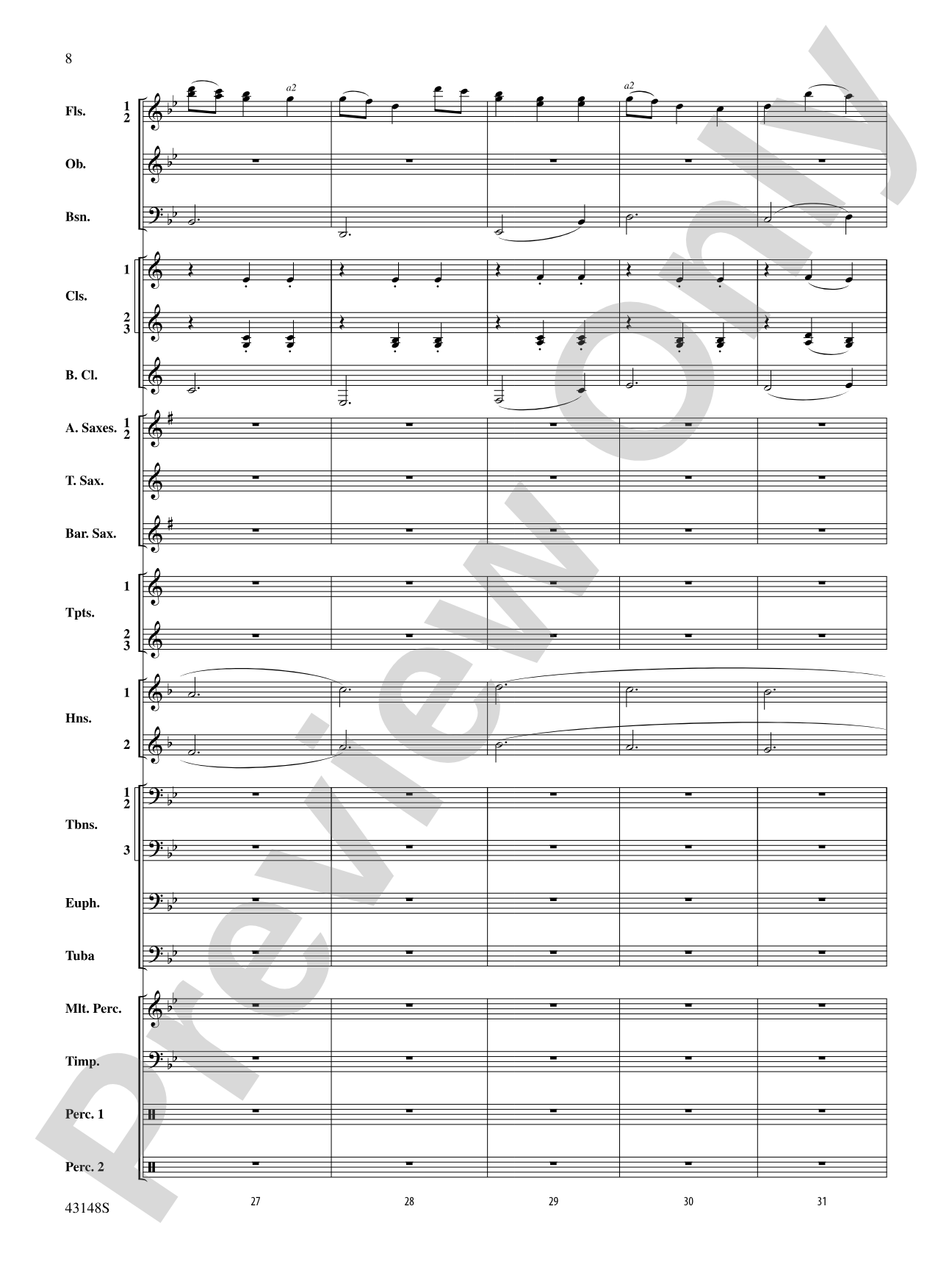
As the title suggests, this medley is comprised of sea songs. Included are, "Spanish Ladies," "Shenandoah," and "What Shall We Do with a Drunken Sailor." Educational, yet entertaining, this arrangement will make a great selection at your next contest or concert. (3:45)


Don't just read it, hear it, play along with it, and watch your students grow with it. In MakeMusic Cloud, Of Sea and Song: Concert Band Conductor Score & Parts comes alive with professional accompaniment, adjustable tempo, and built-in practice tools that turn solo practice into real progress.
Open in the Player
Jump straight in and assign it today.
Start Your Free Trial
Open this title and explore the full library in minutes.
Sample Audio
1
Audio File
--:--
0:00
0:00
Sample Video
Additional Details
Series:
Belwin Concert Band
Publisher:
Alfred Music
Page Count:
210
SKU:
00-PK-0006545
More about this title
Why we love this
Roszell strikes an uncommon balance here: the arrangement respects the melodic integrity of three beloved sea shanties while building genuine musical interest through tasteful scoring and tonal variety. At Grade 3, it's accessible enough for developing bands yet sophisticated enough to reward thoughtful interpretation, making it equally suited to concert programming or competitive festival play.
What to expect
A voyage through maritime tradition. The arrangement honors the sturdy, narrative quality of sea songs while adding orchestral color and harmonic sophistication that keeps the writing fresh across its 3:45 runtime.
Who it's for
Concert bands working at Grade 3 who want engaging, musically substantial repertoire that connects with audiences. Directors seeking pieces that satisfy both contest judging criteria and listener appeal will find this medley particularly useful.
How to get the most out of it
- Emphasize the character shift between movements. Each tune has its own mood; 'Spanish Ladies' calls for deliberate phrasing, 'Shenandoah' needs warmth and singing quality, and 'Drunken Sailor' thrives on rhythmic clarity and lighter articulation.
- Balance melody and accompaniment carefully. With familiar tunes, listeners will notice if supporting voices overshadow the primary line. Keep inner voices proportional and transparent.
- Use dynamic contrast to distinguish sections rather than keeping the entire medley at a single level. The transitions between songs provide natural opportunities for subtle rebalancing.
How to use it
Program this as an opener or closer on a concert where you're balancing serious contemporary repertoire with accessible crowd-pleasers. It also pairs well with other folk-based arrangements or works exploring American musical roots.
Skills your students will build
- Maintaining stylistic consistency across contrasting melodies within a single work
- Balancing foreground and background voices in medley formats
- Recognizing and interpreting phrase structure in traditional vocal music
- Achieving clarity and rhythmic precision in mid-tempo dancing figures
- Dynamic shaping and breath control for singing melodic lines on instruments