
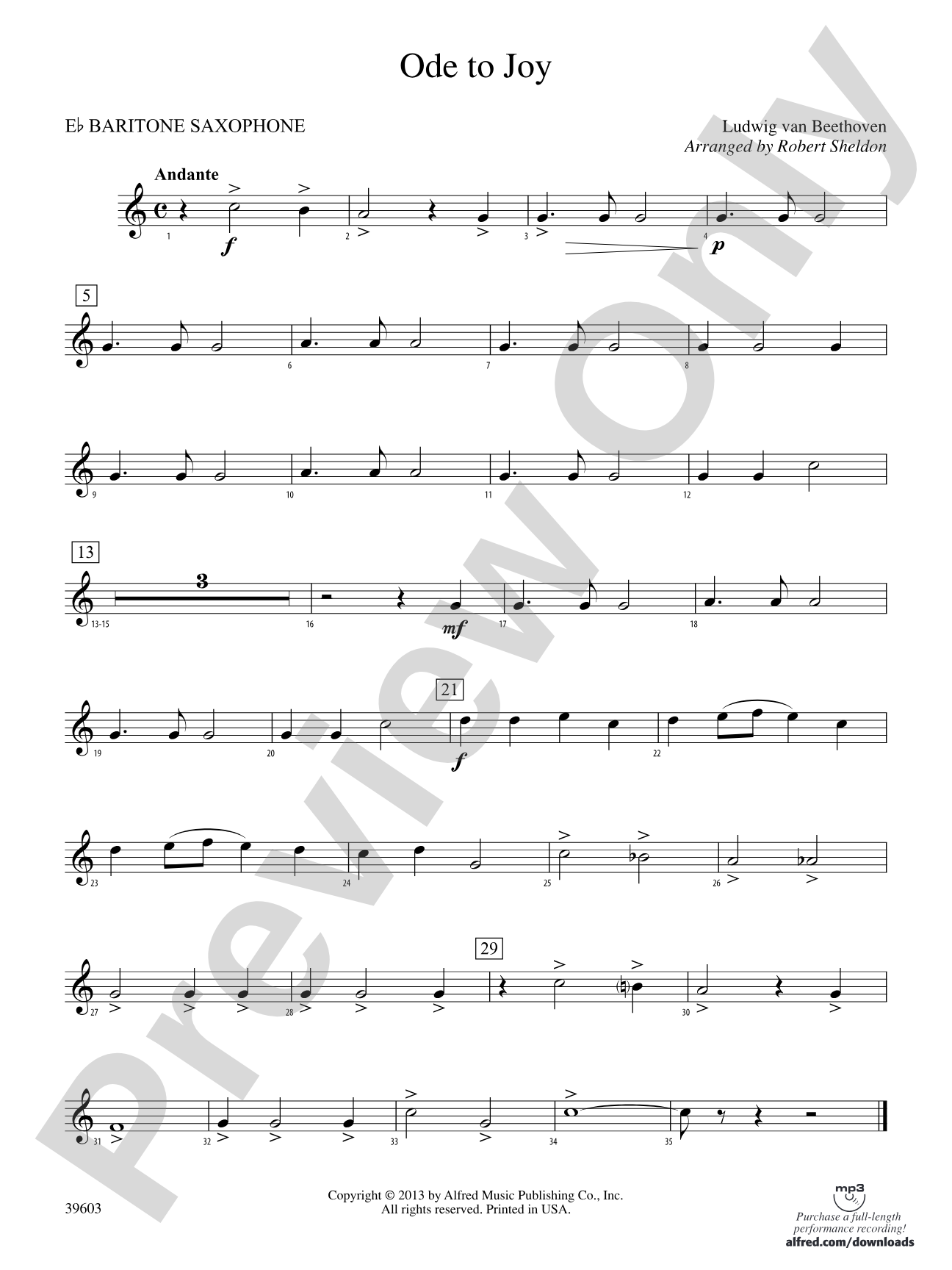

Ode to Joy: E-flat Baritone Saxophone
By Ludwig van Beethoven / arr. Robert Sheldon
Grade: 1 (Very Easy)
Item: 00-PC-0015878_BTX
$3.00
Pickup currently not available
Description
The musical setting of "Ode to Joy" by Ludwig van Beethoven in the final movement of his Ninth Symphony is one of the best-known melodies of all time. This young band arrangement allows first-year players to experience a full band setting of this important theme. (1:30) Correlates to Sound Innovations for Concert Band Book 1, Level 5.


Don't just read it, hear it, play along with it, and watch your students grow with it. In MakeMusic Cloud, Ode to Joy: E-flat Baritone Saxophone comes alive with professional accompaniment, adjustable tempo, and built-in practice tools that turn solo practice into real progress.
Open in the Player
Jump straight in and assign it today.
Start Your Free Trial
Open this title and explore the full library in minutes.
Sample Audio
1
Audio File
--:--
0:00
0:00
Sample Video
No sample videos found.
Additional Details
Series:
Sound Innovations for Concert Band
Publisher:
Alfred Music
Page Count:
130
SKU:
00-PC-0015878_BTX
More about this title
About the Composer: Ludwig van Beethoven
Ludwig van Beethoven (1770-1827) stands as a towering figure in Western music history, a composer who fundamentally transformed what the symphony could express. Born in Bonn and later based in Vienna, Beethoven bridged the Classical and Romantic eras through works of unprecedented emotional depth and structural innovation. His Ninth Symphony, completed in 1824 when he was profoundly deaf, remains his crowning achievement and one of the most significant compositions ever written.
The final movement's choral setting of Friedrich Schiller's poem "Ode to Joy" has become a universal anthem of human connection and triumph. For music educators, Beethoven's work offers students a window into how a master composer can take a simple, singable melody and build it into something transcendent. His influence on concert band repertoire is immeasurable; arrangements of his themes allow younger ensembles to engage with genuine masterworks rather than pale substitutes.
Why we love this
This arrangement respects the integrity of one of music's most beloved melodies while making it genuinely accessible to first-year band students. Robert Sheldon's writing ensures that every section has something meaningful to play, avoiding the hollow feeling that plagues many ultra-easy arrangements of major works. Programming this piece signals to your students and audience that they are capable of meaningful music-making, not just exercises.
What to expect
Joyful, celebratory, and deeply human. The melody carries a sense of dignity and uplift that resonates even in its simplest form. Students will recognize the tune immediately, which builds confidence and pride; they're not learning a new piece, they're joining a conversation with one of history's greatest composers.
Who it's for
First-year concert band students who are ready to experience a complete, recognizable work but still developing fundamental playing skills. This is ideal for students early in their first year of band study, particularly those using the Sound Innovations curriculum. It works equally well for mixed-age beginner ensembles or for programs introducing younger students to "real" repertoire.
How to get the most out of it
- Balance the melody between sections carefully. The opening clarinet presentation should sing above the harmonic foundation, but young clarinetists often push too hard. Coach them to think of a steady, supported tone rather than volume.
- Shape the phrases musically even at this simple level. Help students recognize the natural breathing points in the melody and conduct clear phrase boundaries so the ensemble doesn't sound robotic.
- Let the piece breathe at tempo markings and transitions. Young bands often rush from section to section; give yourself space in rehearsal to mark these moments intentionally.
- Balance upper woodwinds with lower voices in the harmonization. First-year students in the low reeds and brass need encouragement to support the melody without drowning it out.
How to use it
Save this for a concert where your audience includes families and community members who may not attend band concerts regularly. The instant recognizability of "Ode to Joy" creates a powerful moment of connection between student performers and listeners. It also serves as an effective closer for a festival or contest, leaving judges and audiences with something uplifting to carry home.
Skills your students will build
- Playing a complete, multi-section arrangement with clear structural divisions
- Maintaining steady tempo and ensemble blend in a major key harmonic setting
- Balancing melody and accompaniment within the band texture
- Responding to phrasing and dynamic shape in a recognized classical theme
- Reading and executing parts within a full conductor score format