
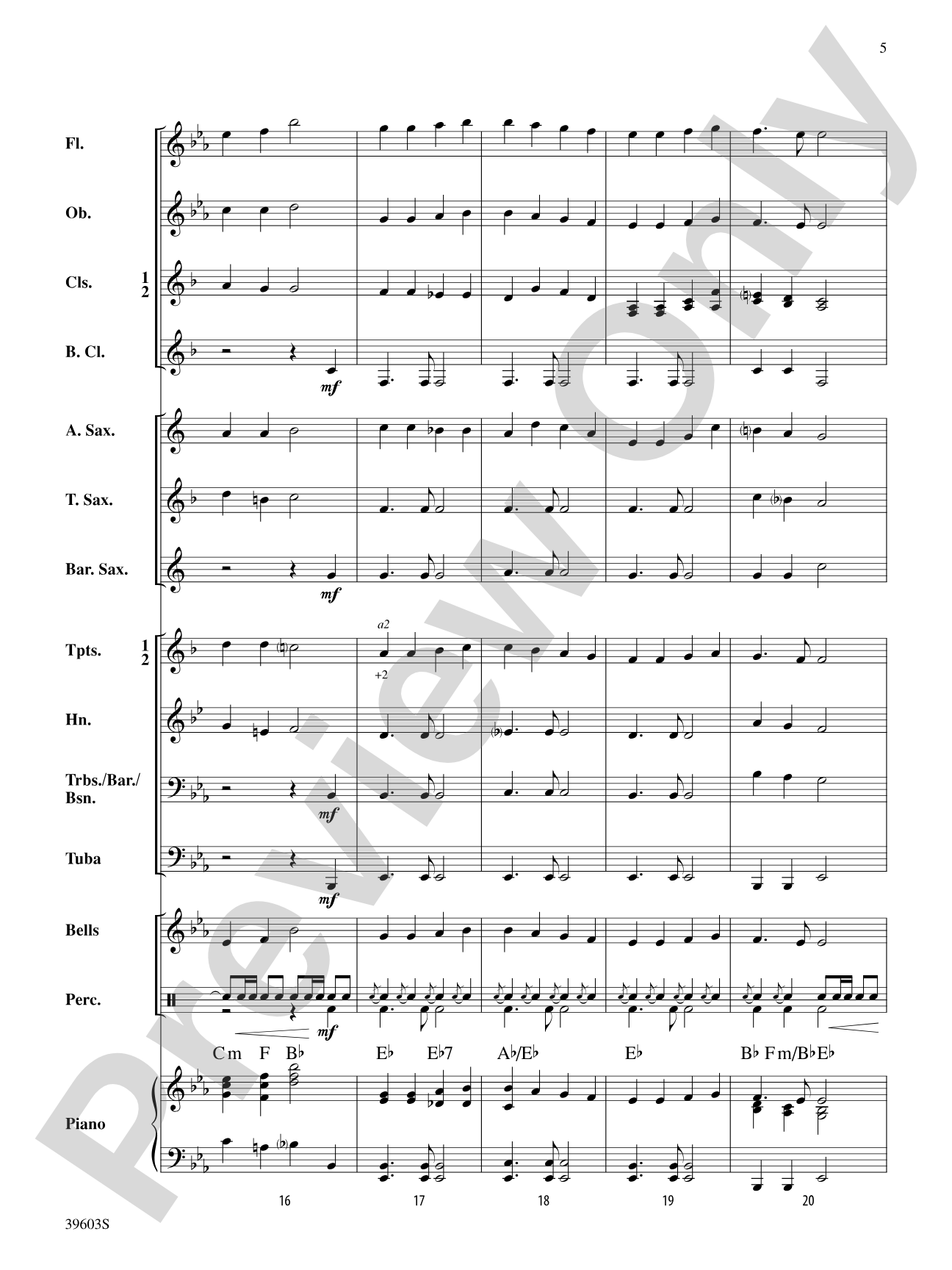
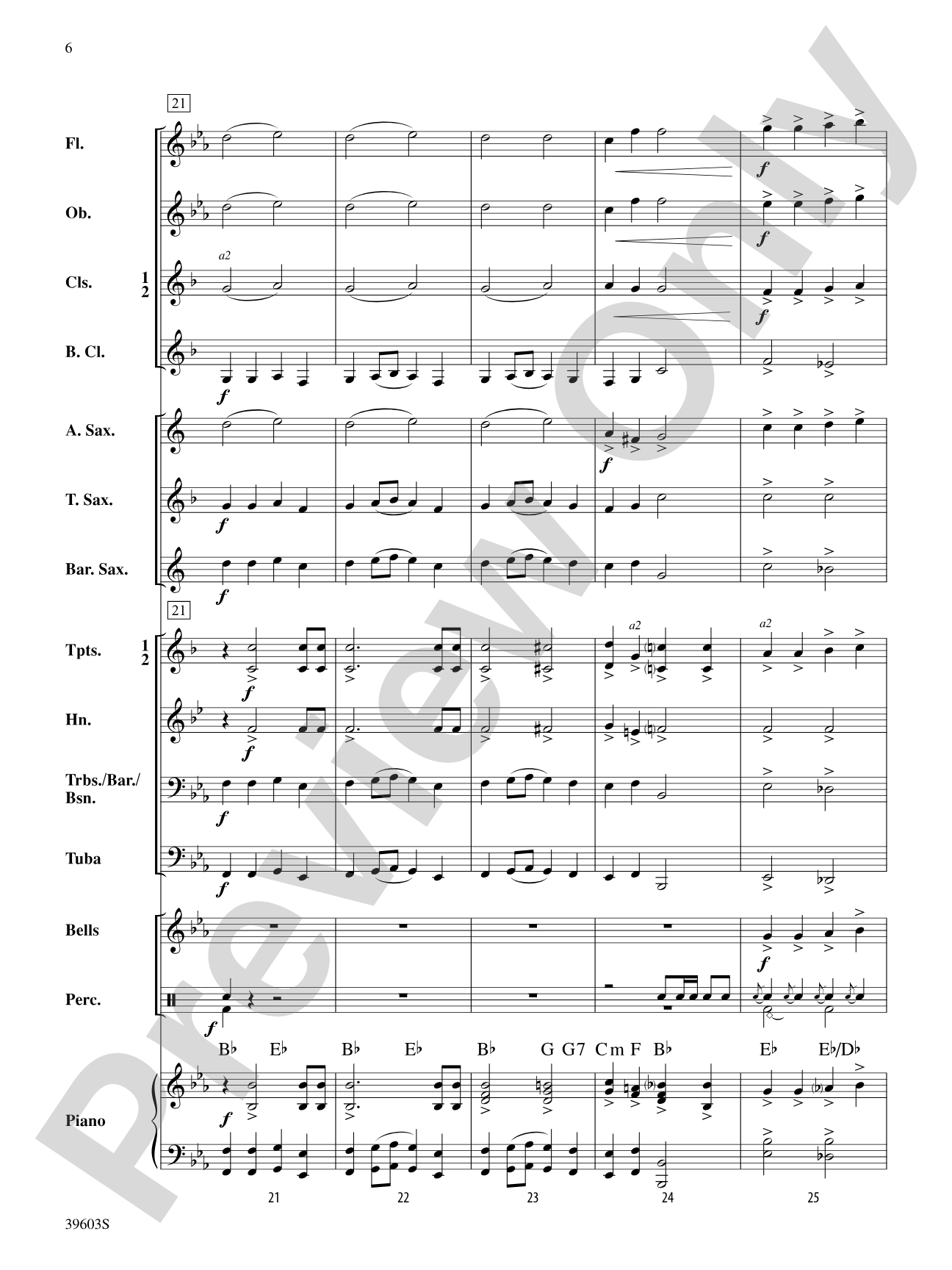
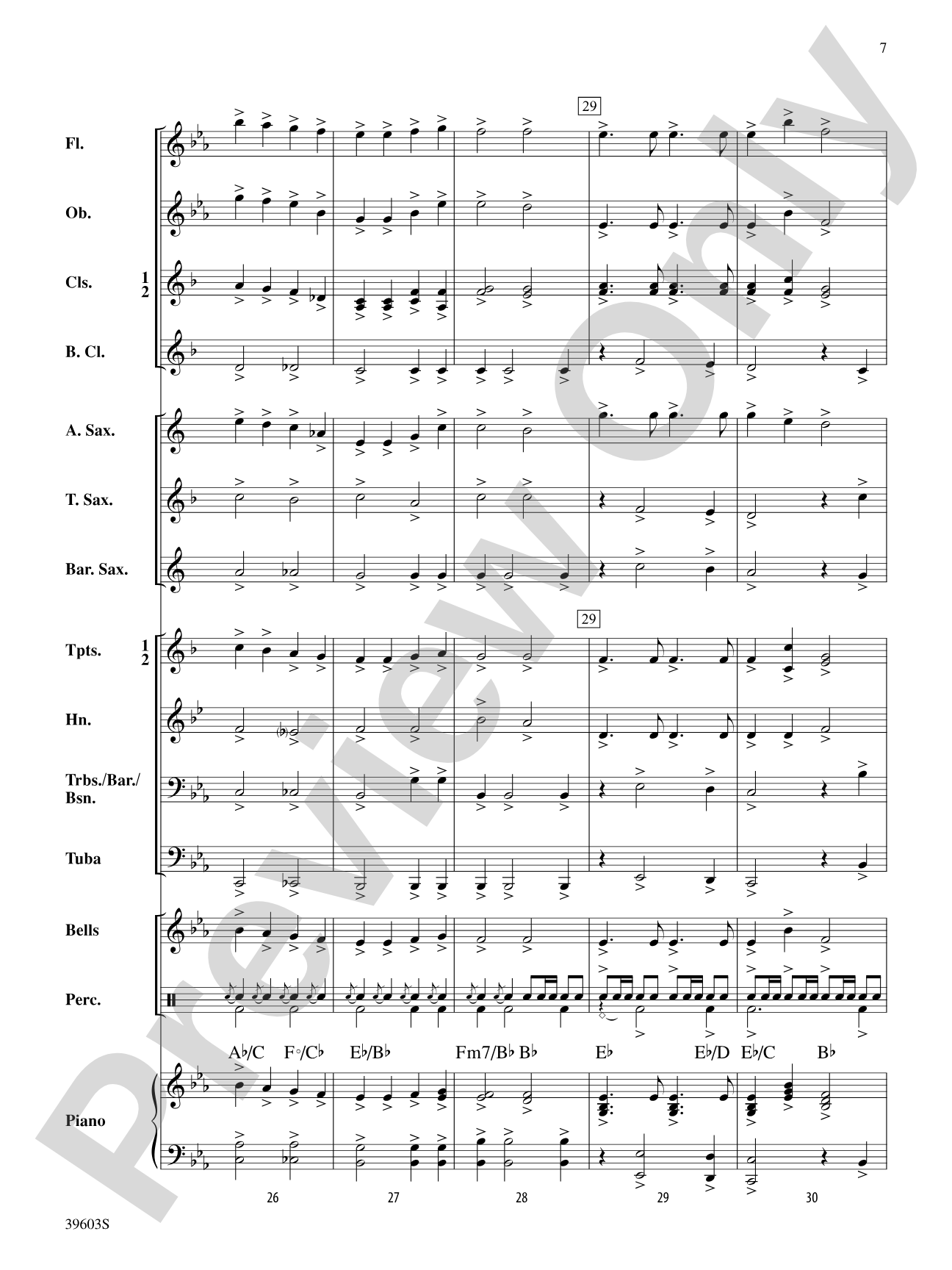
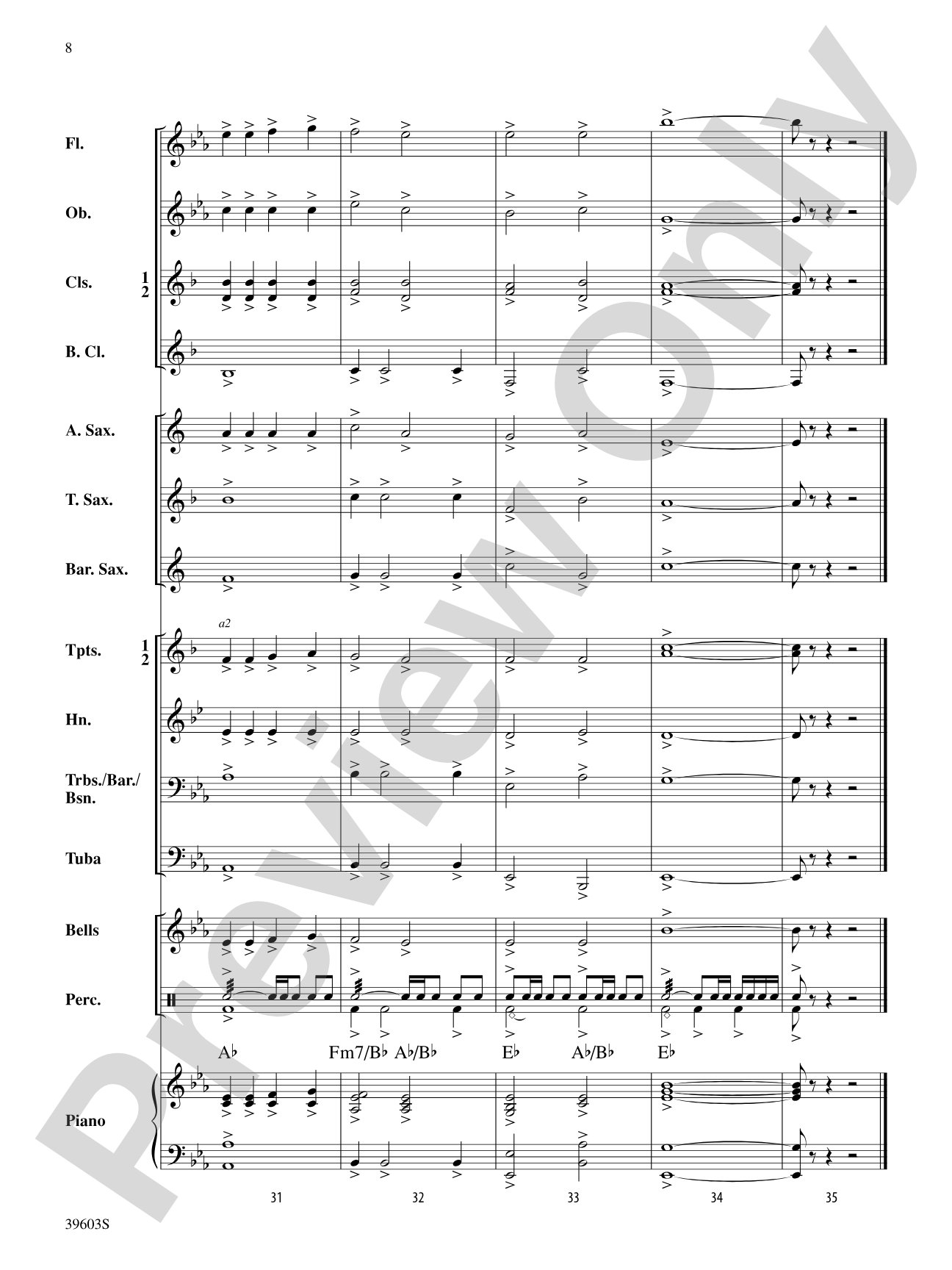

Ode to Joy: Concert Band Conductor Score & Parts
By Ludwig van Beethoven / arr. Robert Sheldon
Grade: 1 (Very Easy)
Item: 00-PK-0005627

$48.00
Pickup currently not available
Buy Extra Parts (Digital PDF Download)
| Product | Price | Quantity |
|---|---|---|
| Ode to Joy: Score | $7.00 | |
| Ode to Joy: Flute | $3.00 | |
| Ode to Joy: Oboe | $3.00 | |
| Ode to Joy: 1st B-flat Clarinet | $3.00 | |
| Ode to Joy: 2nd B-flat Clarinet | $3.00 | |
| Ode to Joy: B-flat Bass Clarinet | $3.00 | |
| Ode to Joy: E-flat Alto Saxophone | $3.00 | |
| Ode to Joy: B-flat Tenor Saxophone | $3.00 | |
| Ode to Joy: E-flat Baritone Saxophone | $3.00 | |
| Ode to Joy: 1st B-flat Trumpet | $3.00 | |
| Ode to Joy: 2nd B-flat Trumpet | $3.00 | |
| Ode to Joy: 1st F Horn | $3.00 | |
| Ode to Joy: 1st Trombone | $3.00 | |
| Ode to Joy: Baritone T.C. | $3.00 | |
| Ode to Joy: Tuba | $3.00 | |
| Ode to Joy: Bells | $3.00 | |
| Ode to Joy: 1st Percussion | $3.00 | |
| Ode to Joy: Piano Accompaniment | $3.00 | |
| Ode to Joy: C Educational Pack | $3.00 | |
| Ode to Joy: Bb Educational Pack | $3.00 | |
| Ode to Joy: Eb Educational Pack | $3.00 | |
| Ode to Joy: F Educational Pack | $3.00 | |
| Ode to Joy: Bass Clef Educational Pack | $3.00 |
Parts Added to Cart!
Description
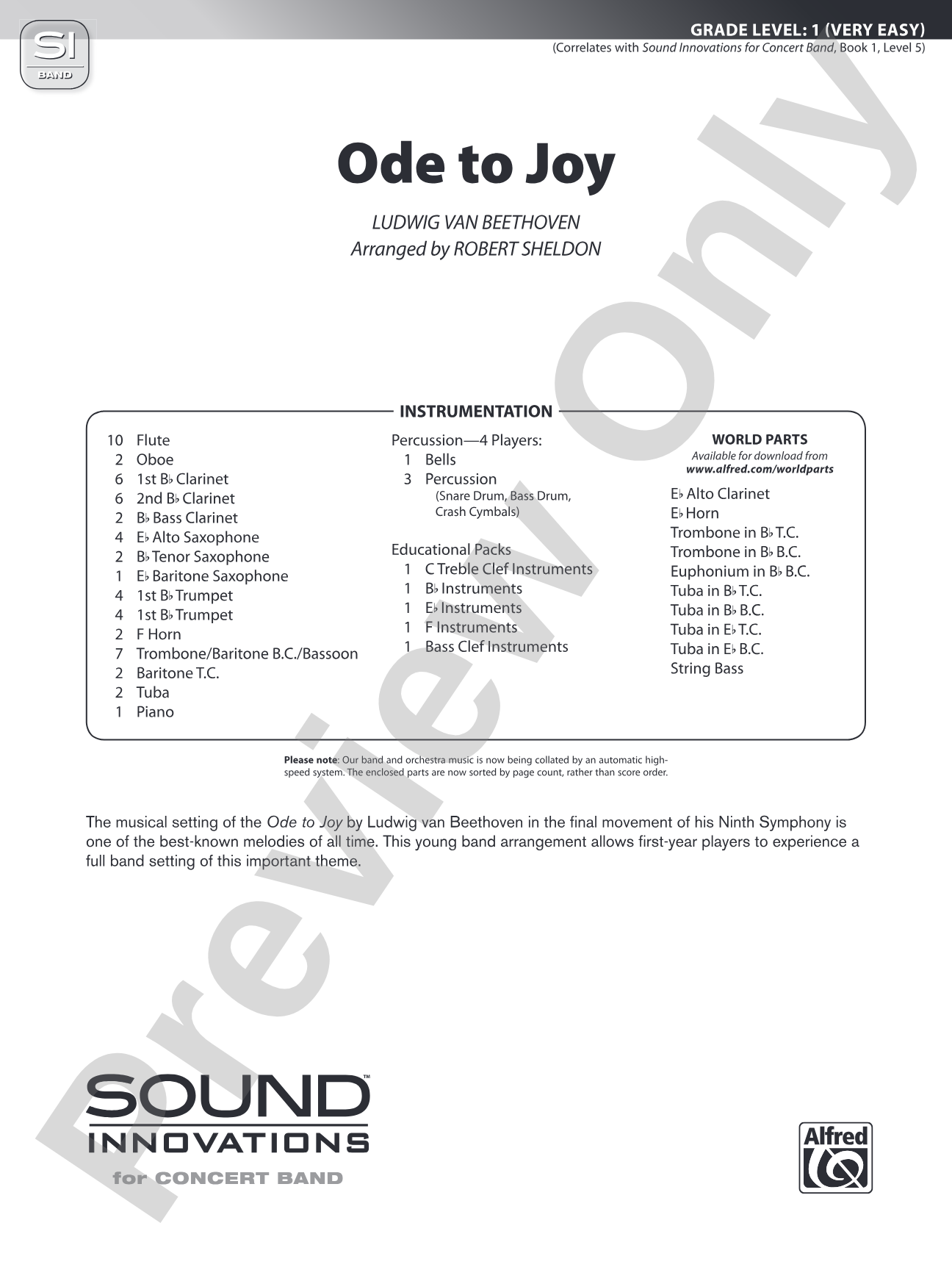
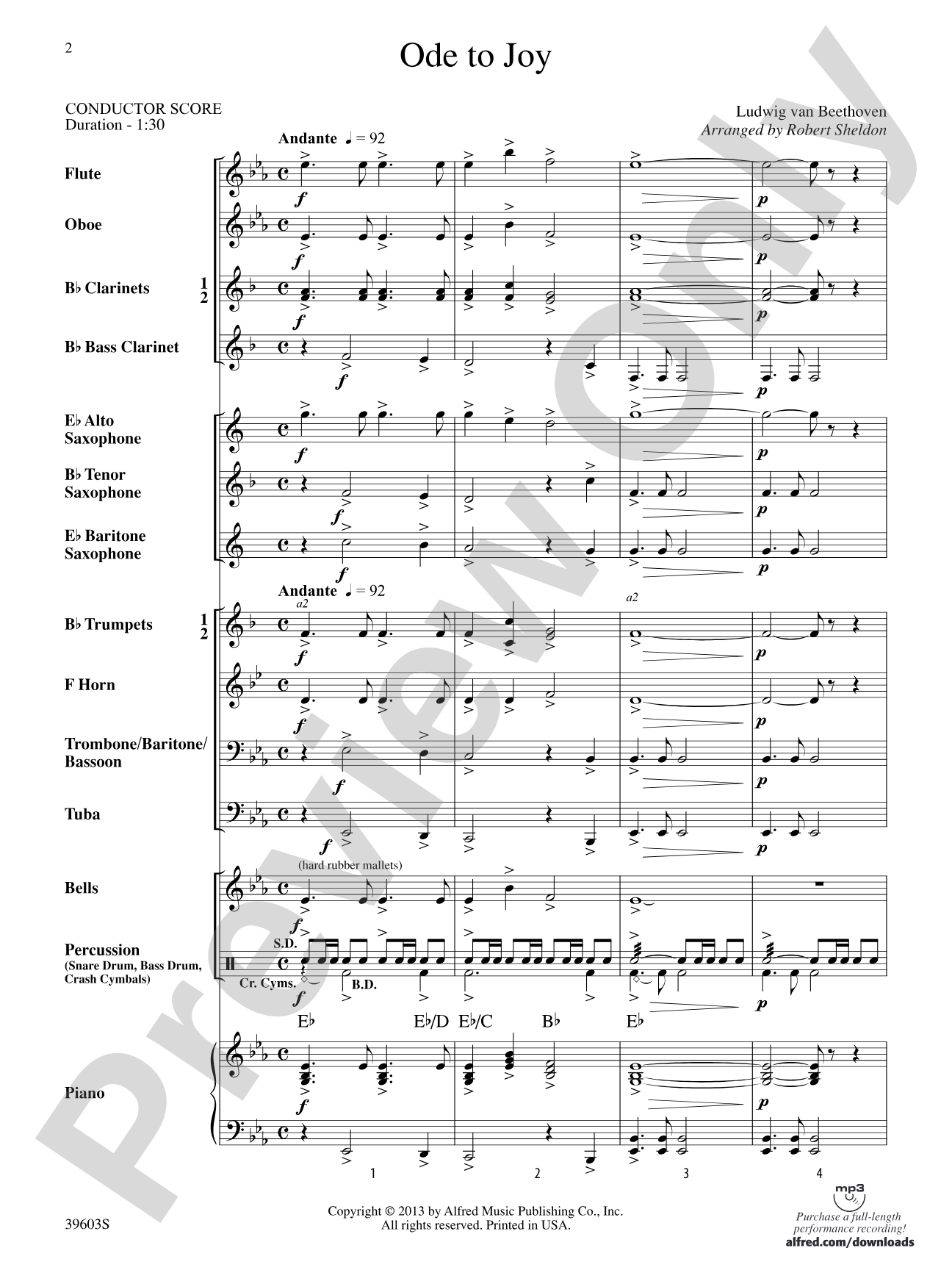
The musical setting of "Ode to Joy" by Ludwig van Beethoven in the final movement of his Ninth Symphony is one of the best-known melodies of all time. This young band arrangement allows first-year players to experience a full band setting of this important theme. (1:30) Correlates to Sound Innovations for Concert Band Book 1, Level 5.


Don't just read it, hear it, play along with it, and watch your students grow with it. In MakeMusic Cloud, Ode to Joy: Concert Band Conductor Score & Parts comes alive with professional accompaniment, adjustable tempo, and built-in practice tools that turn solo practice into real progress.
Open in the Player
Jump straight in and assign it today.
Start Your Free Trial
Open this title and explore the full library in minutes.
Sample Audio
1
Audio File
--:--
0:00
0:00
Sample Video
No sample videos found.
Additional Details
Series:
Sound Innovations for Concert Band
Publisher:
Alfred Music
Page Count:
130
SKU:
00-PK-0005627
More about this title
About the Composer: Ludwig van Beethoven
Ludwig van Beethoven (1770, 1827) stands as a pivotal figure in Western music history, bridging Classical and Romantic traditions. His nine symphonies represent a systematic expansion of the form's emotional and structural possibilities, and the Ninth Symphony remains his most performed and celebrated work. The "Ode to Joy" finale, set to Friedrich Schiller's text, demonstrates Beethoven's revolutionary approach to orchestration and his belief in music's power to unite humanity.
For music educators, Beethoven's legacy is essential: his works teach students how a composer can defy convention, build architectural grandeur through systematic development, and write for young or developing ensembles without sacrificing artistic integrity. Every piece in the standard repertoire owes something to the path Beethoven charted.
Why we love this
This arrangement respects the integrity of one of music's most beloved melodies while making it genuinely accessible to first-year band students. Robert Sheldon's writing ensures that every section has something meaningful to play, avoiding the hollow feeling that plagues many ultra-easy arrangements of major works. Programming this piece signals to your students and audience that they are capable of meaningful music-making, not just exercises.
What to expect
Joyful, celebratory, and deeply human. The melody carries a sense of dignity and uplift that resonates even in its simplest form. Students will recognize the tune immediately, which builds confidence and pride; they're not learning a new piece, they're joining a conversation with one of history's greatest composers.
Who it's for
First-year concert band students who are ready to experience a complete, recognizable work but still developing fundamental playing skills. This is ideal for students early in their first year of band study, particularly those using the Sound Innovations curriculum. It works equally well for mixed-age beginner ensembles or for programs introducing younger students to "real" repertoire.
How to get the most out of it
- Shape the melody with a gentle crescendo across each phrase rather than playing it as a flat, even line. Young players often need permission to give the tune room to breathe.
- Check balance in the harmony parts; woodwinds can easily overwhelm the brass foundation if intonation isn't locked in during sectionals.
- Establish a comfortable tempo that lets articulation remain clean without rushing. The melody's strength comes from clarity, not speed.
- Bring out the arrival points, the moments where the melody peaks or resolves, so the piece doesn't feel like one long, static statement.
How to use it
This works beautifully as a standalone piece in a concert where you want a moment of genuine substance and accessibility. It also serves well as a finale or centerpiece, since its fame means audience members, particularly families of new players, connect to it emotionally.
Skills your students will build
- Playing a complete, multi-section arrangement with clear structural divisions
- Maintaining steady tempo and ensemble blend in a major key harmonic setting
- Balancing melody and accompaniment within the band texture
- Responding to phrasing and dynamic shape in a recognized classical theme
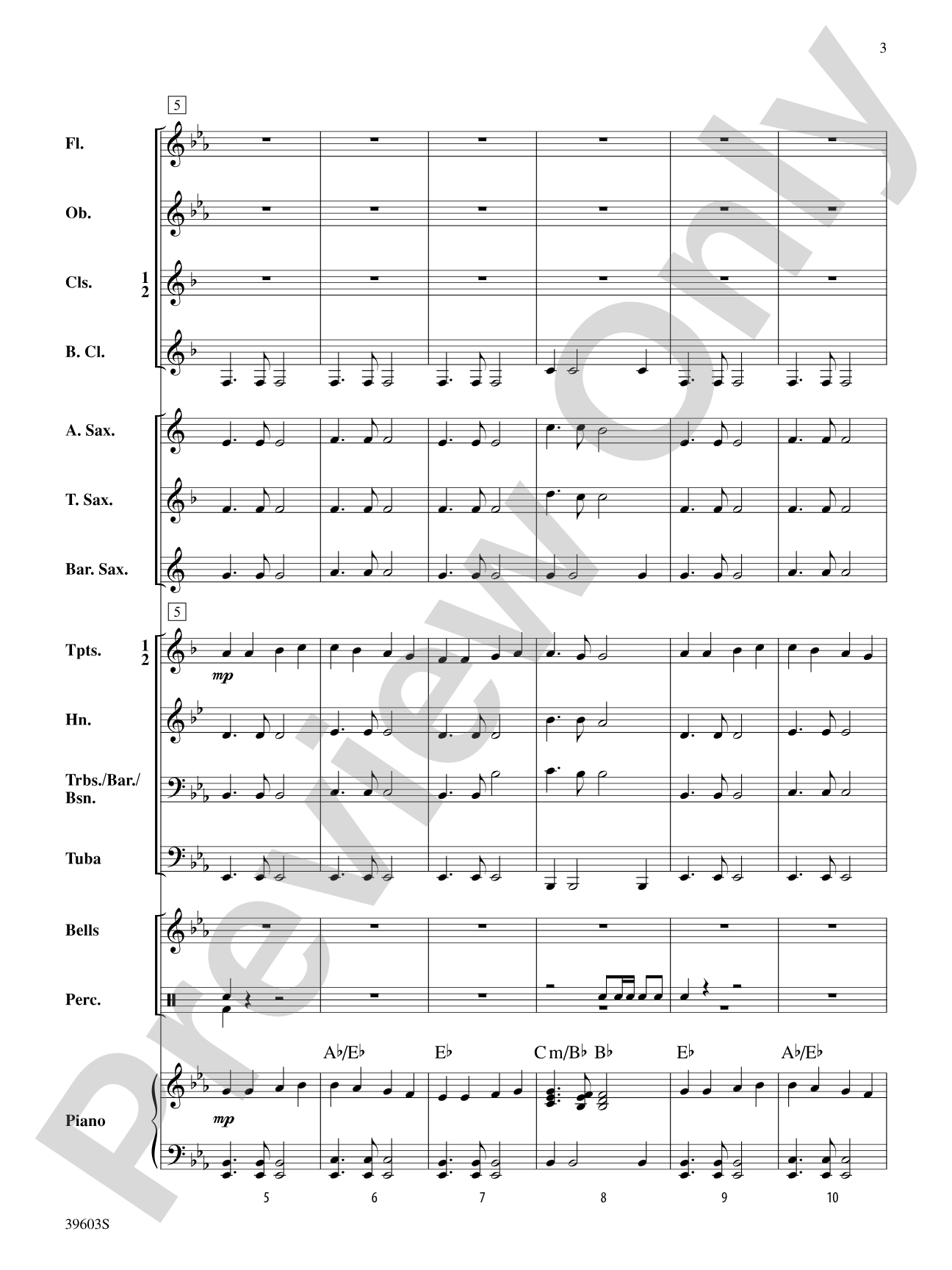
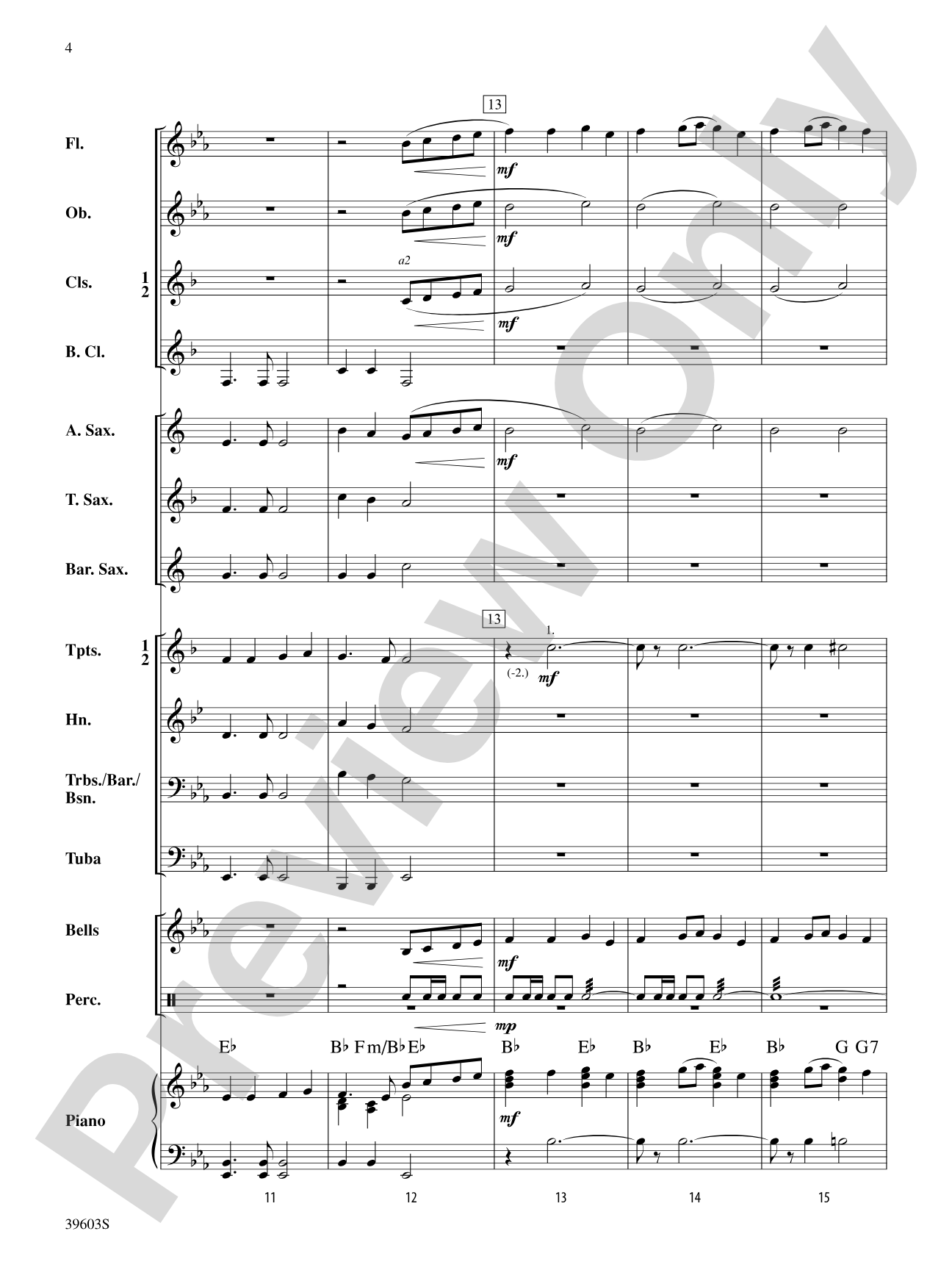
- Reading and executing parts within a full conductor score format