

O Occhi Manza Mia (O Eyes of My Beloved): 3-Part, a cappella Choral Octavo
Arr. Russell Robinson
Item: 00-PO-0002905
$2.25
Minimum order quantity: 20 copies
Pickup currently not available
Description
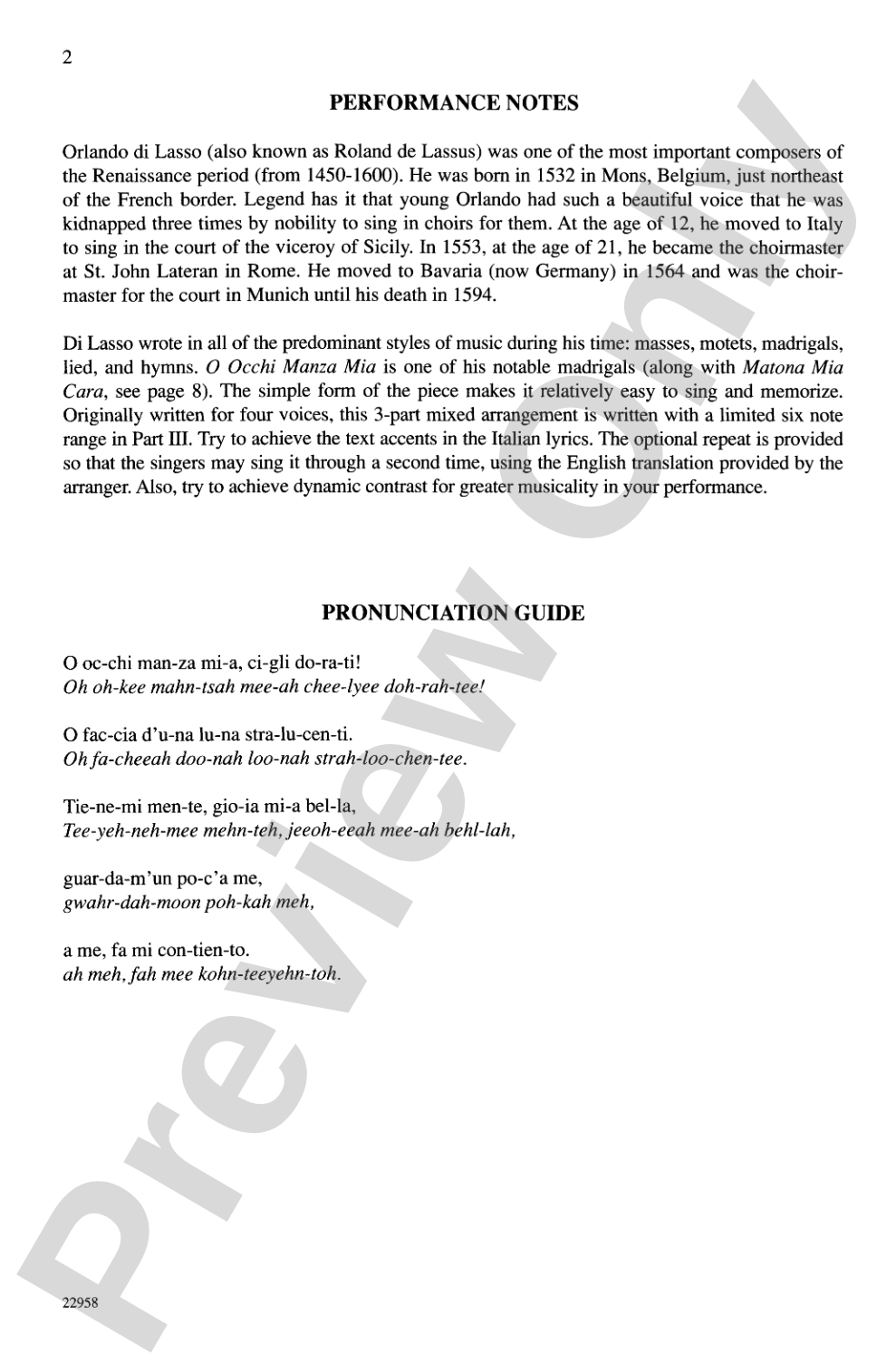
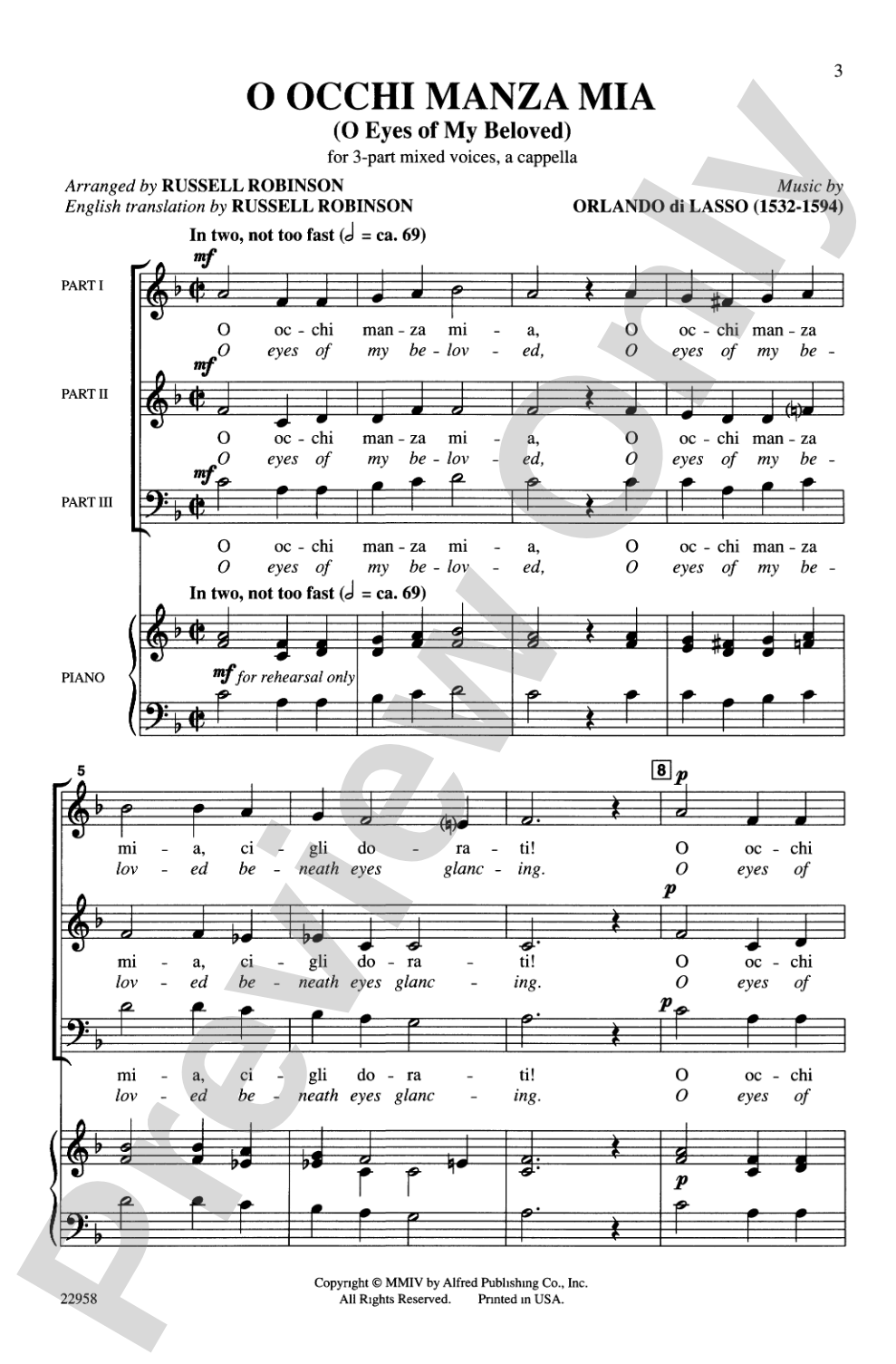
With a text in Italian or English, clear choral phrasing, and excellent voice leading, this new voicing of the Renaissance classic is just right for SSA choirs. Informative performance notes and a pronunciation guide help to make this an excellent introduction to madrigal singing.


O Occhi Manza Mia (O Eyes of My Beloved): 3-Part, a cappella Choral Octavo isn't in MakeMusic Cloud just yet...but it could be. Let us know you'd like to see it, and you'll help shape what comes next. In the meantime, start a free trial and dive into thousands of interactive titles your students can play along with today.
Request This Title
Tell us you want it.
Start Your Free Trial
Explore everything that's ready to play right now.
Sample Audio
1
Audio File
--:--
0:00
0:00
Sample Video
No sample videos found.
Additional Details
Series:
Alfred Archive Edition: Alfred Choral Designs
Publisher:
Alfred Music
Page Count:
8
SKU:
00-PO-0002905
More about this title
About the Arranger: Russell L. Robinson
Russell L. Robinson is an arranger with deep roots in choral pedagogy and a particular gift for making early music accessible to young singers. His work with the Alfred Archive Edition demonstrates a commitment to thoughtful rescoring that preserves the integrity of Renaissance masterworks while meeting singers where they are technically.
Why we love this
Robinson's arranging gives this Renaissance text room to breathe without sacrificing the intimacy that makes madrigals rewarding. The voice leading stays transparent enough that younger singers can hear their own lines, while the harmonic language honors the original's expressive character. It's a genuine introduction to the genre, not a watered-down approximation.
What to expect
Intimate and expressive, with the kind of gentle yearning you find in Renaissance love poetry. The three-part texture lets each voice matter, creating a conversation between parts rather than a thick harmonic wash. There's elegance in the restraint.
Who it's for
SSA choirs, particularly those with developing singers who are ready for repertoire beyond pop arrangements but need clear voice leading and manageable ranges. Directors introducing madrigal literature will find this voicing accessible without feeling oversimplified.
How to get the most out of it
- Start with the pronunciation guide before rehearsal and spend time on vowel consistency across the three parts, especially in sustained passages where blend becomes audible.
- Let the text dictate your phrasing rather than phrase length. These Italian words carry emotional weight; honor the natural speech rhythm rather than forcing even eight-bar phrases.
- Balance sonority by checking that no single part is sitting too high in the choir's range. With only three voices, one strong singer can pull the blend off-center.
How to use it
Program this early in a Renaissance or world music concert where it can anchor a thematic set of madrigals or secular choral works. Its 8-page length and accessible difficulty make it ideal for a festival or contest entry where you want to showcase musicality without technical display.
Skills your students will build
- Reading and performing a cappella literature without harmonic support
- Italian pronunciation and text painting in the madrigal genre
- Listening for balance and blend in three-part writing
- Shaping lyrical phrases driven by text rather than bar line
- Singing sustained lines with consistent vowel quality