

O Occhi Manza Mia (O Eyes of My Beloved): SSA, a cappella Choral Octavo
Arr. Russell Robinson
Item: 00-PO-0000712
$2.05
Minimum order quantity: 20 copies
Pickup currently not available
Description
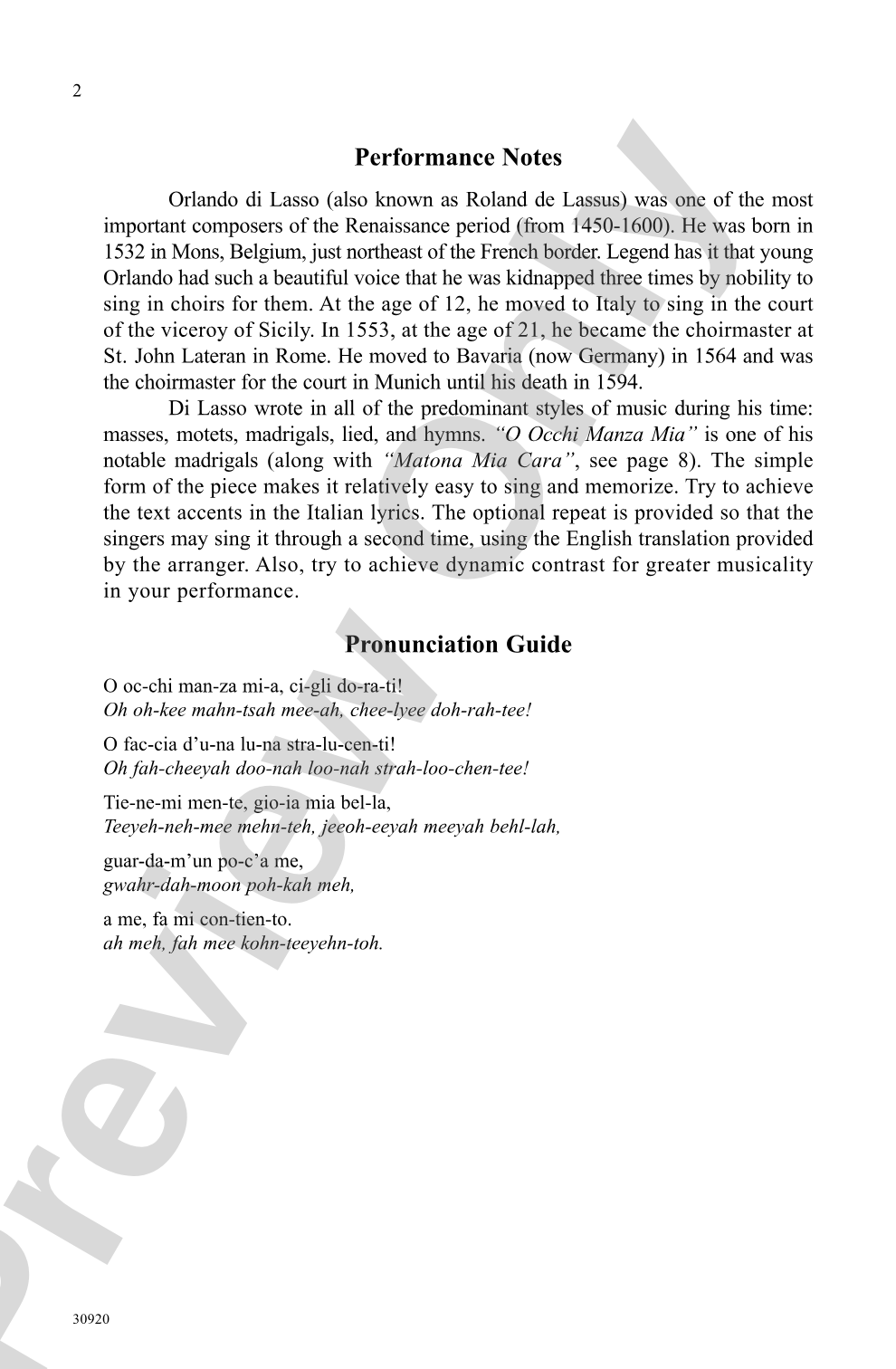
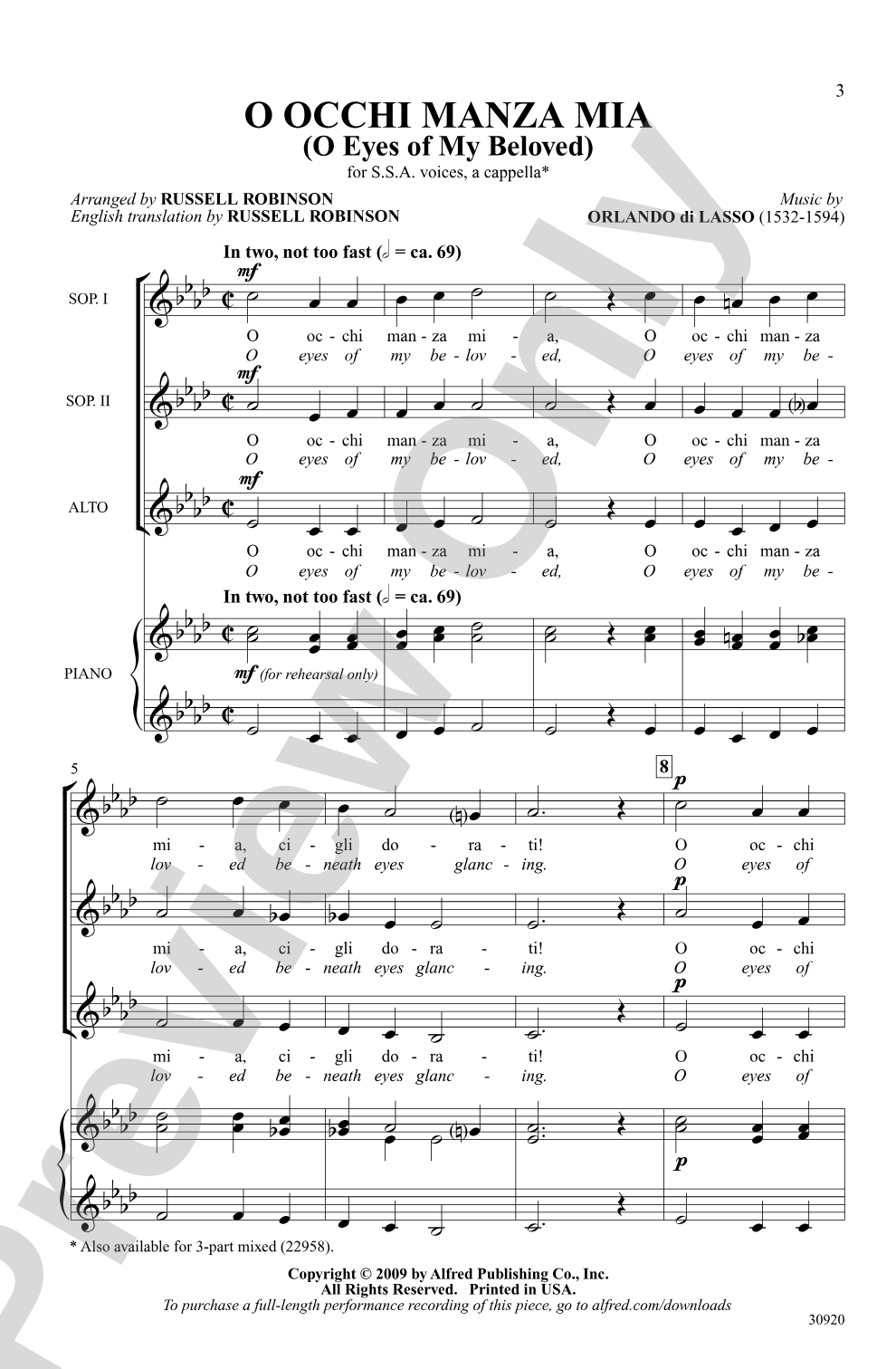
With a text in Italian or English, clear choral phrasing, and excellent voice leading, this new voicing of the Renaissance classic is just right for SSA choirs. Informative performance notes and a pronunciation guide help to make this an excellent introduction to madrigal singing.


O Occhi Manza Mia (O Eyes of My Beloved): SSA, a cappella Choral Octavo isn't in MakeMusic Cloud just yet...but it could be. Let us know you'd like to see it, and you'll help shape what comes next. In the meantime, start a free trial and dive into thousands of interactive titles your students can play along with today.
Request This Title
Tell us you want it.
Start Your Free Trial
Explore everything that's ready to play right now.
Sample Audio
1
Audio File
--:--
0:00
0:00
Sample Video
No sample videos found.
Additional Details
Series:
Alfred Choral Designs
Publisher:
Alfred Music
Page Count:
8
SKU:
00-PO-0000712
More about this title
Why we love this
Robinson's voicing respects the Renaissance harmonic language while making it genuinely singable for younger SSA ensembles. The inclusion of both Italian and English text options, paired with a pronunciation guide and performance notes, means directors spend less time on preparation and more time on musical expression.
What to expect
Intimate and lyrical, the piece unfolds with Renaissance restraint while maintaining genuine emotional warmth. The a cappella setting requires singers to listen closely to one another, creating a sense of chamber intimacy that makes the text about love and longing feel immediate and personal.
Who it's for
SSA choirs seeking an accessible entry point into madrigal literature without sacrificing harmonic sophistication or musicality. This arrangement works well for high school ensembles, treble choirs in community settings, and any group wanting to expand beyond contemporary secular writing.
How to get the most out of it
- Pay attention to the voice leading across all three parts; Renaissance polyphony rewards singers who hear their line as one strand in a larger harmonic fabric rather than a solo melody.
- Use the pronunciation guide to nail the Italian vowels, which will open up the resonance and help the a cappella texture bloom.
- Shape phrases according to text stress and punctuation rather than simply breaking at bar lines; this approach brings the text to life and prevents the piece from feeling metrically rigid.
How to use it
Pair this with other madrigals or secular Renaissance pieces to build a thematic concert around love poetry and courtly song. It also serves as an excellent teaching piece within a unit on historical context and voice leading, giving singers hands-on experience with music that shaped choral writing.
Skills your students will build
- Renaissance harmonic language and voice leading conventions
- Italian pronunciation and text expression
- A cappella blend and intonation in three-part writing
- Madrigal style and phrasing from original text meaning