O Come and Sing Cover Image

O Come and Sing: SATB, <i>a cappella</i> Choral Octavo

$1.40 USD
Sale price  $1.40 USD Regular price 
Skip to product information
O Come and Sing Cover Image

O Come and Sing: SATB, a cappella Choral Octavo

Music by Mary Donnelly and George L. O. Strid

Item: 00-18644

$1.40
Shipped

One moment…

Description
Straightforward, homophonic vocal writing is the highlight of this fullsounding yet simple Christmas work. It's in the style of a madrigal, and may be performed with or without piano.

O Come and Sing: SATB, a cappella Choral Octavo isn't in MakeMusic Cloud just yet...but it could be. Let us know you'd like to see it, and you'll help shape what comes next. In the meantime, start a free trial and dive into thousands of interactive titles your students can play along with today.

Sample Pages

No sample pages found.

Sample Audio
0:00
0:00
Sample Video
Additional Details
Series: Alfred Choral Designs
Publisher: Alfred Music
Page Count: 8
UPC: 038081172842
SKU: 00-18644
Instrumentation: Opt. Piano

More about this title

About the Composer: Mary Donnelly
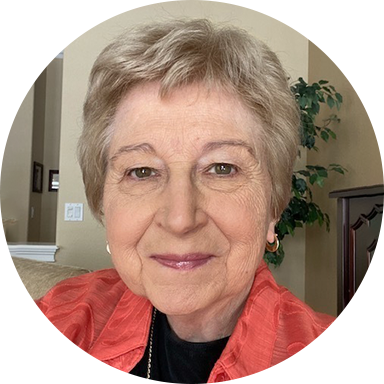
Mary Donnelly

Mary Donnelly grew up in Reno, Nevada, and studied English and French at the University of Nevada, Reno. While still an undergraduate, she found herself drawn to choral work, organizing children's choruses that sparked a deeper passion for music education. She pursued formal training in music pedagogy at Lesley College in Cambridge, Massachusetts, where she focused on integrating the arts across the curriculum. Over three decades, she taught general music and choir in the Washoe County School District, retiring after building a legacy of ensemble work and educational songwriting.

In 1985, Donnelly began collaborating with George L. O. Strid when the two team-taught a sixth-grade music class. Their principal's request to create a musical for Reading Week launched a prolific partnership that has produced more than two hundred songs and twenty-five full musicals. Both are active members of ACDA, and Donnelly holds membership in ASCAP and the National Education Association. She remains based in Reno with her husband, Rich.

Why we love this

The homophonic texture and clear harmonic language make this piece accessible for developing choirs without sacrificing musical substance. Its dual nature as either a cappella work or piano-accompanied piece gives you genuine programming flexibility, and the madrigal style brings a festive, singable charm that audiences recognize immediately as holiday music with character.

What to expect

Warm and inviting, with the timeless appeal of a madrigal tradition adapted for modern voices. The homophonic texture creates an immediate, full sound that feels celebratory without requiring complex rhythmic or harmonic navigation, evoking a gathering where voices blend in simple joy.

Who it's for

This octavo works well for developing middle school or high school choirs that are still building unison and two-part confidence, as well as adult community choruses seeking straightforward holiday material. The manageable range and clear voice leading make it approachable for less experienced singers while remaining musical enough to satisfy more advanced ensembles.

How to get the most out of it

  • Balance the parts carefully in the a cappella version; the straightforward harmony means any voice dominating will throw off the blend. If you choose to use piano, let the accompaniment support without overwhelming the four-part texture.
  • Shape phrases with gentle dynamic contours even in this simple setting. A madrigal thrives on subtle expression, so encourage singers to breathe as a unified ensemble and shape each phrase as a complete musical thought.
  • Rehearse vowel unity across all four parts early. Homophonic writing exposes unmatched vowels, so securing consistent vowel sounds will tighten your overall sound faster than in more complex textures.

How to use it

Position this as a flexible component in a holiday concert where you need repertoire that balances your more ambitious works. Its short length and warm character make it ideal for opening a set, and its dual capability (a cappella or with piano) means you can adapt it to whatever instrumental resources are available on any given performance.

Skills your students will build

  • SATB part independence while maintaining homophonic balance
  • A cappella intonation and blend
  • Madrigal phrasing and stylistic interpretation
  • Unified vowel production across four parts

You May Also Like