
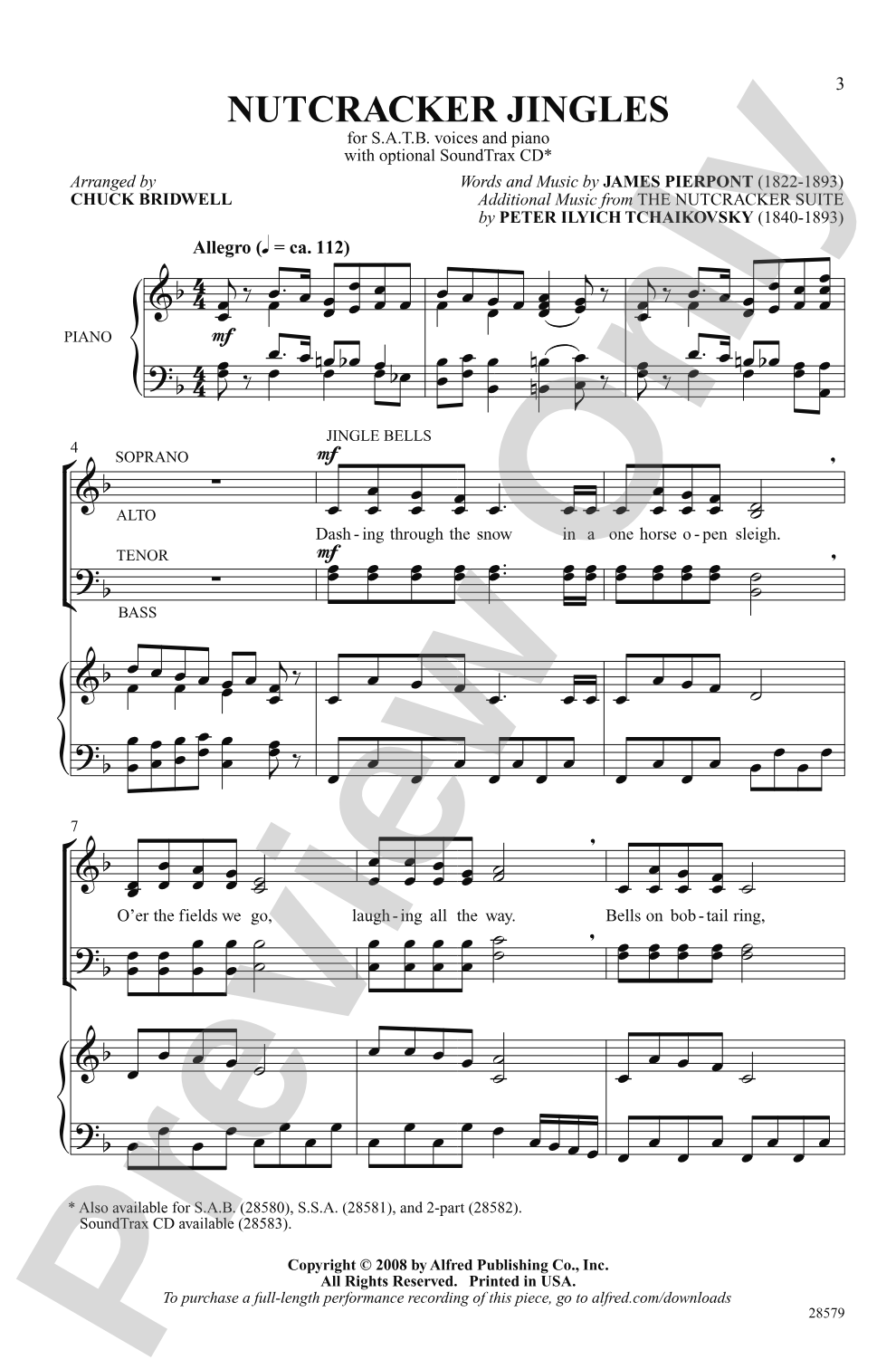
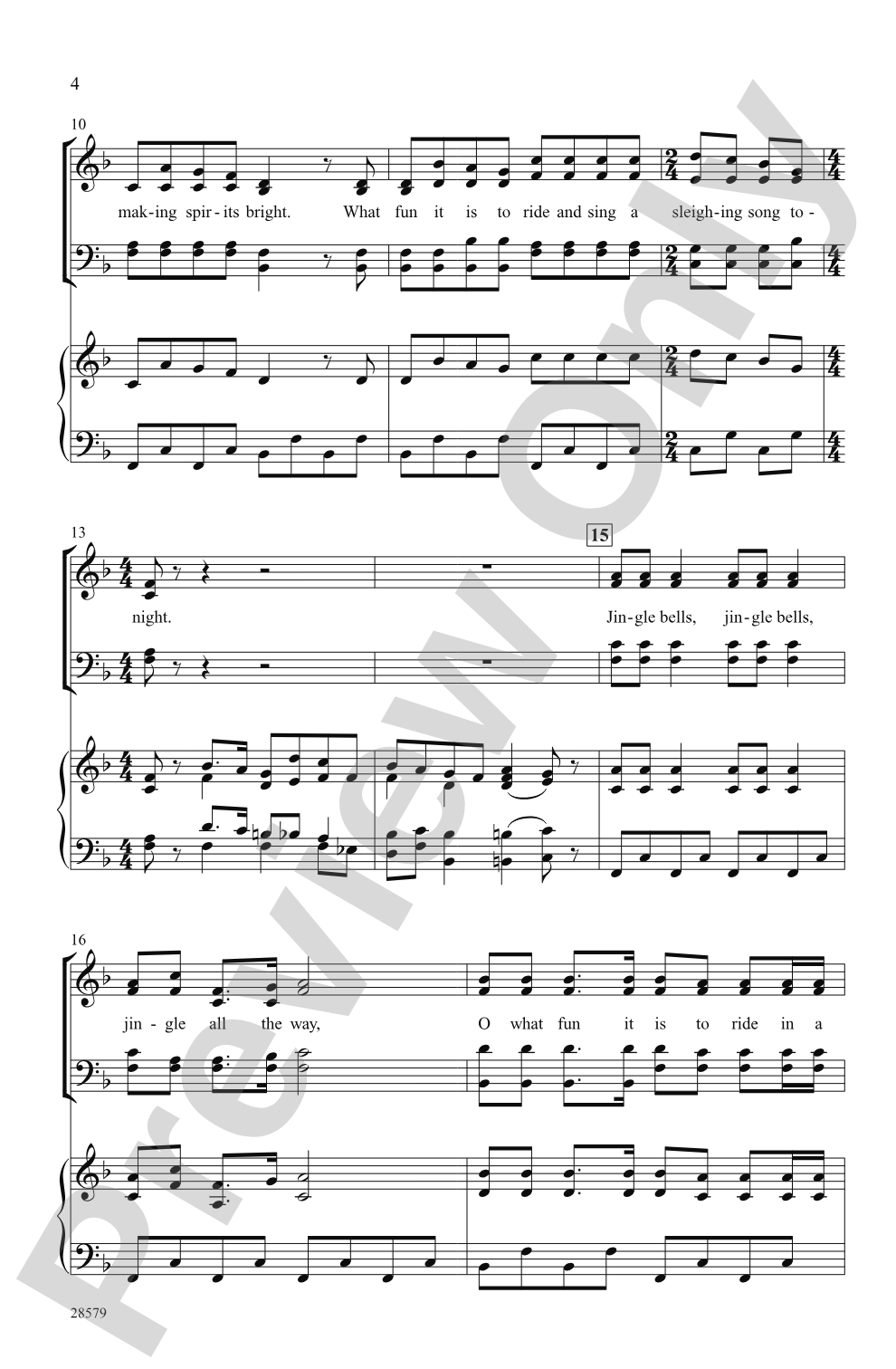
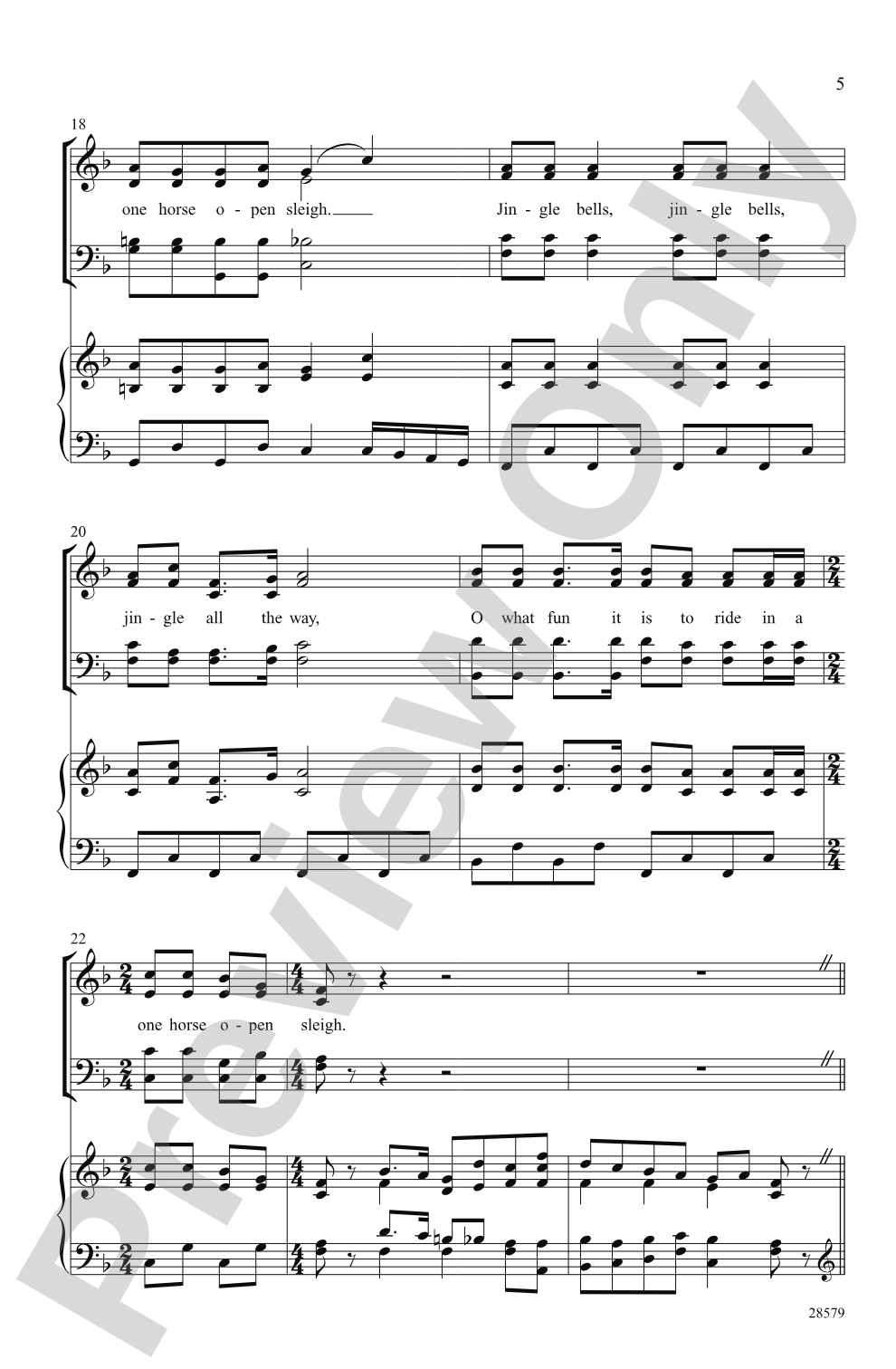

Nutcracker Jingles: SATB Choral Octavo
Words and music by James Pierpont, additional music from The Nutcracker Suite by Peter Ilyich Tchaikovsky / arr. Chuck Bridwell
Item: 00-PO-0000491
$2.20
Minimum order quantity: 20 copies
Pickup currently not available
Related Items
Nutcracker Jingles: SAB Choral Octavo |
$2.20
|
View | |
Nutcracker Jingles: SSA Choral Octavo |
$2.20
|
View | |
Nutcracker Jingles: TTBB Choral Octavo |
$2.20
|
View | |
Nutcracker Jingles: 2-Part Choral Octavo |
$2.20
|
View | |
Nutcracker Jingles: SoundTrax Digital Audio Download |
$27.99
|
View | |
Nutcracker Jingles: SATB Choral Octavo |
$2.20
|
View | |
Nutcracker Jingles: SAB Choral Octavo |
$2.20
|
View | |
Nutcracker Jingles: SSA Choral Octavo |
$2.20
|
View | |
Nutcracker Jingles: TTBB Choral Octavo |
$2.20
|
View | |
Nutcracker Jingles: 2-Part Choral Octavo |
$2.20
|
View | |
Nutcracker Jingles: Choral Octavo SoundTrax CD |
$27.99
|
View |
Description
It's "Jingle Bells" . . . it's The Nutcracker . . . it's newly arranged for men's voices . . . it's "Nutcracker Jingles!" Holiday frivolity abounds in this clever mash-up combining a favorite winter carol with familiar tunes from Tchaikovsky's famous ballet. A proven crowd-pleaser! The instrumental parts are available for rent. Go to presser.com/request-rental.


Nutcracker Jingles: SATB Choral Octavo isn't in MakeMusic Cloud just yet...but it could be. Let us know you'd like to see it, and you'll help shape what comes next. In the meantime, start a free trial and dive into thousands of interactive titles your students can play along with today.
Request This Title
Tell us you want it.
Start Your Free Trial
Explore everything that's ready to play right now.
Sample Audio
1
Audio File
--:--
0:00
0:00
Sample Video
Additional Details
Series:
Alfred Choral Designs
Publisher:
Alfred Music
Page Count:
16
SKU:
00-PO-0000491
More about this title
About the Composer: James Pierpont
James Pierpont (1822-1893) composed "Jingle Bells" in 1857, originally titled "One Horse Open Sleigh." His straightforward, singable melody has become one of the most recognizable winter songs in American music, transcending its 19th-century origins to anchor holiday celebrations across generations.
Peter Ilyich Tchaikovsky (1840-1893) stands among the most performed composers in the classical canon. His ballet The Nutcracker (1892) seamlessly blends Russian musical traditions with Western European forms, creating a work beloved equally by concert audiences and young dancers. The ballet's melodic richness and accessibility have made its themes ideal for arrangements across ensemble types and skill levels.
Why we love this
Chuck Bridwell's arrangement walks the fine line between genuine musical creativity and outright entertainment without sacrificing either. The mash-up genuinely works because both sources share clear melodic profiles and compatible harmonic territories, giving singers a satisfying musical experience rather than a novelty gimmick. Audiences respond immediately to the familiarity and ingenuity, and your choir will enjoy the playfulness throughout rehearsal.
What to expect
Clever without winking. The arrangement respects both sources while playfully interweaving them, creating moments of genuine surprise alongside warm familiarity. Singers will feel the wit in the writing, and audiences respond to music that entertains without condescension.
Who it's for
This octavo suits choirs of mixed voices looking for a crowd-pleasing selection with genuine musical substance beneath the holiday wrapper. Adult community choirs, church holiday services, and college/high school groups all find traction here. The 16-page format and proven track record make it a reliable concert closer or finale.
How to get the most out of it
- Balance the Tchaikovsky material against Pierpont's melody so neither overwhelms the other. SATB voicing in a novelty arrangement often benefits from slight spotlight on the primary tune while supporting voices stay transparent.
- Lock in the rhythmic precision early, especially at seams where the two melodies interact. Sloppy transitions will expose the arrangement's mechanics rather than let the cleverness land.
- Lean into characterization of the contrasting sections. The shift between Pierpont and Tchaikovsky is your opportunity for dynamic contrast and dramatic lift; let it breathe.
How to use it
Position this as your finale or penultimate piece on a holiday concert, where its infectious energy and recognizable material send audiences out on a high note. It works equally well as a mid-season break in a serious program, offering contrast and levity without disrupting the flow of your broader concert arc.
Skills your students will build
- Singing independent lines while tracking a second melody moving concurrently
- Balancing clarity and blend in contrapuntal writing
- Executing rhythmic precision across tempo changes and sectional transitions
- Interpreting arrangement intention through dynamic and textural choices