

Now Is the Month of Maying: SSA, a cappella Choral Octavo
Music by Thomas Morley / arr. Russell Robinson
Item: 00-PO-0004280

$2.25
Minimum order quantity: 20 copies
Pickup currently not available
Description
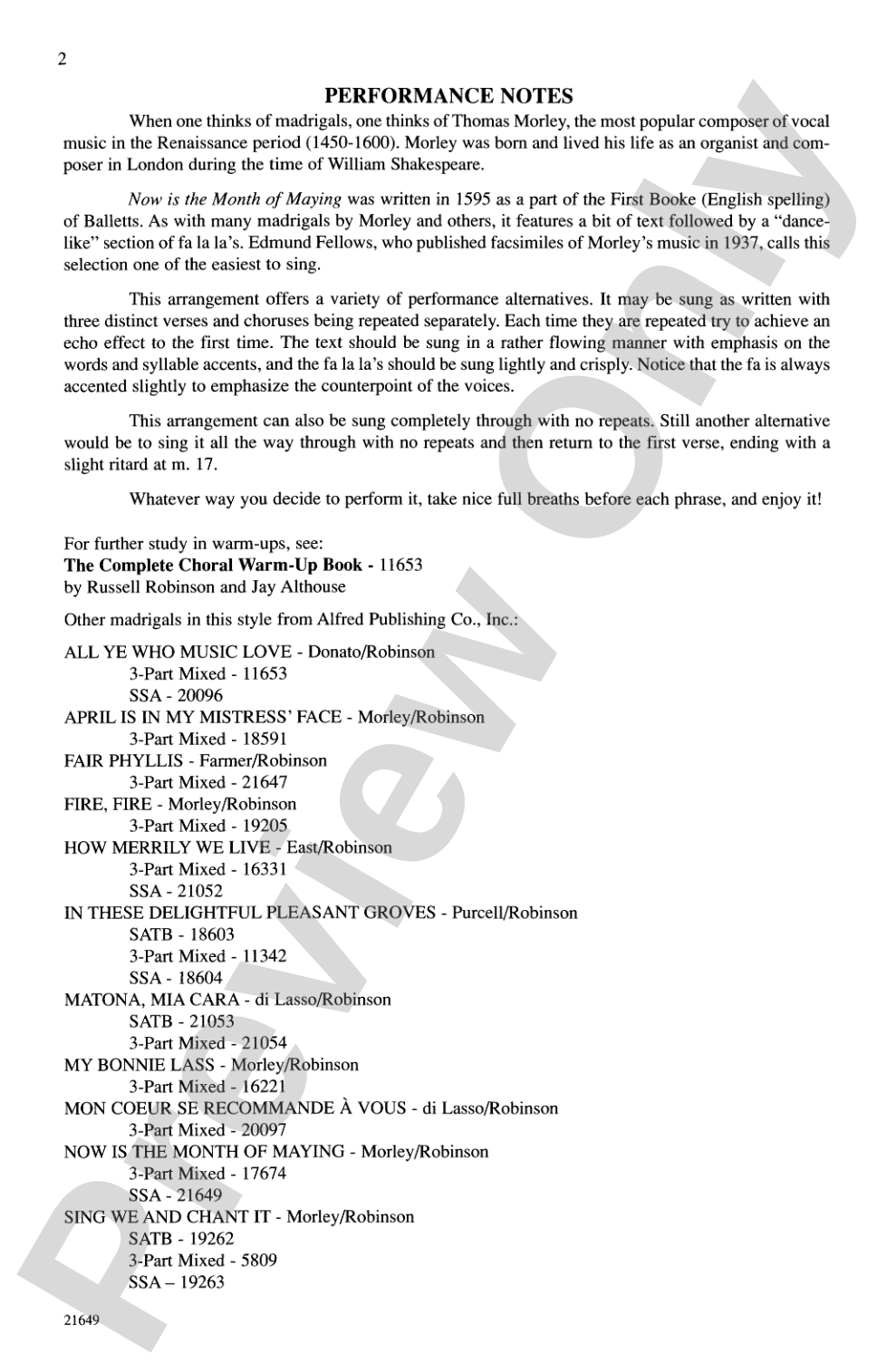
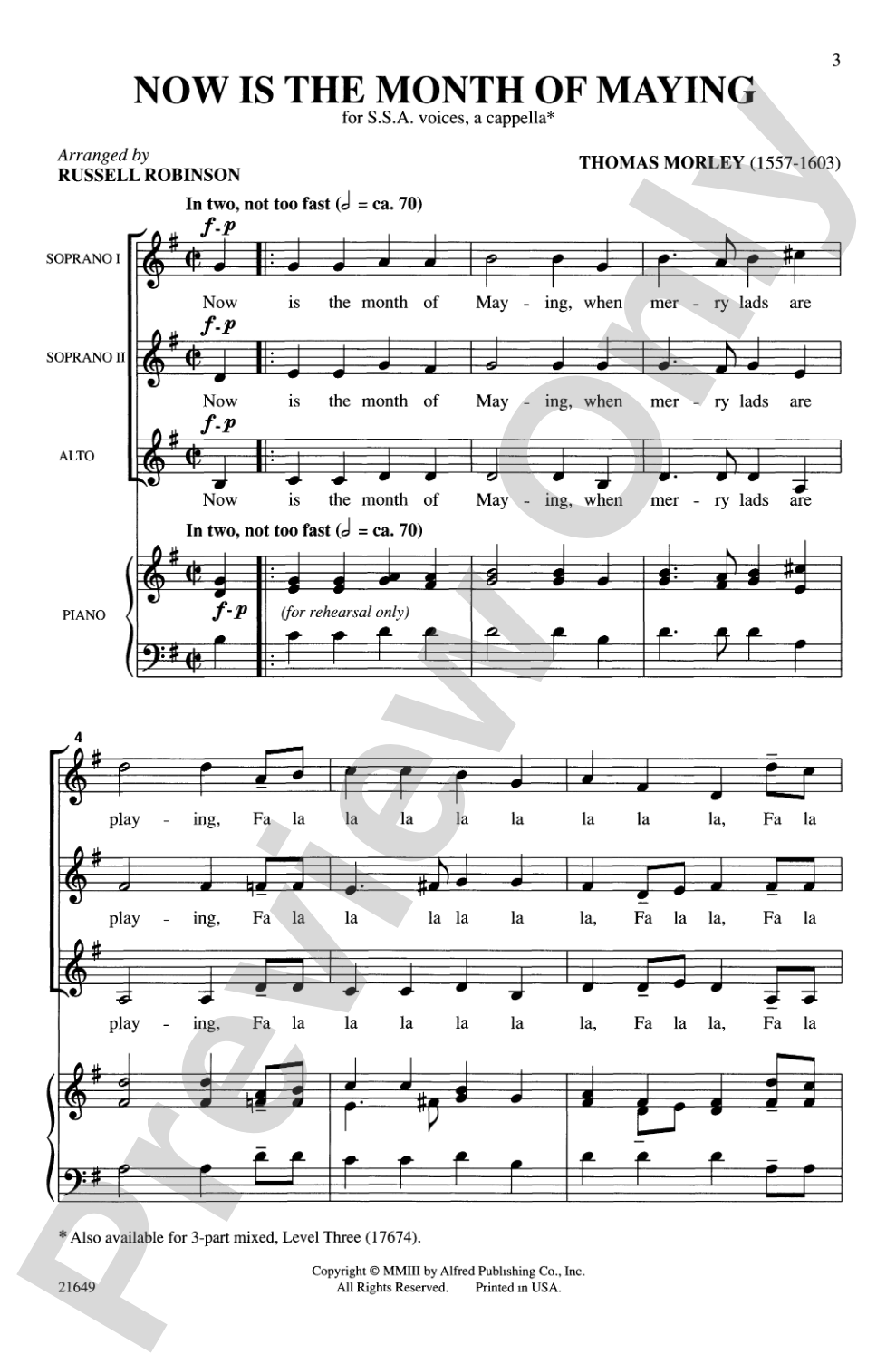
Thanks to the skillful editing of Russell Robinson, now SSA and 3-part mixed choirs can enjoy this merry madrigal from the traditional repertoire. Superbly reduced to preserve the harmonic and melodic structure of Thomas Morley's original work. A quintessential madrigal featuring dynamic variations, much repetition, and joyful "fa-la-la's."


Don't just read it, hear it, play along with it, and watch your students grow with it. In MakeMusic Cloud, Now Is the Month of Maying: SSA, a cappella Choral Octavo comes alive with professional accompaniment, adjustable tempo, and built-in practice tools that turn solo practice into real progress.
Open in the Player
Jump straight in and assign it today.
Start Your Free Trial
Open this title and explore the full library in minutes.
Sample Audio
1
Audio File
--:--
0:00
0:00
Sample Video
No sample videos found.
Additional Details
Series:
Alfred Archive Edition: Alfred Choral Designs
Publisher:
Alfred Music
Page Count:
12
SKU:
00-PO-0004280
More about this title
About the Composer: Thomas Morley
Thomas Morley (1557-1602) was among the most prolific and inventive English composers of the Renaissance, known for his ability to blend Italian musical sophistication with English sensibility. His madrigals, including "Now Is the Month of Maying," showcase the wit, rhythmic vitality, and harmonic clarity that made him a central figure in the English madrigal school.
As a composer, organist, and music theorist, Morley shaped the sound of Elizabethan England. He held the position of organist at St. Paul's Cathedral in London and later became a member of the Chapel Royal. His theoretical writings, particularly his introduction to practical musicianship, remained influential long after his death.
Why we love this
Russell Robinson's arrangement captures everything that makes this madrigal irresistible for SSA choirs: the harmonic integrity of Morley's original voice-leading remains intact, yet the texture is perfectly proportioned for three voices. The repetition and cascading "fa-la-la's" give singers natural momentum and joy, making this both musically substantial and genuinely fun to perform.
What to expect
Morley's madrigal radiates the optimism of springtime with its rhythmic energy and pervasive good humor. The interplay of imitative passages and homophonic text-painting captures a kind of musical conversation, light-hearted yet architecturally sound, that feels both historical and immediately alive.
Who it's for
This arrangement opens the English madrigal tradition to SSA choirs and three-part mixed ensembles that might otherwise overlook Renaissance repertoire due to voicing limitations. High school choirs, collegiate treble choirs, and community choruses will find this piece both accessible and rewarding.
How to get the most out of it
- Keep the "fa-la-la" sections bright and rhythmically precise; they're the piece's signature moment and should feel like a shared celebration rather than filler.
- Shape the text-driven sections with attention to the dynamic markings, allowing contrast between lively passages and more tender moments to emerge naturally.
- Balance the three voices so that the melody remains clear while the inner voices support the harmonic structure; this is essential in a cappella singing where every note carries weight.
How to use it
Program this as a concert centerpiece or festival offering where you want to represent Renaissance choral literature without overwhelming an SSA ensemble. It pairs beautifully with other secular works from the same era or with modern pieces that echo the madrigal's playfulness.
Skills your students will build
- Renaissance voice-leading and harmonic independence
- Imitative singing and text declamation
- A cappella balance and blend in three voices
- Sustained legato phrasing across longer musical phrases
- Rhythmic precision in repeated patterns and syllabic text