

Now Is the Month of Maying: 3-Part Mixed, a cappella Choral Octavo
Music by Thomas Morley / arr. Russell Robinson
Item: 00-PO-0002110

$2.25
Minimum order quantity: 20 copies
Pickup currently not available
Description
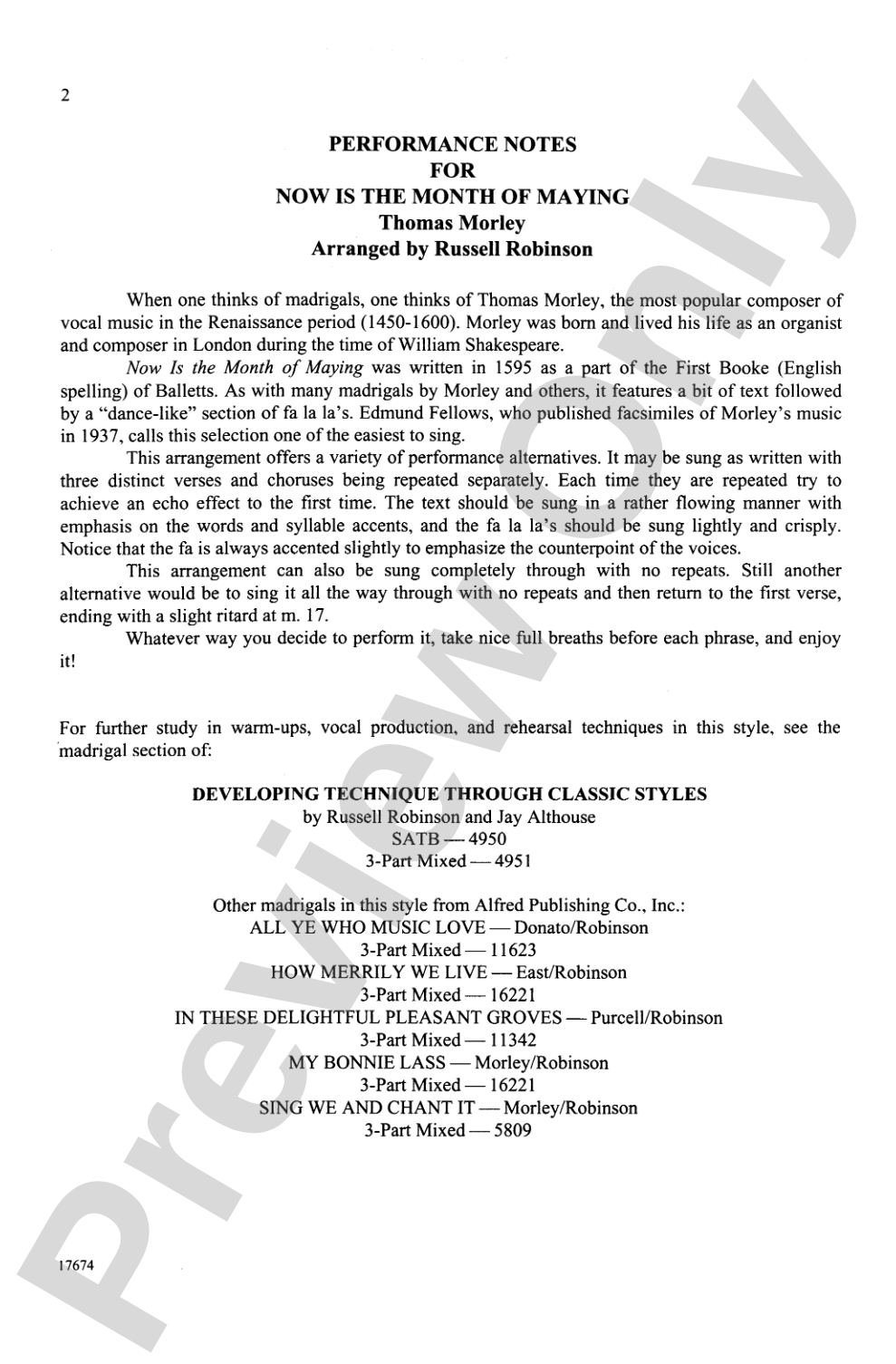
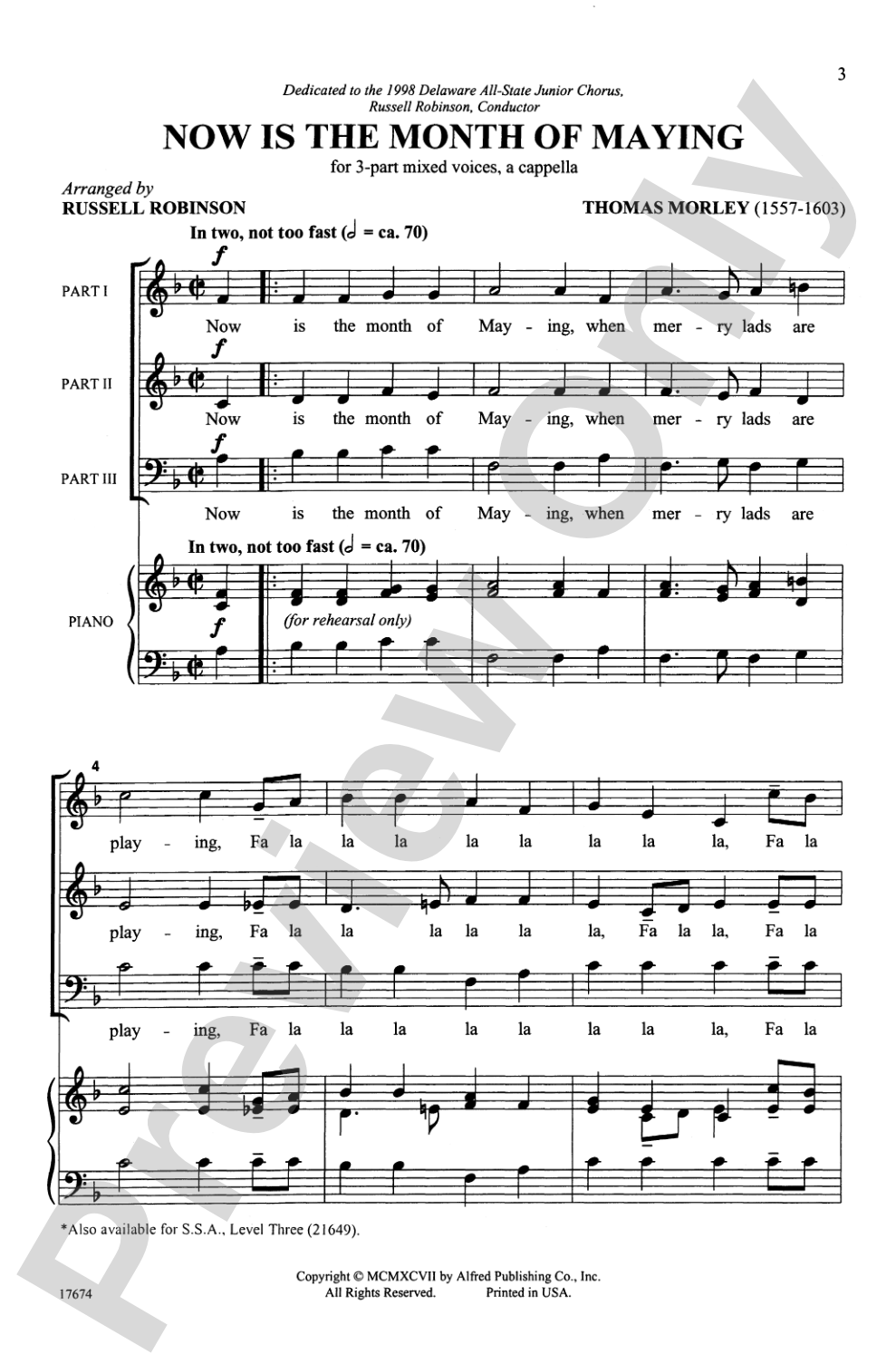
Morley's famous madrigal is arranged perfectly for 3-part mixed voices. Excellent for developing choirs and small vocal ensembles. Limited range male part.


Don't just read it, hear it, play along with it, and watch your students grow with it. In MakeMusic Cloud, Now Is the Month of Maying: 3-Part Mixed, a cappella Choral Octavo comes alive with professional accompaniment, adjustable tempo, and built-in practice tools that turn solo practice into real progress.
Open in the Player
Jump straight in and assign it today.
Start Your Free Trial
Open this title and explore the full library in minutes.
Sample Audio
1
Audio File
--:--
0:00
0:00
Sample Video
No sample videos found.
Additional Details
Series:
Alfred Archive Edition: Alfred Choral Designs
Publisher:
Alfred Music
Page Count:
12
SKU:
00-PO-0002110
More about this title
About the Composer: Thomas Morley
Thomas Morley (1557/58–1602) stands as one of the most prolific English composers of the Renaissance, dominating the madrigal genre in his era. His output shaped vocal music across England and the Continent; his treatise A Plaine and Easie Introduction to Practicall Musicke remains a vital historical source on Renaissance performance and composition.
Morely's gift was accessibility married to sophistication. His madrigals balance technical interest with immediate melodic appeal, making them rewarding for singers of varying abilities while offering genuine musical substance. This combination explains their enduring presence in choral repertoire.
Why we love this
Morley's "Now Is the Month of Maying" radiates an infectious energy that energizes any rehearsal room. Robinson's SAB arrangement preserves the piece's Renaissance character while making it genuinely singable for developing choirs—the limited male range removes a typical barrier without sacrificing authentic madrigal texture.
What to expect
Sunlit and celebratory, with the bright energy of spring breaking through. The piece bounces along with dance-like rhythms and playful text painting, inviting singers into genuine musical conversation rather than demanding technical virtuosity.
Who it's for
Developing choirs and small vocal ensembles seeking authentic Renaissance repertoire at an accessible level. The SAB voicing works especially well for mixed groups with fewer men or younger singers new to madrigal singing.
How to get the most out of it
- Shape the text rhythmically with natural speech patterns rather than metronomic accuracy. Renaissance madrigals thrive on flexible phrasing that highlights the words.
- Balance the three parts so no voice dominates; this arrangement depends on blend and conversational interaction between lines.
- Keep the tempo brisk and dance-like. The piece's character comes from its forward momentum and joyful rhythmic vitality.
- Emphasize clarity of consonants to bring out Morley's witty text setting and ensure the madrigal's humor lands with your audience.
How to use it
Program this alongside other Renaissance secular works for a thematic concert on nature or festivity. It pairs well with lighter madrigals and can anchor a lighter set in a mixed-era program, offering audiences a joyful contrast to heavier repertoire.
Skills your students will build
- Text-driven phrasing in Renaissance style
- Blend and balance in three-part texture
- Madrigal articulation and word painting
- Flexible rhythm within structured meters
- A cappella intonation without instrumental support