

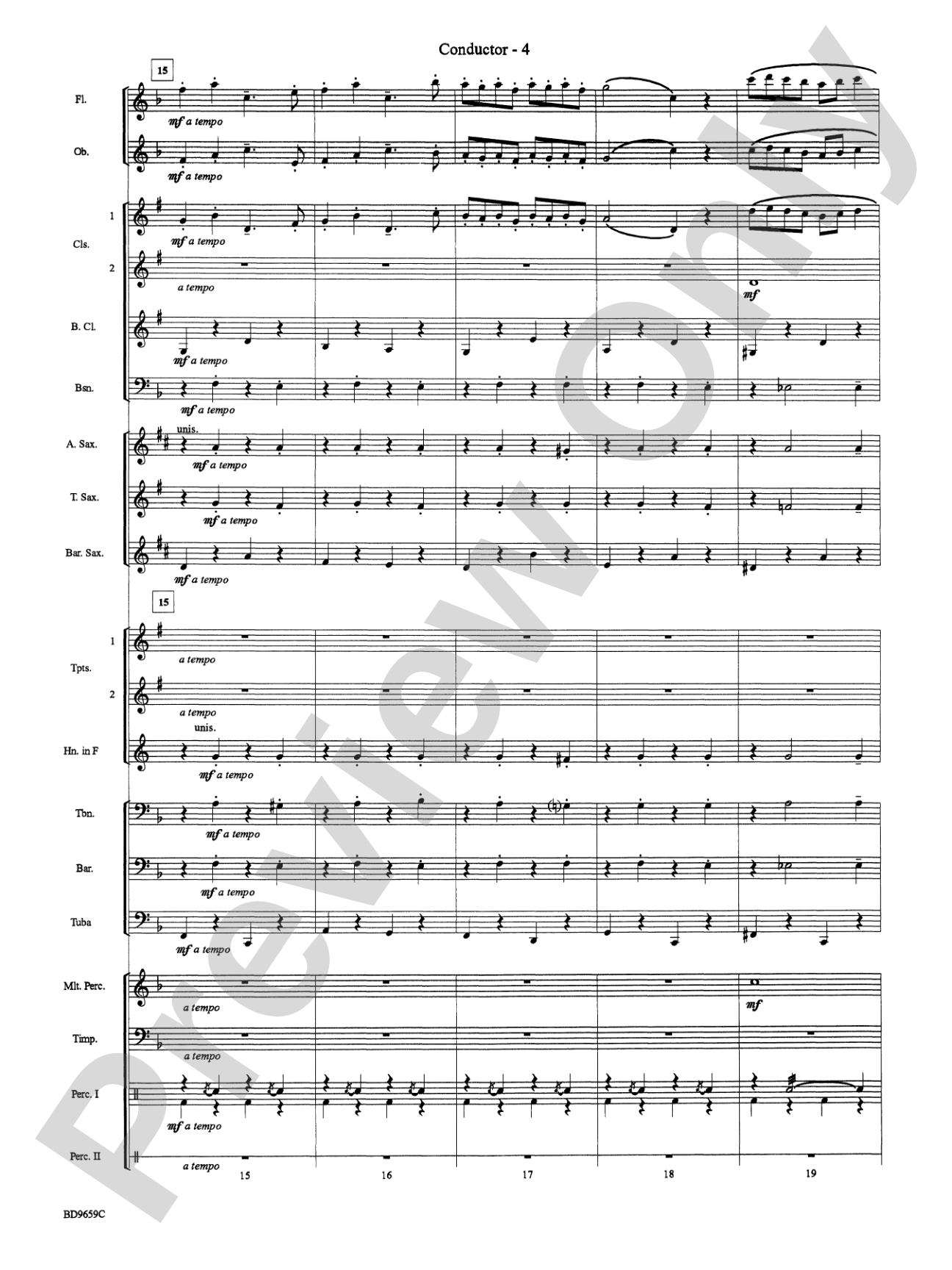
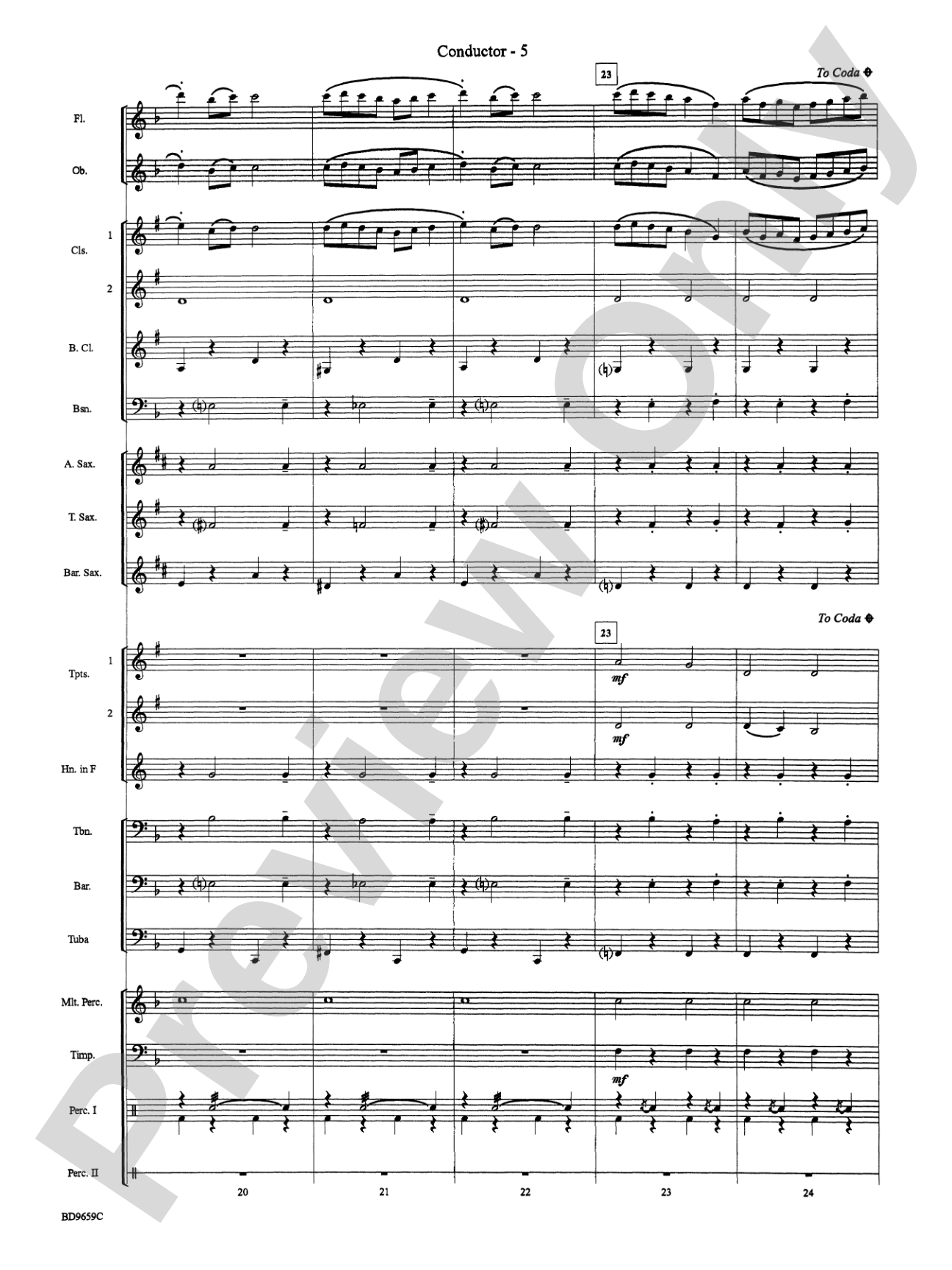
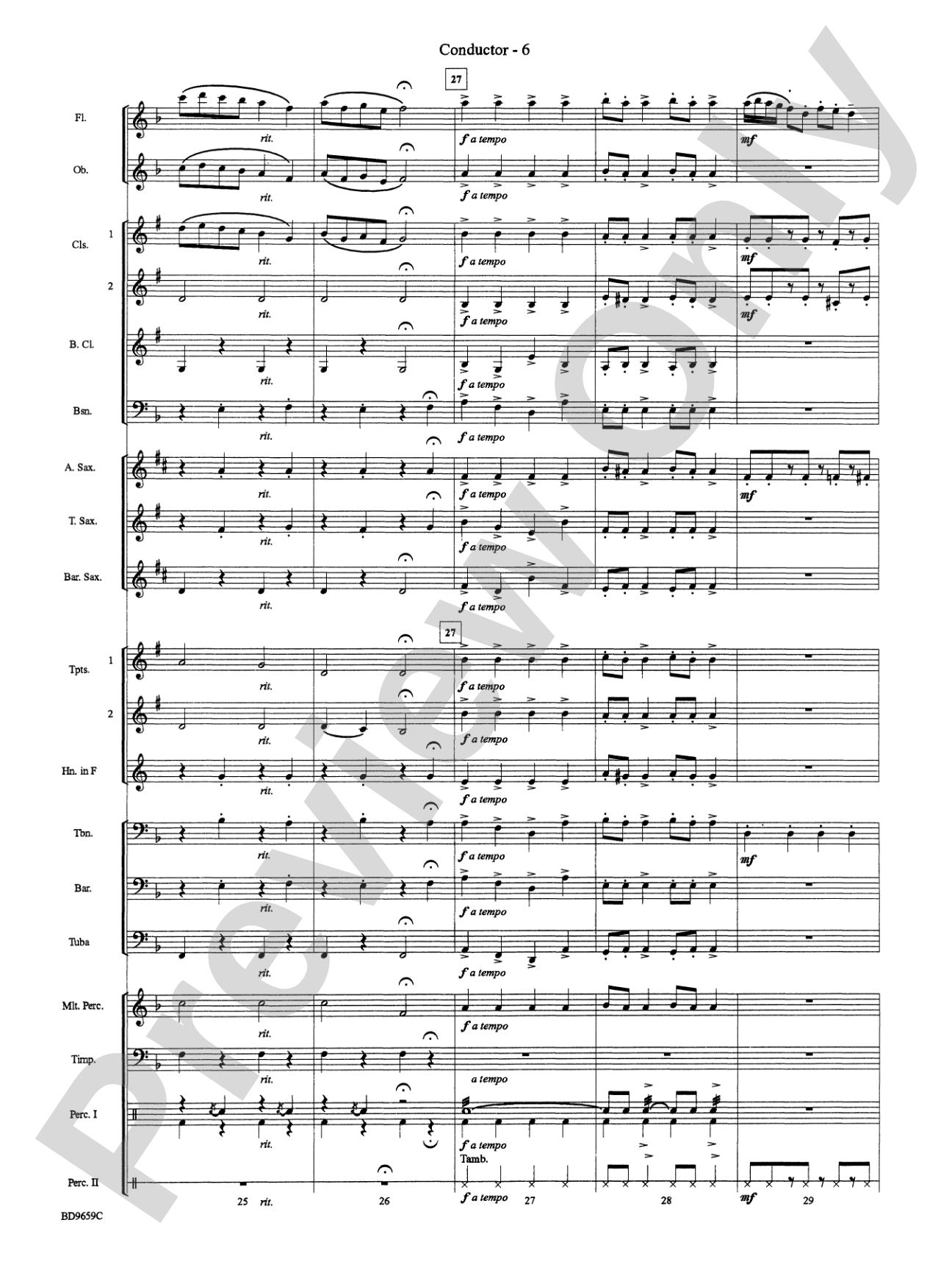
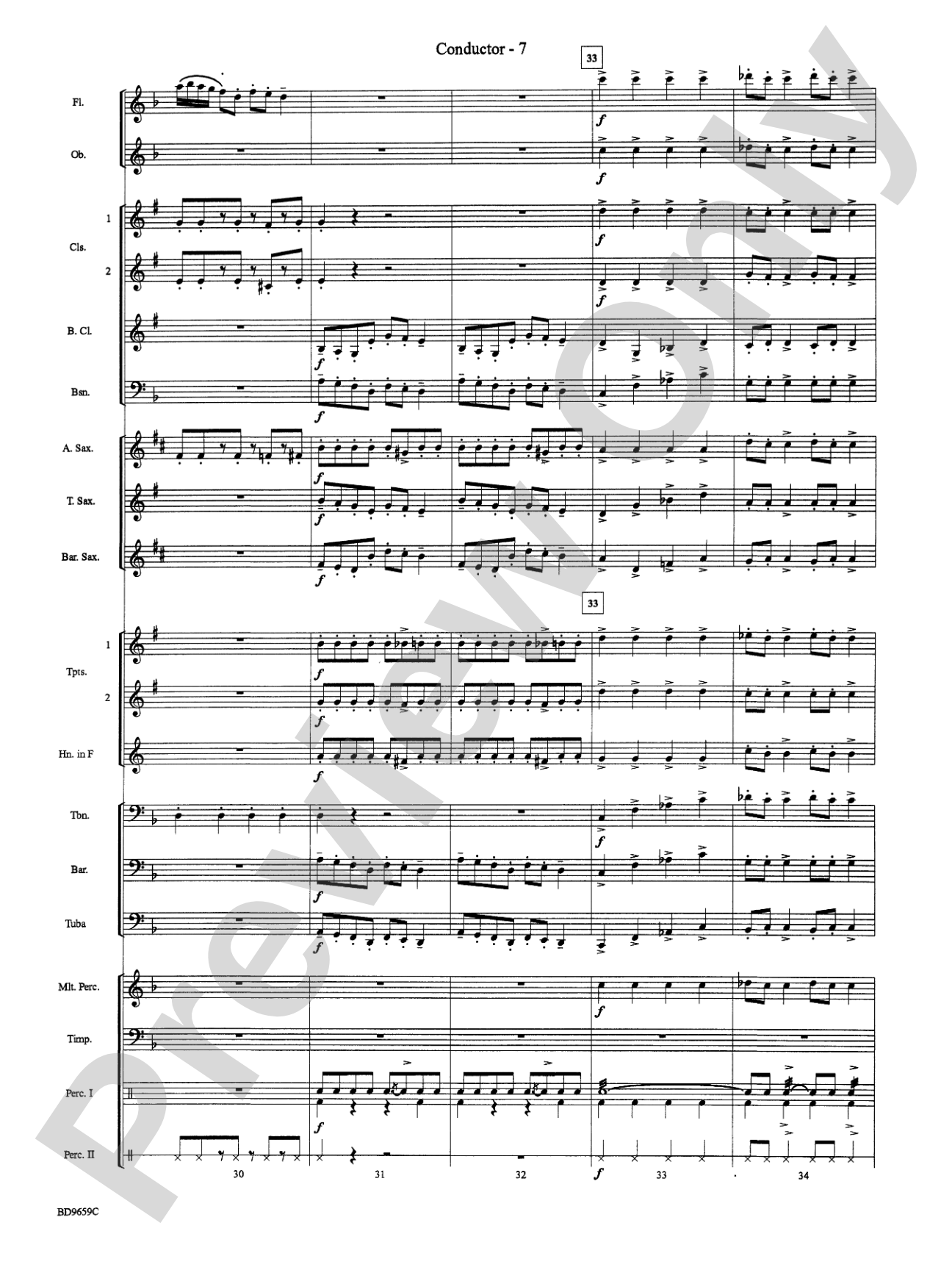
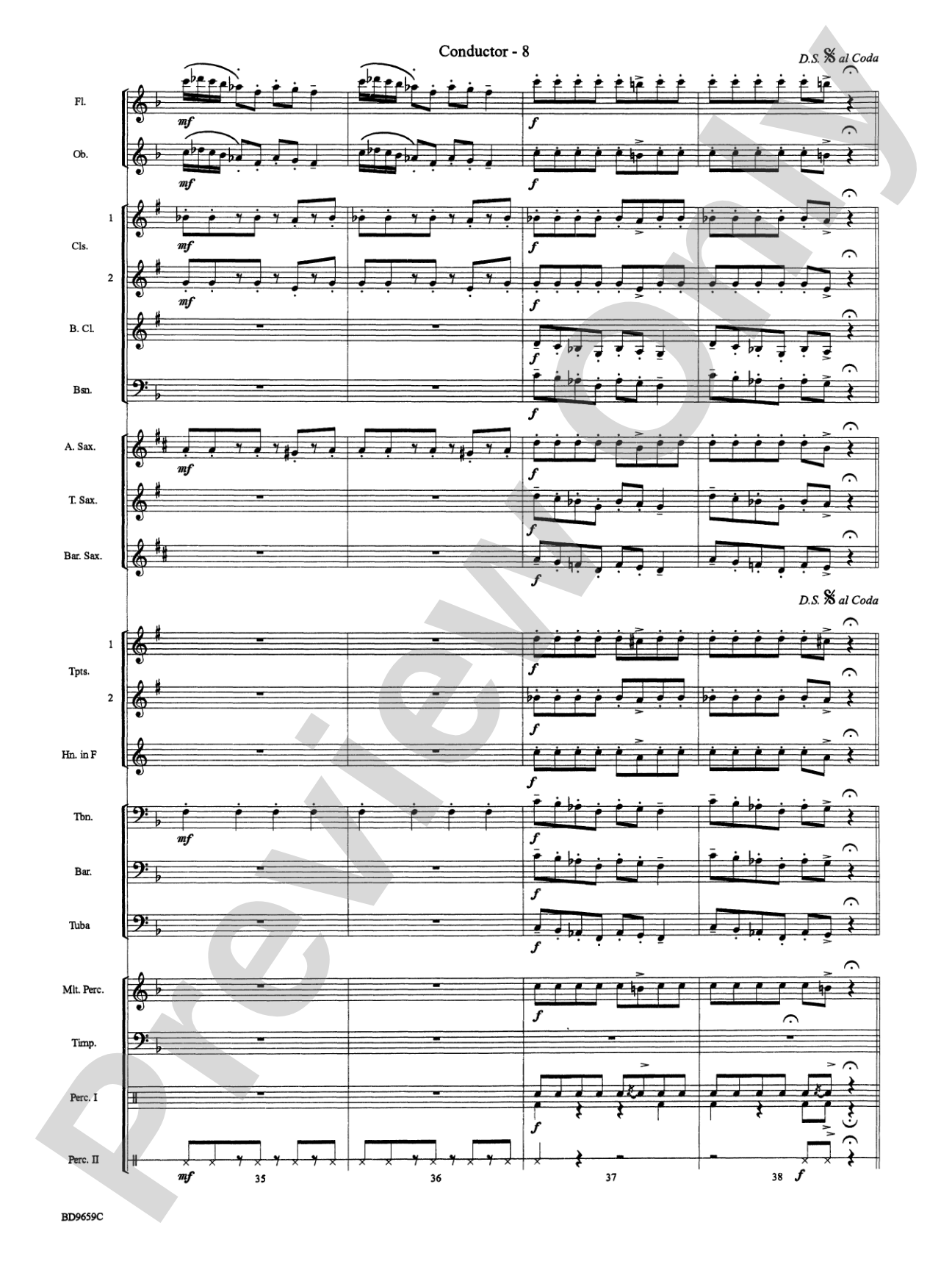
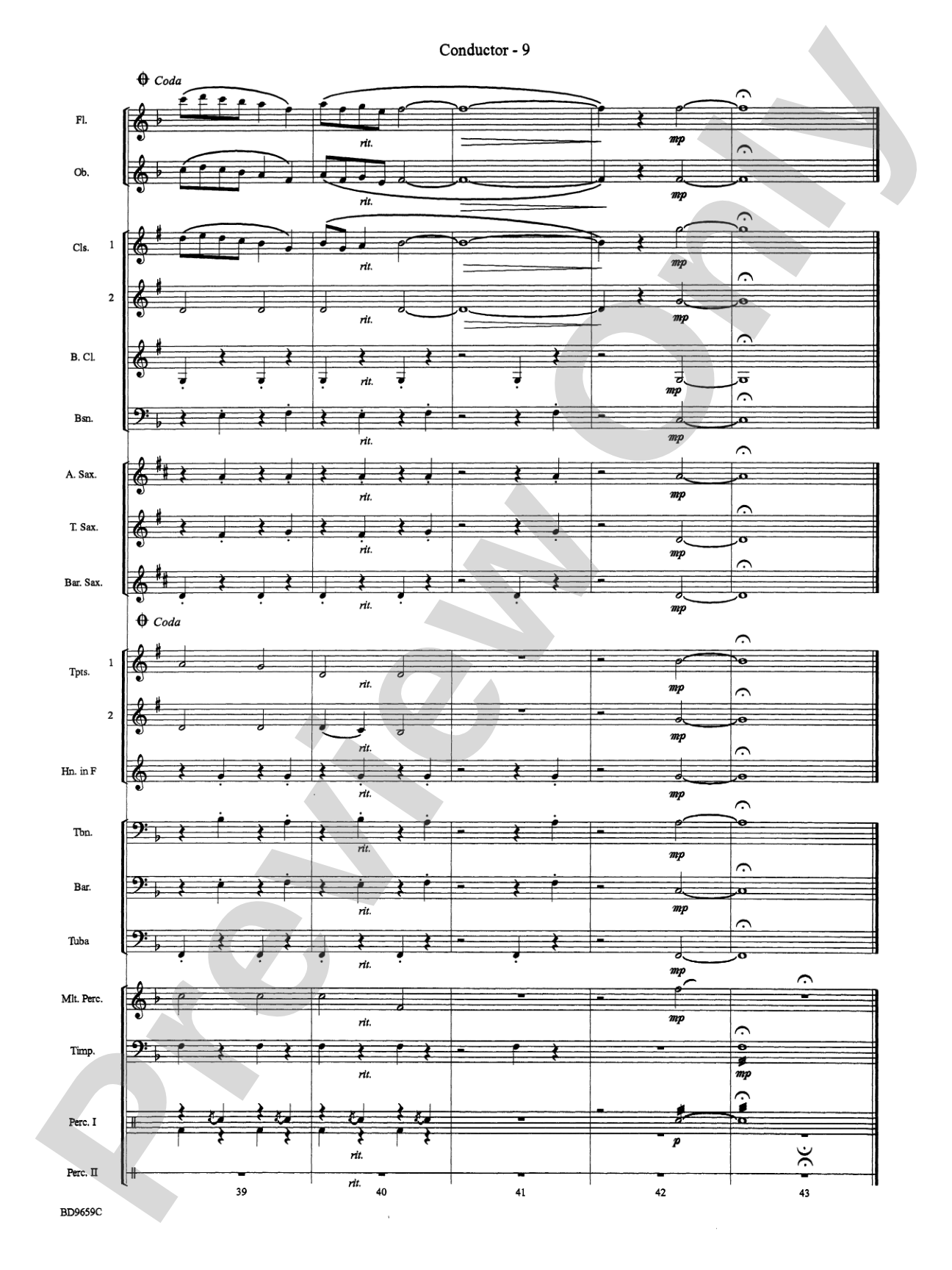


Norwegian Dance No. 2: Concert Band Conductor Score & Parts
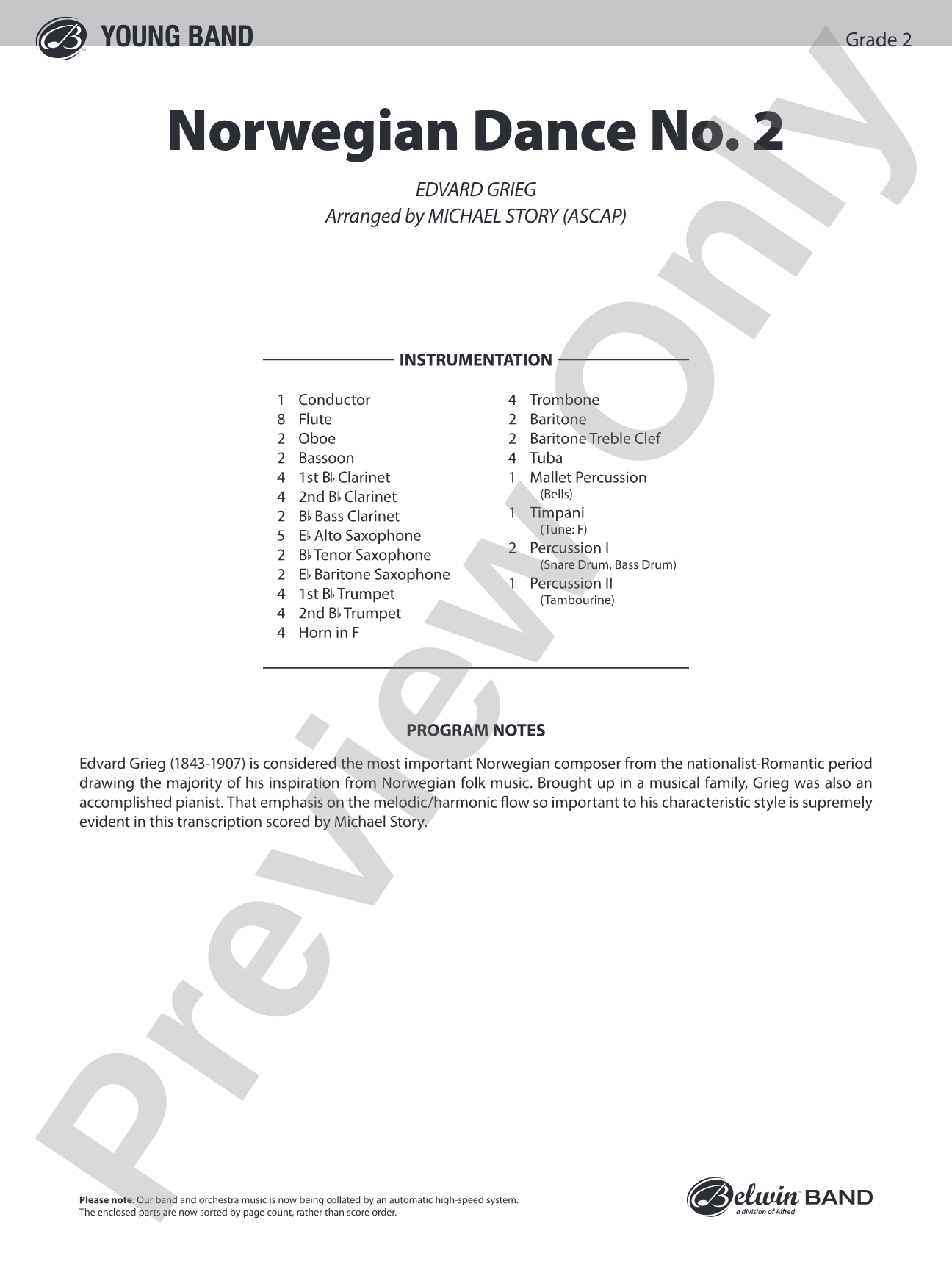
By Edvard Grieg / arr. Michael Story
Grade: 2 (Easy)
Item: 00-PK-0004911

$55.00
Pickup currently not available
Buy Extra Parts (Digital PDF Download)
Parts Added to Cart!
Description
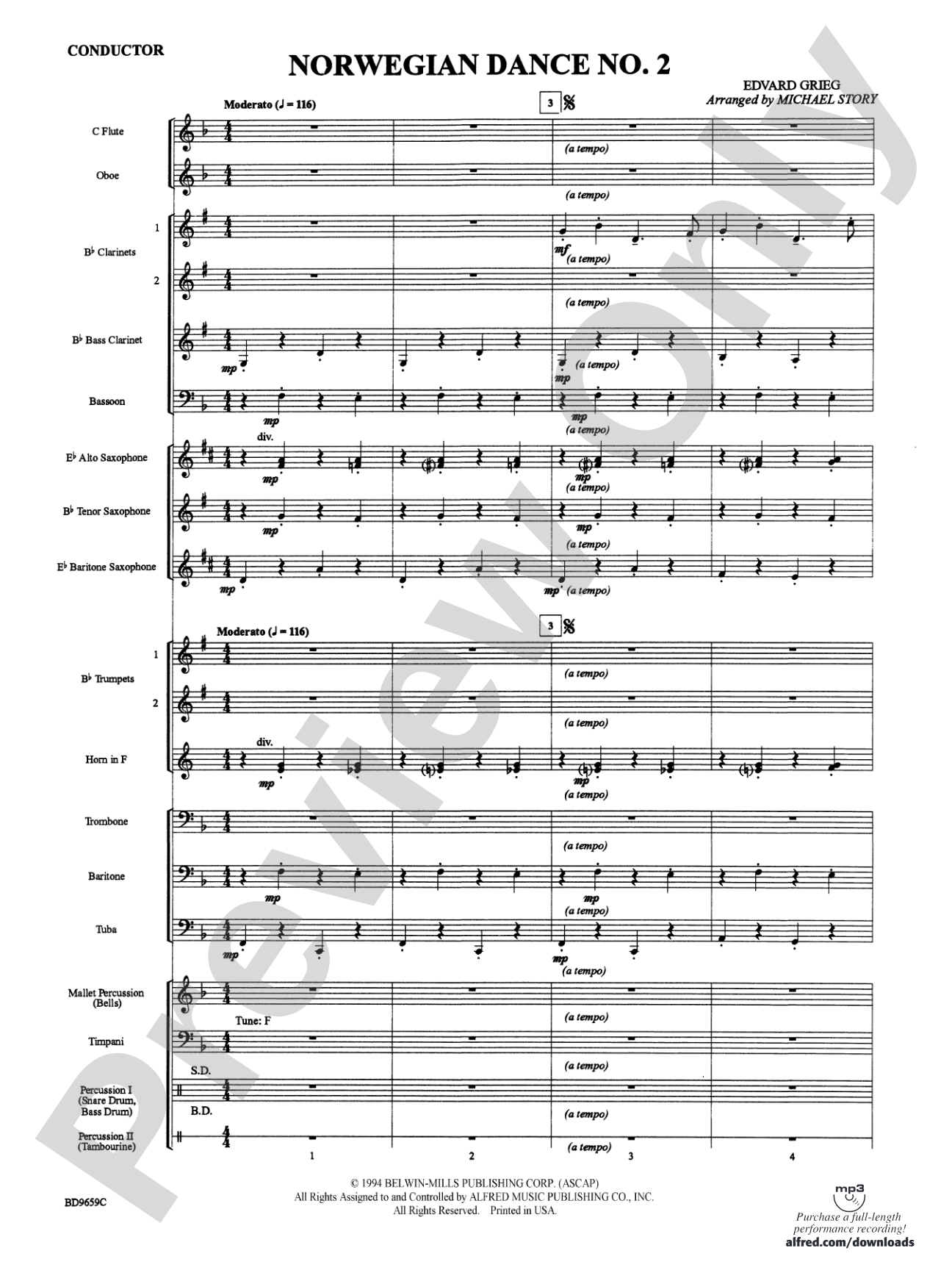
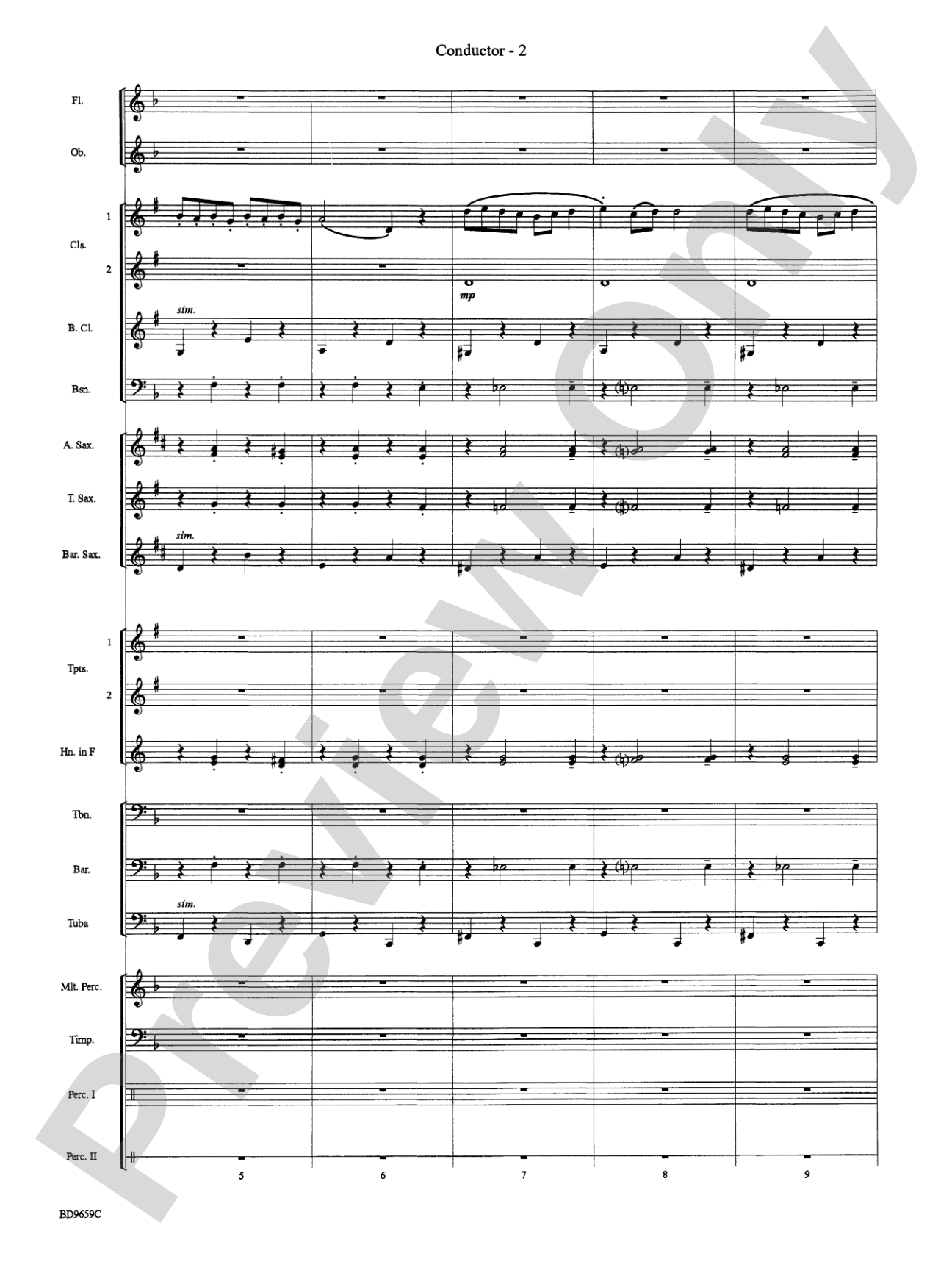
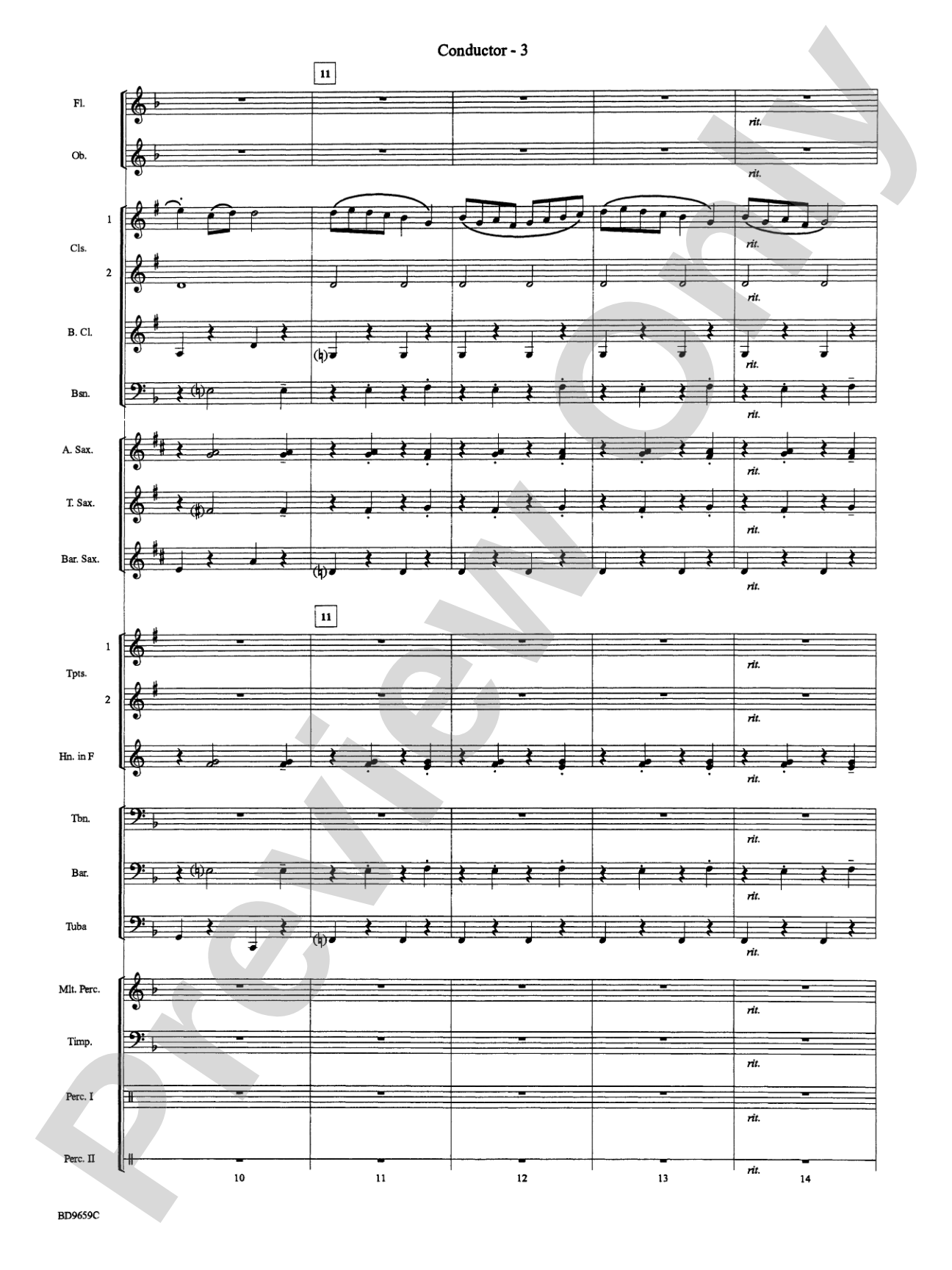
Edvard Grieg is considered the most important Norwegian composer from the nationalist-Romantic period. That emphasis on the melodic/harmonic flow so important to the style of the time is supremely evident in this transcription for your concert band. Teaching opportunities abound, both musically and historically. This piece will prove to be useful year after year.


Don't just read it, hear it, play along with it, and watch your students grow with it. In MakeMusic Cloud, Norwegian Dance No. 2: Concert Band Conductor Score & Parts comes alive with professional accompaniment, adjustable tempo, and built-in practice tools that turn solo practice into real progress.
Open in the Player
Jump straight in and assign it today.
Start Your Free Trial
Open this title and explore the full library in minutes.
Sample Audio
1
Audio File
--:--
0:00
0:00
Sample Video
No sample videos found.
Additional Details
Series:
Belwin Young Band
Publisher:
Alfred Music
Page Count:
120
SKU:
00-PK-0004911
More about this title
About the Composer: Edvard Grieg
Edvard Grieg (1843–1907) stands as Norway's defining voice in classical music. His work during the nationalist-Romantic movement elevated Norwegian folk idioms and melodic sensibilities to concert hall prominence, establishing a musical identity for his country that resonates across generations. Grieg's gift for combining lyrical melody with rich harmonic language made his music immediately beloved by performers and audiences alike.
In education, Grieg's work teaches fundamental lessons about nationalism in music and the power of folk-influenced composition. His pieces demonstrate how composers can honor cultural roots while speaking in the language of European Romanticism. For student musicians, his melodies provide accessible entry points into sophisticated harmonic thinking.
Why we love this
Michael Story's transcription captures the lyrical warmth that makes Grieg's Norwegian dances enduring favorites while writing idiomatically for young bands. The Grade 2 level means your players can access a genuine masterwork without compromises that sacrifice musical integrity. This is repertoire that sounds mature and feels rewarding to perform, and your audience will recognize the melody immediately.
What to expect
Warm, lyrical, and celebratory. The Norwegian Dance flows with a natural elegance, moving between sections with the ease of a folk tradition elevated to concert dress. There is joy in the melody and a sense of place, anchored by clear harmonic progressions that give young players something solid to hold onto.
Who it's for
Concert band directors seeking repertoire that combines cultural significance with genuine student engagement and technical accessibility. This works beautifully for bands new to playing extended melodies and harmonic sophistication without the leap to Grade 3 or 4 complexity.
How to get the most out of it
- Shape phrases around the natural arch of Grieg's melodies rather than breaking them into smaller units. Let the line breathe and sing through the accompaniment.
- Balance the melody sections generously in front. Young players often underprice solo voices against harmonic support, so explicit rehearsal time on dynamics pays off here.
- Bring out the character of the dance rhythm without forcing a rigid tempo. Grieg's notation guides the groove; trust it and adjust minimally in rehearsal.
- Attend to the harmonic color changes that Grieg uses to develop his material. Even at Grade 2, these shifts create structural clarity when rehearsed deliberately.
How to use it
Program this early in a concert to establish audience goodwill with a piece they likely know and love. It pairs well on a Romantic-era set alongside other nationalist works or serves as a strong opener that sets a lyrical, approachable tone before moving into more substantial concert band fare.
Skills your students will build
- Sustained melodic phrasing across longer lines
- Balance between melody and harmonic accompaniment
- Sensitivity to harmonic color and voice leading
- Intonation within consonant harmonic structures
- Dance rhythm interpretation and subdivision
- Dynamic shaping within a Romantic idiom