
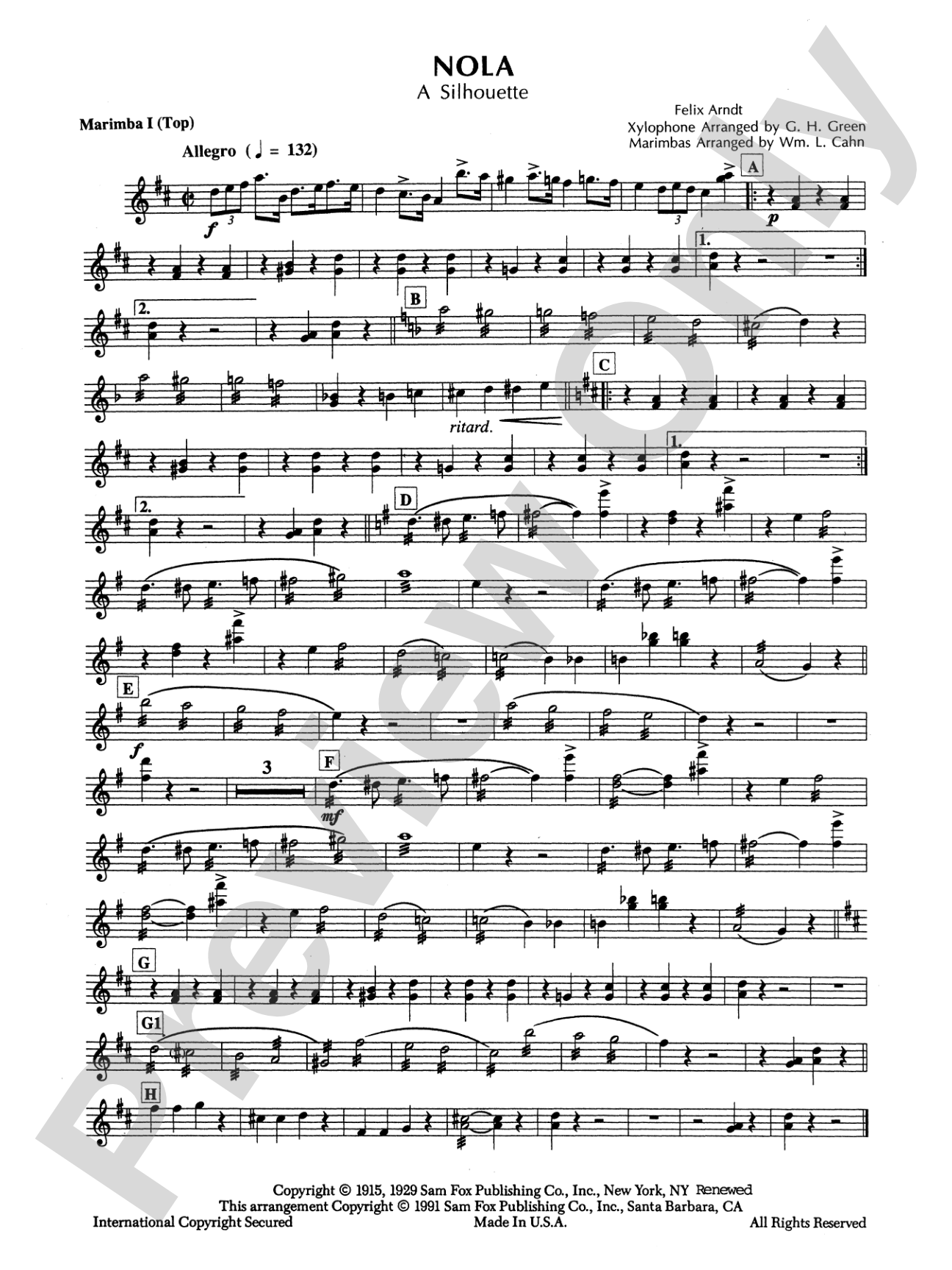

Nola: Percussion Ensemble Parts
For Marimba Ensemble with Xylophone Solo (5 Players)
By Felix Arndt
Grade: 4
Item: 00-PK-0004415

$15.00
Pickup currently not available
Buy Extra Parts (Digital PDF Download)
| Product | Price | Quantity |
|---|---|---|
| Nola: M1T | $3.00 | |
| Nola: M1B | $3.00 | |
| Nola: M2T | $3.00 | |
| Nola: M2B | $3.00 | |
| Nola: Xylophone | $3.00 |
Parts Added to Cart!
Description
Felix Arndt, an American pianist and popular music composer, wrote the piano solo "Nola" in 1915 as an engagement gift to his fiancé (and later wife). It became the theme song for the Vincent Lopez orchestra and a top ten hit for Les Paul in 1950. This marimba ensemble with xylophone was arranged by George Hamilton Green (xylophone) and William L. Cahn (marimba arrangement). It is arranged for five players.


Don't just read it, hear it, play along with it, and watch your students grow with it. In MakeMusic Cloud, Nola: Percussion Ensemble Parts comes alive with professional accompaniment, adjustable tempo, and built-in practice tools that turn solo practice into real progress.
Open in the Player
Jump straight in and assign it today.
Start Your Free Trial
Open this title and explore the full library in minutes.
Sample Audio
No sample audio found.
Sample Video
No sample videos found.
Additional Details
Publisher:
Alfred Music
Page Count:
12
SKU:
00-PK-0004415
More about this title
About the Composer: Felix Arndt
Felix Arndt (1885-1918) was an American pianist and composer who specialized in popular and novelty piano music during the early twentieth century. Though his career was cut short by his early death, Arndt composed works that achieved genuine commercial success and cultural staying power. "Nola," written in 1915 as a personal gift to his fiancée, became his most enduring composition, earning its place in jazz and popular music history through numerous recorded versions and arrangements.
Why we love this
This arrangement transforms a beloved period novelty into a rewarding ensemble experience that actually works for five players. The interplay between marimba and xylophone gives each player a genuine voice, and the arrangement respects the original's infectious charm while creating genuine musical interest in the ensemble texture. Percussionists at this level get to experience a piece with real performance history, which motivates them to play with style and purpose.
What to expect
Bright, bouncy, and full of period charm. The piece has an easygoing ragtime swing that feels accessible but never cheap. There's genuine musicality in the melodic lines paired with the sparkle and resonance of mallet percussion; playing it lifts your mood.
Who it's for
Percussion ensembles of intermediate ability (Grade 4) who are ready to move beyond unison playing into genuine musical collaboration. This works well for groups with five dedicated percussionists who want repertoire with personality and a piece that engages audiences. Directors seeking novelty literature that has authentic roots in American music history will find this particularly rewarding.
How to get the most out of it
- Balance the xylophone and marimba lines so both colors shine. The xylophone's brightness should not overwhelm the marimba's warmth, especially in passages where they share thematic material.
- Lock the rhythm section parts with precision. The supporting players need to provide a rock-solid foundation so the melodic voices can phrase freely and shape the raggy articulation that defines the style.
- Lean into the novelty character without overselling it. The piece has humor and lightness, but it's not a comedy act. Play with confidence and groove rather than winking at the audience.
- Shape phrases across ensemble parts rather than within individual instruments. This creates continuity even when the melody trades around the group.
How to use it
This works beautifully as a concert opener or as a moment of lightness in a varied program of percussion music. It pairs well with more serious contemporary ensemble works, offering the audience a chance to experience the roots of American popular music played live by young musicians. The piece is short enough to program as a prelude to another selection and substantial enough to stand alone as a feature.
Skills your students will build
- Balancing two independent melodic lines across different mallet instruments
- Playing with period-appropriate articulation and swing feel
- Coordinating rhythmic precision in a five-player ensemble without a conductor
- Reading and executing parts that require awareness of harmonic and textural context