
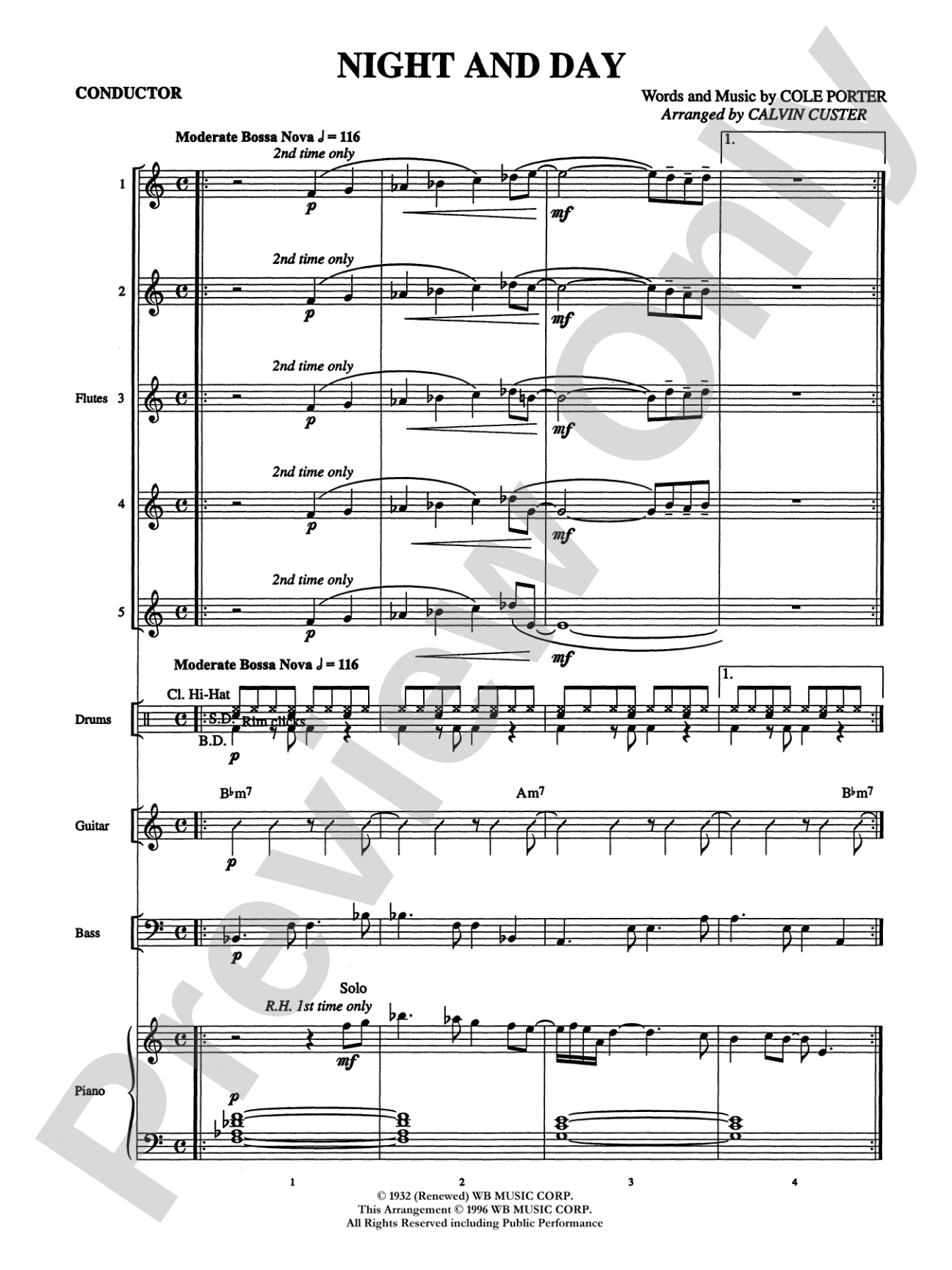
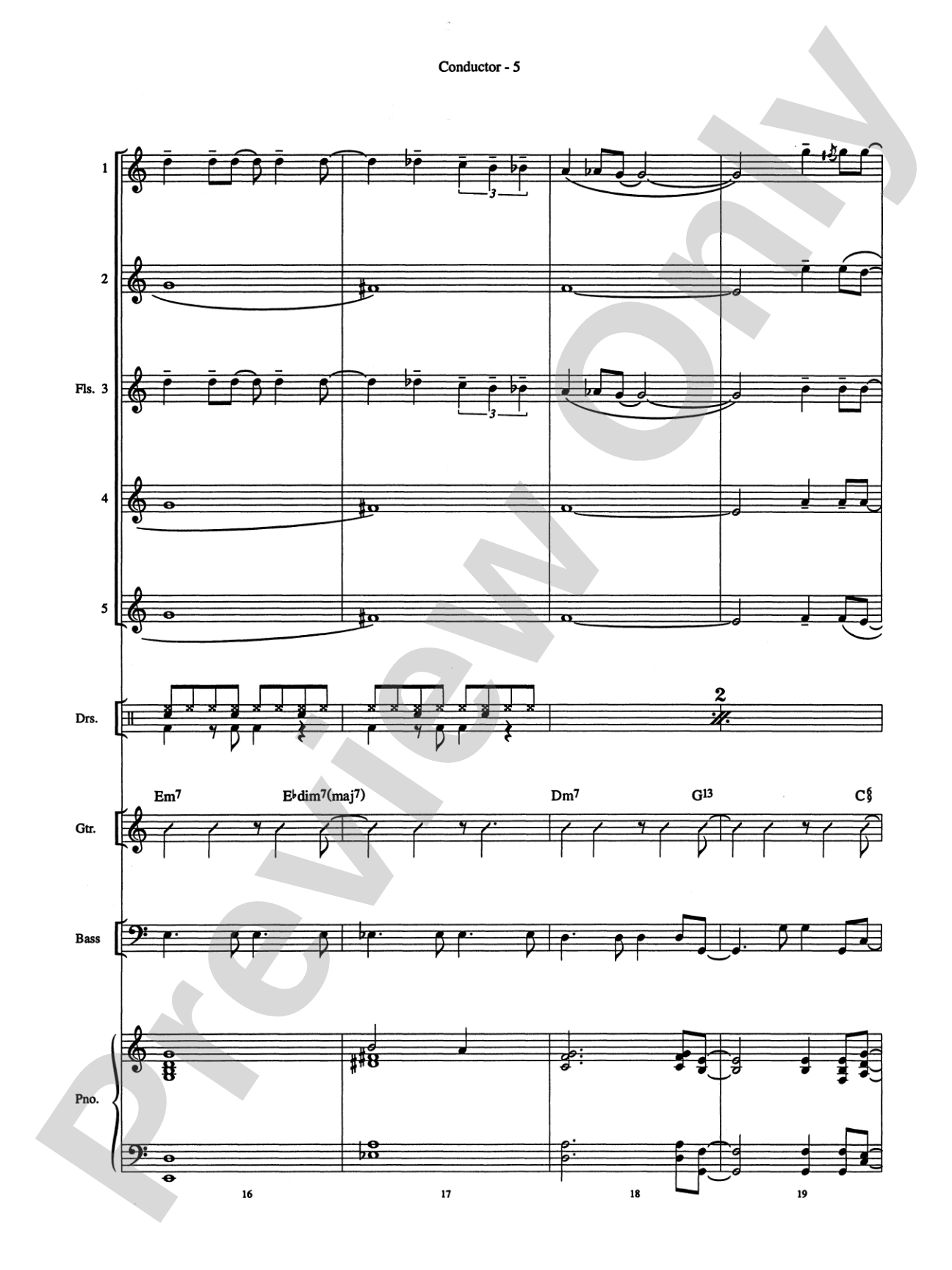
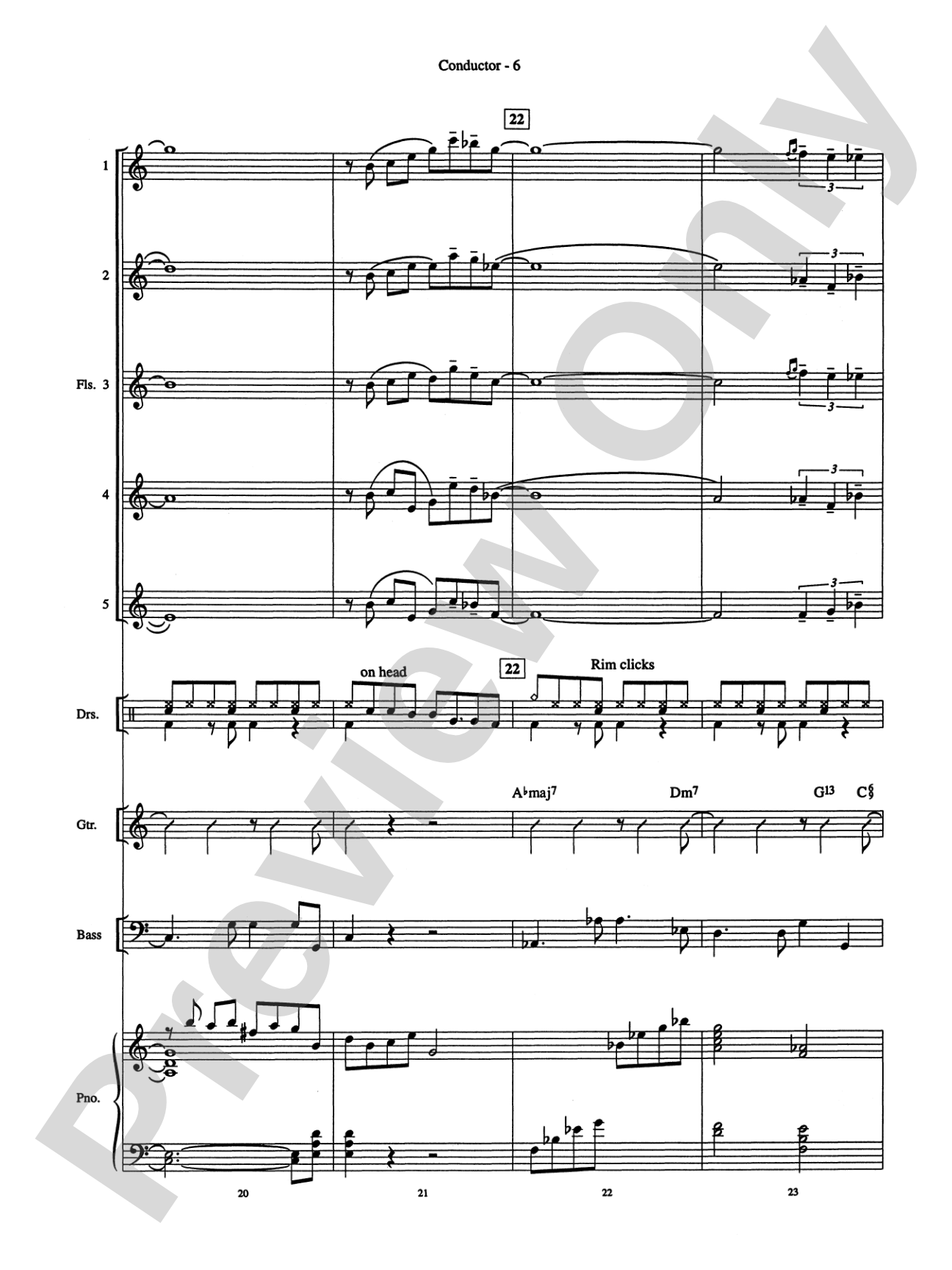
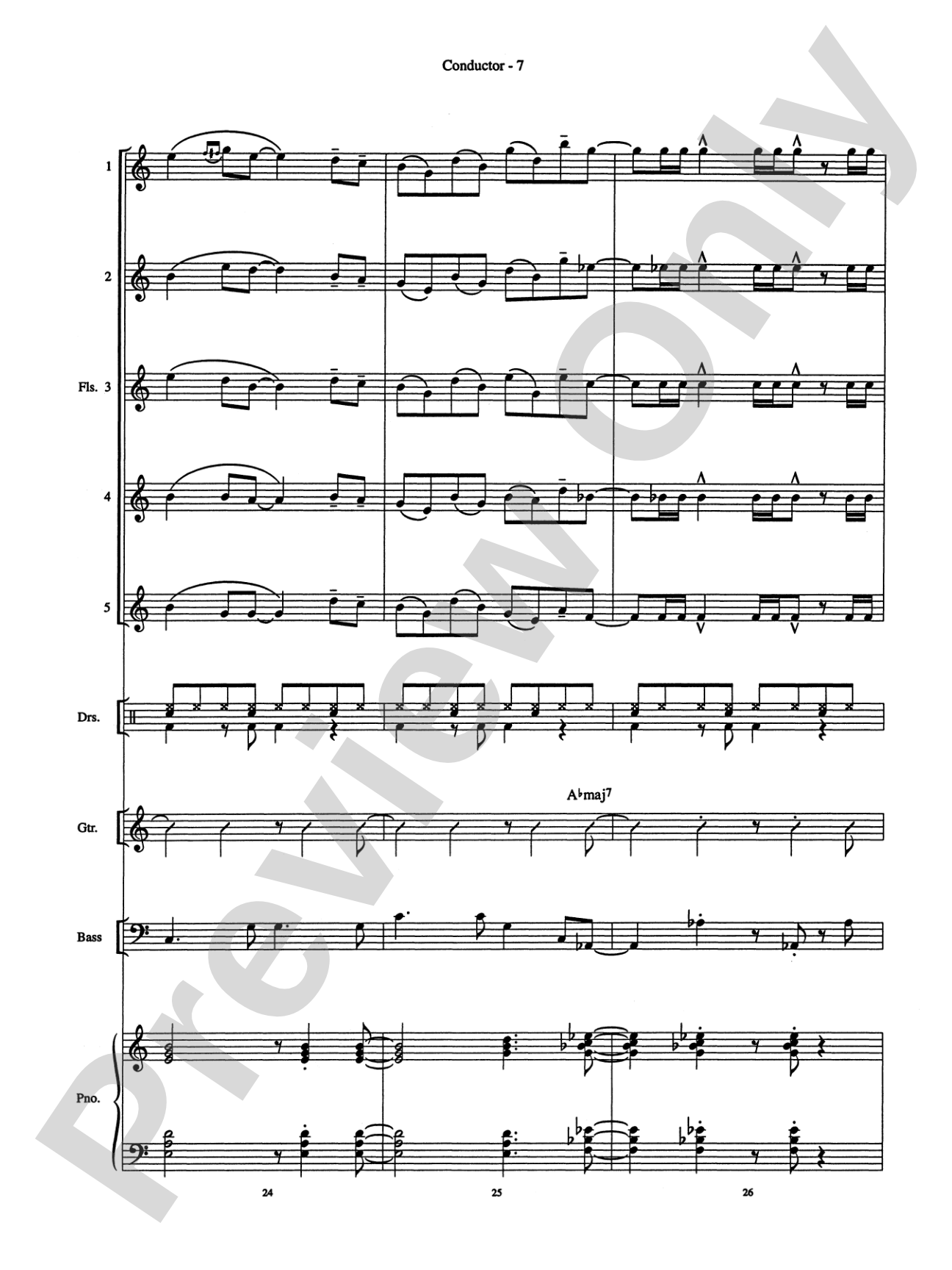
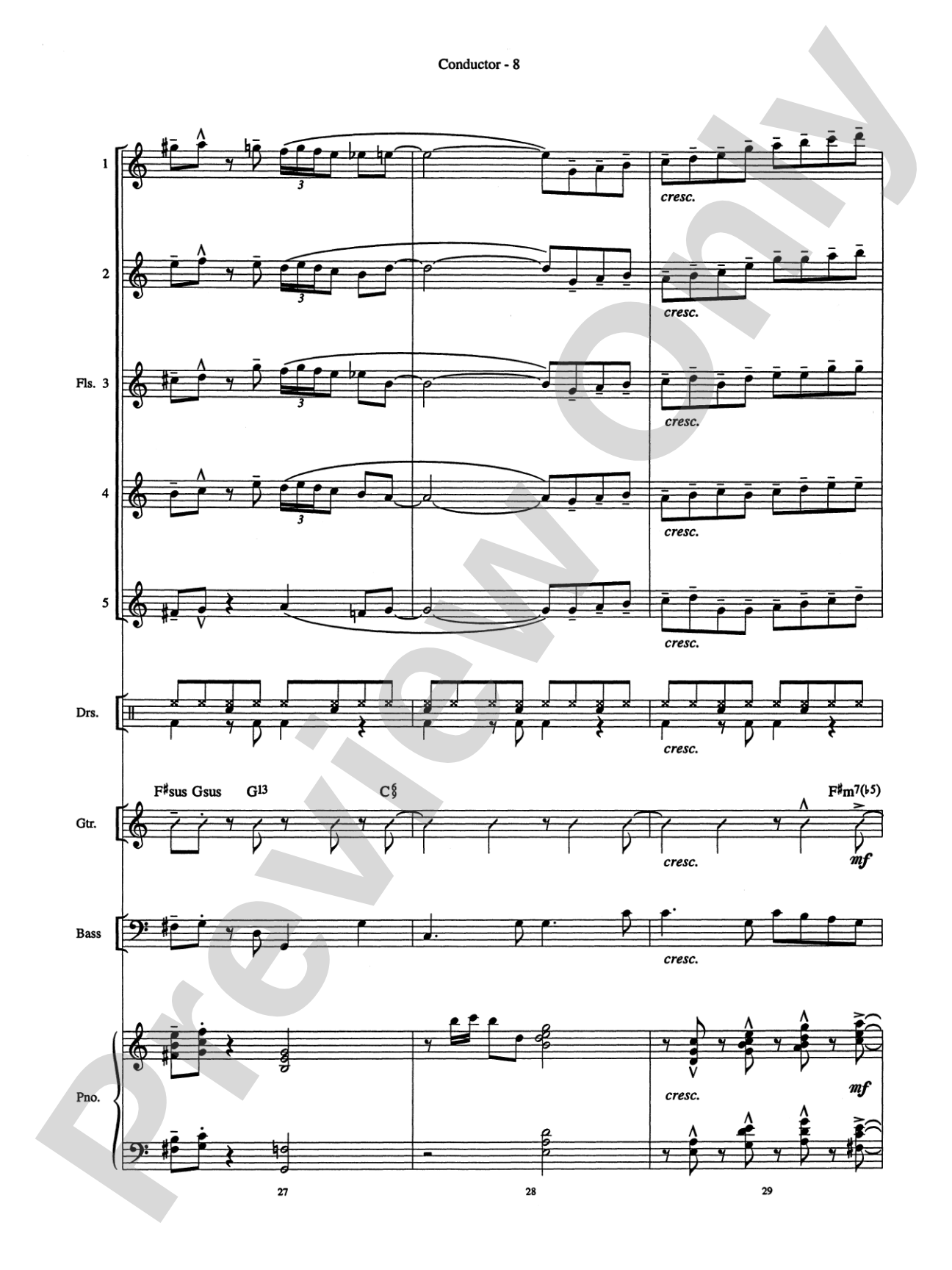
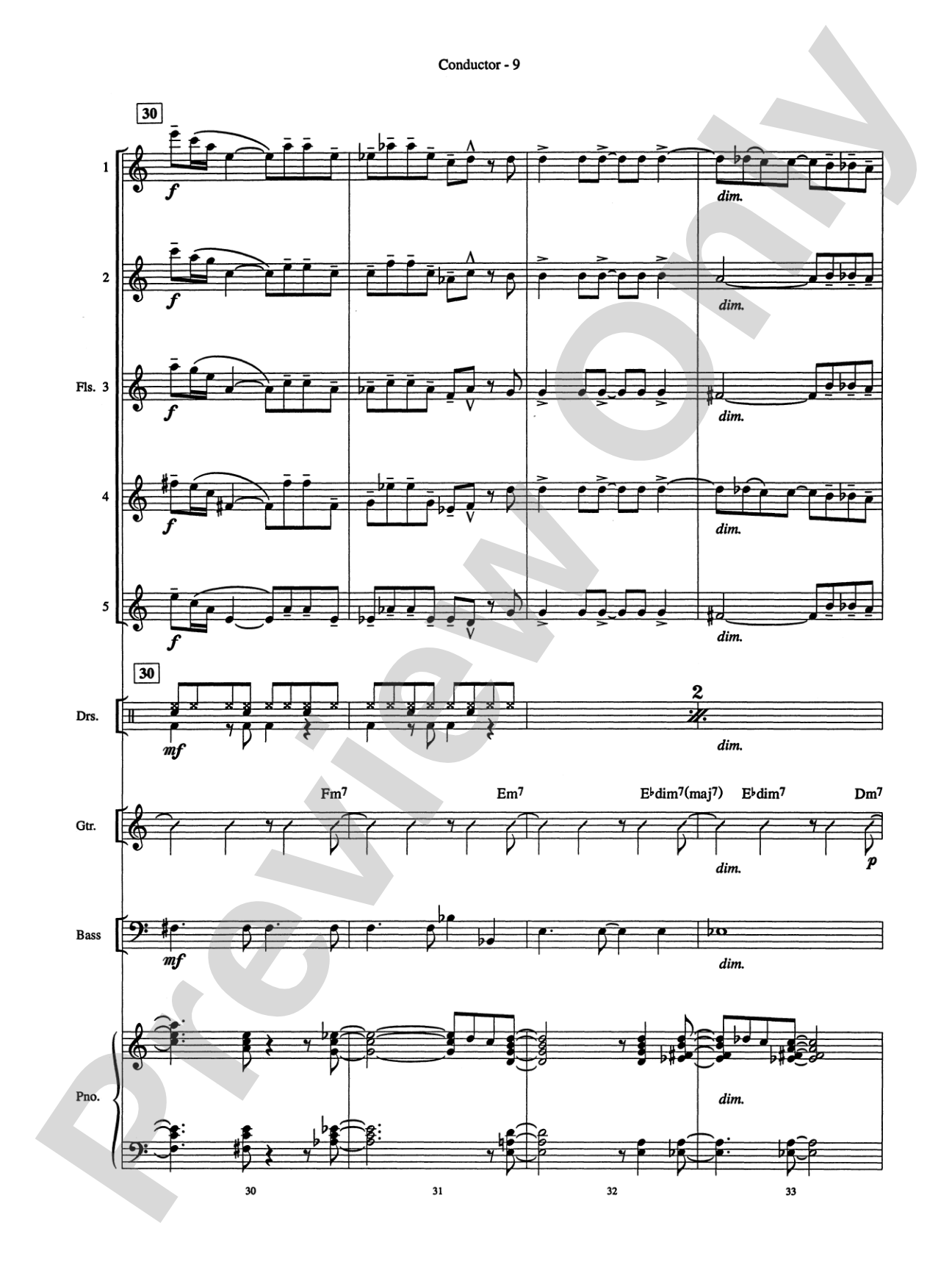
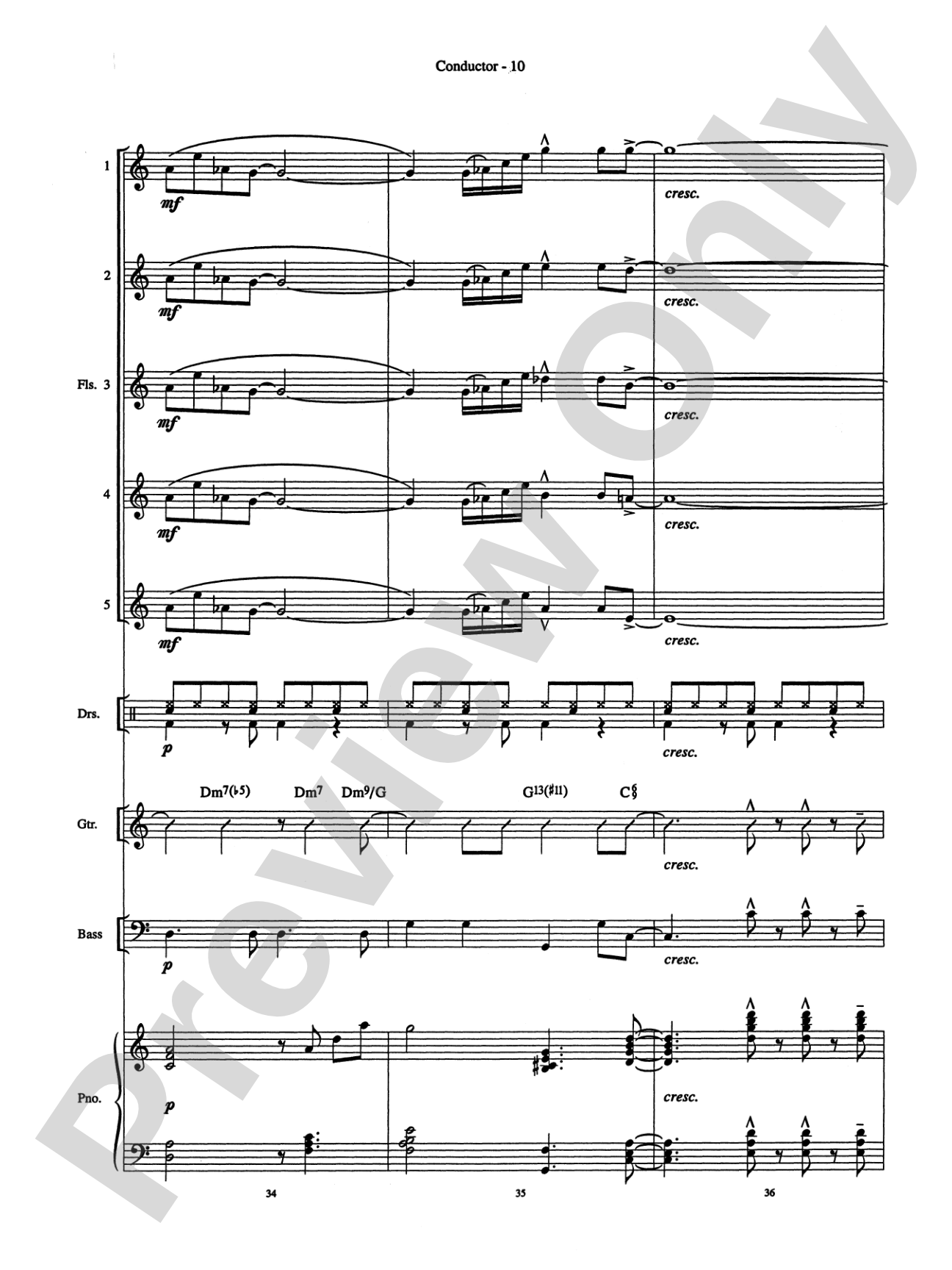
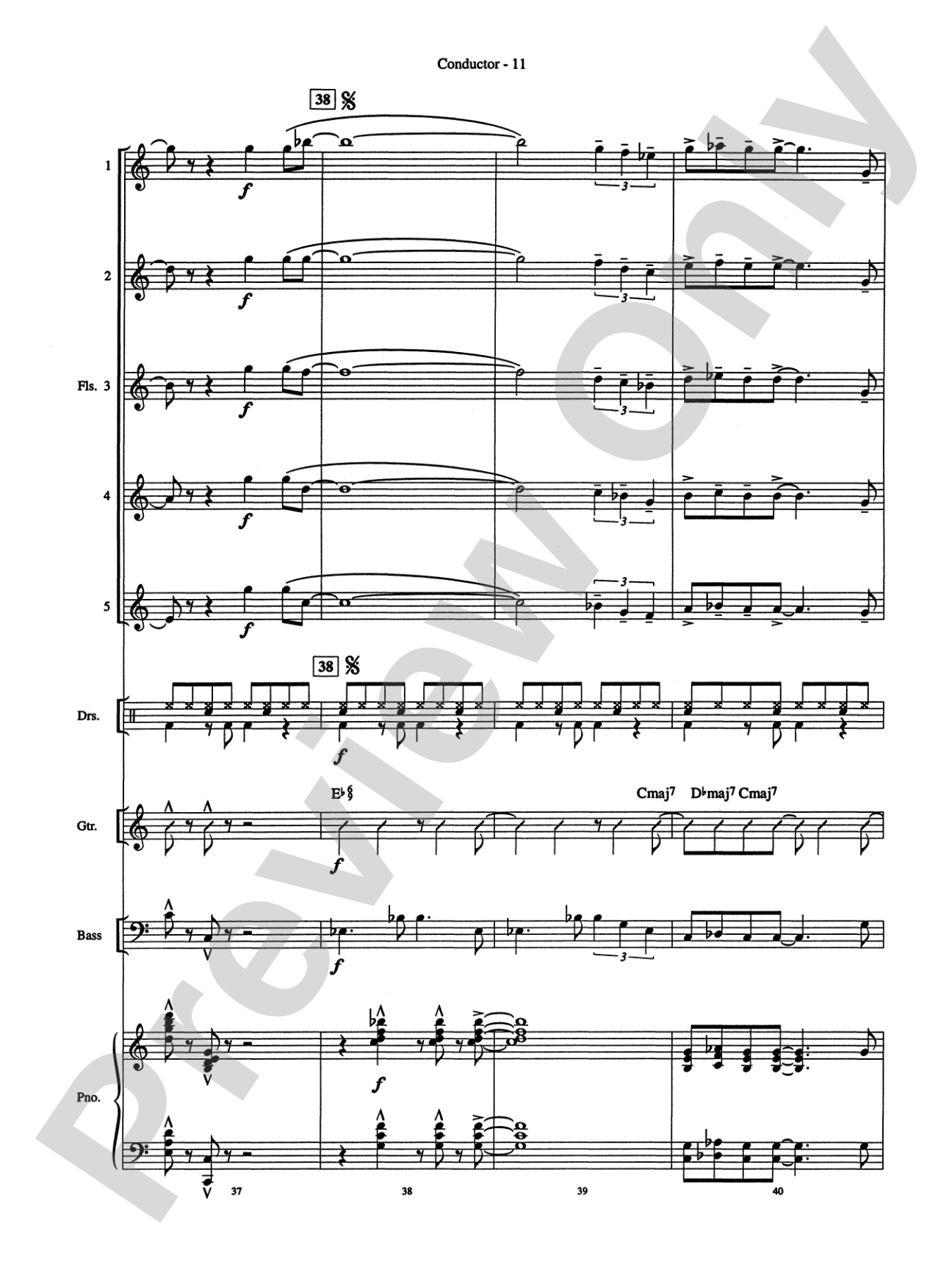
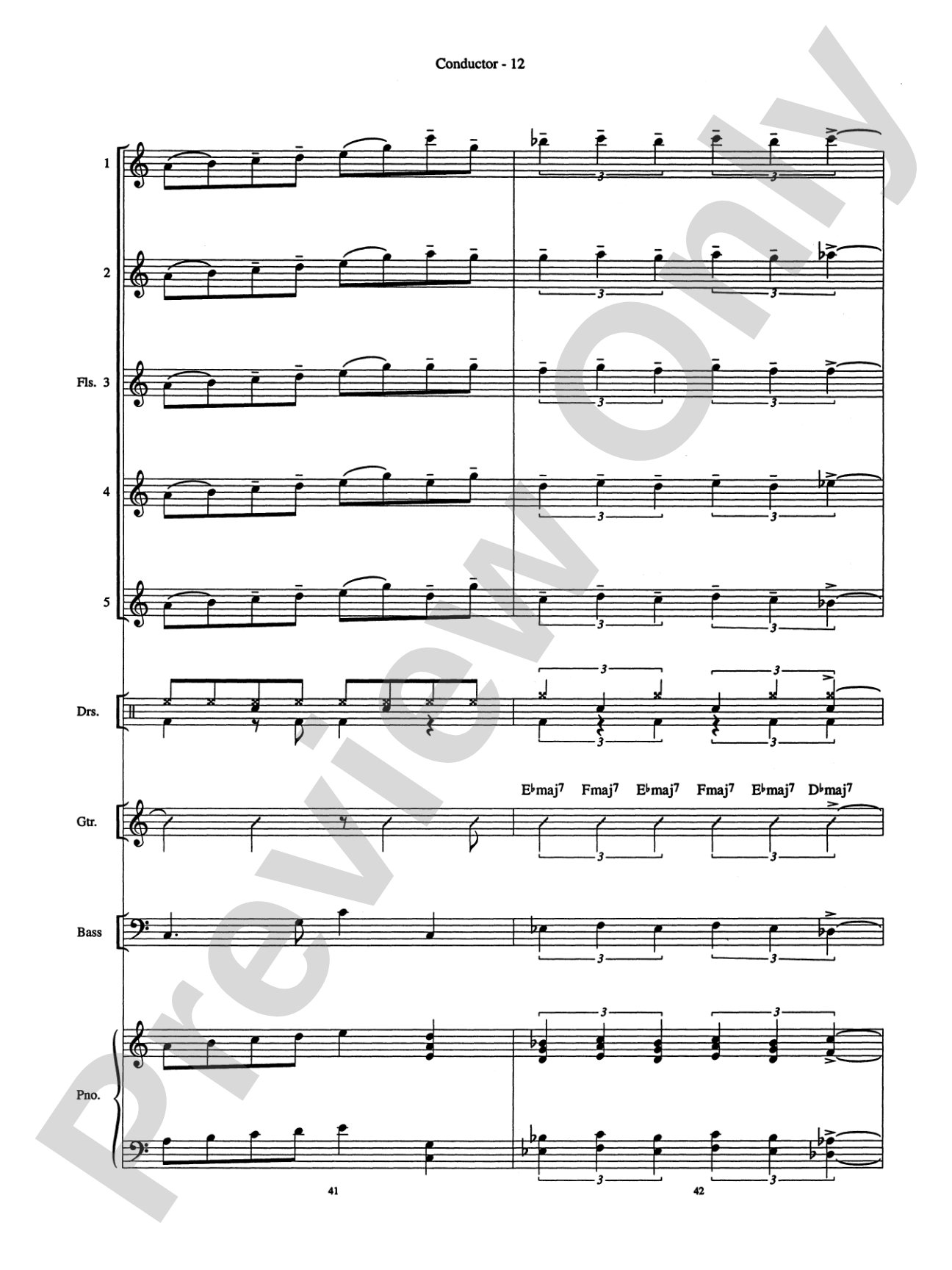
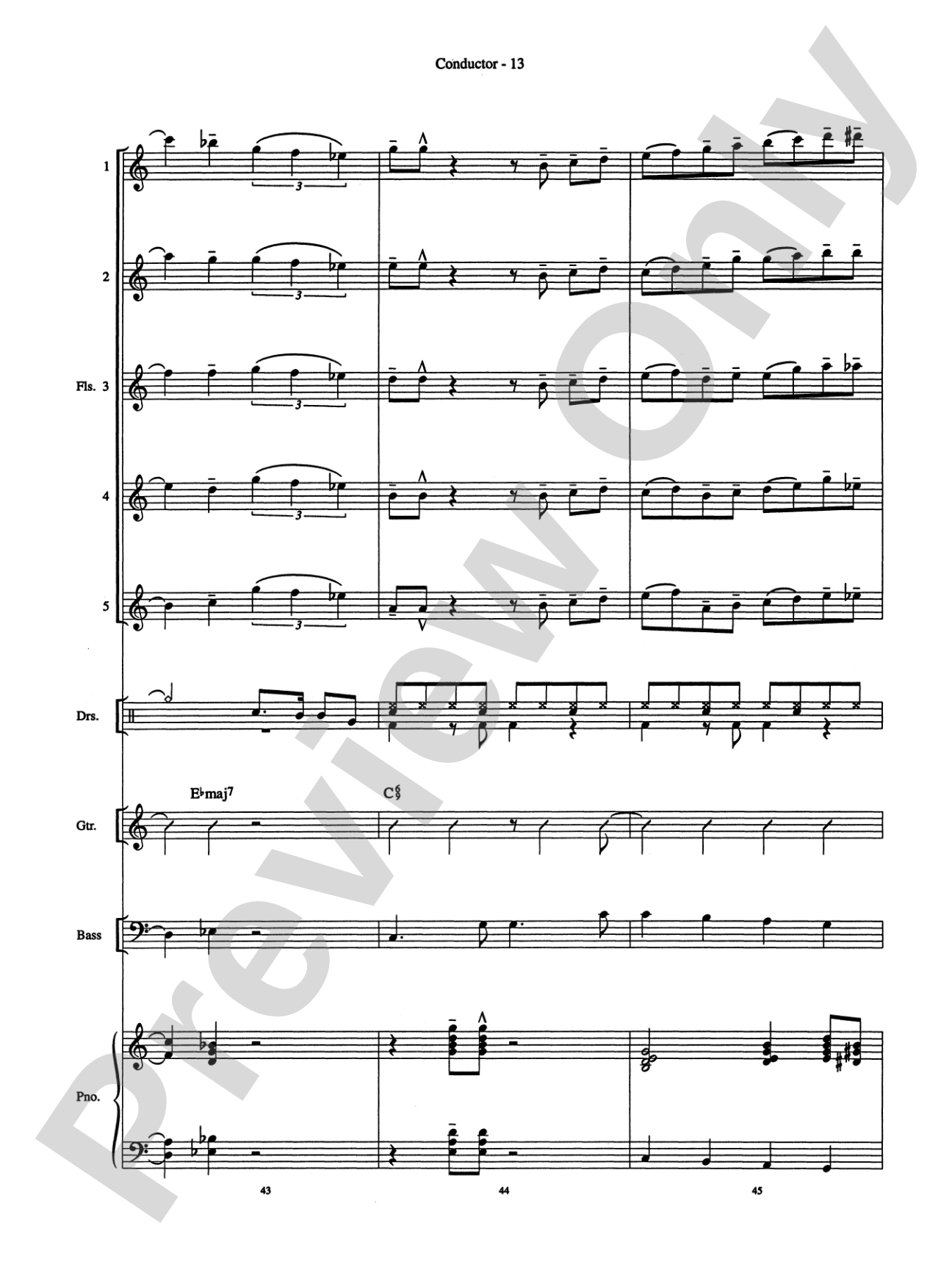
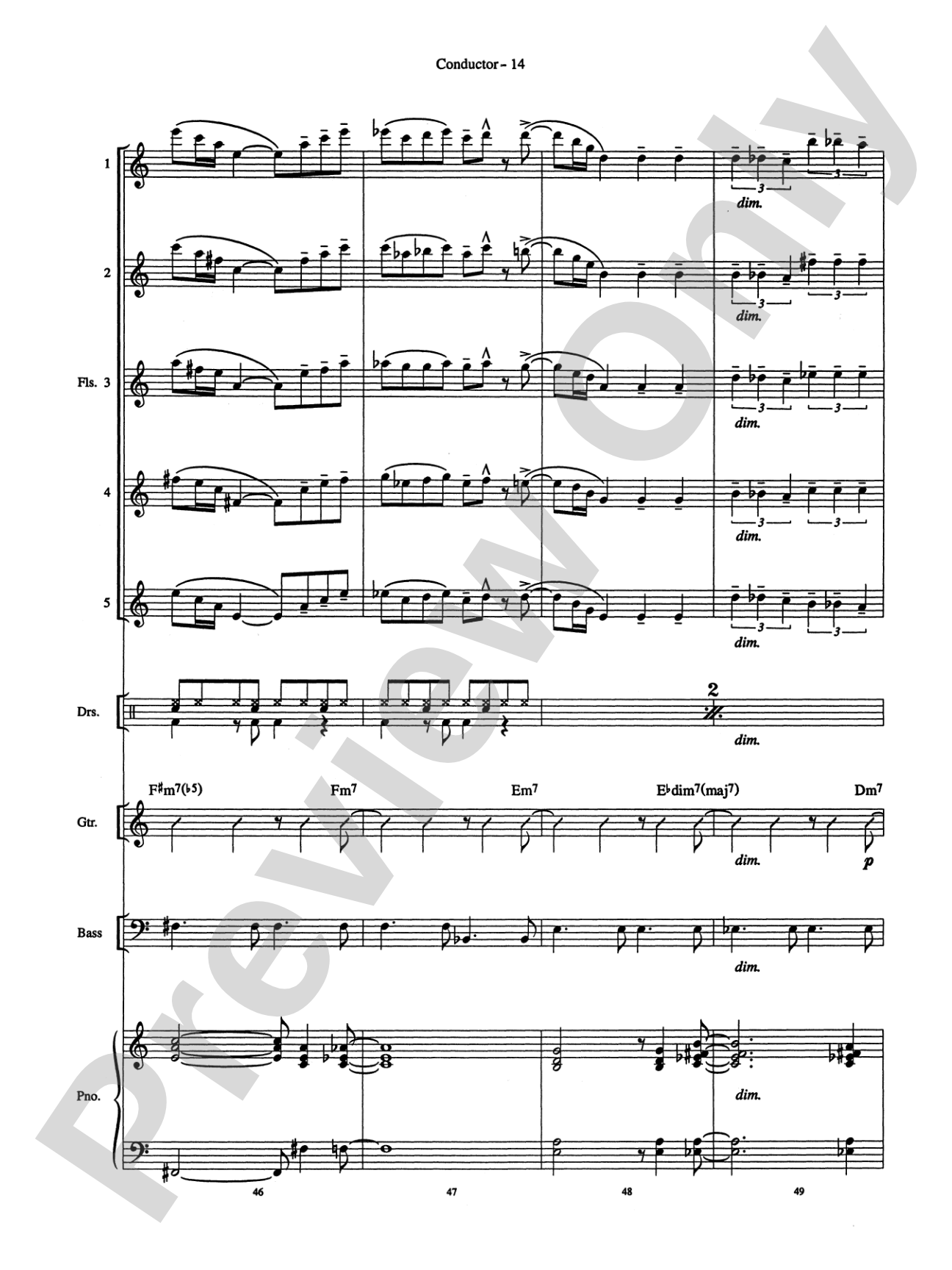
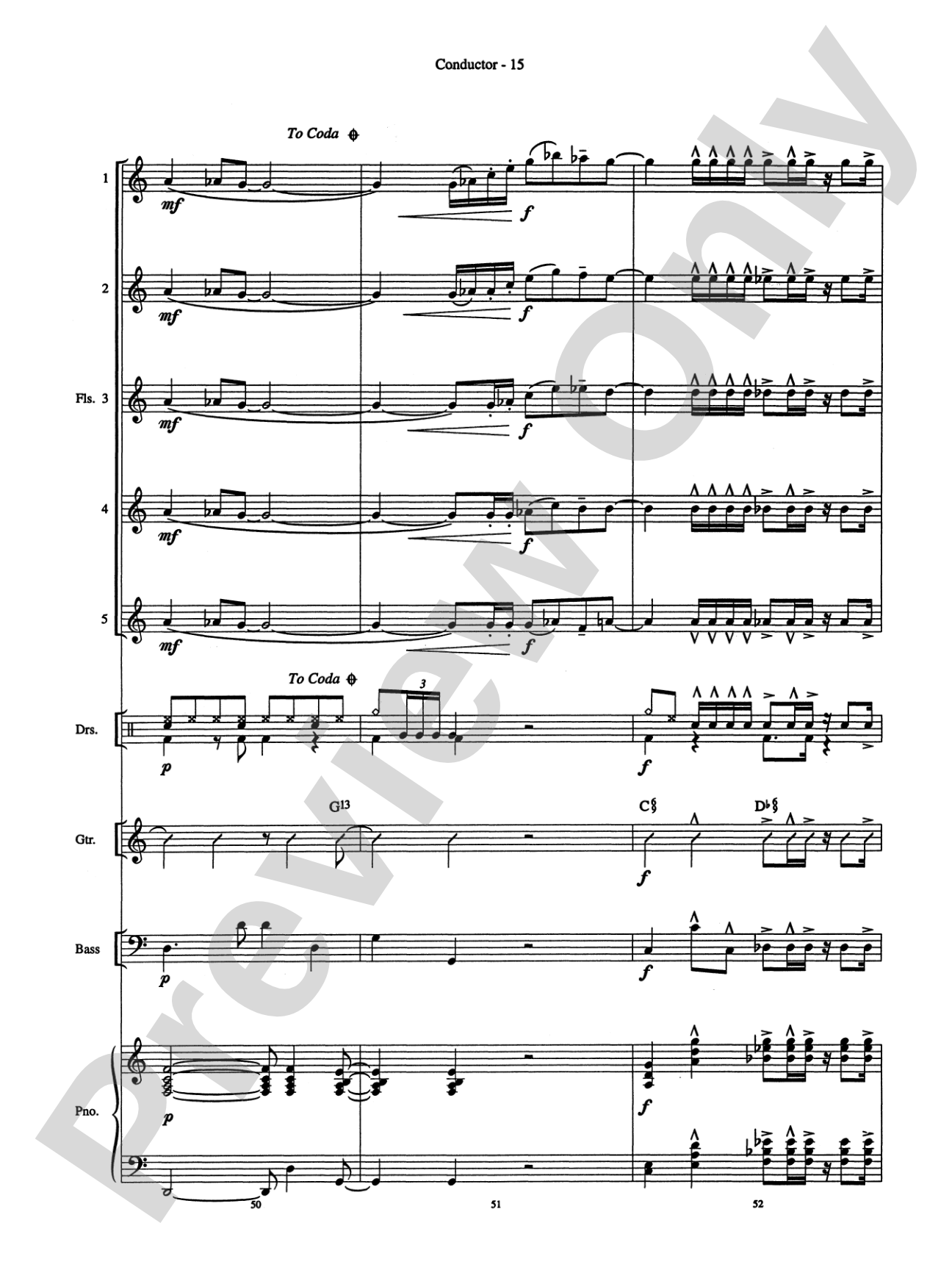
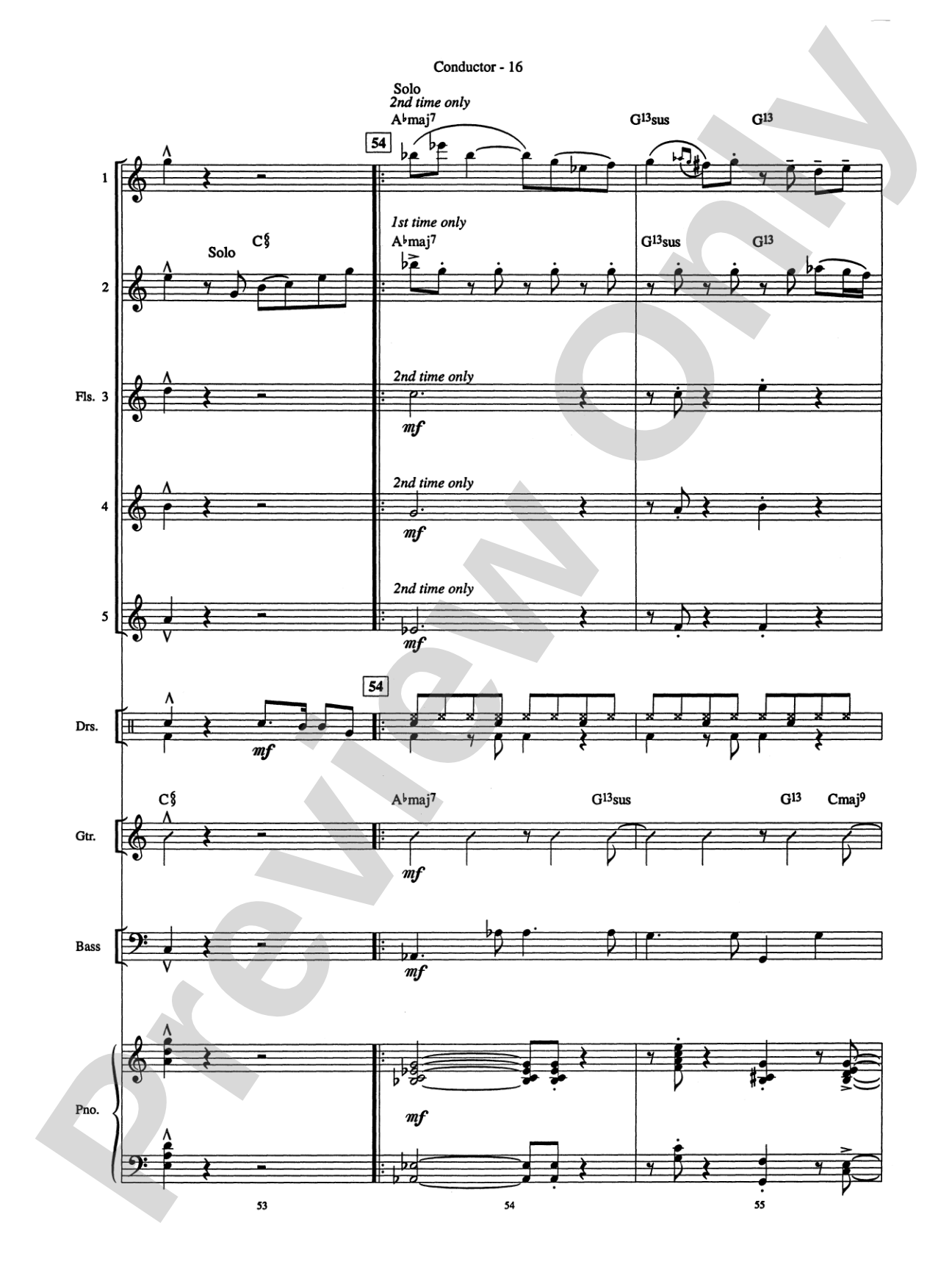
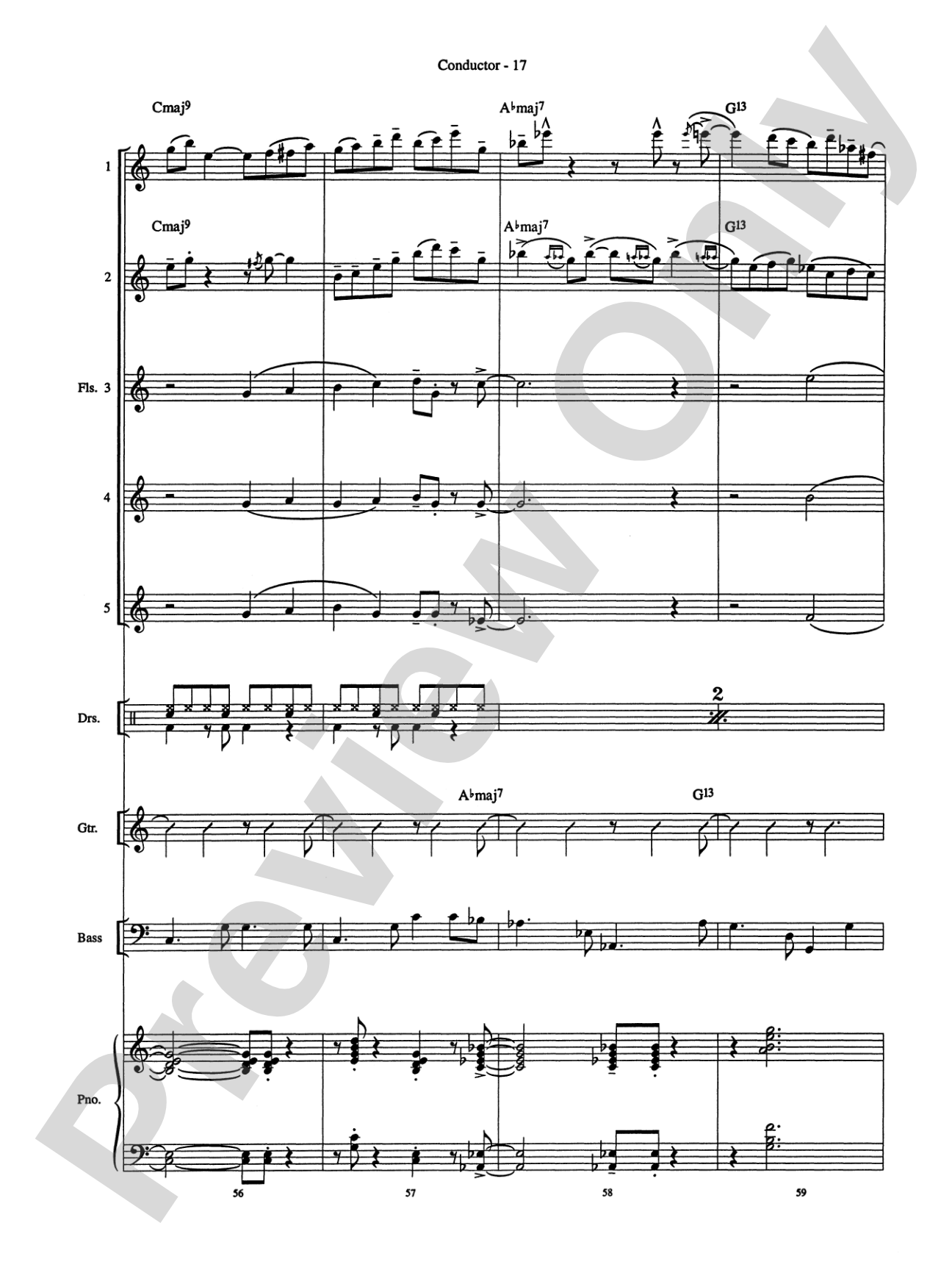
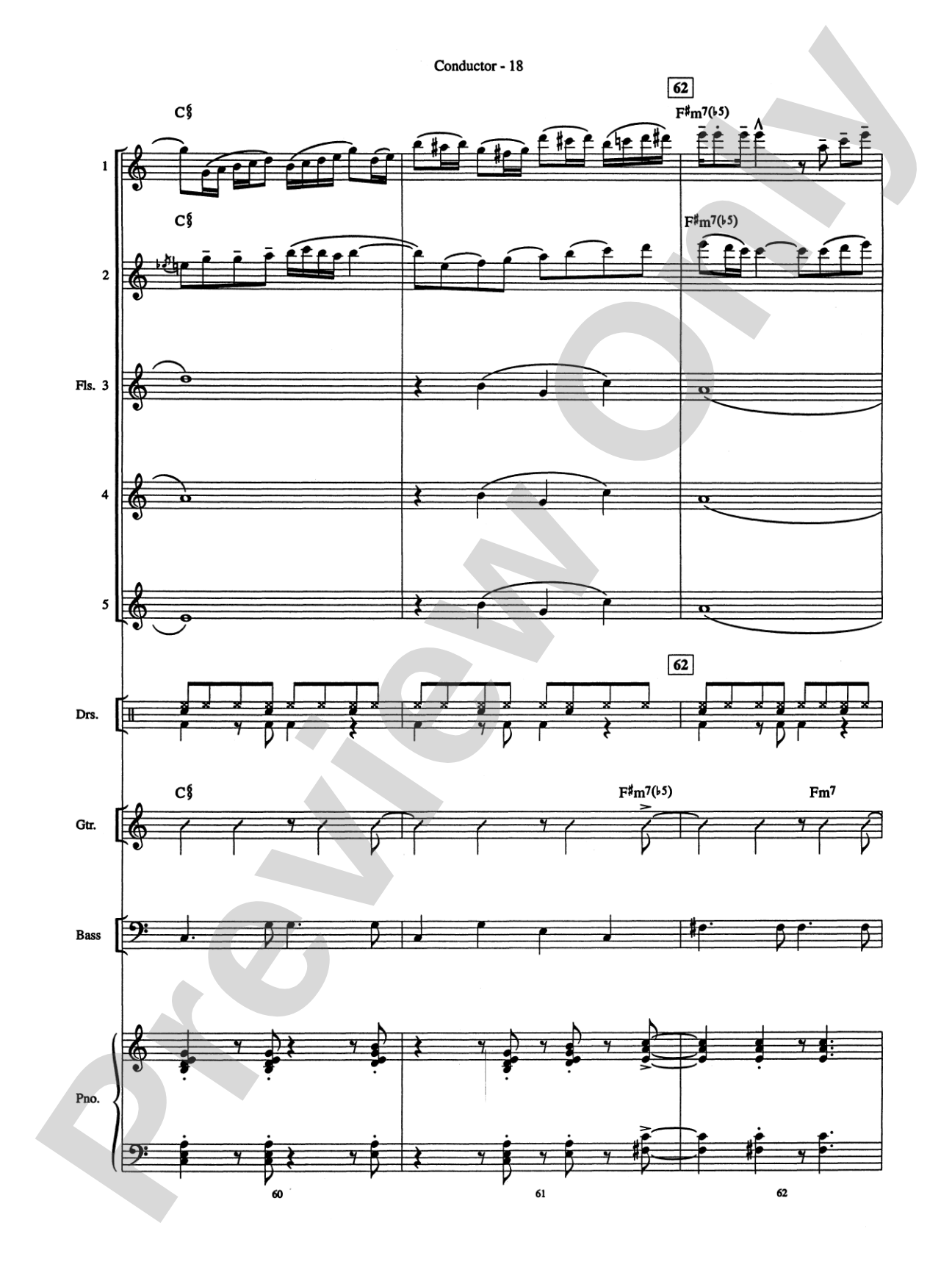
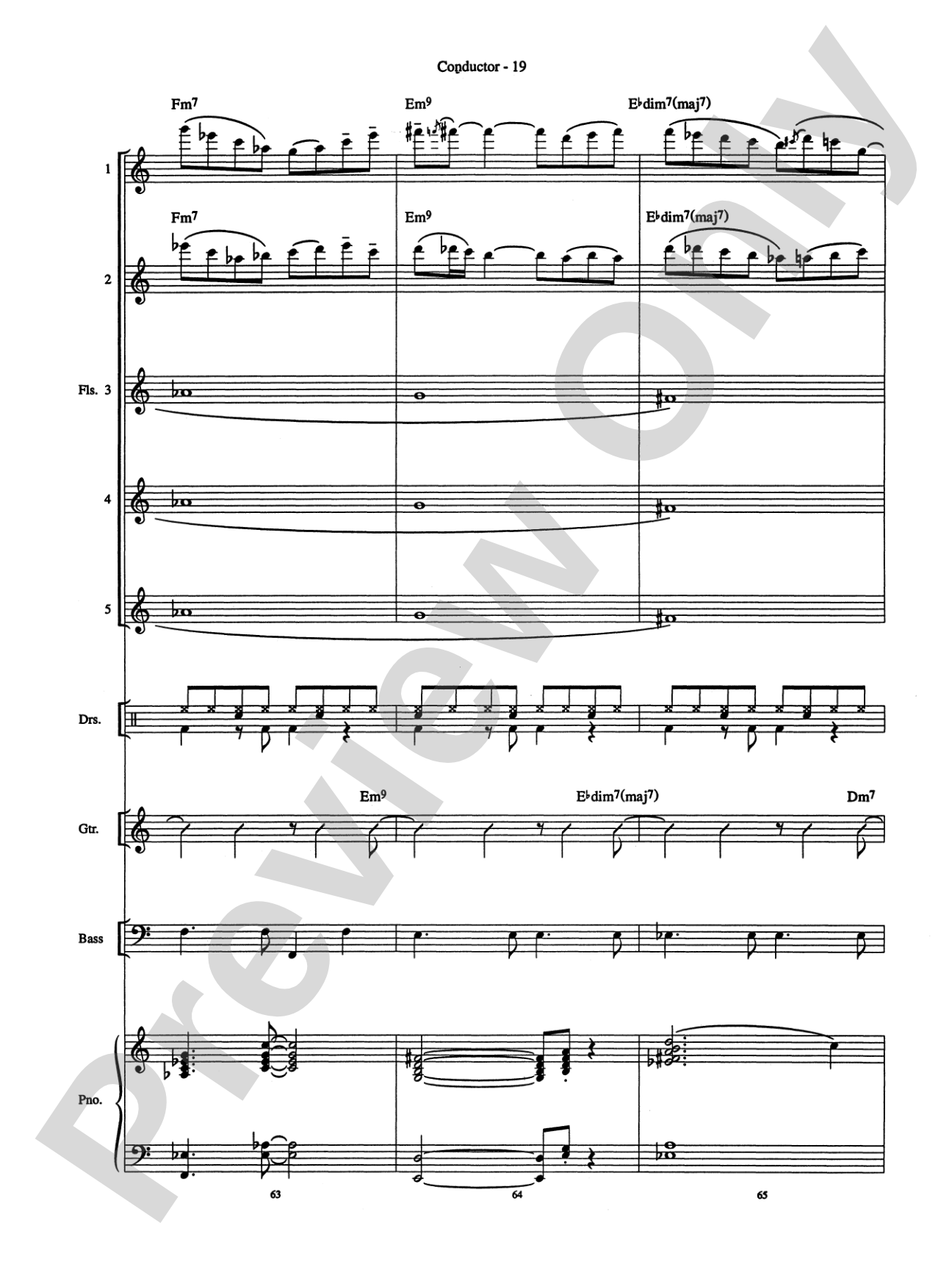
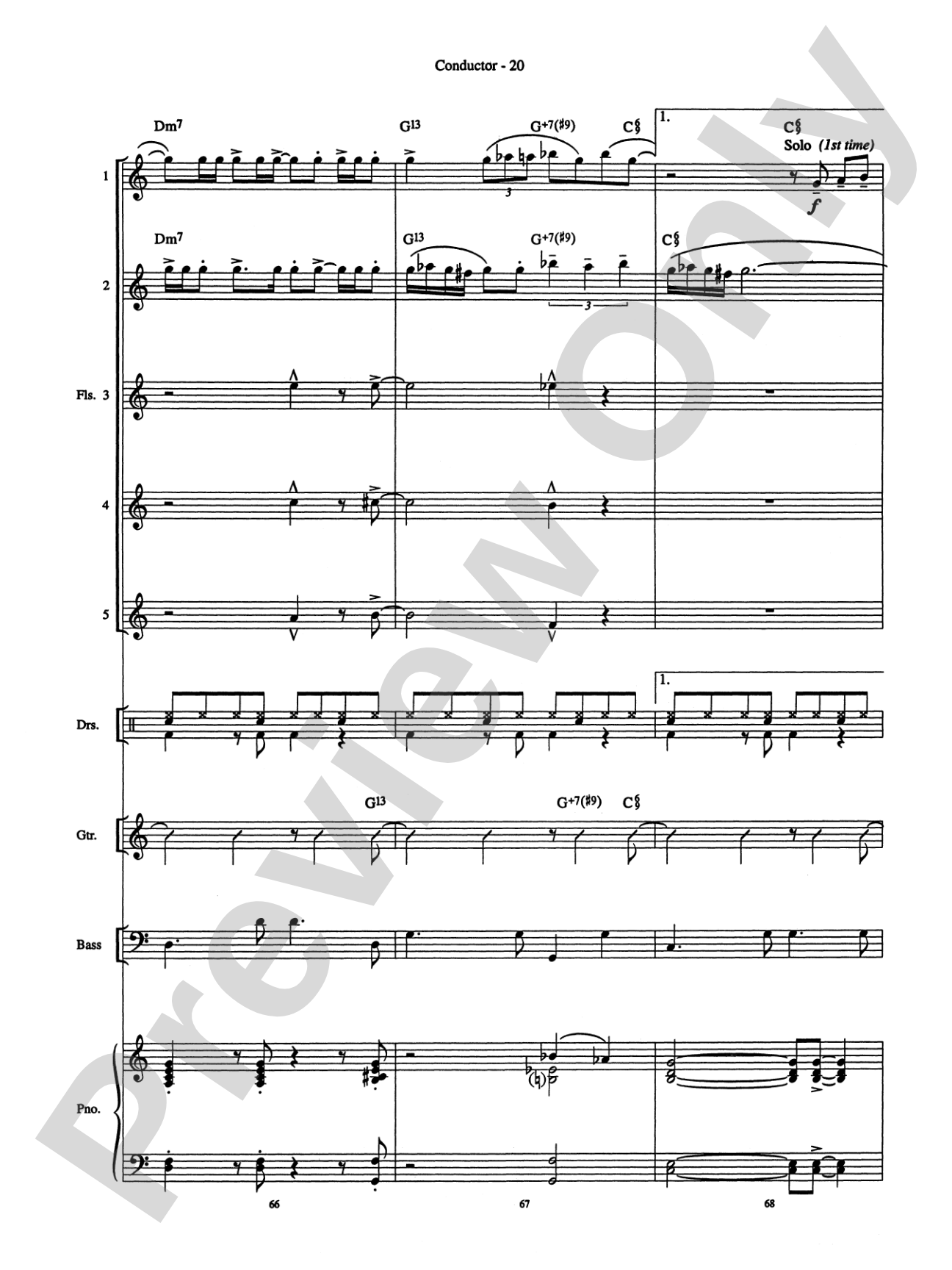
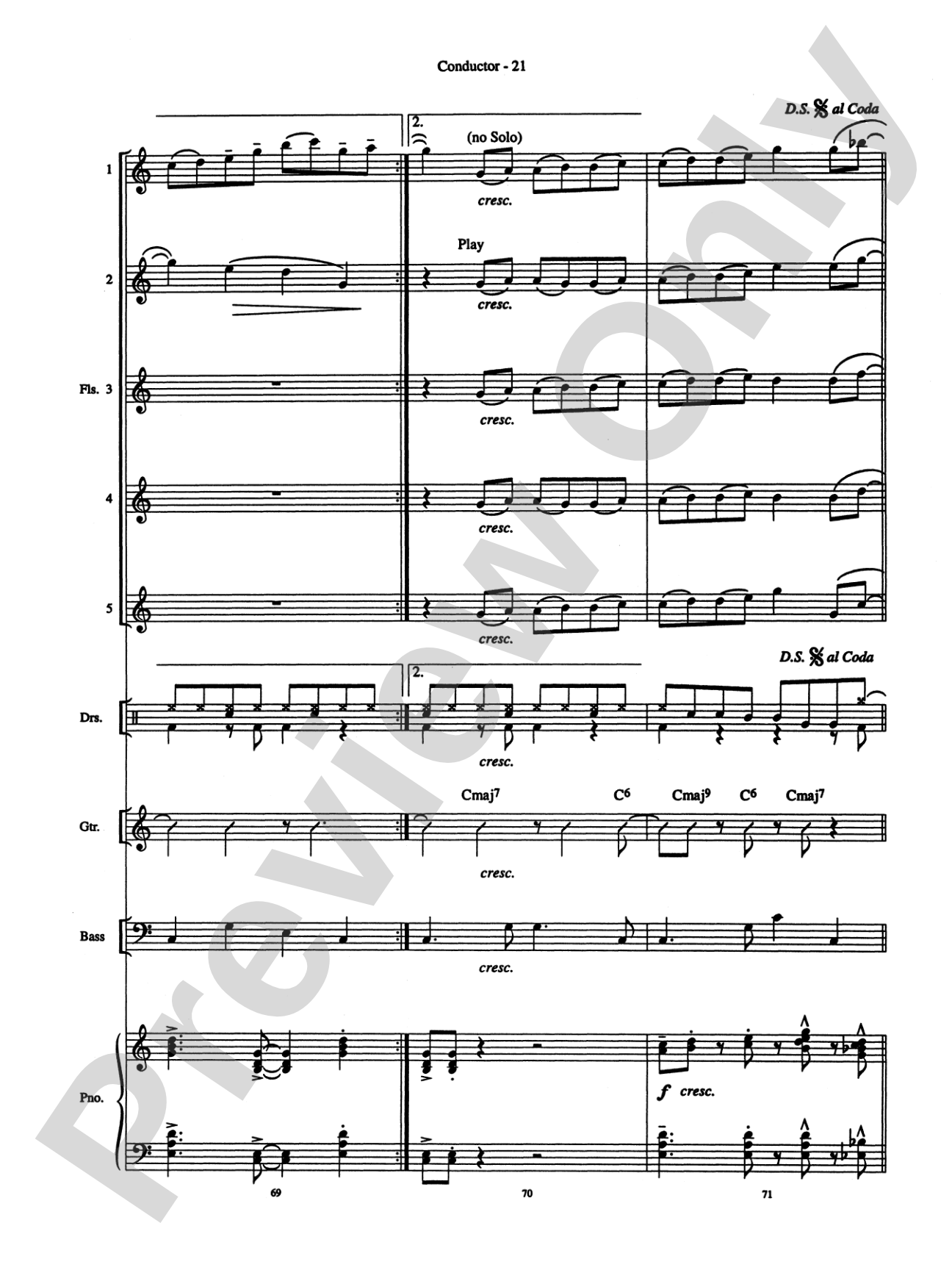
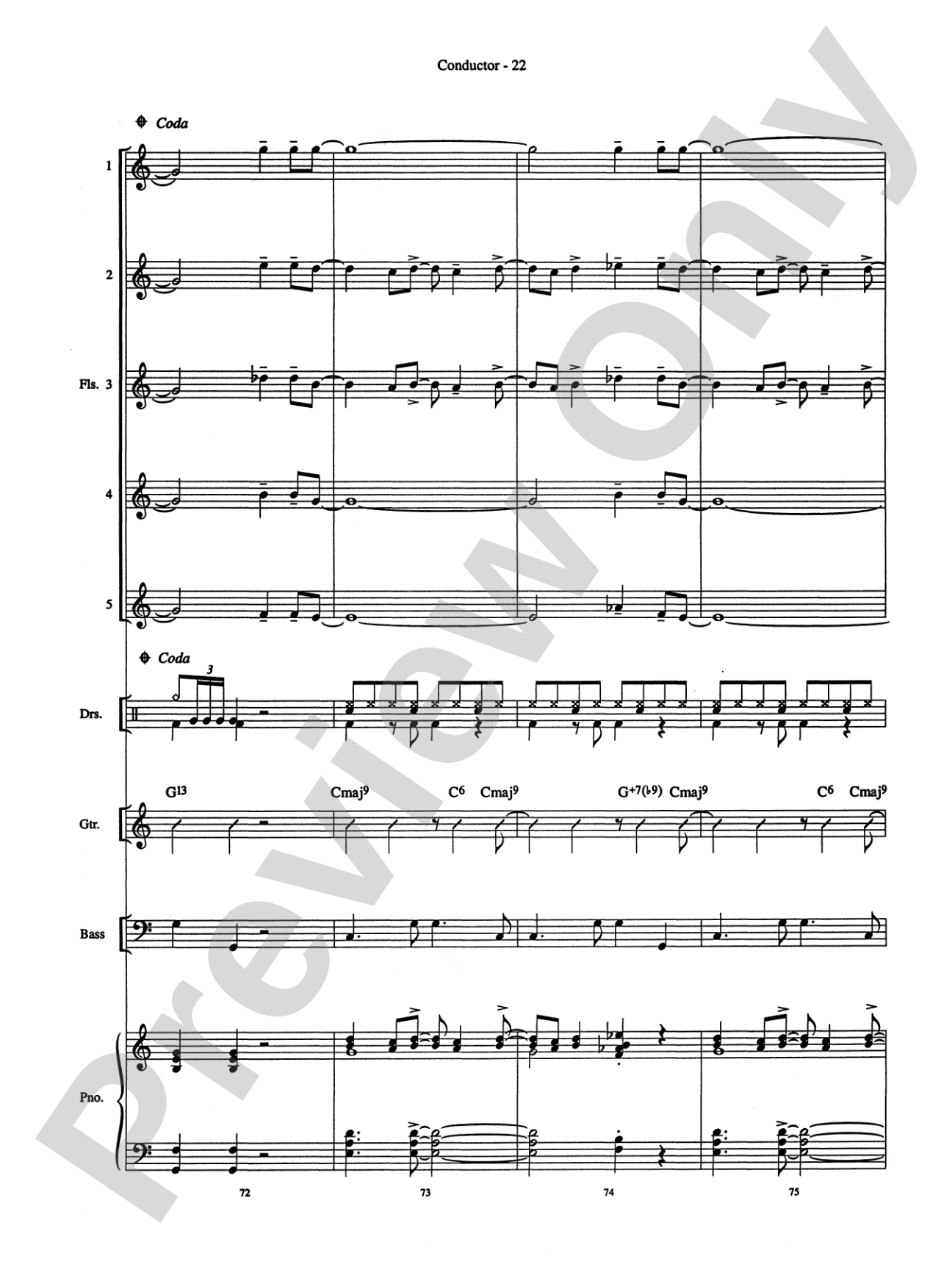
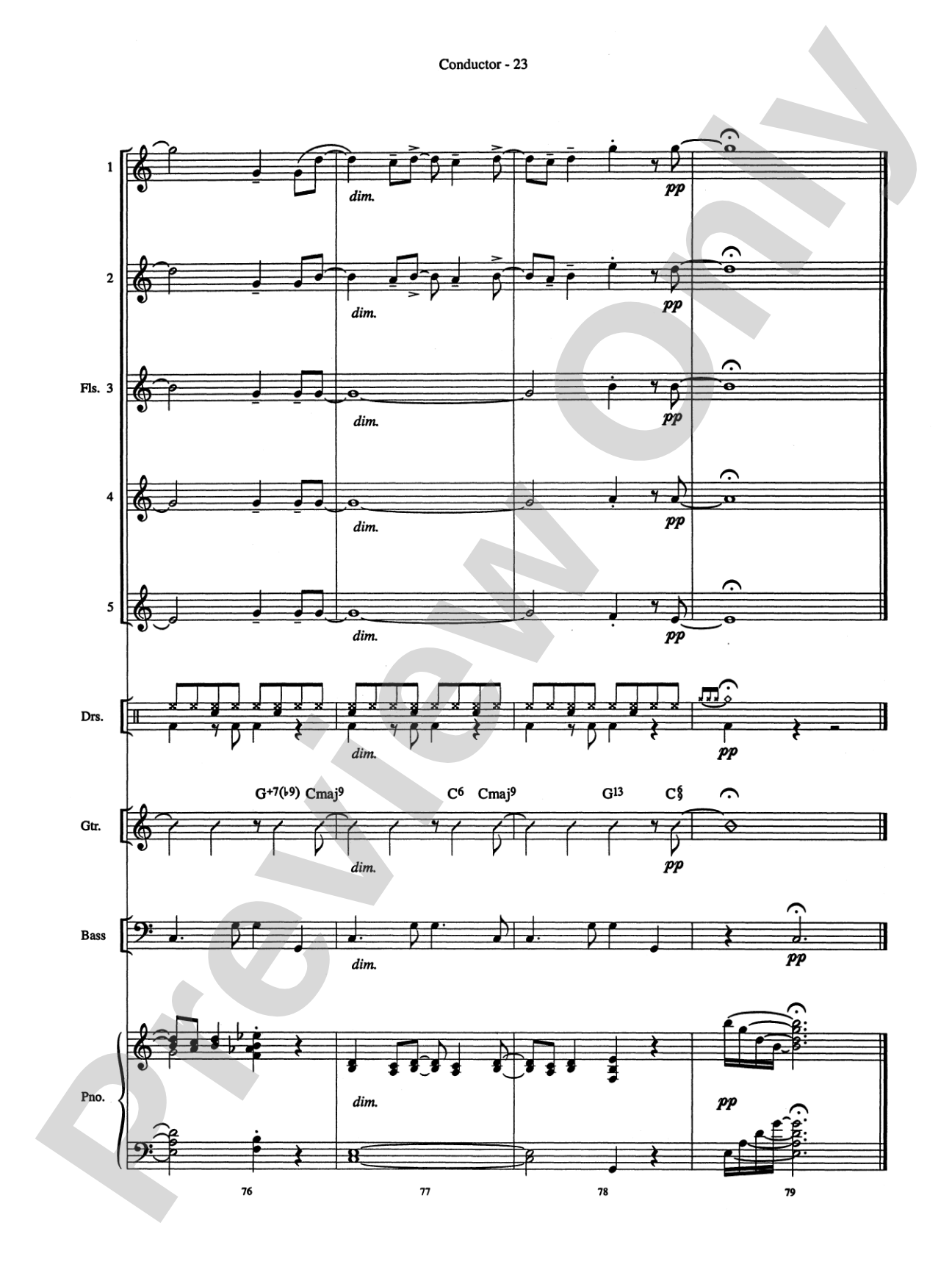


Night and Day: Flute Choir
Words and music by Cole Porter / arr. Calvin Custer
Item: 00-PK-0001702

$15.99
One moment…
Description
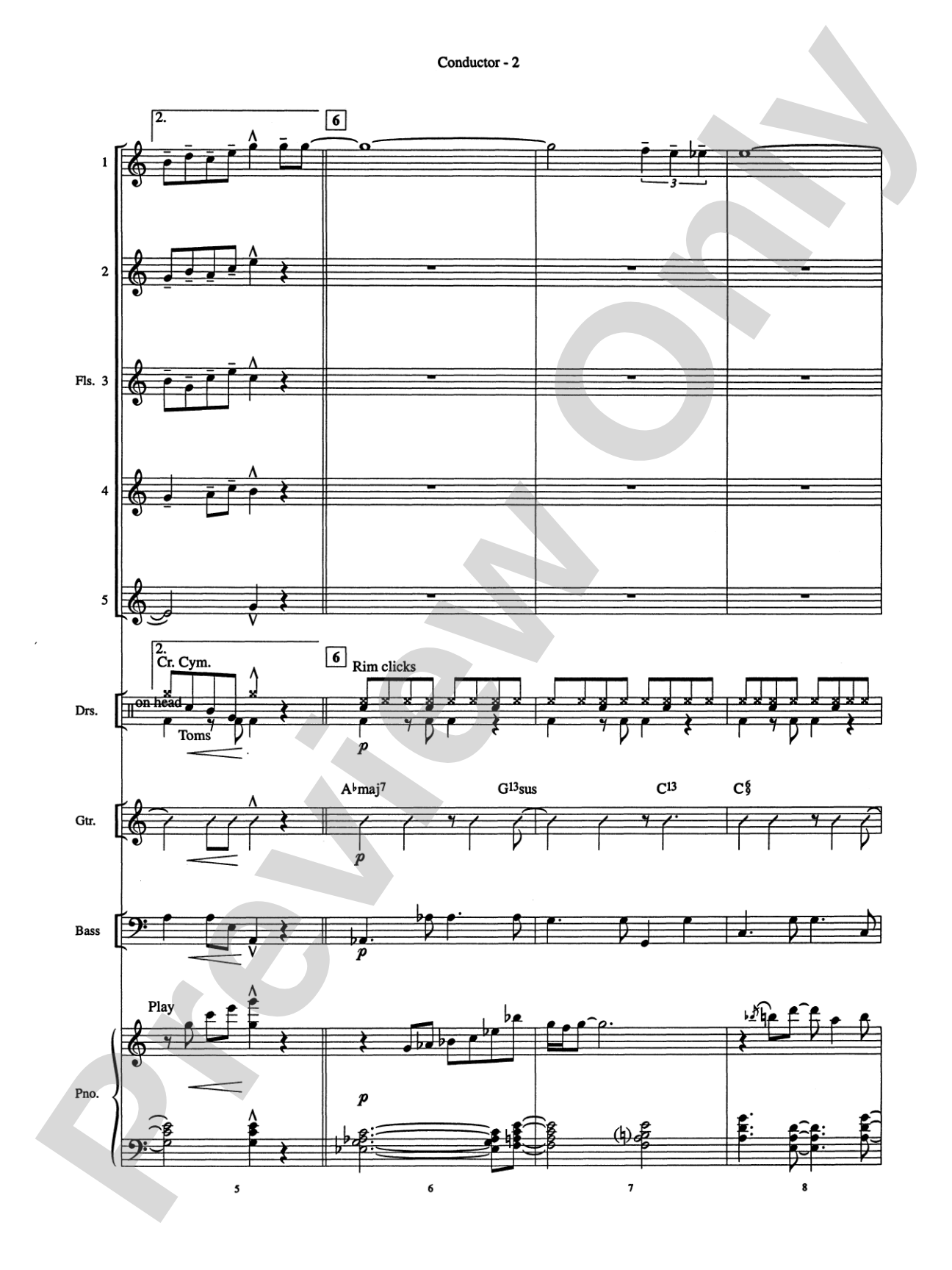
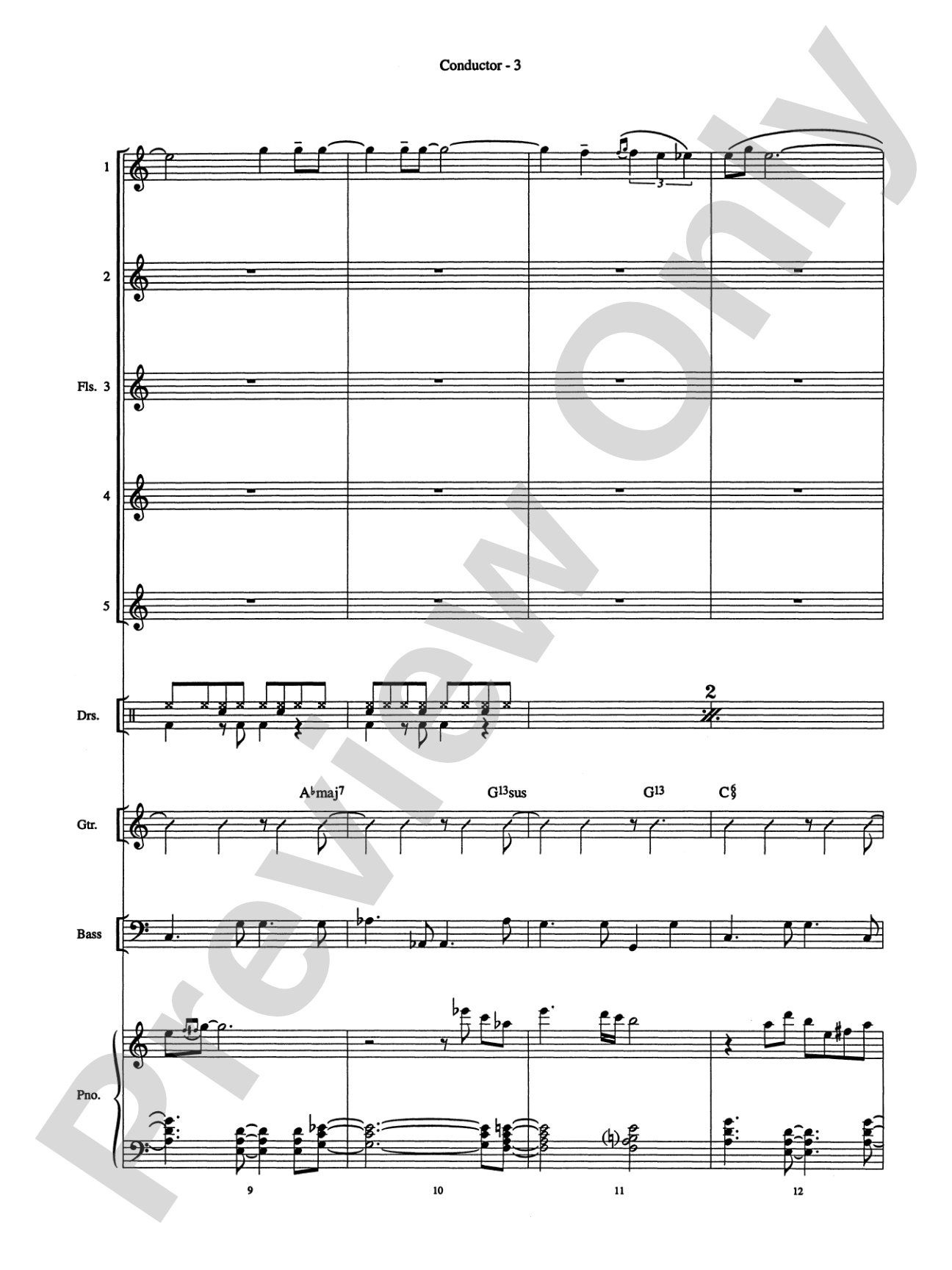
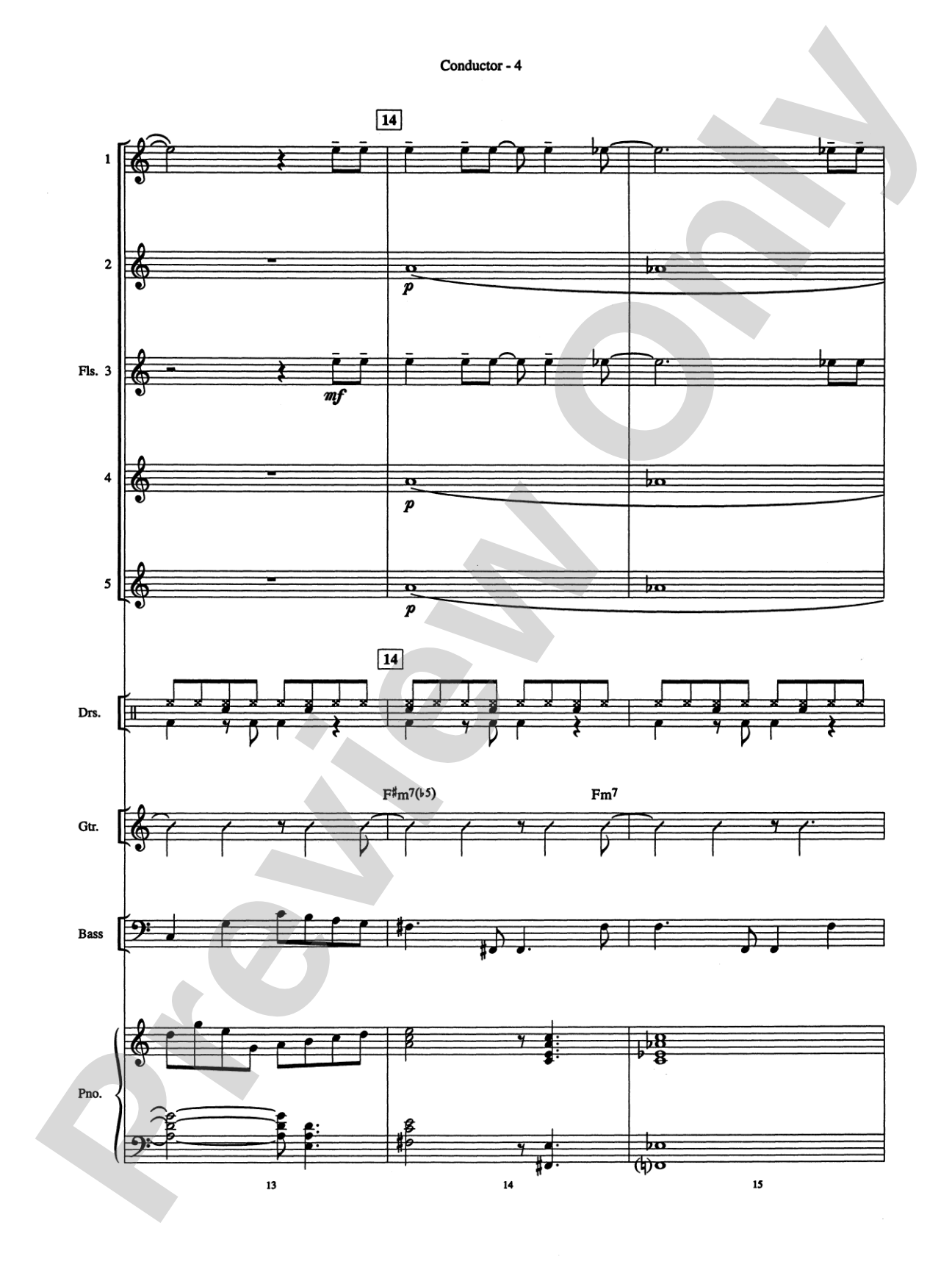
Ensemble for flute choir with rhythm section accompaniment.
Download free full-performance and accompaniment recordings. Play along with the music and learn the correct style with the full-performance track. The accompaniment track includes only piano, guitar, bass, and drums, so if you don't have a rhythm section, you can play along with this track in rehearsal and performance.
Free Recording Downloads:
Full Performance Track
Accompaniment Track


Download free full-performance and accompaniment recordings. Play along with the music and learn the correct style with the full-performance track. The accompaniment track includes only piano, guitar, bass, and drums, so if you don't have a rhythm section, you can play along with this track in rehearsal and performance.
Free Recording Downloads:
Full Performance Track
Accompaniment Track
Don't just read it, hear it, play along with it, and watch your students grow with it. In MakeMusic Cloud, Night and Day: Flute Choir comes alive with professional accompaniment, adjustable tempo, and built-in practice tools that turn solo practice into real progress.
Open in the Player
Jump straight in and assign it today.
Start Your Free Trial
Open this title and explore the full library in minutes.
Sample Audio
1
Audio File
--:--
0:00
0:00
Sample Video
No sample videos found.
Additional Details
Series:
Ensembles That Swing
Publisher:
Alfred Music
Page Count:
36
SKU:
00-PK-0001702
Instrumentation:
Flute Choir
More about this title
About the Composer: Cole Porter
Cole Porter (1891-1964) ranks among the most sophisticated composers of the American songbook. A prolific creator of musical theater and popular standards, Porter wrote melodies of unusual harmonic complexity and lyrics of wit and elegance. His songs have become foundational repertoire for musicians across genres, from jazz ensembles to concert orchestras.
Porter's influence on music education extends far beyond his lifetime. His compositions appear in everything from sight-reading anthologies to jazz method books because they demand and develop musicianship. A Porter standard requires attention to harmony, style, and phrasing in ways that simpler tunes do not.
Why we love this
Cole Porter's harmonies bring genuine sophistication to flute choir writing without demanding virtuosity beyond what a competent ensemble can achieve. Calvin Custer's arrangement treats the flute section idiomatically, giving each voice meaningful material while the recorded rhythm section anchors the swing feel exactly where it needs to be. The included full-performance and accompaniment tracks eliminate the frustration of finding a compatible rhythm section, making this accessible to groups that would otherwise struggle with the genre.
What to expect
Sophisticated and urbane, with that particular Porter elegance that comes from unexpected harmonic turns and witty melodic phrasing. The rhythm section gives the piece a relaxed swing, letting the flute choir float over a grounded, swinging foundation. There is genuine joy in the writing, the kind that comes from a master craftsman who believed great songs need not be serious to be serious about craft.
Who it's for
Flute choirs and flute ensembles at the high school and early college level, as well as community ensembles seeking repertoire that sounds substantial without excessive technical demands. If your ensemble has irregular attendance or a shifting roster, the recorded accompaniment lets you rehearse and perform with a complete sound even when the rhythm section is unavailable. This suits any director hunting for jazz-adjacent repertoire that appeals to both audiences and players.
How to get the most out of it
- Listen closely to the full-performance track for the groove's pocket. The swing interpretation on the recording shows how to sit with the rhythm section rather than rushing ahead.
- Balance the flute voicings so the chord quality reads clearly. Porter's harmony is the point; thick, undifferentiated doubling obscures what makes the writing worth playing.
- Use the accompaniment track in sectional rehearsals to lock each flute part individually. This builds confidence before blending all voices together.
- Attend to the style markers in the score itself. Porter standards have specific phrasing conventions; your score will show articulation and breathing choices that shape the tune's character.
How to use it
Slot this into a concert that pairs art-song tradition with jazz-influenced American repertoire. The Porter name and standard recognition make it an excellent closer or penultimate piece, signaling to the audience that your flute ensemble commands both classical technique and contemporary style. It also works well in a spring program emphasizing lighter fare, or as a feature that showcases how skillfully your ensemble balances ensemble blend with individual voice clarity.
Skills your students will build
- Harmonic awareness through Porter's jazz-tinged chord progressions
- Swing articulation and phrasing conventions in ensemble context
- Balance and blend in four- or five-part flute voicings
- Rhythmic precision and groove-oriented ensemble coordination
- Style-appropriate interpretation of American popular song standards