

Mysterious Moon: 2-Part Choral Octavo
Words by Henry Wadsworth Longfellow, music and additional words by Janet Gardner
Item: 00-PO-0001758
$1.85
Minimum order quantity: 20 copies
Pickup currently not available
Description
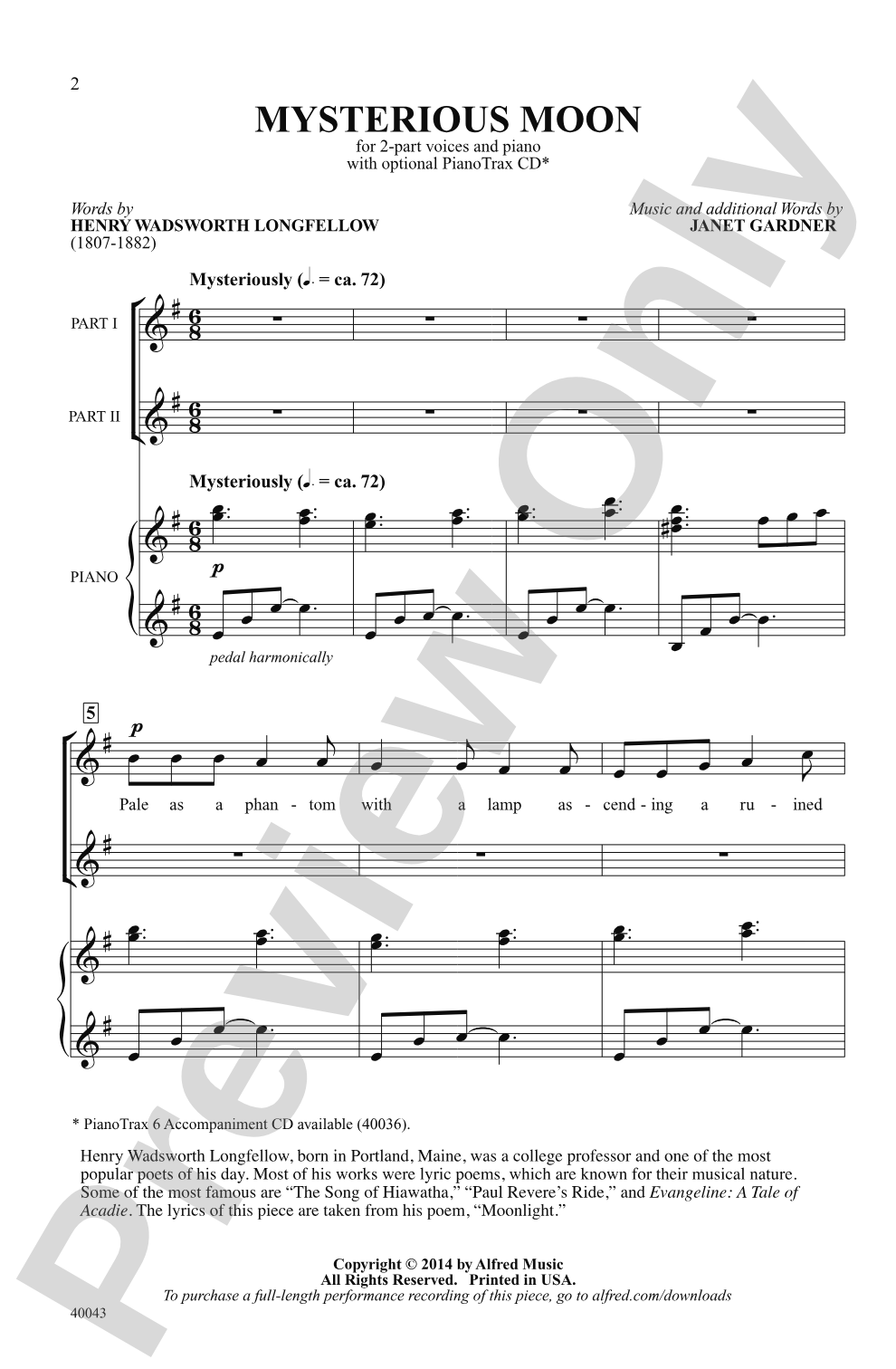
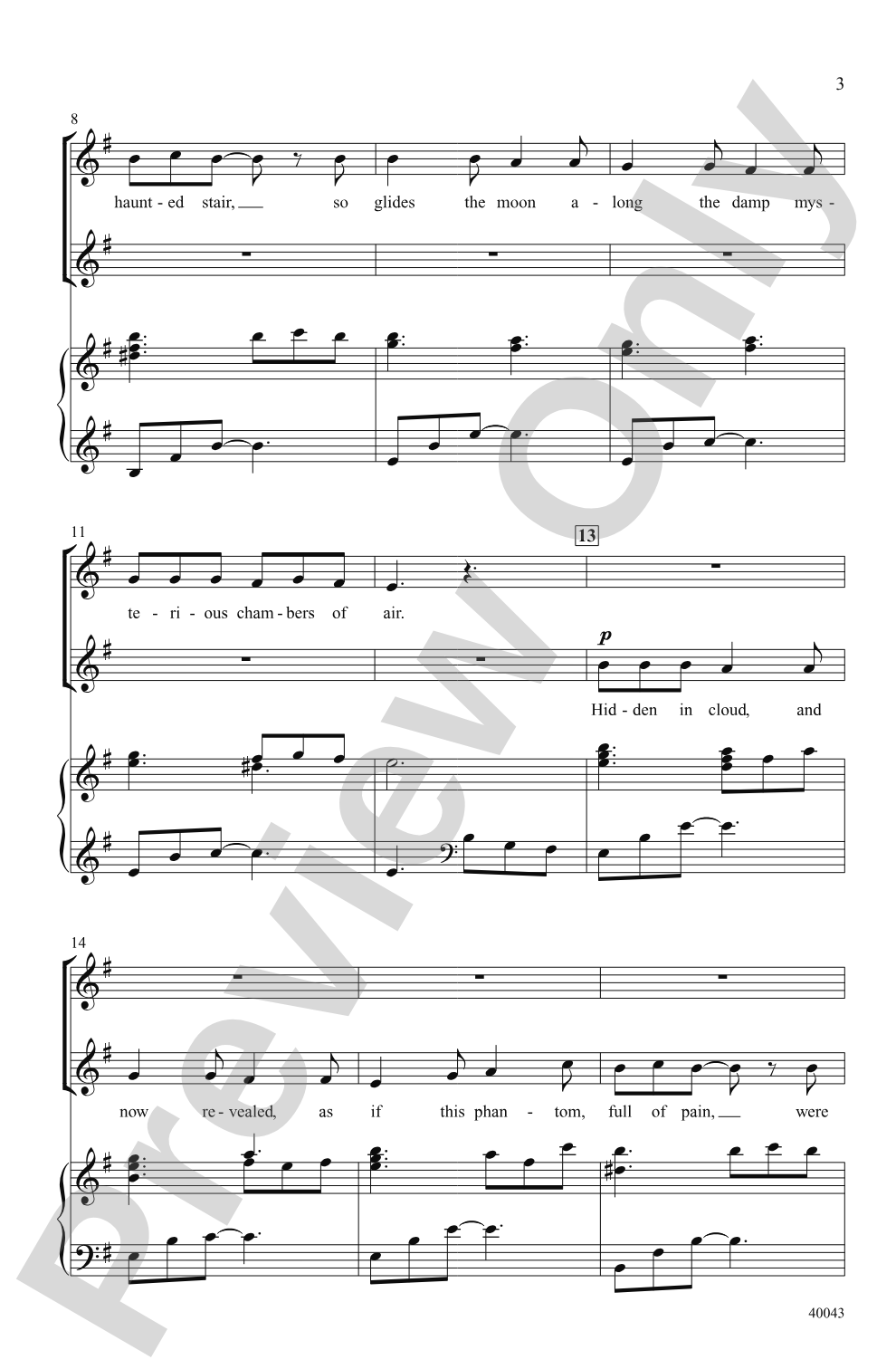
Longfellow's mysterious words are beautifully set with a minor-mode melody, designed specifically for developing choirs. Staggered entrances create a canon effect, and independent voice parts form partner song moments. Stays comfortably within a one-octave range for all.


Mysterious Moon: 2-Part Choral Octavo isn't in MakeMusic Cloud just yet...but it could be. Let us know you'd like to see it, and you'll help shape what comes next. In the meantime, start a free trial and dive into thousands of interactive titles your students can play along with today.
Request This Title
Tell us you want it.
Start Your Free Trial
Explore everything that's ready to play right now.
Sample Audio
1
Audio File
--:--
0:00
0:00
Sample Video
No sample videos found.
Additional Details
Series:
Alfred Choral Designs
Publisher:
Alfred Music
Page Count:
12
SKU:
00-PO-0001758
More about this title
About the Composer: Janet Gardner

Janet Gardner studied music education at Concordia College in Moorhead, Minnesota, and devoted 33 years to teaching elementary general music in Montevideo, Minnesota. She became known as a clinician and composer, leading workshops at state universities and music conventions across the United States and Canada, earning recognition as Minnesota's 1995 Music Classroom Teacher of the Year.
Gardner has composed numerous musicals for Alfred Publishing, including Bones!, Broadway Santa, The Granny Awards, and The Phantom of the Music Room, alongside choral works that set literary texts with care and accessibility. Her contributions to music education have been recognized through annual ASCAP awards. Since retiring from classroom teaching in 2006, she has continued composing while serving her community as a church musician and director of contemporary music.
Why we love this
Gardner crafts 2-part writing that genuinely serves developing singers without sacrificing musical interest. The canon effect and partner song moments give young choristers real ensemble challenges while the one-octave range keeps technical demands manageable, making this ideal for building confidence alongside musicianship.
What to expect
A hushed, contemplative moment unfolds as voices drift in and out of focus, creating an atmosphere of quiet intrigue. The minor-mode melody draws listeners into Longfellow's mysterious words, supported by partner song writing that feels intimate rather than dramatic.
Who it's for
This piece belongs in middle school and developing high school choirs seeking accessible yet artistically rewarding literature. Singers ready for independent voice parts and simple canon technique will thrive with Gardner's careful writing.
How to get the most out of it
- Shape the staggered entrances with slight dynamic space between voice parts so the canon effect emerges clearly rather than blending into unison.
- Use Longfellow's text to inform phrasing; minor-mode melody often benefits from a sense of introspection, so encourage singers to connect emotionally with the poetic content.
- Mark the partner song moments where independent parts intersect, and rehearse those sections separately before blending to ensure both lines remain secure and distinct.
- Keep the tempo steady throughout; the mysterious quality depends on rhythmic clarity and vocal balance rather than expressive tempo changes.
How to use it
Program this as a concert opening to establish an introspective mood, or pair it with other literary-text choral works for a thematic set exploring poetry in music. Its modest page count and one-octave range make it an excellent choice for a festival program where rehearsal time is limited.
Skills your students will build
- Singing independent voice parts in a 2-part texture
- Executing staggered entrances and canon-style writing
- Reading and interpreting literary poetry through music
- Maintaining secure vocal lines while other parts enter or move independently
- Understanding partner song structure and how voices can move together and apart