
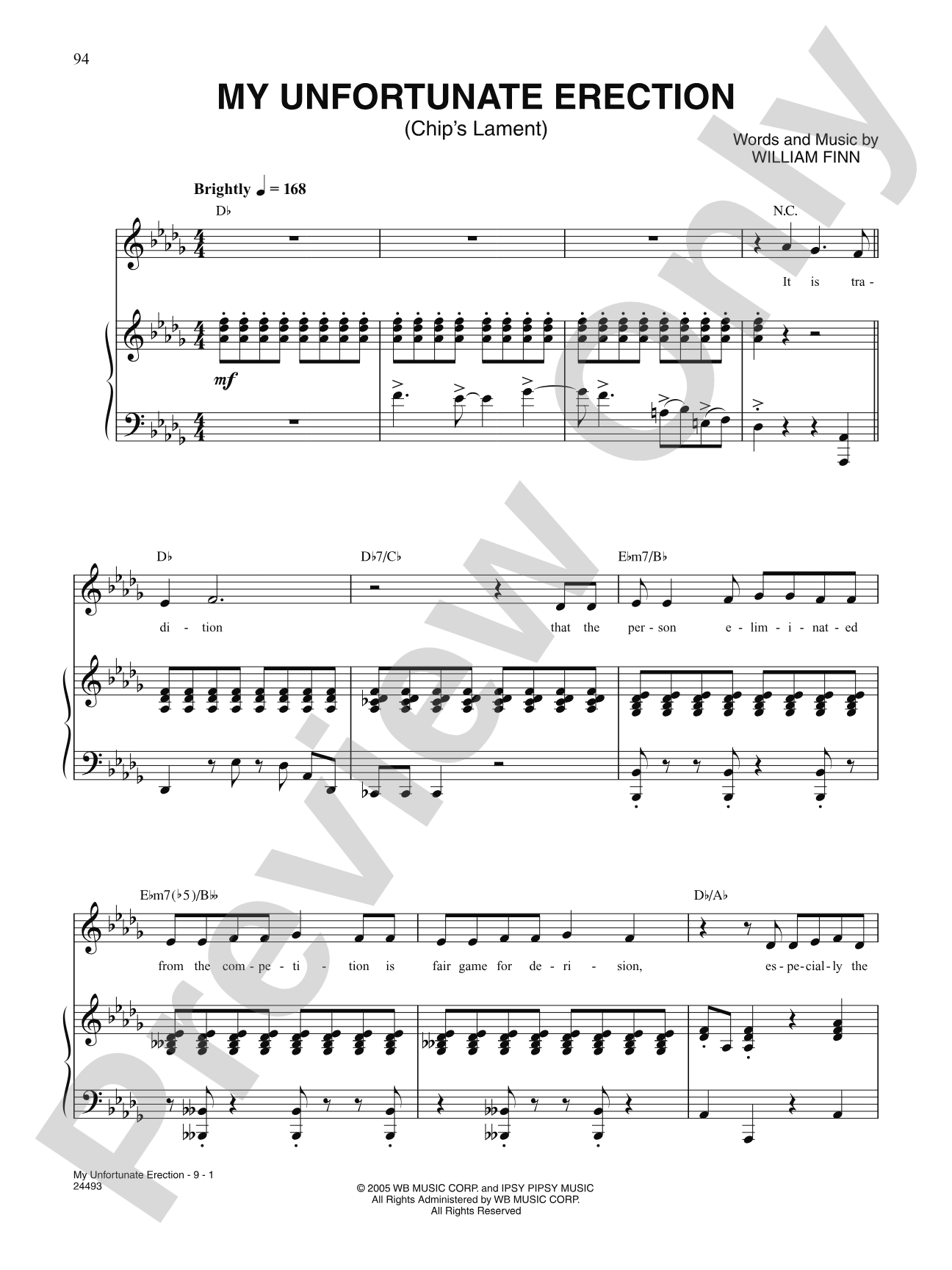
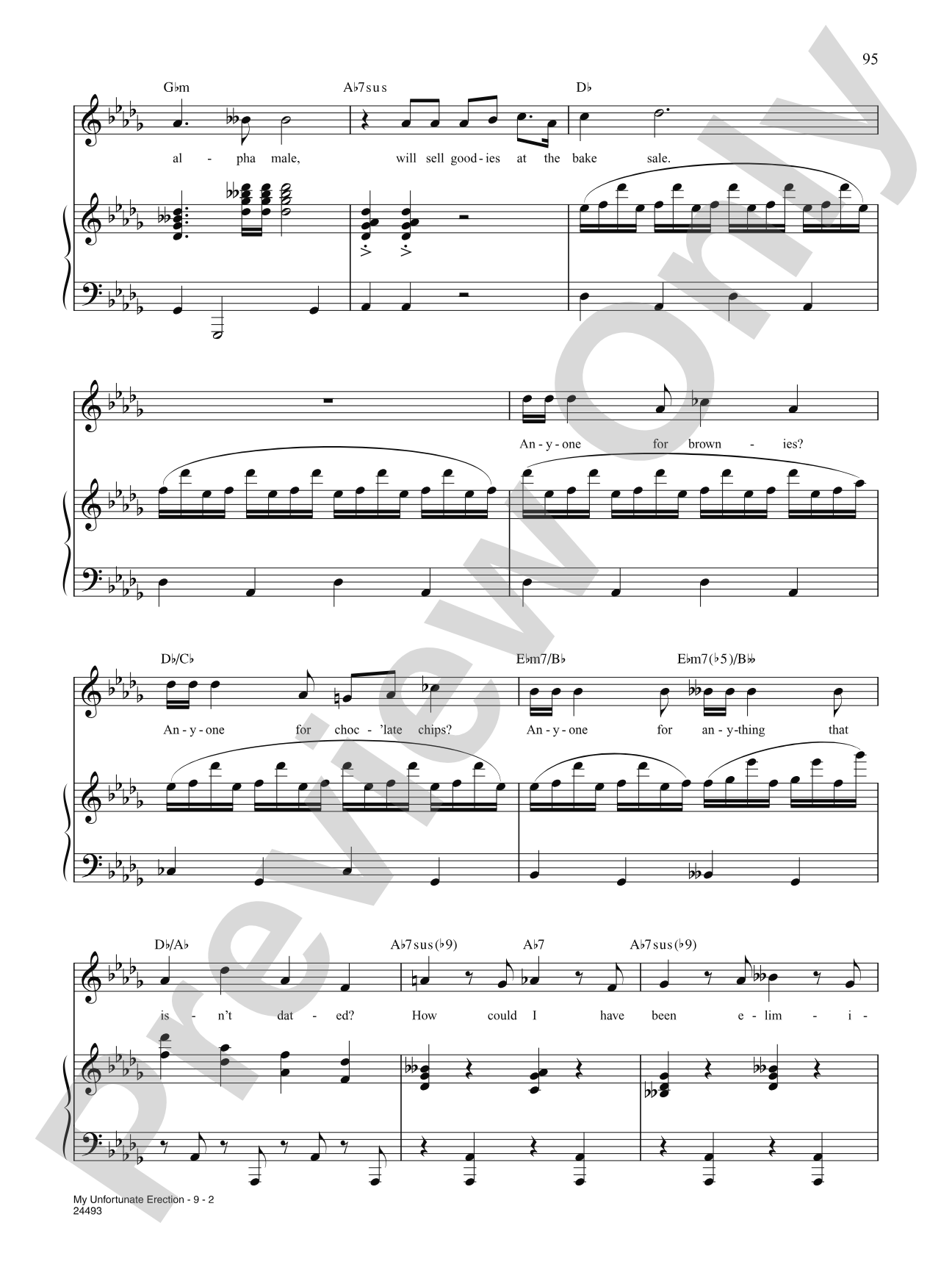

My Unfortunate Erection (from "The 25th Annual PUtnam County Spelling Bee"): Piano/Vocal/Chords
Music and lyrics by William Finn
Item: 00-PSP-000006
$5.99
One moment…
Related Items
The 25Th Annual Putnam County Spelling Bee: Piano/Vocal/Chords |
$9.99
|
View | |
I Speak Six Languages (from "The 25th Annual Putnam County Spelling Bee"): Piano/Vocal/Chords |
$5.99
|
View | |
I'm Not That Smart (from "The 25th Annual Putnam County Spelling Bee"): Piano/Vocal/Chords |
$5.99
|
View | |
Magic Foot (from "The 25th Annual Putnam County Spelling Bee"): Piano/Vocal/Chords |
$5.99
|
View | |
My Friend, The Dictionary (from "The 25th Annual Putnam County Spelling Bee"): Piano/Vocal/Chords |
$5.99
|
View | |
Pandemonium (from "The 25th Annual Putnam County Spelling Bee"): Piano/Vocal/Chords |
$9.99
|
View | |
Prayer Of The Comfort Counselor (from "The 25th Annual Putnam County Spelling Bee"): Piano/Vocal/Chords |
$5.99
|
View | |
The I Love You Song (from "The 25th Annual Putnam County Spelling Bee"): Piano/Vocal/Chords |
$9.99
|
View | |
Woe Is Me (from "The 25th Annual Putnam County Spelling Bee"): Piano/Vocal/Chords |
$9.99
|
View |
Description
Titles are: 25th Annual Putnam County Spelling Bee * My Friend, the Dictionary * Pandemonium * I'm Not That Smart * Magic Foot * Prayer of the Comfort Counselor * My Unfortunate Erection * Woe Is Me * I Speak Six Languages * The I Love You Song.


Discover MakeMusic Cloud: thousands of interactive titles your students can play along with today.
Sample Audio
No sample audio found.
Sample Video
No sample videos found.
Additional Details
Publisher:
Alfred Music
Page Count:
104
SKU:
00-PSP-000006
More about this title
About the Artist: William Finn
William Finn is a composer and lyricist whose work spans musical theatre, opera, and choral music. His gift for combining sharp wit with genuine emotional vulnerability has made him a distinctive voice in contemporary theatre music, earning him multiple Tony Award nominations and recognition as one of Broadway's most inventive songwriters.
Why we love this
Finn's score for The 25th Annual Putnam County Spelling Bee captures the nervous energy, humor, and unexpected pathos of adolescence with unflinching honesty. This piano/vocal score gives singers and accompanists access to some of the most character-driven, rhythmically inventive songs in recent musical theatre, where every song deepens both personality and plot.
What to expect
The music swings between quirky humor and genuine emotion, from the frenetic energy of "Pandemonium" to the tender vulnerability of "The I Love You Song." Finn's orchestrations (here arranged for piano) feel intimate and conversational, as though you're eavesdropping on a character's inner world.
Who it's for
Singers preparing audition material or scenes from this show will find the vocal writing accessible yet dramatically rich, and accompanists will appreciate how the piano part supports without overwhelming. This score works for high school and college singers exploring contemporary musical theatre with strong character work and comedic timing.
How to get the most out of it
- Honor the conversational rhythms in the vocal lines; these songs are written to sound like speech, so resist over-legit singing and lean into the character's voice and comic timing.
- The piano part often carries rhythmic complexity that anchors the singer's flexibility, so lock in the accompaniment's groove and let the vocal melody breathe around it.
- Pay close attention to dynamic markings and tempo changes, which Finn uses to shift emotional tone within single songs; these details reveal character psychology.
- Balance accompaniment texture with the lyrical content; the piano writing is deliberately exposed in places, asking the accompanist to shape harmonic color and support the singer's storytelling.
How to use it
Use this score for scene study or song cycle programming in a musical theatre context, pairing songs to explore character arcs. The variety of song styles makes it ideal for audition coaching, song selection for revue formats, or study of contemporary theatrical songwriting across a full show season.
Skills your students will build
- Reading complex rhythmic figures and syncopation in contemporary musical theatre style
- Singing conversational, speech-like vocal lines with dynamic storytelling
- Accompanying with awareness of rhythmic independence between voice and piano
- Understanding character motivation through song structure and lyrical content
- Managing tempo flexibility and rubato within a structured harmonic framework