
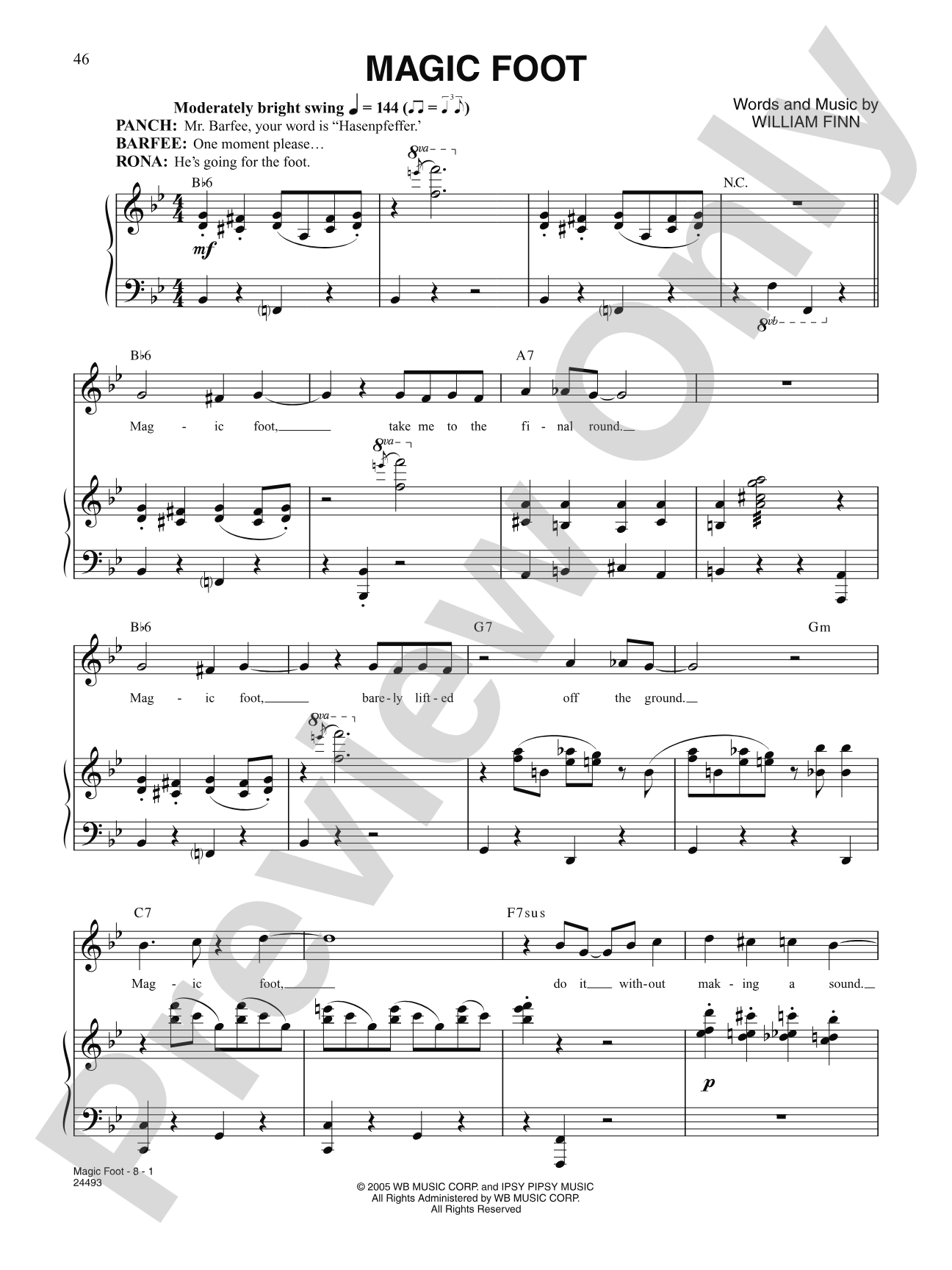
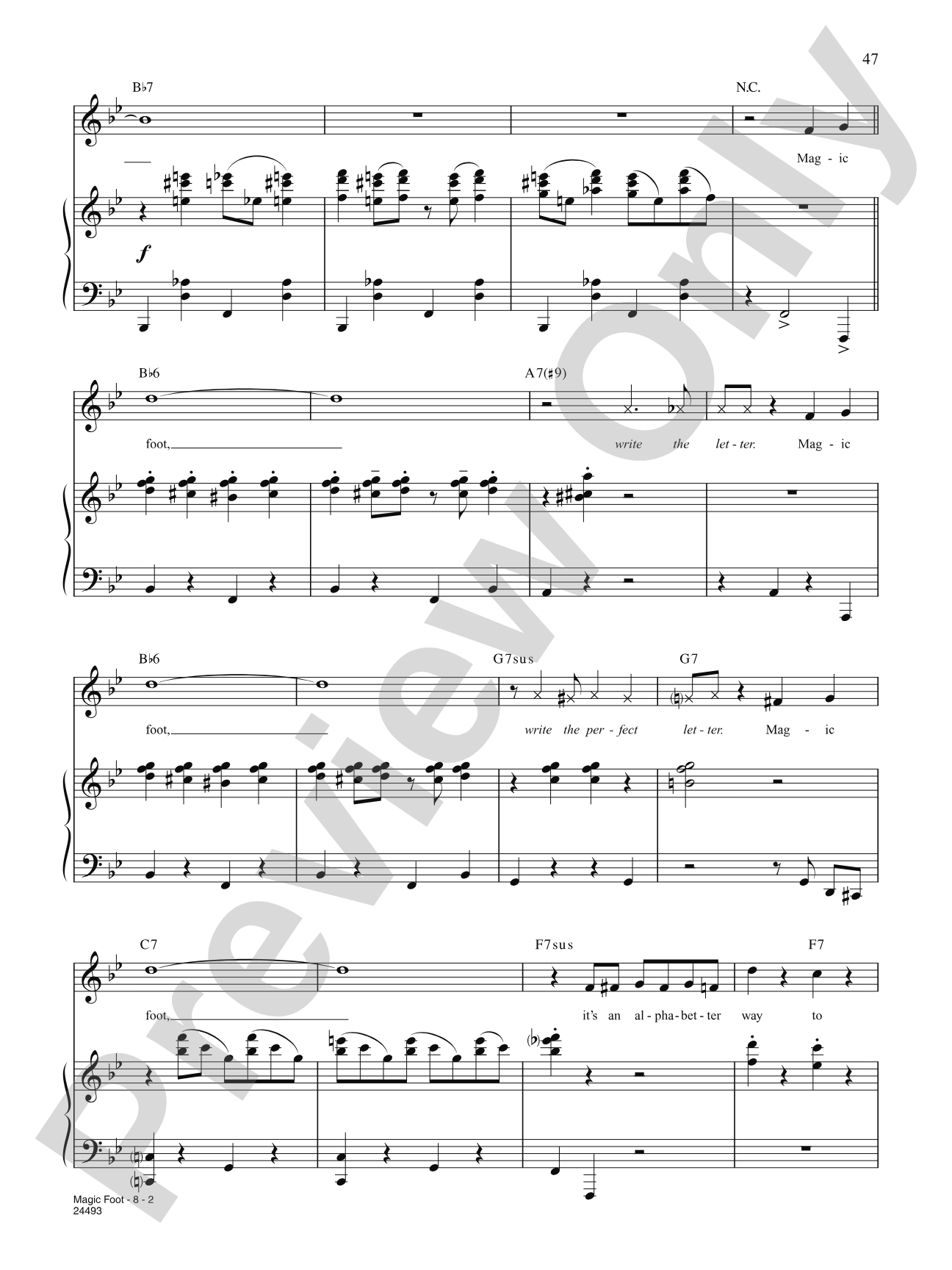

Magic Foot (from "The 25th Annual Putnam County Spelling Bee"): Piano/Vocal/Chords
Music and lyrics by William Finn
Item: 00-PSP-000004
$5.99
One moment…
Related Items
The 25Th Annual Putnam County Spelling Bee: Piano/Vocal/Chords |
$9.99
|
View | |
I Speak Six Languages (from "The 25th Annual Putnam County Spelling Bee"): Piano/Vocal/Chords |
$5.99
|
View | |
I'm Not That Smart (from "The 25th Annual Putnam County Spelling Bee"): Piano/Vocal/Chords |
$5.99
|
View | |
My Friend, The Dictionary (from "The 25th Annual Putnam County Spelling Bee"): Piano/Vocal/Chords |
$5.99
|
View | |
My Unfortunate Erection (from "The 25th Annual PUtnam County Spelling Bee"): Piano/Vocal/Chords |
$5.99
|
View | |
Pandemonium (from "The 25th Annual Putnam County Spelling Bee"): Piano/Vocal/Chords |
$9.99
|
View | |
Prayer Of The Comfort Counselor (from "The 25th Annual Putnam County Spelling Bee"): Piano/Vocal/Chords |
$5.99
|
View | |
The I Love You Song (from "The 25th Annual Putnam County Spelling Bee"): Piano/Vocal/Chords |
$9.99
|
View | |
Woe Is Me (from "The 25th Annual Putnam County Spelling Bee"): Piano/Vocal/Chords |
$9.99
|
View |
Description
Titles are: 25th Annual Putnam County Spelling Bee * My Friend, the Dictionary * Pandemonium * I'm Not That Smart * Magic Foot * Prayer of the Comfort Counselor * My Unfortunate Erection * Woe Is Me * I Speak Six Languages * The I Love You Song.


Discover MakeMusic Cloud: thousands of interactive titles your students can play along with today.
Sample Audio
No sample audio found.
Sample Video
No sample videos found.
Additional Details
Publisher:
Alfred Music
Page Count:
104
SKU:
00-PSP-000004
More about this title
About the Artist: William Finn
William Finn is a composer and lyricist whose work spans musical theater, film, and concert music. His scores are known for their harmonic sophistication, rhythmic complexity, and emotional directness; he won the Tony Award for Best Original Score for "Falsettos" and has been nominated multiple times for his contributions to Broadway. Finn's music often explores vulnerability and humor simultaneously, creating pieces that challenge performers while remaining deeply human.
Why we love this
This collection captures the full vocal score of one of musical theater's most inventive comedies, with Finn's trademark harmonic surprises and rhythmic playfulness on every page. The piano writing is detailed without being precious; it supports the singers while maintaining the sharp wit the show demands. Directors will find immediate usability in both classroom and performance contexts, whether teaching contemporary musical theater or preparing singers for audition material that's become a standard.
What to expect
Sharp-witted and emotionally raw at the same time. Finn's music shifts between comedy and tenderness without warning, capturing the awkwardness and strange grace of adolescence. The piano part brims with harmonic color and unexpected turns; it keeps both performer and listener slightly off balance in the best way.
Who it's for
Singers preparing audition material from contemporary musical theater, directors building a choral or music theater program around 21st-century repertoire, and pianists looking for engaging accompaniment work that requires both technical facility and musical sensitivity. High school and college music programs will find this essential for programming and training.
How to get the most out of it
- Stay rhythmically precise through the syncopations; the comedy lands harder when the pulse is locked. Finn's rhythms are intentional, not sloppy.
- Resist over-interpreting the emotional moments. The show's power comes from underplaying sincerity alongside absurdity; let the text and music do the work.
- Use the chord chart strategically for rehearsals. While the piano part is fully written, having chord symbols available helps singers understand harmonic structure and aids collaborative arranging if you're adapting for smaller ensembles.
- Balance vocal clarity with the piano's active accompaniment patterns. This isn't a score where the piano recedes; it's a full dialogue.
How to use it
Extract individual songs for a spring musical theater concert or revue, pairing them with other contemporary Broadway numbers to build a programming bridge between classics and current work. The variety across ten numbers makes this score valuable for teaching vocal style across multiple musical idioms in a single sitting. Consider using selections in music theory or composition classes to examine how Finn layers harmony and rhythm for dramatic effect.
Skills your students will build
- Sight-reading modern harmonic language (secondary dominants, modal mixture, chromatic voice leading)
- Coordinating melodic phrasing with syncopated accompaniment patterns
- Balancing comedic delivery with musical timing
- Interpreting chord charts alongside fully notated piano parts
- Navigating frequent meter changes and rhythmic displacement