
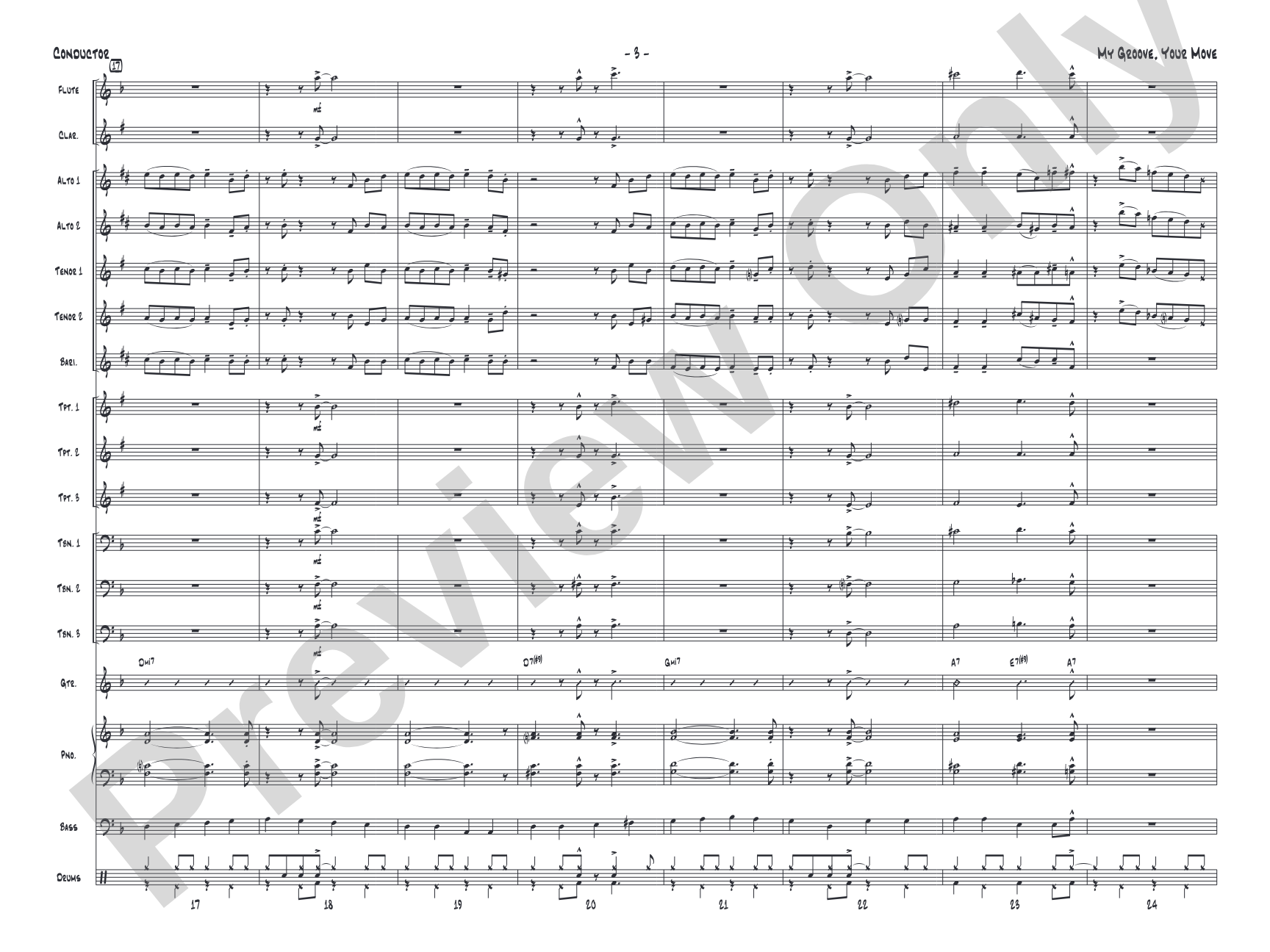
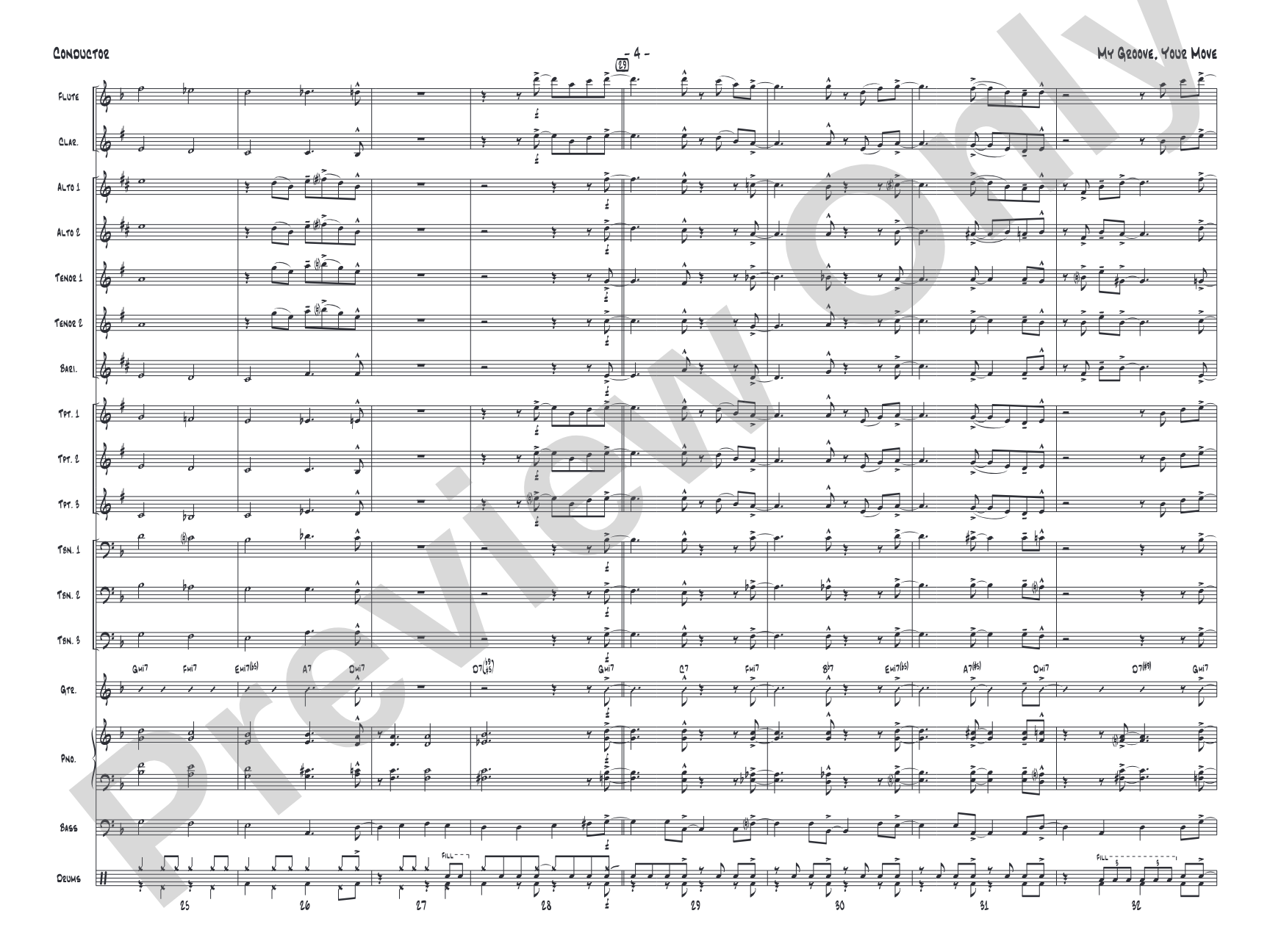
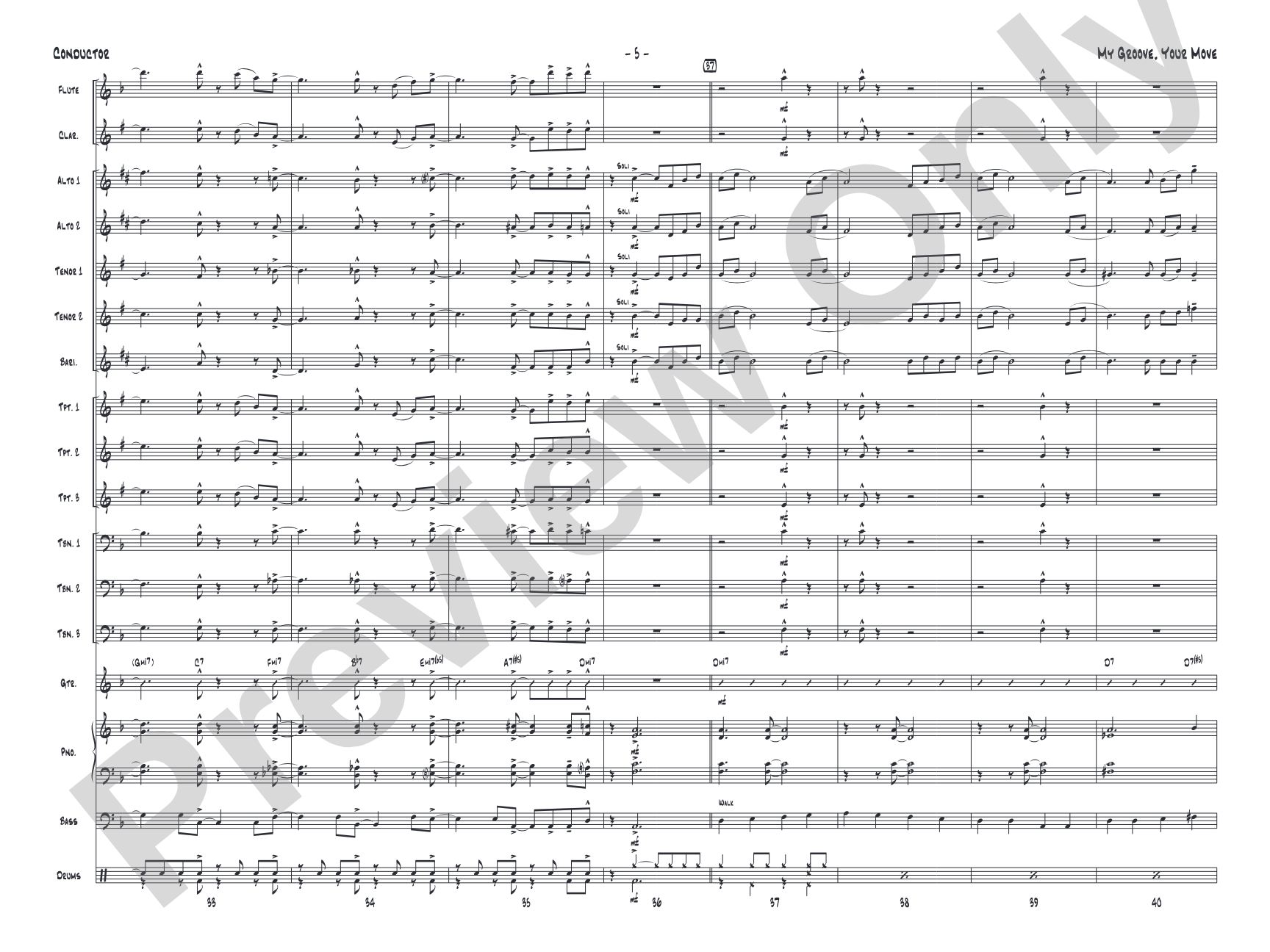
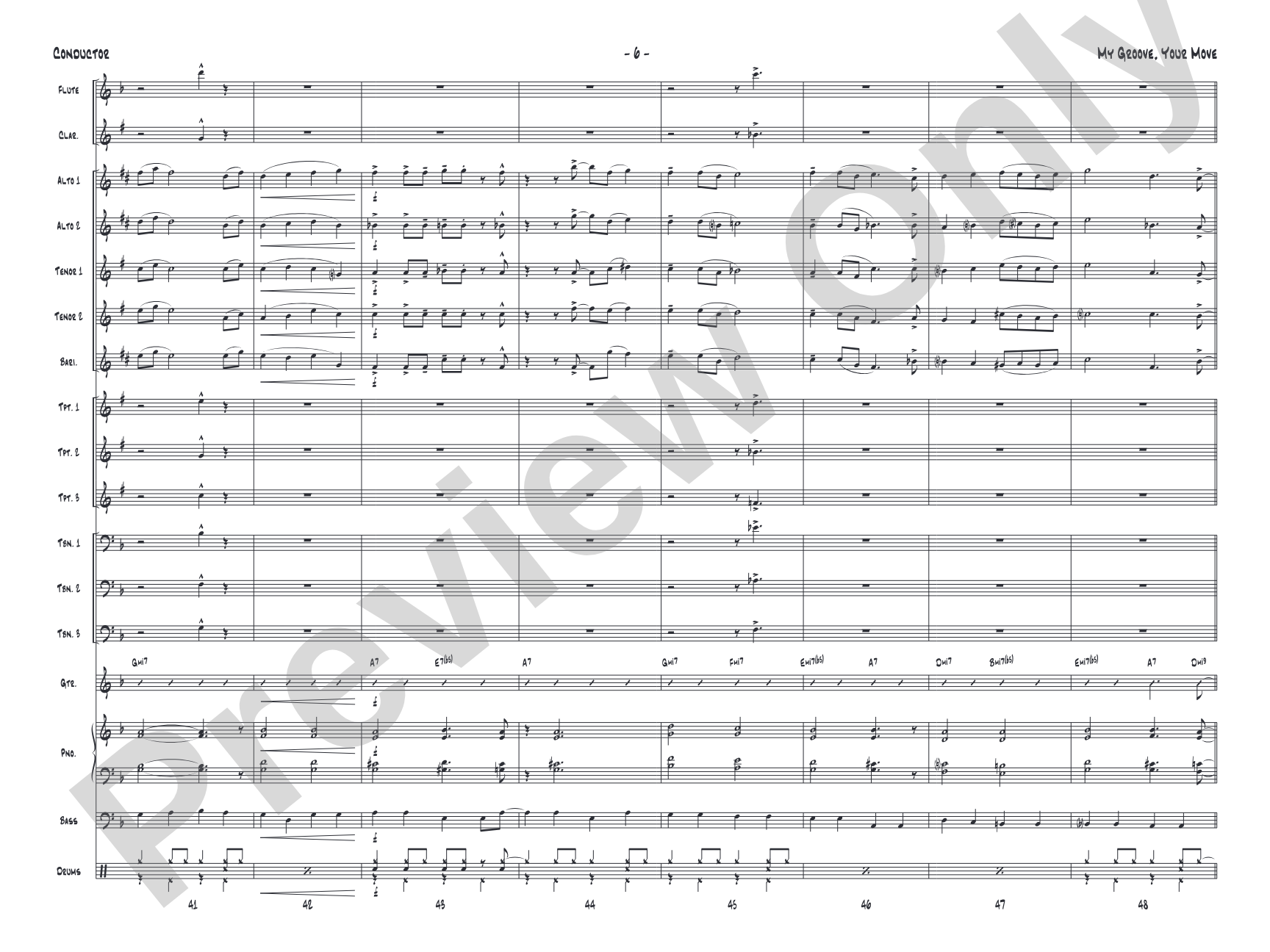
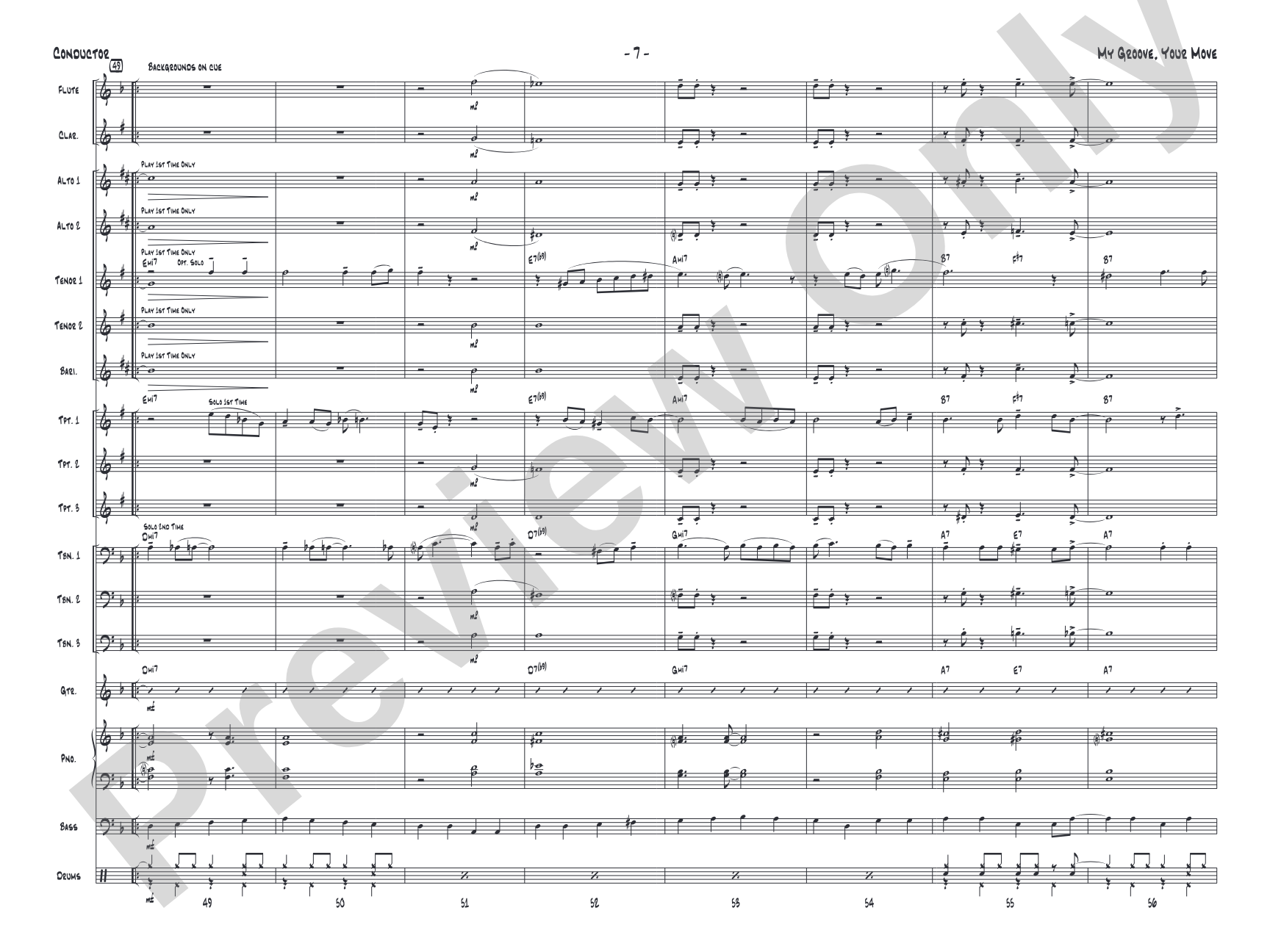
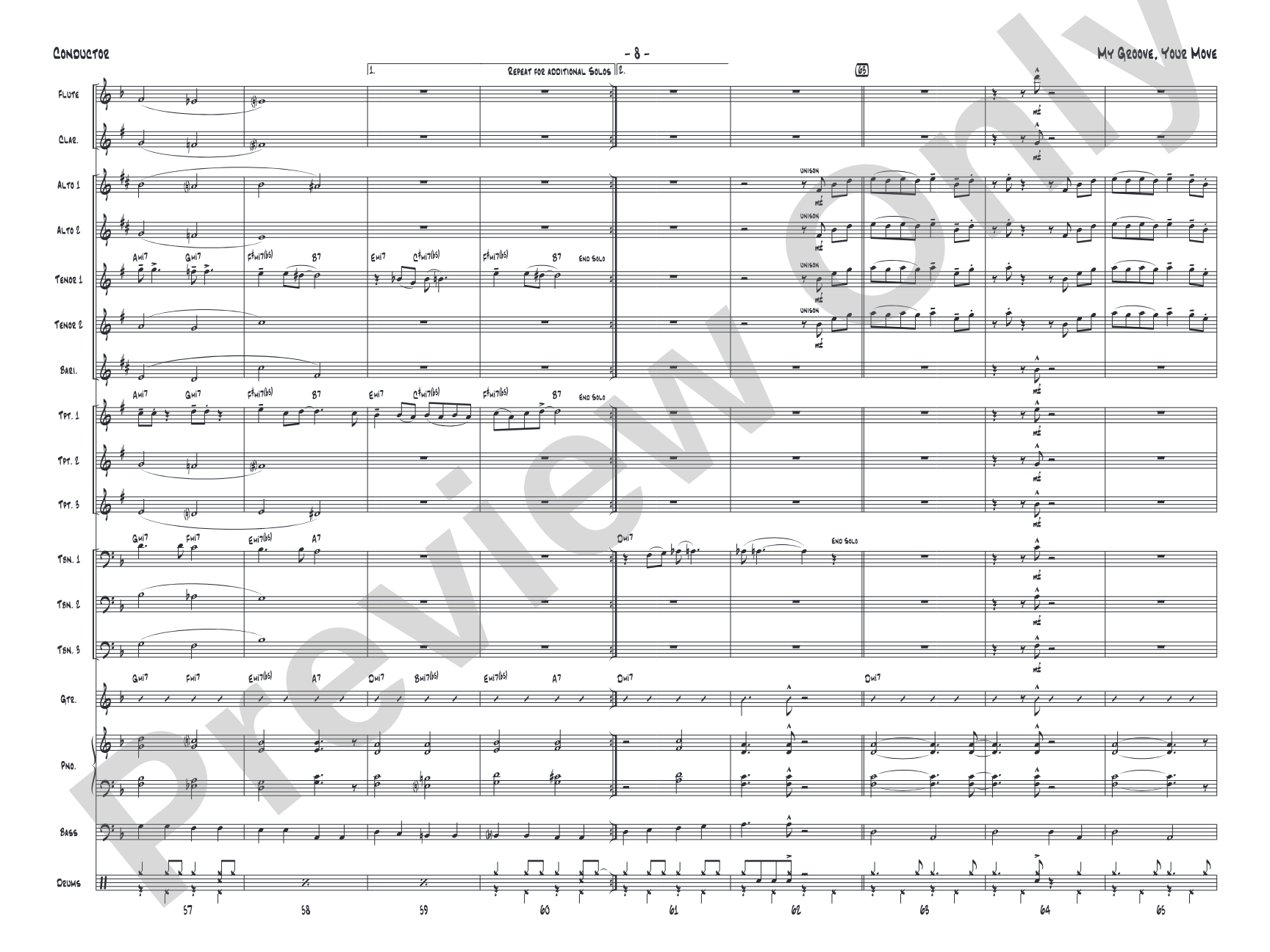
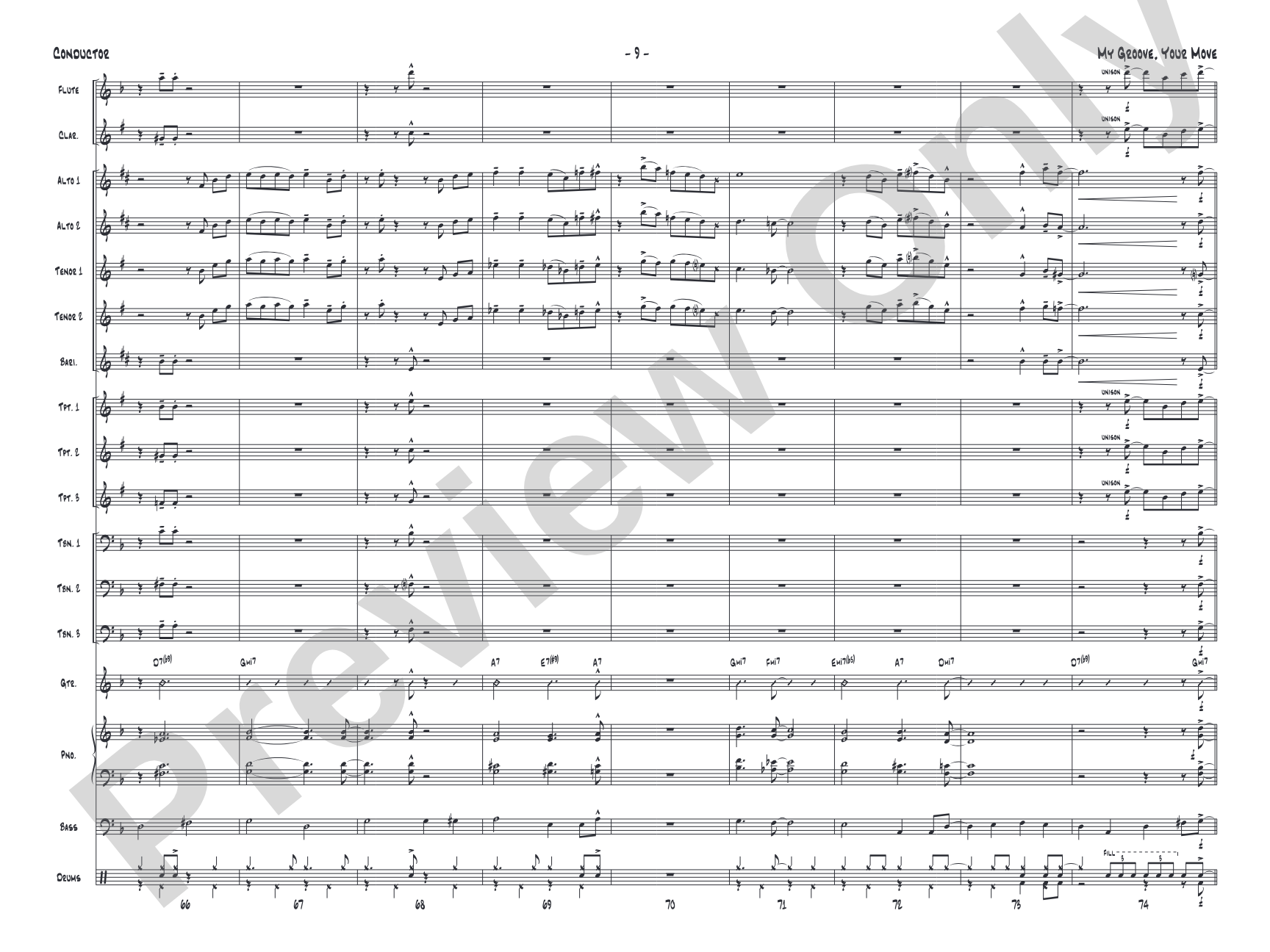
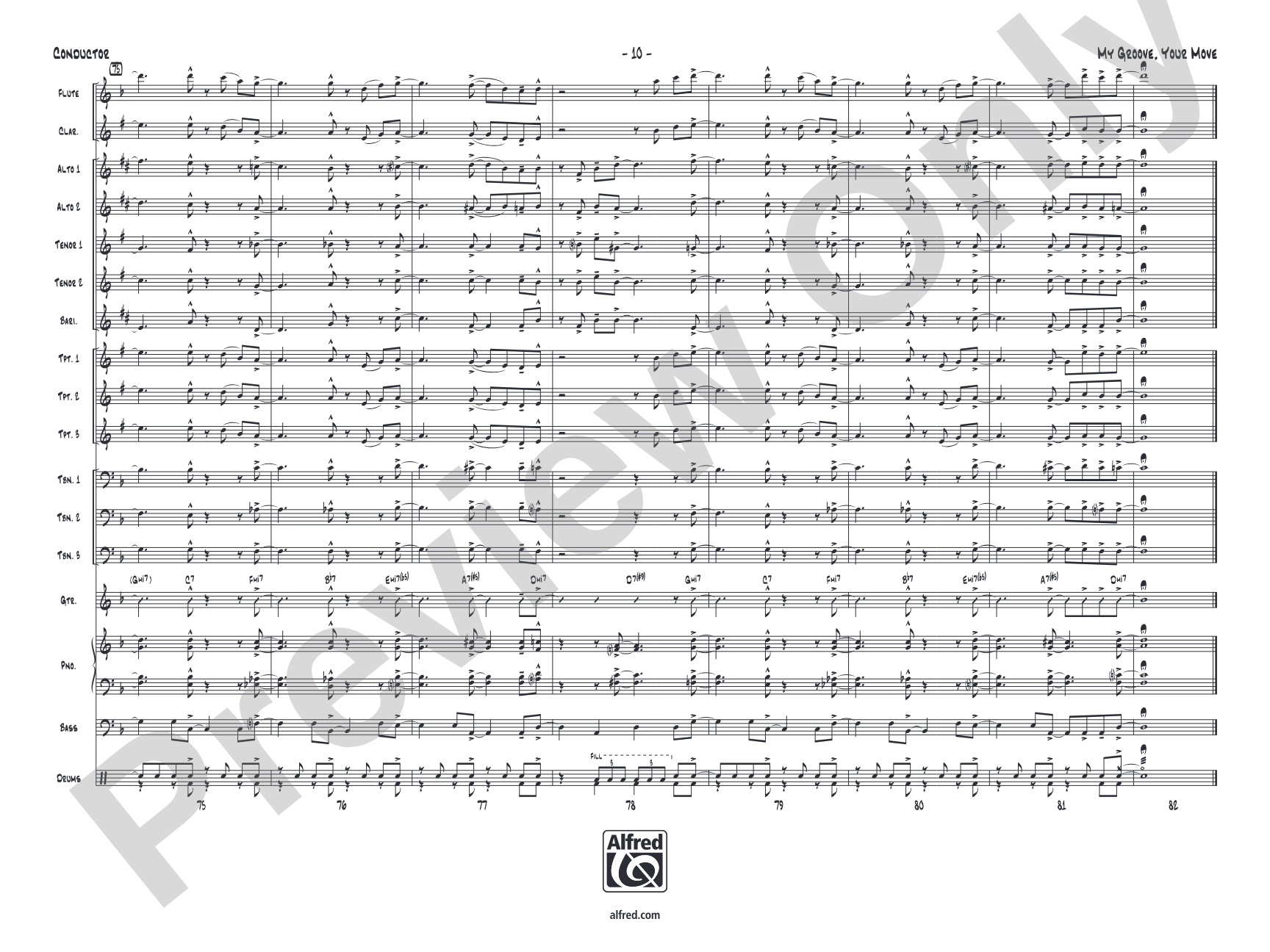

My Groove, Your Move: Jazz Ensemble Conductor Score & Parts
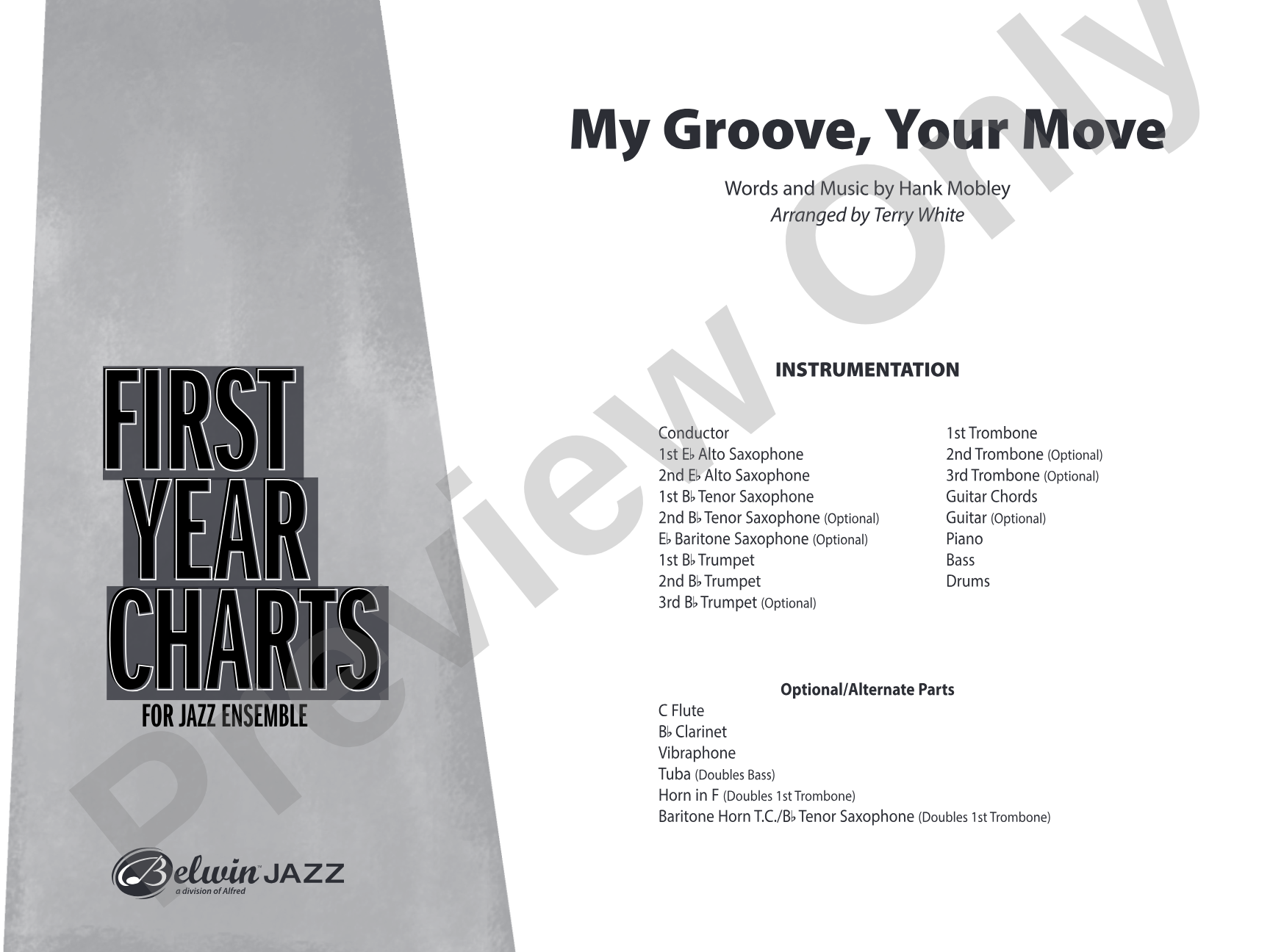
Words and music by Hank Mobley / arr. Terry White
Grade: 1 (Easy)
Item: 00-PK-0008425

$42.00
One moment…
Description
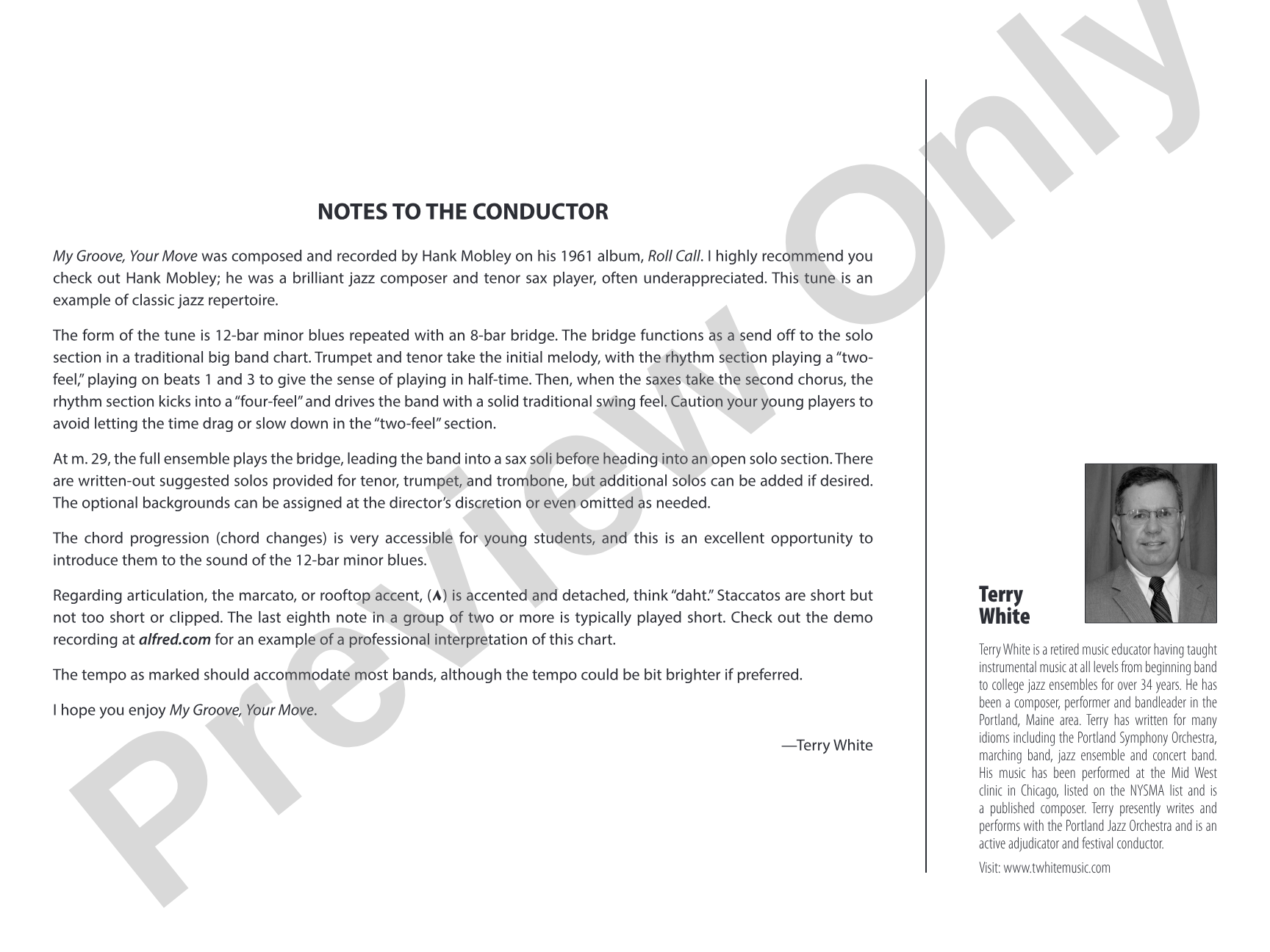
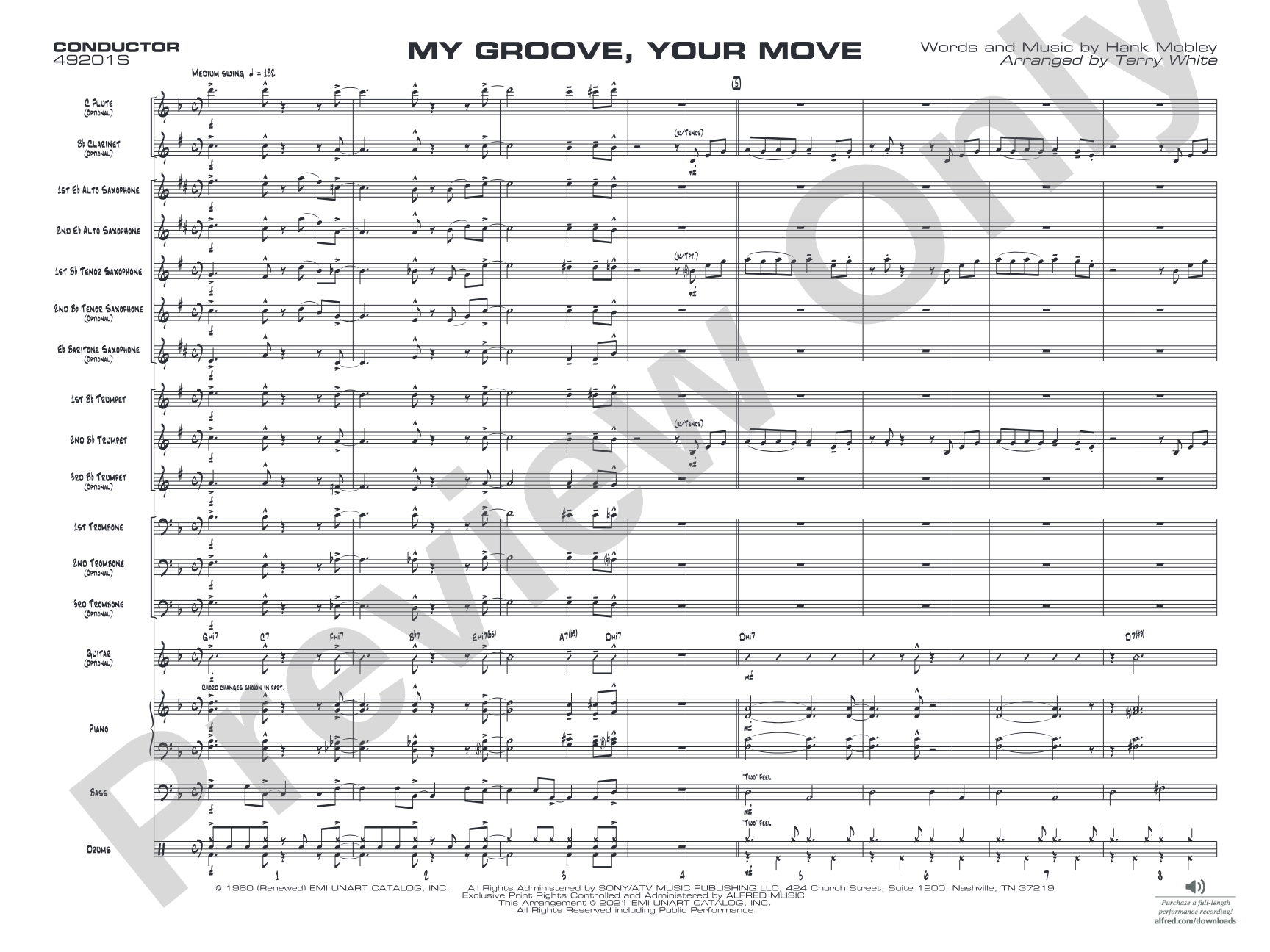
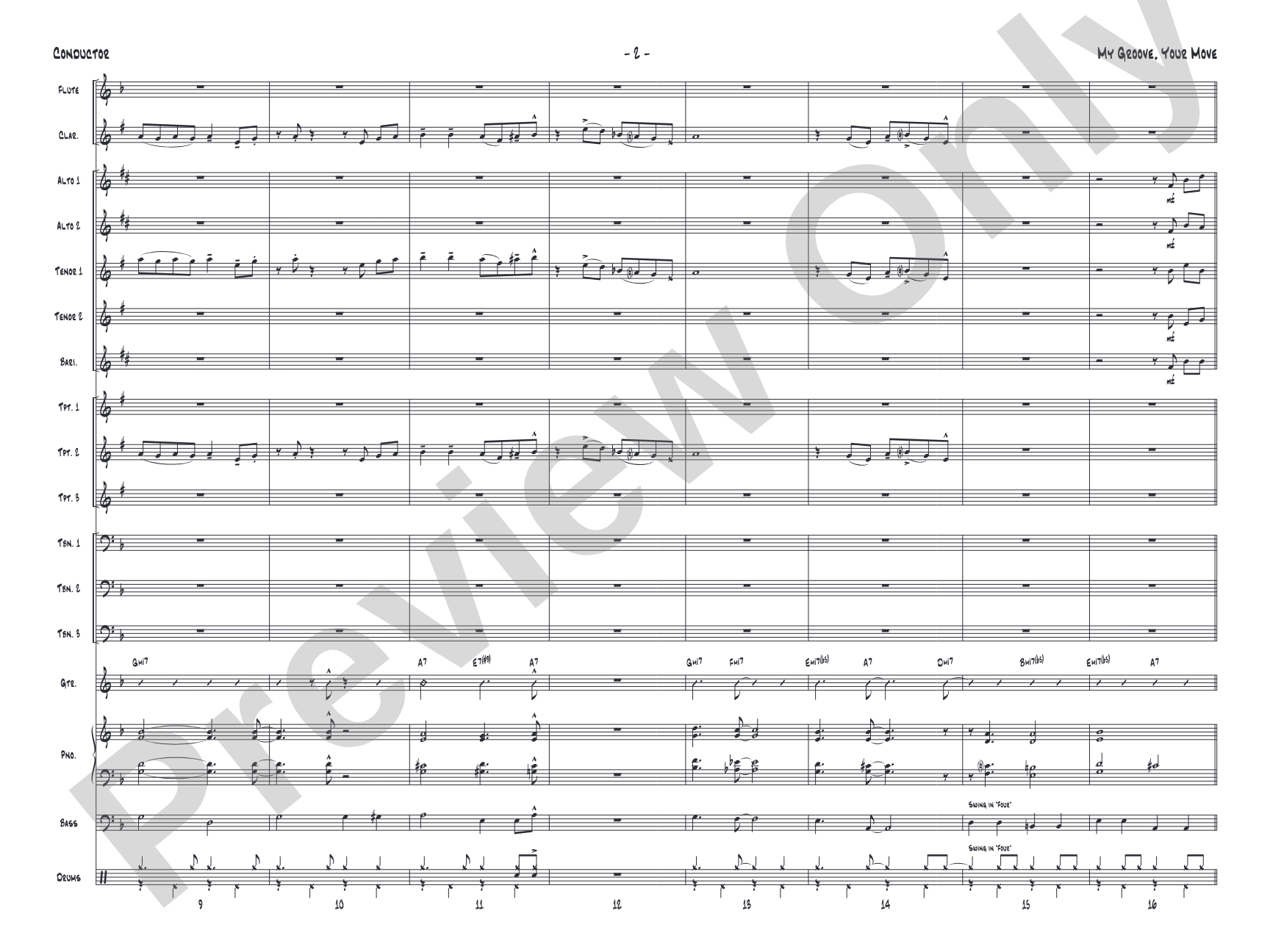
A moderate swing played around 132 BPM. A fine jazz classic with a catchy melody, written-out solos for trumpet 1 and trombone 1, the lead trumpet range is to written E top space, plus a few sax solis. Optional parts include flute, clarinet, vibes, and more. This very playable swing chart will be a success at every performance. My Groove, Your Move is arranged by Terry White. (3:00) This title is available in MakeMusic Cloud.


Don't just read it, hear it, play along with it, and watch your students grow with it. In MakeMusic Cloud, My Groove, Your Move: Jazz Ensemble Conductor Score & Parts comes alive with professional accompaniment, adjustable tempo, and built-in practice tools that turn solo practice into real progress.
Open in the Player
Jump straight in and assign it today.
Start Your Free Trial
Open this title and explore the full library in minutes.
Sample Audio
1
Audio File
--:--
0:00
0:00
Sample Video
Additional Details
Series:
First Year Charts for Jazz Ensemble
Publisher:
Alfred Music
Page Count:
52
SKU:
00-PK-0008425
More about this title
About the Composer: Hank Mobley
Hank Mobley (1930-1986) was a tenor saxophonist and composer whose warm, soulful tone and accessible melodies made him one of hard bop's most recorded and respected voices. He composed prolifically throughout his career, writing standards that became vehicles for improvisation across generations of jazz musicians. His gift for crafting memorable, singable themes that sit comfortably in ensemble settings made his music ideal for education contexts where students need clear melodic anchors.
Why we love this
This arrangement captures everything that makes Mobley's writing enduring: a hook that students will remember after one listen and want to play again immediately. Terry White's voicing keeps the ensemble accessible at Grade 1 while preserving the swing feel and harmonic interest that makes the tune sound genuinely professional. The written-out trumpet and trombone solos mean you get real jazz solo experience without requiring advanced improvisation skills from day one.
What to expect
Warm and approachable, with an irresistible forward motion. The moderate swing tempo and singable melody create an inviting groove that feels less complex than it actually is, making listeners feel the pocket without overthinking the harmony underneath.
Who it's for
Jazz ensemble directors working with Grade 1 students who are ready to play real jazz standards but need clear melodic and structural guidance. This works well for ensembles that include both experienced jazz players and students encountering swing feel for the first time.
How to get the most out of it
- Lock the ride cymbal rhythm with the walking bass line during the head. This foundation makes the whole ensemble sit into the groove more naturally.
- Give the optional sax solis breathing room and space in the arrangement. Even when students aren't explicitly playing, their silent attention to soloists sharpens the ensemble's overall listening and swing feel.
- Tempo at 132 BPM is moderate but firm. Keep it steady on a click track during early rehearsals so the backbeat settles in before you remove it.
- Bring out the melody on the lead trumpet without letting it rush ahead of the rhythm section. The catchiness of the tune can make players want to push the tempo forward.
How to use it
Open a concert with this to establish energy and audience goodwill immediately. The three-minute length and high playability also make it an excellent anchor piece when teaching jazz standards to beginners, or a spirit-builder during rehearsal block when working through more challenging material.
Skills your students will build
- Reading and executing swing rhythm notation at moderate tempo
- Playing written-out jazz solos with proper phrasing and articulation
- Listening and responding to ensemble texture while playing individual parts
- Understanding and maintaining groove and backbeat in a jazz context
- Responding to optional instrumentation and adapting arrangements to available personnel