My Funny Valentine Sheet Music Preview

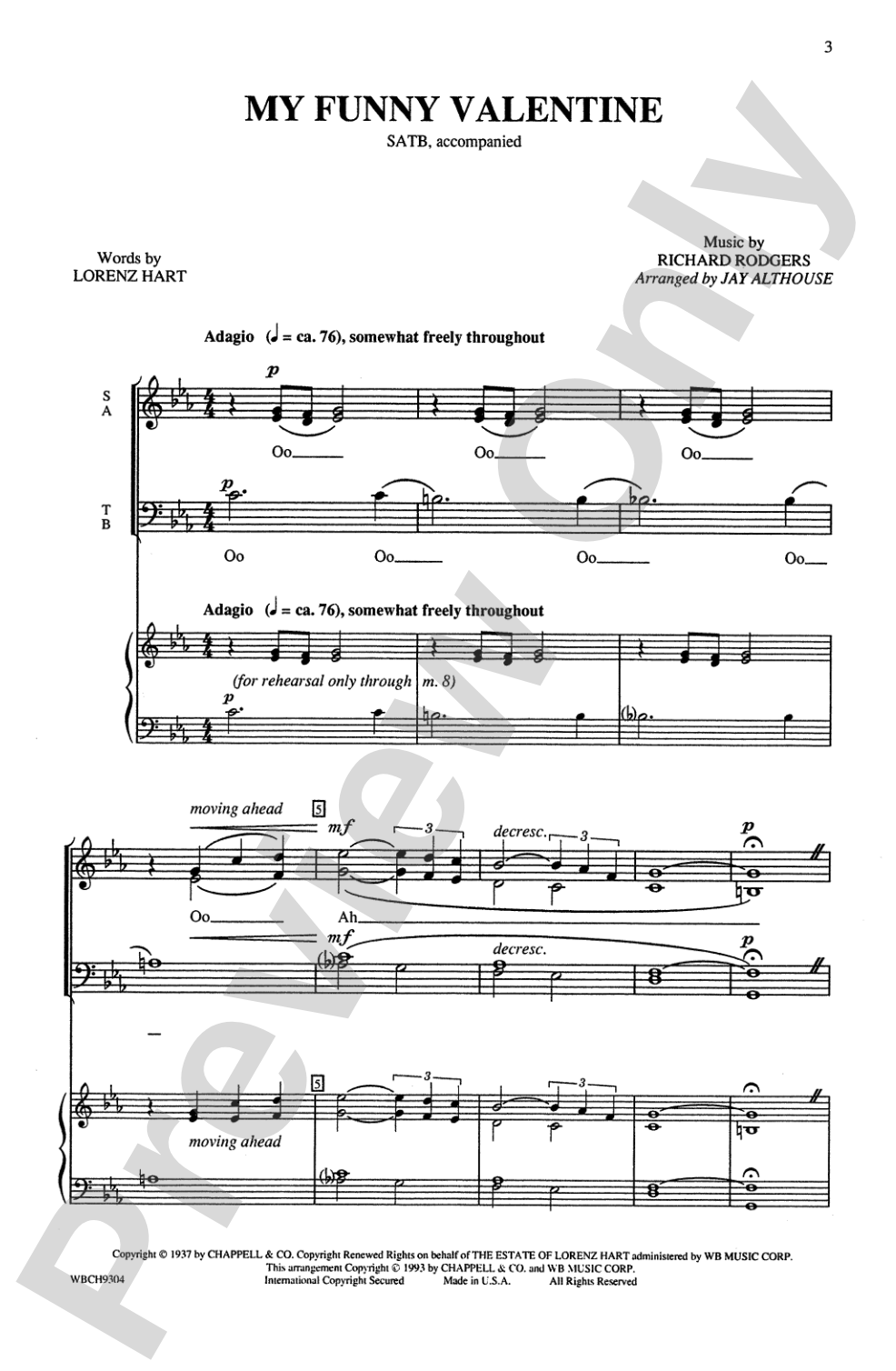
My Funny Valentine: SATB Choral Octavo

By Richard Rodgers / arr. Jay Althouse

Level: Moderate

Item: 00-PO-0005444

Digital Download
$2.25

Minimum order quantity: 20 copies

One moment…

Description
This stunning rendition of a timeless classic is destined to become a standard in the choral repertoire. Exquisite harmonies and a beautiful accompaniment add that touch of class. Perfect for any performance setting, this one is a must!

My Funny Valentine: SATB Choral Octavo isn't in MakeMusic Cloud just yet...but it could be. Let us know you'd like to see it, and you'll help shape what comes next. In the meantime, start a free trial and dive into thousands of interactive titles your students can play along with today.

Sample Audio
No sample audio found.
Sample Video
Additional Details
Series: Alfred Archive Edition: Alfred Pop Choral Series
Publisher: Alfred Music
Page Count: 8
SKU: 00-PO-0005444

More about this title

About the Composer: Richard Rodgers

Richard Rodgers (1902-1979) revolutionized American musical theater by raising the craft of melody writing to an art form. His partnership with lyricist Oscar Hammerstein II produced some of the most enduring scores in theater history, including The Sound of Music, South Pacific, and The King and I. Rodgers's gift for writing singable, memorable lines that served character and story made him a natural resource for arrangers and educators seeking Broadway material that feels both sophisticated and accessible.

Beyond the theater, Rodgers's melodies have become part of the standard jazz and popular repertoire, recorded countless times across genres. For choral directors, his work offers the rare combination of theatrical flair, harmonic richness, and melodic clarity that keeps audiences engaged while offering singers something genuinely musical to sink their teeth into.

Why we love this

Jay Althouse's arrangement respects the vulnerability and intimacy of this Rodgers standard while giving it enough harmonic sophistication to satisfy adult singers. At Grade 3, the piece sits right in that sweet spot where your singers can focus on legit phrasing and blend rather than wrestling with technical complexity. You'll find your ensemble genuinely moved by what they're singing, which makes the rehearsal process feel purposeful instead of labored.

What to expect

Wistful and romantic, full of the bittersweet beauty that made Rodgers's theater music legendary. The arrangement lets the melody breathe while surrounding it with tasteful, supporting harmonies that enhance rather than obscure the emotional core. Singing this should feel like saying something true and a little vulnerable.

Who it's for

Intermediate choral ensembles with at least one season of singing experience and basic part-singing literacy. Soloists or small groups preparing to sing in social or informal settings will also find this accessible and musically rewarding.

How to get the most out of it

  • Shape the melody line as you would a lyrical solo; resist the urge to push volume even when all four parts are singing. Rodgers's melodies are intimate by nature, and maintaining that character keeps the arrangement from feeling overblown.
  • Balance the accompanimental voices carefully so the soprano line always has clarity. The arrangement likely distributes harmonic material across parts, but the primary tune belongs to the top voice throughout.
  • Approach the final cadence with restraint. This arrangement will reward a tender, unhurried conclusion rather than a dramatic finish.

How to use it

Program this as a standalone feature on a concert built around American musical theater or classic popular song. It also works beautifully in a set of contrasting love songs, pairing naturally with both art song and contemporary choral arrangements. Depending on your audience and context, consider programming it early enough in a concert to establish warmth and connection before moving into heavier material.

Skills your students will build

  • Singing legit sustained melody with appropriate phrasing and breath placement
  • Balancing individual part lines within four-part harmony
  • Interpreting theatrical music idiomatically while maintaining choral ensemble discipline
  • Achieving blend and resonance in close harmony

You May Also Like