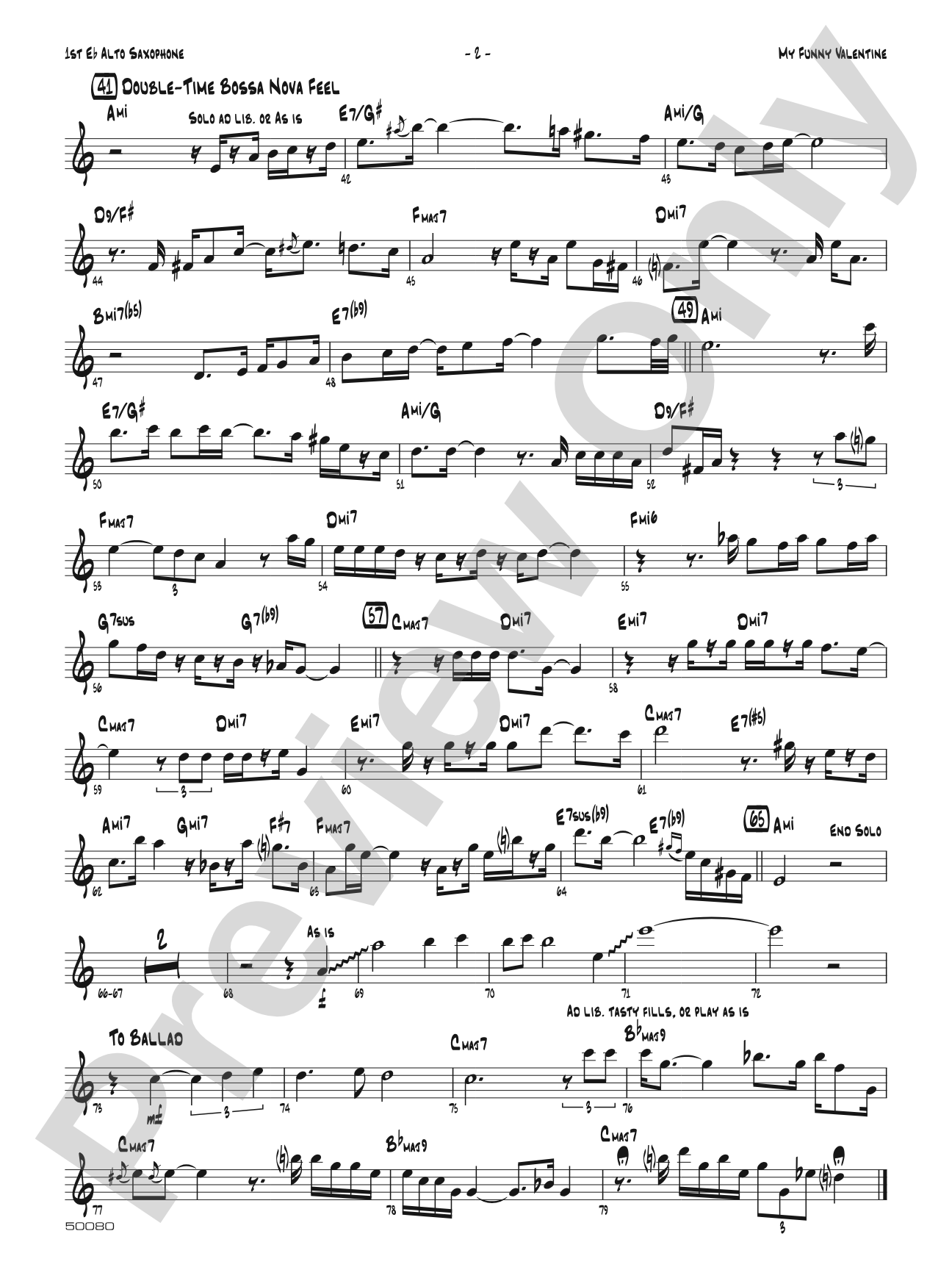
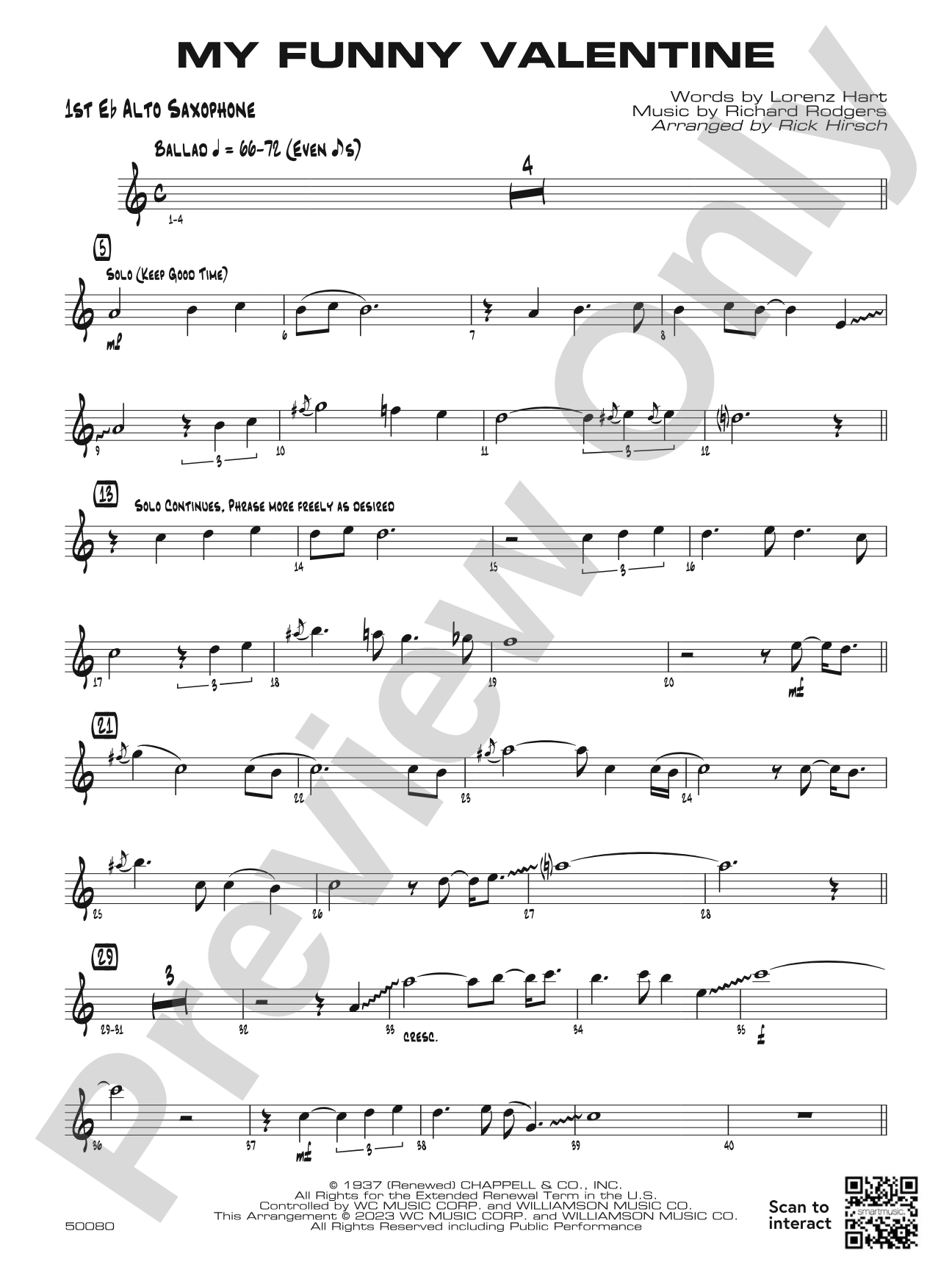
My Funny Valentine Sheet Music Preview

My Funny Valentine: Jazz Ensemble Conductor Score & Parts

Words by Lorenz Hart, Music by Richard Rodgers / arr. Rick Hirsch

Grade: 3

Item: 00-PK-0008749

Digital Download
makemusic Cloud badge
$55.00

One moment…

Description
This is an extraordinary ballad feature for your lead alto. Beautiful, sensitive, and truly captivating, the chart features a suggested written solo section, lead trumpet range to written A above the staff (opt. 8va), a double-time feel section, and some effective backgrounds behind the soloist. Optional flute and vibes parts included. This is an excellent arrangement! (4:25)

Don't just read it, hear it, play along with it, and watch your students grow with it. In MakeMusic Cloud, My Funny Valentine: Jazz Ensemble Conductor Score & Parts comes alive with professional accompaniment, adjustable tempo, and built-in practice tools that turn solo practice into real progress.

Sample Audio
0:00
0:00
Sample Video
Additional Details
Series: Jazz Band Series
Publisher: Alfred Music
SKU: 00-PK-0008749

More about this title

About the Composer: Richard Rodgers

Richard Rodgers (1902-1979) composed some of the most enduring melodies in American musical theater, creating standards that have become the foundation of jazz repertoire. His gift for memorable, singable lines and sophisticated harmonies made his songs natural vehicles for jazz interpretation, and "My Funny Valentine" exemplifies why his work remains central to both theatrical and jazz education.

Why we love this

Hirsch's arrangement gives your lead alto a genuine feature moment without overwhelming the rest of the ensemble. The optional double-time feel section and carefully voiced backgrounds create contrast and texture while keeping focus on the soloist, making this an intelligent choice for developing both featured players and supportive ensemble work.

What to expect

Tender and introspective, with the wry affection the title promises. The ballad frame creates intimate space for the alto's voice, while the double-time section offers a moment of gentle energy before returning to the contemplative mood that makes this standard so compelling.

Who it's for

Directors seeking a showcase for a strong lead alto with genuine lyrical presence. This works equally well in jazz ensemble festivals, winter or spring concerts, or as a feature for your best soloist without requiring instrumental virtuosity at the expense of musicality.

How to get the most out of it

  • Balance the optional vibes part to support rather than overshadow the lead alto's vulnerability; use it as a harmonic color, not a competing voice.
  • Shape the suggested written solo section with the alto's natural phrasing and breathing, treating it as a guide rather than a rigid prescription.
  • Articulate the double-time feel section with clarity in the rhythm section to mark the energy shift without rushing the tempo.
  • Sit with the ballad's harmonic richness in the backgrounds; Rodgers' chords reward attention to voicing balance and blend.

How to use it

Place this as a mid-set or closing feature in a concert; its reflective character works well after more uptempo charts and serves as an effective closer if you want to leave the audience with lyricism. It pairs naturally with other Great American Songbook standards and offers a welcome contrast to funk or swing-heavy programming.

Skills your students will build

  • Leading a ballad with phrasing and breath control
  • Voicing jazz backgrounds with transparency and balance
  • Navigating tempo and feel changes (ballad to double-time)
  • Playing from a written solo section while maintaining musicality
  • Reading optional instrumentation (flute, vibes) to understand textural choices

You May Also Like