
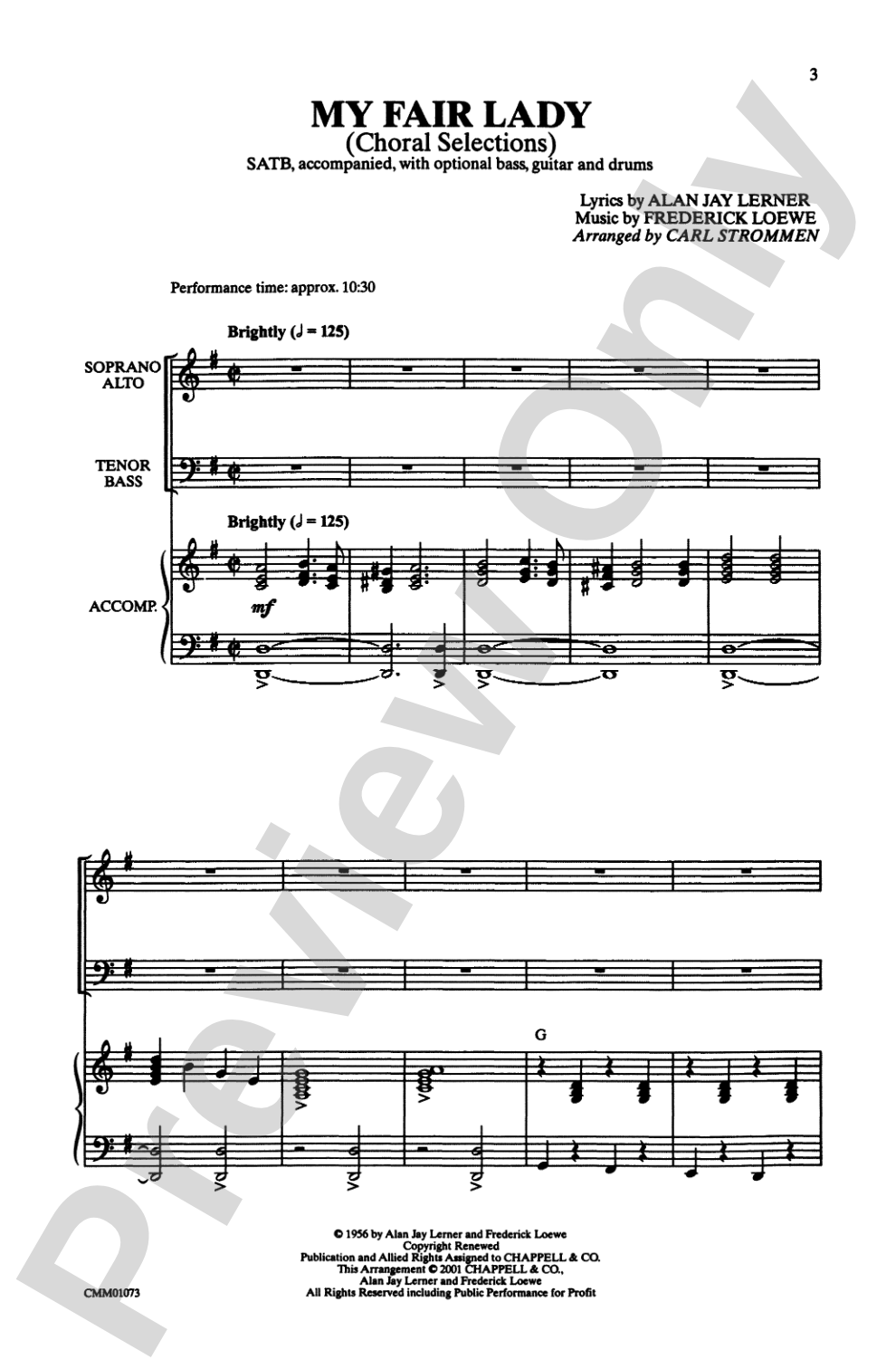
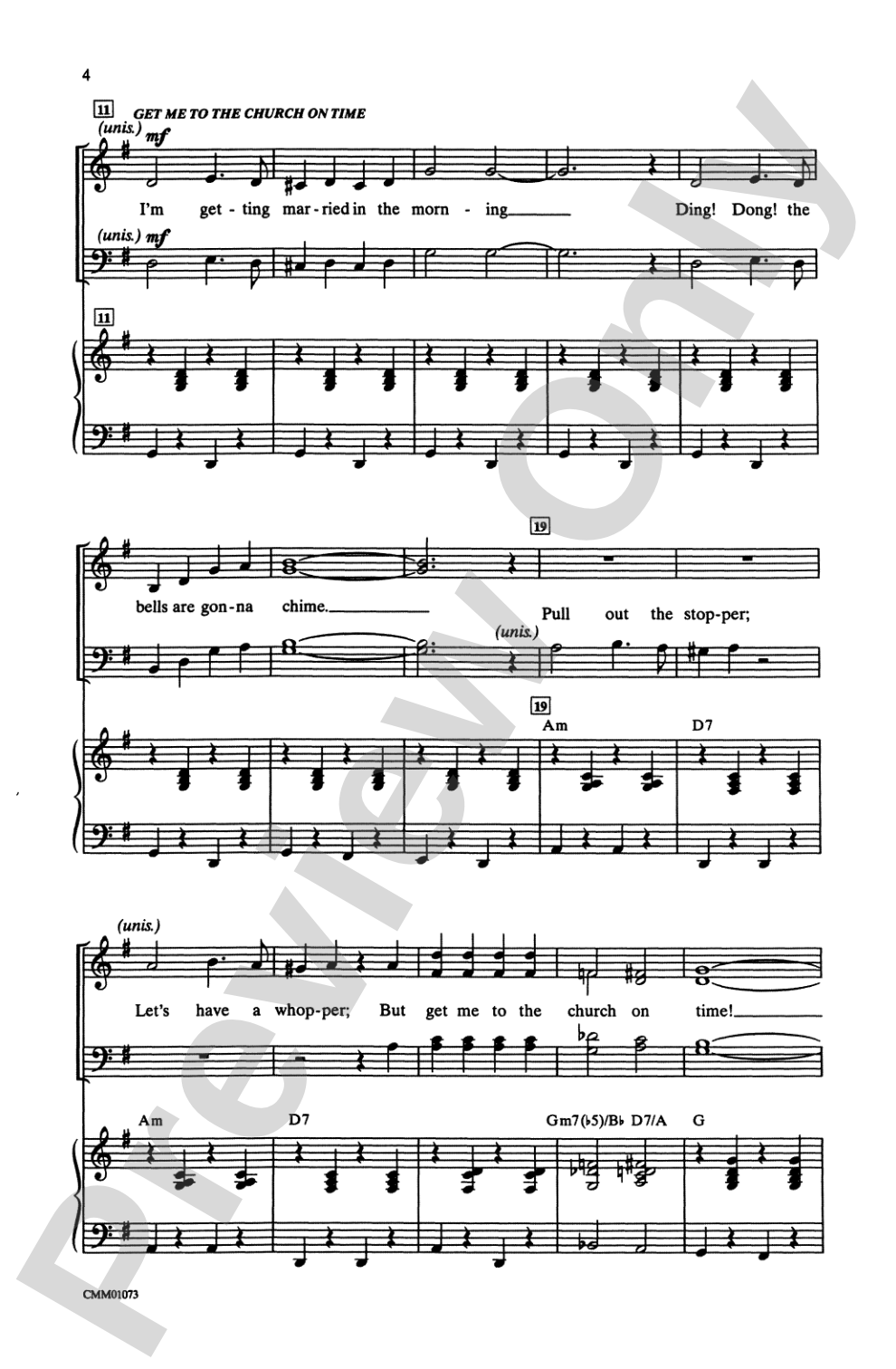
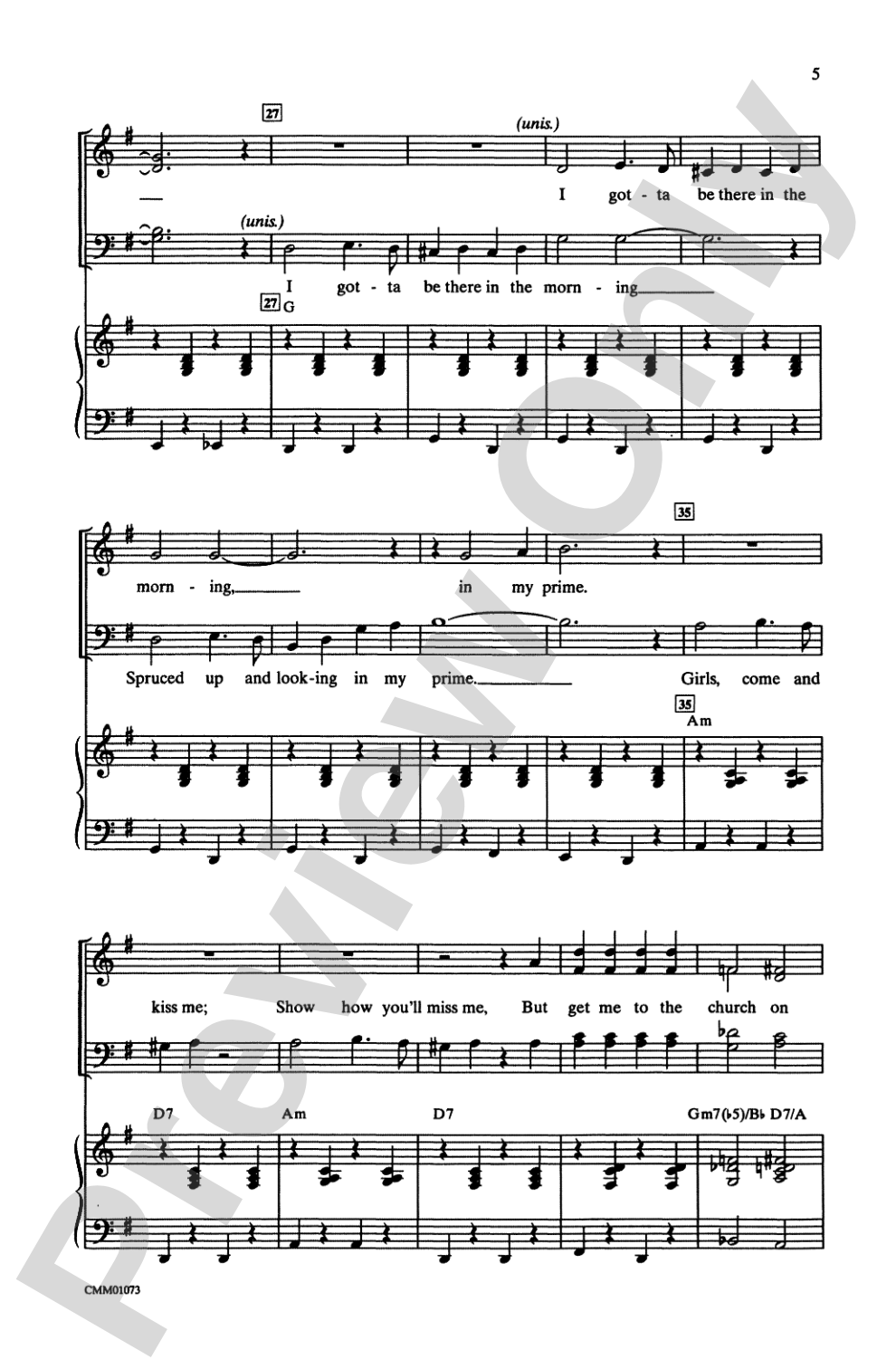
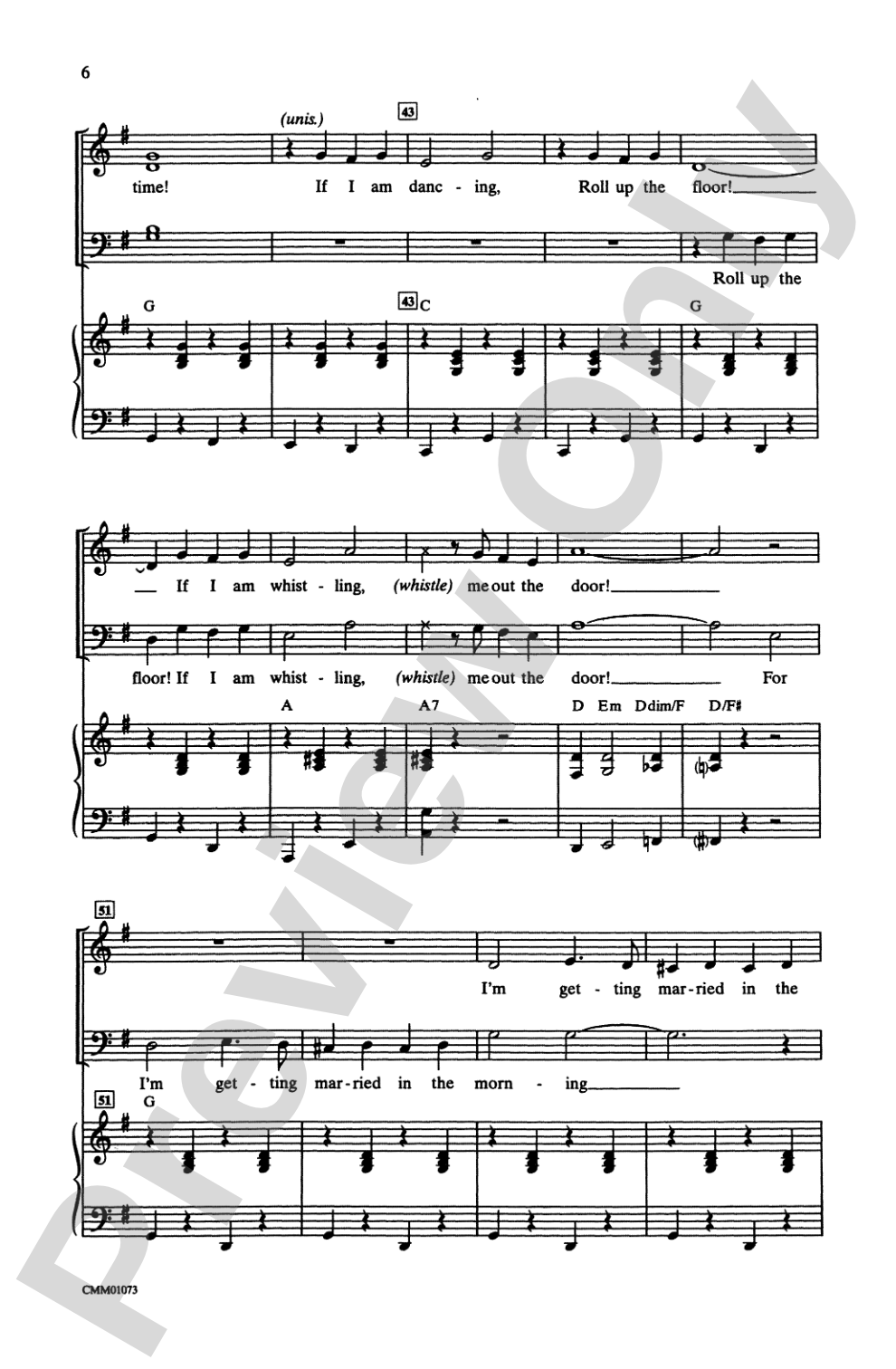
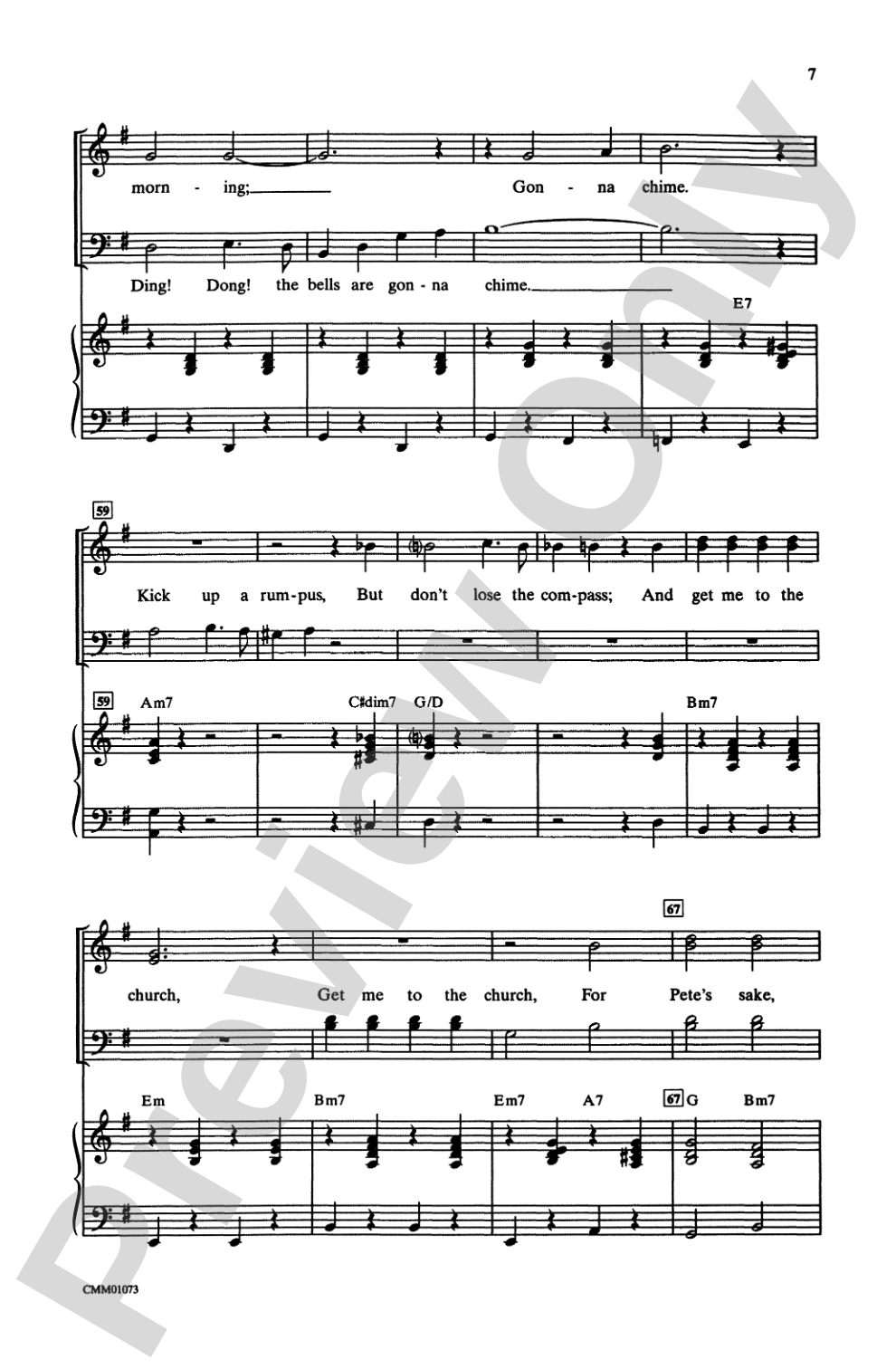
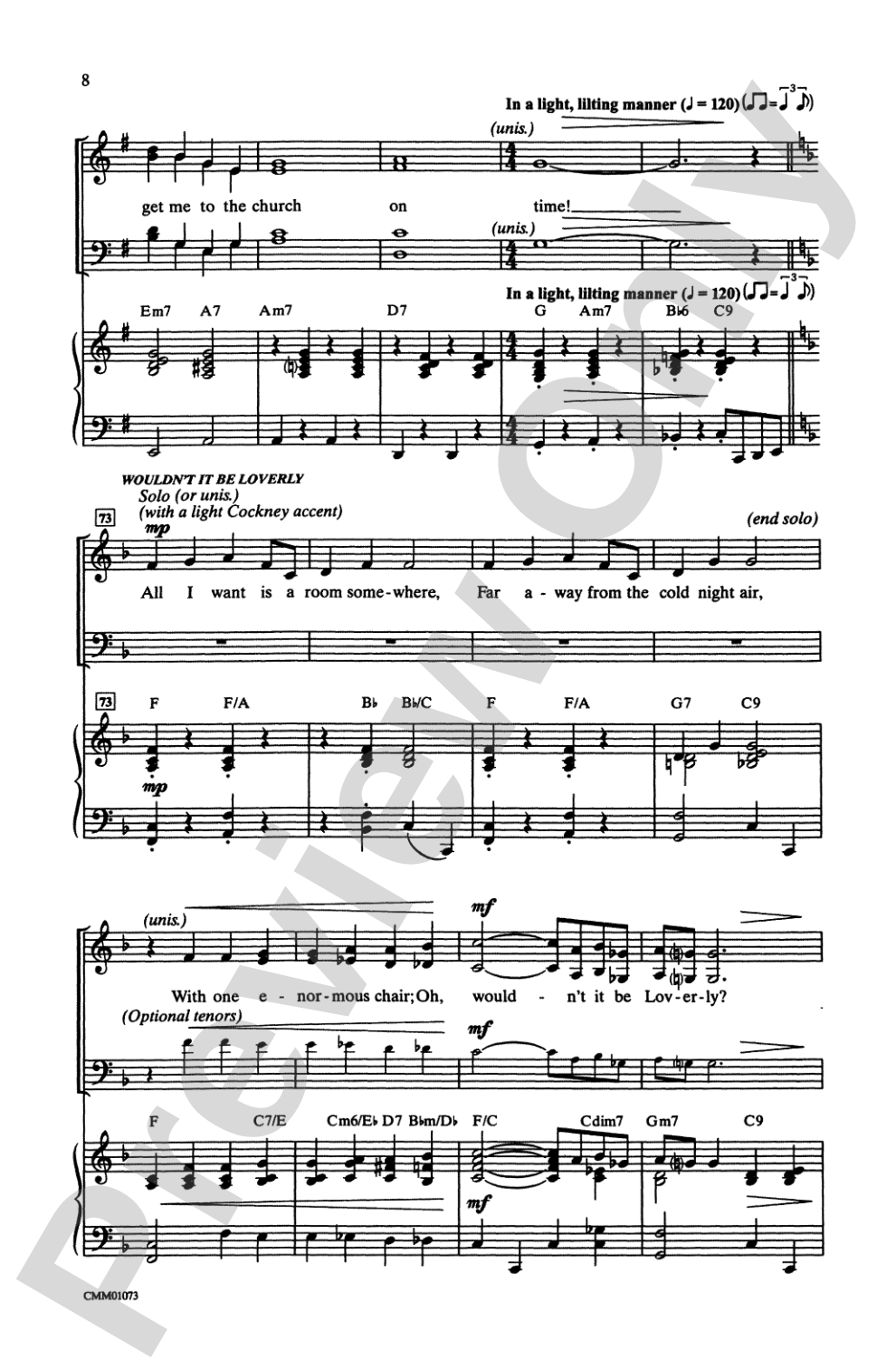
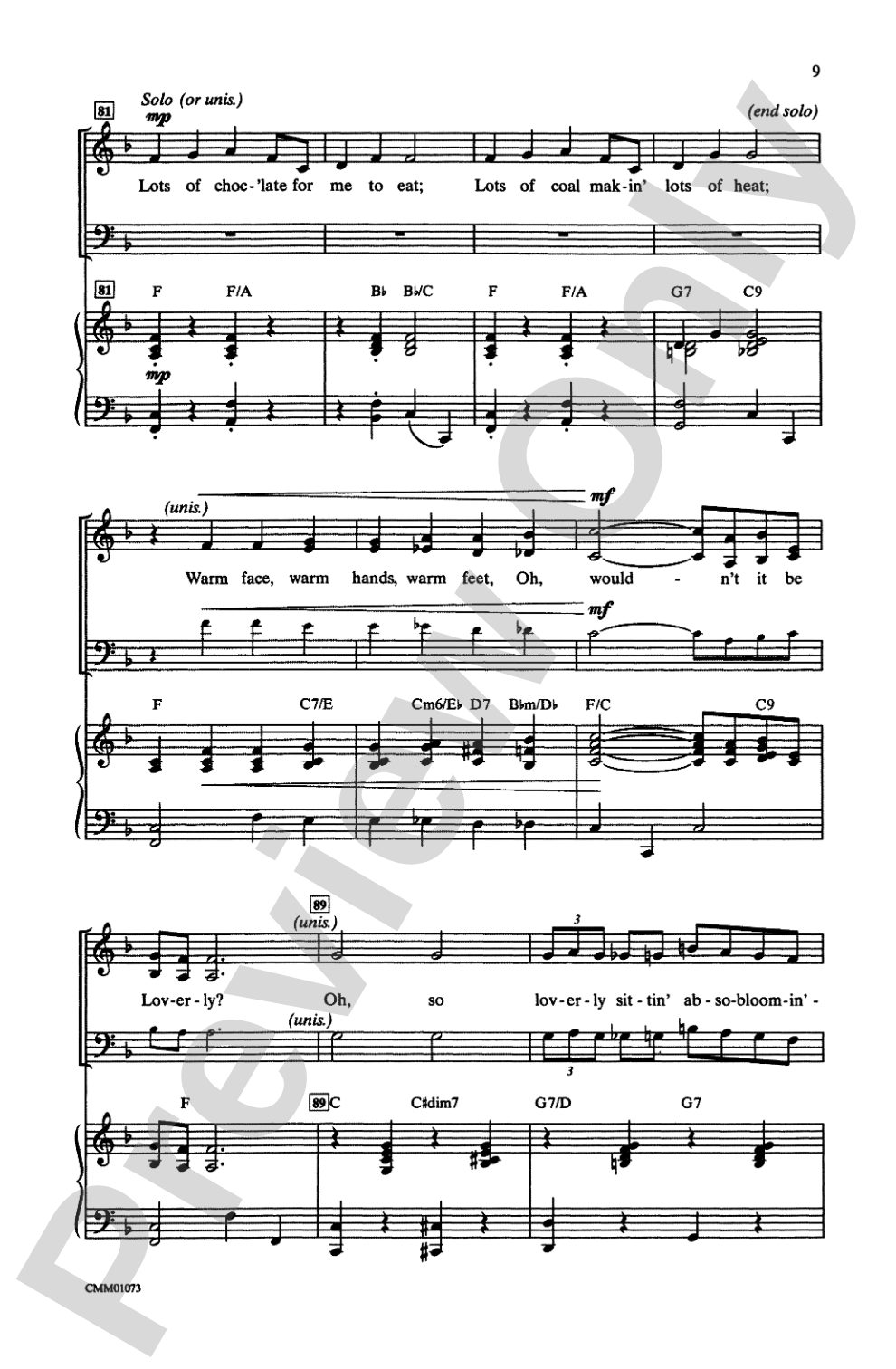
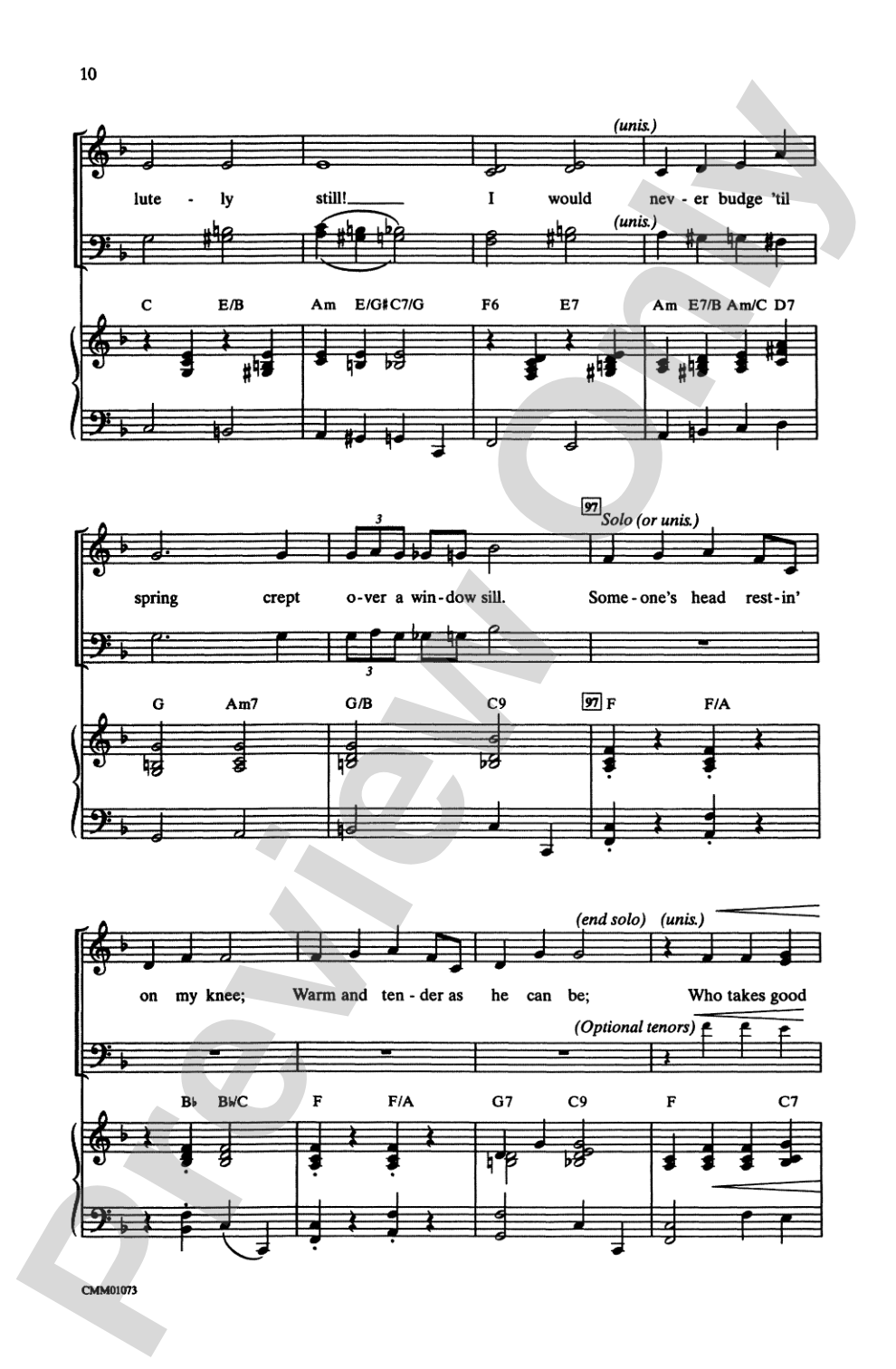

My Fair Lady (Choral Selections): SATB Choral Octavo
Music by Frederick Loewe, lyrics by Alan Jay Lerner / arr. Carl Strommen
Level: Moderate
Item: 00-PO-0003507
$6.99
Minimum order quantity: 20 copies
One moment…
Related Items
My Fair Lady (Choral Selections): 3-Part Mixed Choral Octavo |
$6.99
|
View | |
My Fair Lady (Choral Selections): Choral Instrumental Parts |
$15.00
|
View | |
My Fair Lady (Choral Selections): SATB Choral Octavo |
$6.99
|
View | |
My Fair Lady (Choral Selections): 3-Part Mixed Choral Octavo |
$6.99
|
View | |
My Fair Lady (Choral Selections): Choral Instrumental Parts |
$15.00
|
View | |
My Fair Lady (Choral Selections): Choral Octavo SoundTrax CD |
$29.99
|
View |
Description
The great Lerner and Loewe stage show was jam packed with fascinating songs. This Carl Strommen medley brings these classic Broadway hits alive again. Audiences and choirs will thrill to hear this one! Nine minutes in length.


My Fair Lady (Choral Selections): SATB Choral Octavo isn't in MakeMusic Cloud just yet...but it could be. Let us know you'd like to see it, and you'll help shape what comes next. In the meantime, start a free trial and dive into thousands of interactive titles your students can play along with today.
Request This Title
Tell us you want it.
Start Your Free Trial
Explore everything that's ready to play right now.
Sample Audio
No sample audio found.
Sample Video
No sample videos found.
Additional Details
Publisher:
Alfred Music
Page Count:
40
SKU:
00-PO-0003507
More about this title
About the Composer: Frederick Loewe
Frederick Loewe (1901-1988) was an Austrian-American composer whose theatrical works defined the Golden Age of Broadway. Collaborating with lyricist Alan Jay Lerner, he created some of musical theater's most enduring scores, including Brigadoon, Paint Your Wagon, Gigi, and My Fair Lady. His gift for melody was matched by his orchestral sophistication; even in their simplest moments, his songs reward careful harmonic listening.
Loewe's influence on music education extends beyond his famous melodies. His scores teach young musicians how theatrical music balances accessibility with artistry, how melody and harmony work together to tell a story, and how the same musical material can be recontextualized across an entire show. Choral arrangements of his work remain popular because they retain the emotional core of his writing while making it achievable for student ensembles.
Why we love this
Strommen's medley captures the joy and sophistication of My Fair Lady without overwhelming a choir's rehearsal schedule. The familiar melodies land immediately with audiences, but the arranging itself is smart: it balances chord writing that sounds rich and confident with lines that sit well for mixed voices. A nine-minute piece that feels like a full concert event.
What to expect
Elegance meets Broadway charm. The melodies bloom in ways that feel both theatrical and genuinely singable, with moments of lush harmony that remind you why these songs became standards. There's a lightness to much of it, but underneath runs the sophisticated harmonic language that made Loewe's work so influential.
Who it's for
This arrangement works beautifully for grade 3 to 4 choirs that have solid voice part independence and enough rehearsal time to build confidence. It's ideal for choirs who want to program something audiences will recognize and love without sacrificing musicianship.
How to get the most out of it
- Shape the transitions between songs so each melody emerges freshly rather than feeling stitched together. The medley gains its power when the emotional arc builds across all sections.
- Balance the recorded accompaniment carefully during rehearsal; use it as a reference for tempos and style, then gradually let your singers own the phrasing so they're not following mechanically on performance day.
- Pay attention to diction in the faster passages. Broadway style demands crisp consonants and clear vowels, especially in ensemble sections where articulation reads as clarity.
- Work the dynamic architecture with your section leaders early. These songs have peaks and valleys, and your choir will sound more polished when both individual lines and the overall shape are intentional.
How to use it
This medley works exceptionally well as a concert closer or as the centerpiece of a spring pops concert. It also pairs naturally with other Broadway repertoire if you're building a musical theater program, or stands alone as the uplifting moment in a more classical set. Consider using it late in the season when your choir has built the vocal stamina and confidence to execute it fully.
Skills your students will build
- Singing legit Broadway style with clear diction and theatrical phrasing
- Managing tempo changes and sectional transitions within a medley framework
- Balancing individual line singing with ensemble blend in four-part writing
- Interpreting recorded accompaniments and maintaining independence from them
- Building dynamic contrast and emotional arc across a longer choral work