
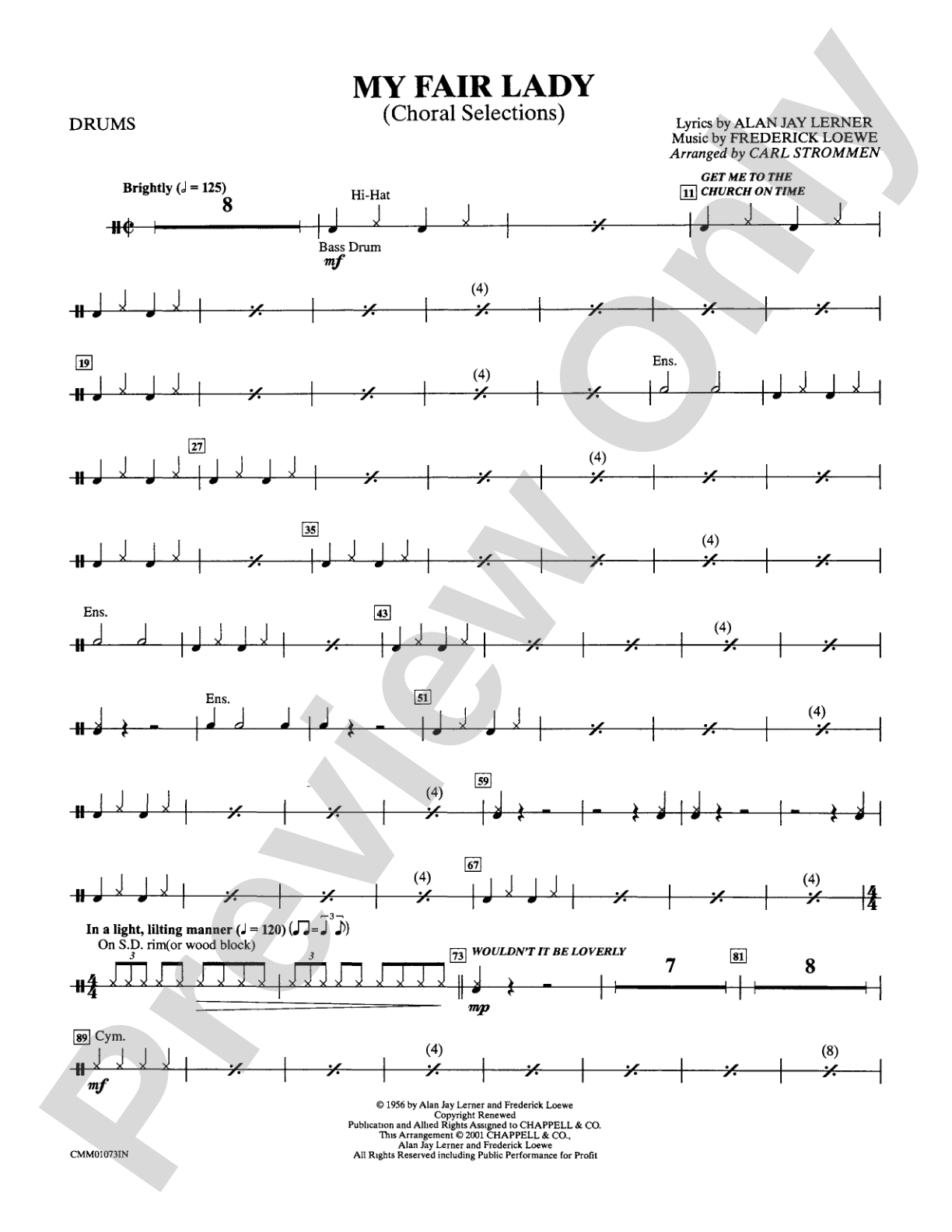
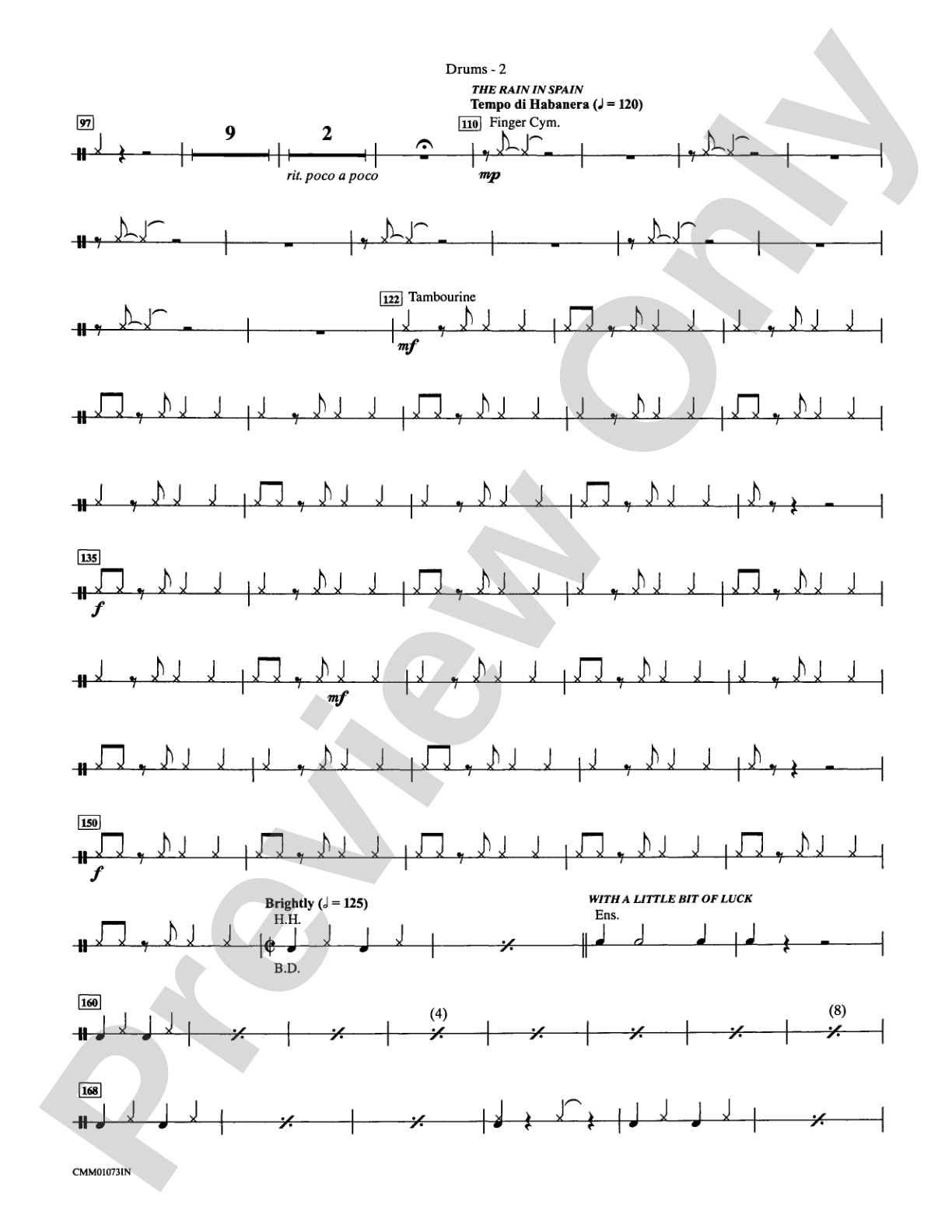
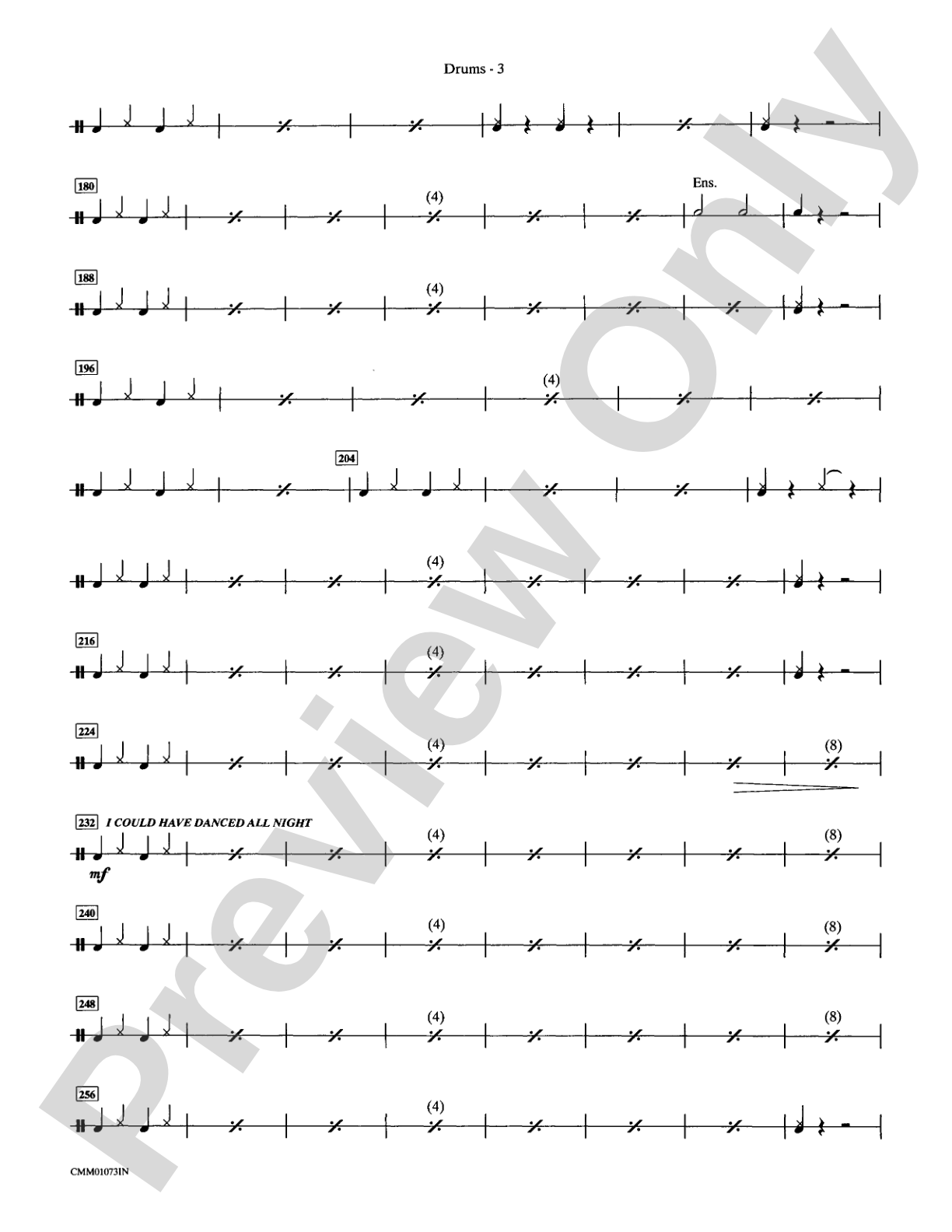
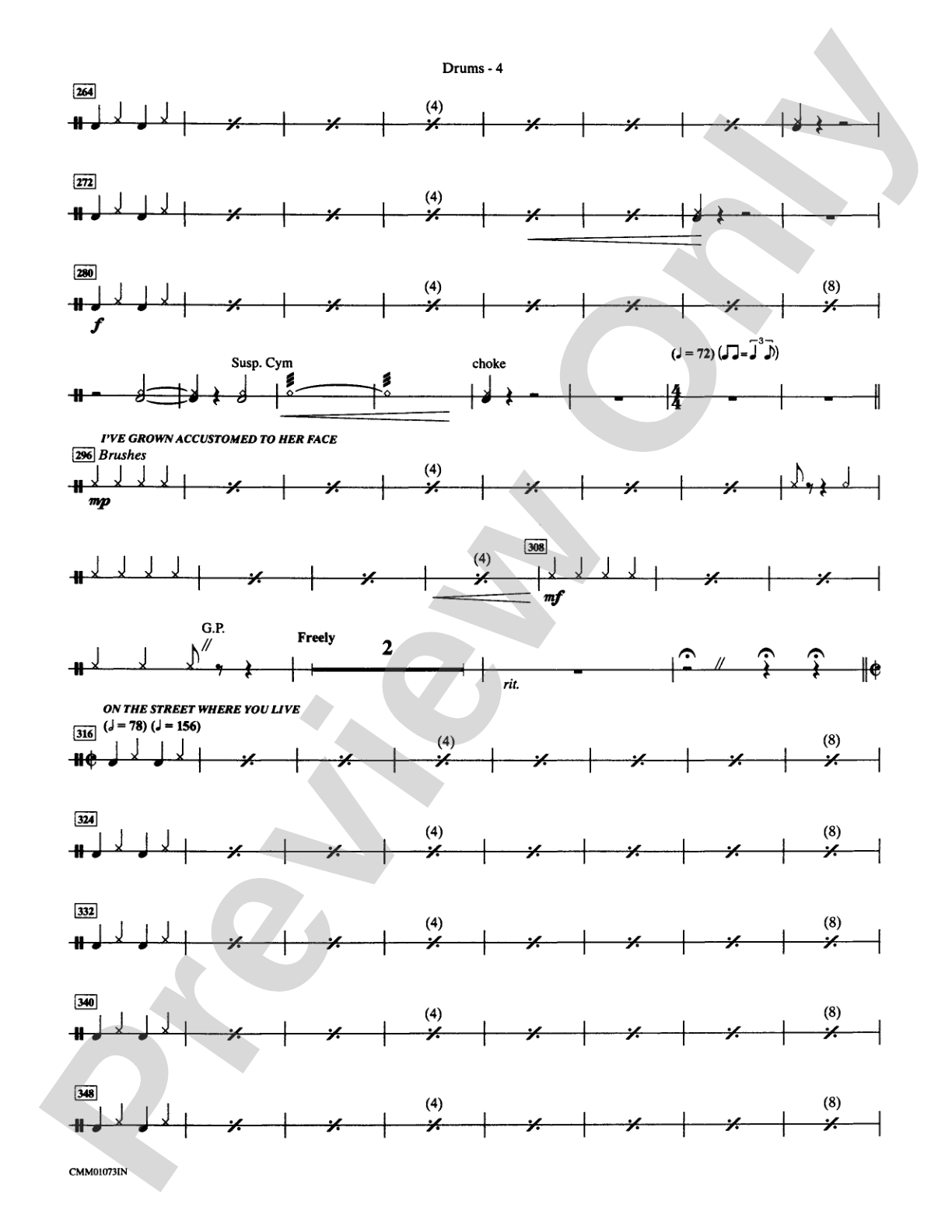
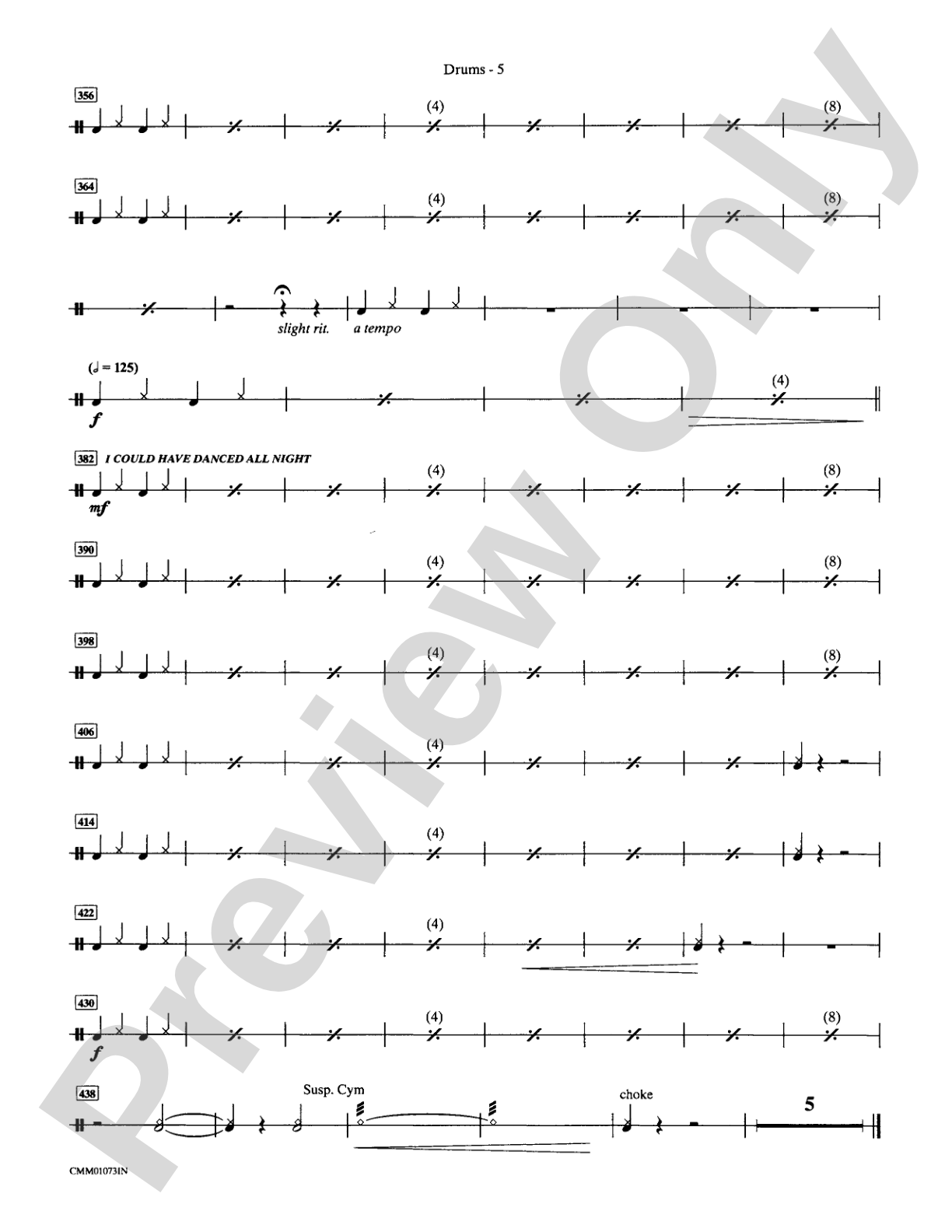




My Fair Lady (Choral Selections): Choral Instrumental Parts
Music by Frederick Loewe, lyrics by Alan Jay Lerner / arr. Carl Strommen
Item: 00-PK-0005844

$15.00
Pickup currently not available
Buy Extra Parts (Digital PDF Download)
| Product | Price | Quantity |
|---|---|---|
| My Fair Lady (Choral Selections): Drums: Choral Instrumental Parts | $3.00 | |
| My Fair Lady (Choral Selections): String Bass: Choral Instrumental Parts | $3.00 |
Parts Added to Cart!
Related Items
My Fair Lady (Choral Selections): SATB Choral Octavo |
$6.99
|
View | |
My Fair Lady (Choral Selections): 3-Part Mixed Choral Octavo |
$6.99
|
View | |
My Fair Lady (Choral Selections): SATB Choral Octavo |
$6.99
|
View | |
My Fair Lady (Choral Selections): 3-Part Mixed Choral Octavo |
$6.99
|
View | |
My Fair Lady (Choral Selections): Choral Instrumental Parts |
$15.00
|
View | |
My Fair Lady (Choral Selections): Choral Octavo SoundTrax CD |
$29.99
|
View |
Description
The great Lerner and Loewe stage show was jam packed with fascinating songs. This Carl Strommen medley brings these classic Broadway hits alive again. Audiences and choirs will thrill to hear this one! Nine minutes in length.


Don't just read it, hear it, play along with it, and watch your students grow with it. In MakeMusic Cloud, My Fair Lady (Choral Selections): Choral Instrumental Parts comes alive with professional accompaniment, adjustable tempo, and built-in practice tools that turn solo practice into real progress.
Open in the Player
Jump straight in and assign it today.
Start Your Free Trial
Open this title and explore the full library in minutes.
Sample Audio
No sample audio found.
Sample Video
No sample videos found.
Additional Details
Publisher:
Alfred Music
Page Count:
24
SKU:
00-PK-0005844
More about this title
About the Composer: Frederick Loewe
Frederick Loewe (1901, 1988) was an Austrian-American composer whose theatrical instincts shaped Broadway's golden age. His partnership with lyricist Alan Jay Lerner produced some of musical theater's most enduring scores, including My Fair Lady, Gigi, and Camelot. Loewe's gift lay in crafting melodies that feel inevitable once you hear them, combined with orchestrations that balance sophistication with accessibility.
For music educators, Loewe's work offers a masterclass in how melody serves dramatic storytelling. His songs teach singers about phrasing, character, and the relationship between music and text. Even in medley form, his compositions reward careful attention to style and emotional detail.
Why we love this
Carl Strommen's medley captures the theatrical sweep and melodic richness of My Fair Lady in a package that works beautifully for choral ensembles. The arrangement honors Loewe's original melodies while creating moments of genuine excitement that keep audiences engaged across nine minutes of music. When you add instrumental parts, you unlock dynamic possibilities that make this feel like a full production number rather than a choral encore.
What to expect
There is immediate joy in these melodies; Loewe's gift for writing singable, memorable lines means your singers will feel the music in their bones. The arrangement moves between intimate moments and sweeping ensemble passages, creating a sense of theatrical journey that audiences recognize and love. Nine minutes provides enough time to establish mood, develop drama, and land solidly without wearing out either performer or listener.
Who it's for
This medley works for intermediate to advanced choral ensembles seeking Broadway repertoire with theatrical appeal and professional shine. Directors programming spring concerts, musicals-focused shows, or gala events will find this gives choirs a chance to perform recognizable masterworks in a fully realized arrangement.
How to get the most out of it
- Balance the vocal lines against the instrumental parts carefully; the orchestration should enhance rather than overshadow your singers. Use the recorded accompaniment to establish tempo and phrasing during early rehearsals.
- Shape the transitions between medley sections so each new song feels like a distinct moment rather than a patchwork. Mark breathing points in parts where the choir naturally wants to lift.
- Assign your strongest singers to exposed passages and soloistic moments. Strommen's arrangement includes spots where individual voices or small groups carry the melody, and clarity matters.
- Rehearse with instrumental parts present from the middle stage onward. The presence of an ensemble playing rhythmic or harmonic accompaniment changes how your choir locks into the groove.
How to use it
Place this as a centerpiece in a concert celebrating Broadway or musical theater, where it can anchor a set of related songs or stand powerfully on its own. It also serves as an elegant closer for a pops or gala concert where you want to send audiences out humming. Consider pairing it with lighter, shorter pieces earlier in the program so this medley becomes a memorable finale.
Skills your students will build
- Singing over instrumental accompaniment and responding to ensemble ensemble cues
- Sustaining vocal tone and energy across extended medley sections with varied tempos
- Balancing choral blend with exposed melody passages
- Coordinating with instrumental musicians and responding to their rhythmic anchoring
- Interpreting phrase shapes and emotional arcs within a theatrical context