

My Fair Ladies: SSA Choral Octavo
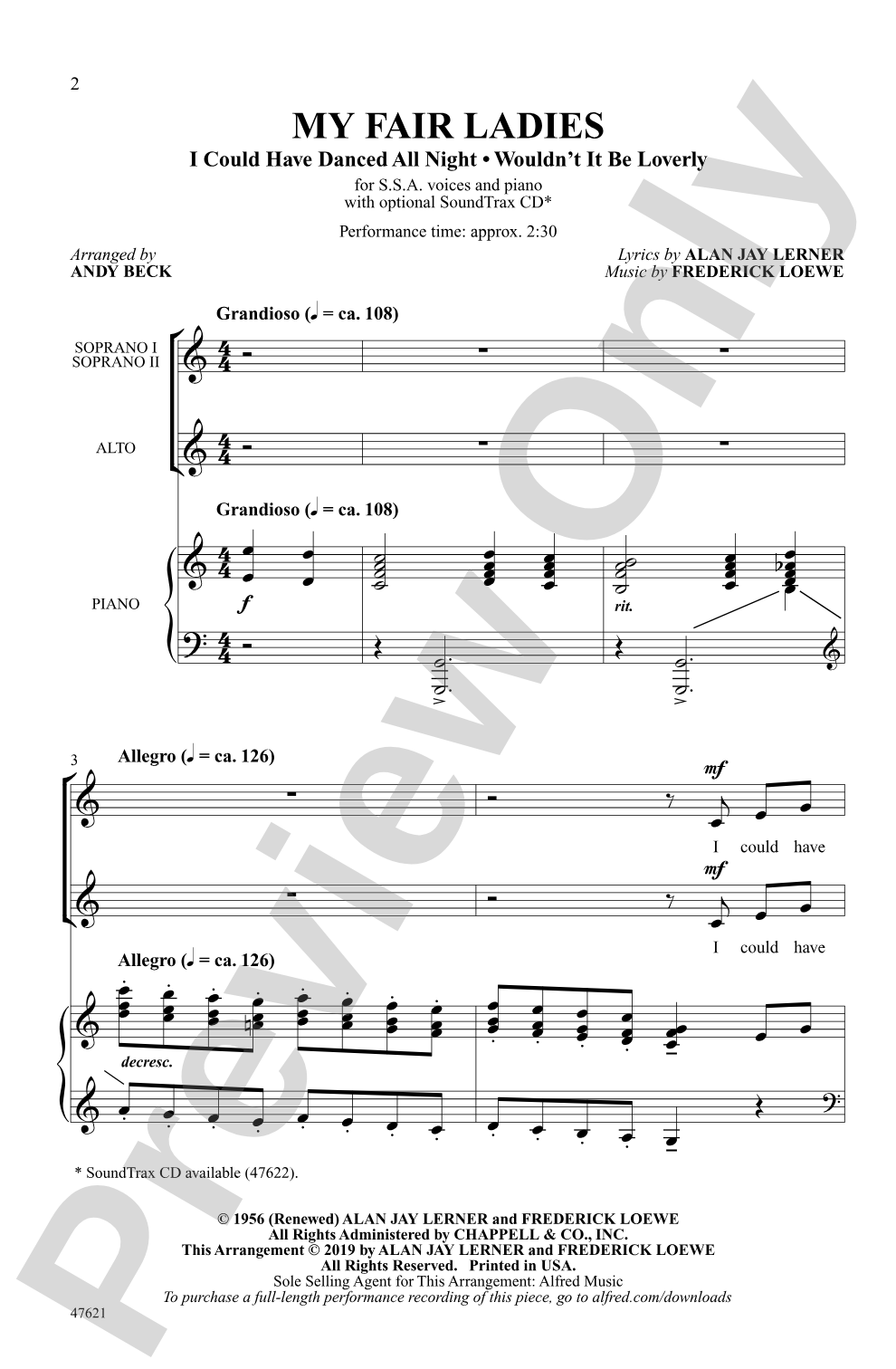
I Could Have Danced All Night * Wouldn't It Be Loverly
Lyrics by Alan Jay Lerner, music by Frederick Loewe / arr. Andy Beck
Item: 00-PO-0005966
$2.10
Minimum order quantity: 20 copies
One moment…
Description
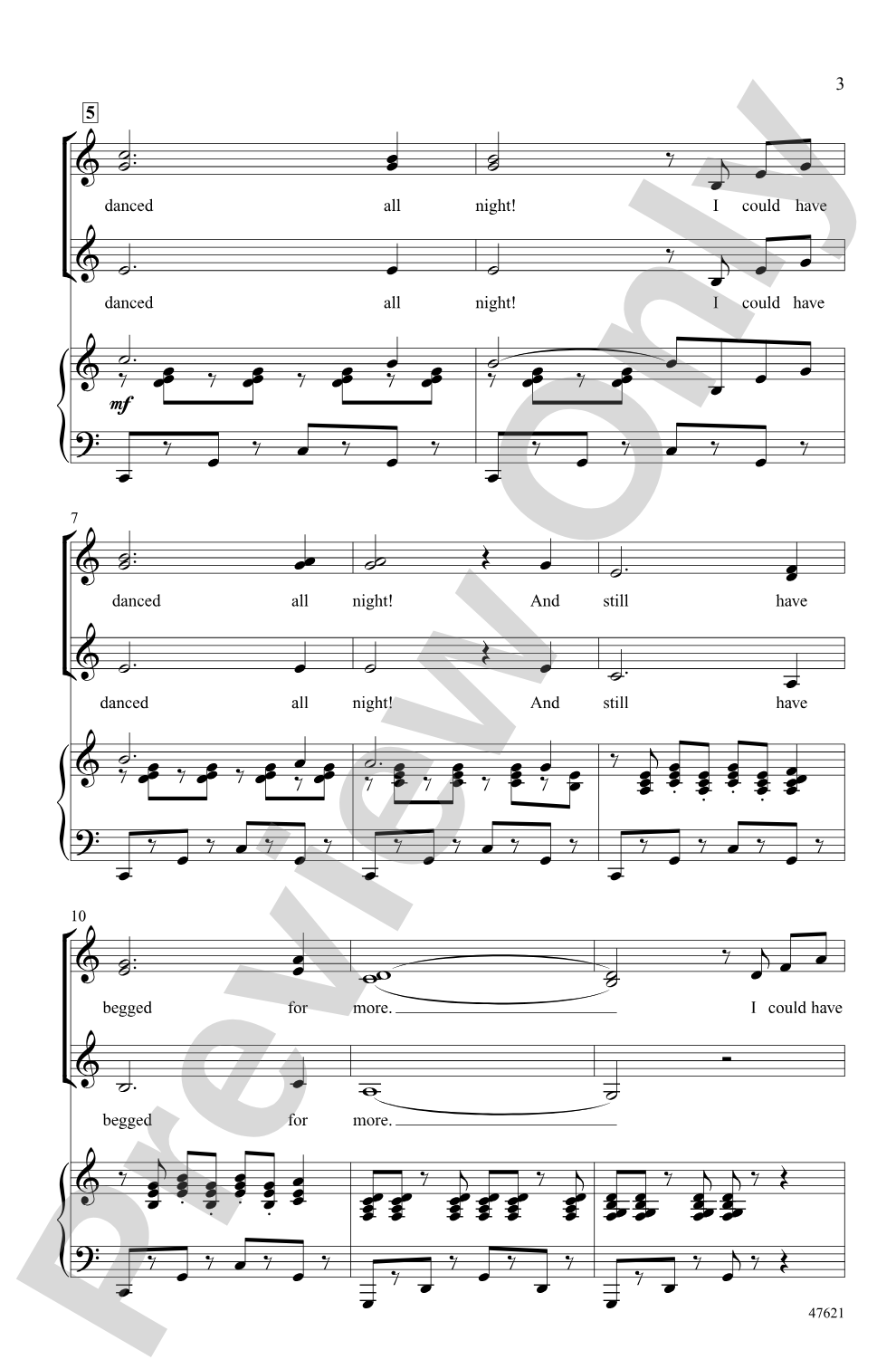
Two of the most delightful songs from Lerner and Loewe's much-revered musical My Fair Lady are combined into this 2½-minute medley designed for women's ensembles of any age. A grandiose introduction gives way to the breathless energy of Eliza and Henry's first dance, followed by a playful setting of “Wouldn't It Be Loverly.” The melodies and harmonies are distributed beautifully across all three voices, encouraging all of your ladies to channel their inner Julie Andrews.


My Fair Ladies: SSA Choral Octavo isn't in MakeMusic Cloud just yet...but it could be. Let us know you'd like to see it, and you'll help shape what comes next. In the meantime, start a free trial and dive into thousands of interactive titles your students can play along with today.
Request This Title
Tell us you want it.
Start Your Free Trial
Explore everything that's ready to play right now.
Sample Audio
1
Audio File
--:--
0:00
0:00
Sample Video
Additional Details
Series:
Alfred Pop Choral Series
Publisher:
Alfred Music
Page Count:
12
SKU:
00-PO-0005966
More about this title
About the Composer: Frederick Loewe
Frederick Loewe (1901-1988) was an Austrian-American composer whose gift for melody and dramatic storytelling defined the golden age of musical theater. Working alongside lyricist Alan Jay Lerner, he created some of Broadway's most enduring scores, including My Fair Lady, which premiered in 1956 and became one of the most successful musicals ever written.
Loewe's music is characterized by sophisticated harmonies, memorable vocal lines, and an almost operatic sensibility that elevated the Broadway musical as an art form. His melodies sit naturally in the voice, making them accessible to singers while remaining genuinely beautiful and complex enough to engage serious musicians.
Why we love this
Andy Beck's arrangement captures everything that makes My Fair Lady irresistible while respecting the integrity of Loewe's original melodies. The piece gives every singer a moment to shine, with the harmonic writing distributed thoughtfully across all three voices so that no one part carries the entire burden. For directors programming a concert that needs both sophistication and warmth, this medley delivers immediate audience connection without sacrificing musical substance.
What to expect
There's a sense of theatrical sophistication threaded through this piece, from the grand opening that recalls a West End stage to the intimate charm of the second song. Singers will feel the difference between the excitement of the dance number and the wistful longing of 'Wouldn't It Be Loverly,' and the contrast keeps the medley engaging from start to finish.
Who it's for
Women's ensembles at any level will find this medley both accessible and rewarding. Whether your singers are in middle school or a community choir, the arrangement scales beautifully to their abilities without compromising Loewe's elegant compositional voice.
How to get the most out of it
- Shape the grandiose introduction with dramatic dynamic control and clear articulation; let the orchestra music breathe before the voices enter.
- Emphasize the rhythmic vitality of the first dance section by keeping the ensemble locked together; the breathless energy depends on precision, not speed.
- Balance the playfulness of 'Wouldn't It Be Loverly' with genuine musicality; charm without sentimentality keeps the piece from feeling lightweight.
- Use the recorded accompaniment to internalize the harmonic movement, especially in the transition between the two songs where voices need to blend seamlessly.
How to use it
This works beautifully as an elegant opener for a concert or as a sophisticated closer that leaves audiences smiling. Pair it with other musical theater selections for a Broadway-themed concert, or use it as a palate cleanser between heavier classical repertoire to remind your audience why these melodies have lasted for nearly seventy years.
Skills your students will build
- Sustaining legit singing tone while maintaining theatrical expression
- Balancing three-part harmony with clear voice independence
- Responding to tempo and dynamic shifts between contrasting musical sections
- Interpreting character and mood through phrasing and articulation choices
- Locking ensemble rhythm while preserving lyrical fluidity