

Music Gives: SSA Choral Octavo
Words from Traditional Latin and Plato, music by Mark Burrows
Item: 00-PO-0007259
$2.30
Minimum order quantity: 20 copies
Pickup currently not available
Related Items
Music Gives: SATB Choral Octavo |
$2.30
|
View | |
Music Gives: 3-Part Mixed Choral Octavo |
$2.30
|
View | |
Music Gives: PianoTrax Digital Audio Download |
$9.99
|
View | |
Music Gives: SATB Choral Octavo |
$2.30
|
View | |
Music Gives: 3-Part Mixed Choral Octavo |
$2.30
|
View | |
Music Gives: SSA Choral Octavo |
$2.30
|
View |
Description
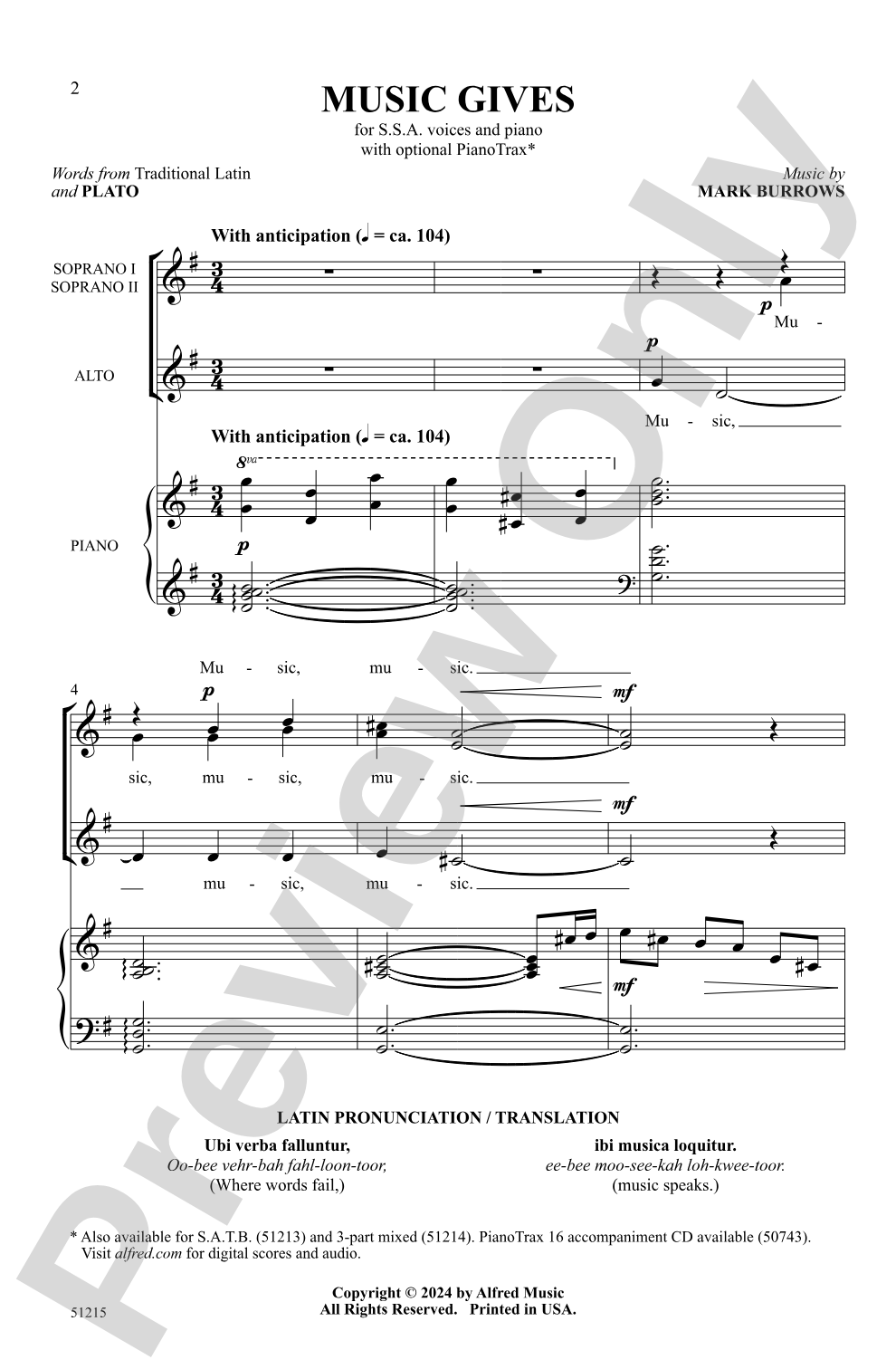
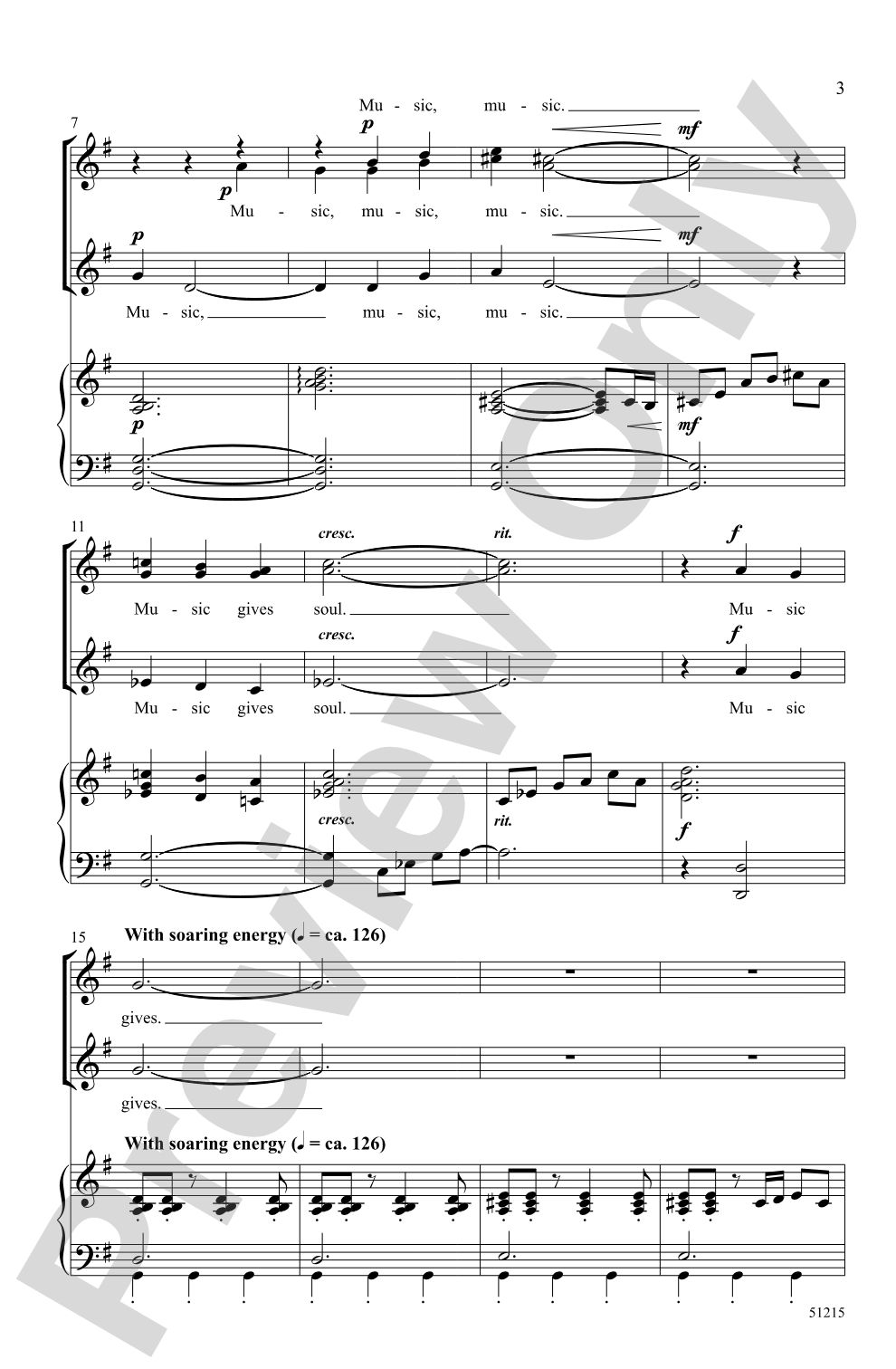
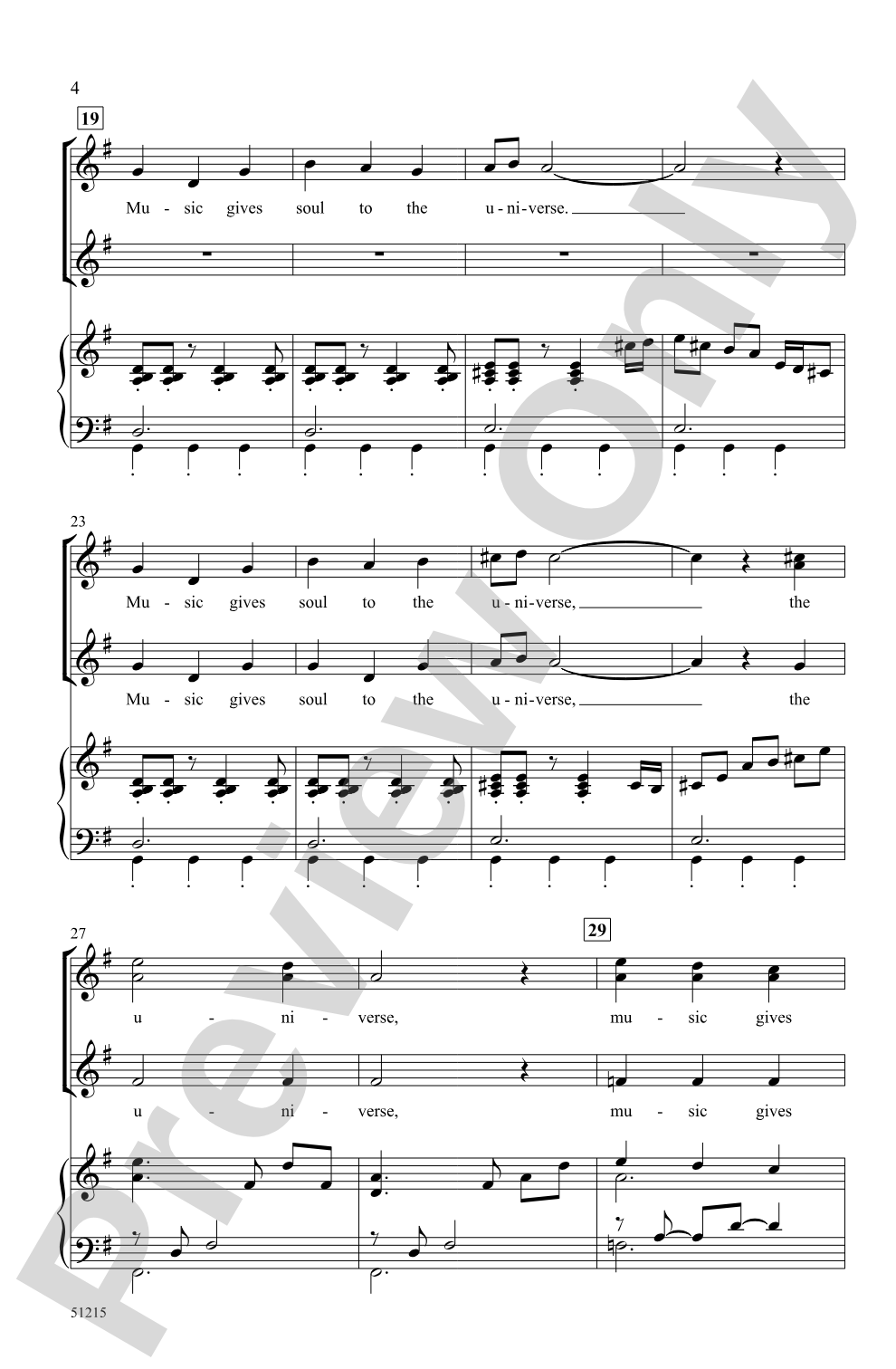
"Music gives . . . life to everything." Powerful words by Plato are given a contemporary sound in this buoyant piece by Mark Burrows. Soaring with radiant energy, it uses colorful harmonies and a driving 3/4 meter to extol the virtues of music. A central chant-like section sets the familiar phrase "Where words fail, music speaks" in Latin. Highly recommended for concert, contest, or festival.


Discover MakeMusic Cloud: thousands of interactive titles your students can play along with today.
Sample Audio
1
Audio File
--:--
0:00
0:00
Sample Video
Additional Details
Series:
Alfred Choral Designs
Publisher:
Alfred Music
Page Count:
12
SKU:
00-PO-0007259
More about this title
About the Composer: Mark Burrows
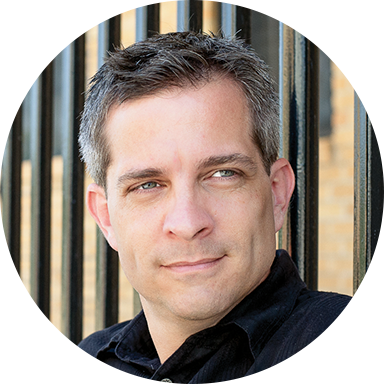
Mark Burrows composes for ensembles across the age and experience spectrum, from children's choirs to adult groups to intergenerational festival choirs. His published works appear regularly on state and festival lists, and he receives multiple commissions annually from a wide range of organizations. Burrows holds a music education degree from Southern Methodist University and a conducting degree from Texas Christian University, and he currently directs children's ministries at FUMC in Fort Worth, Texas, where he lives with his wife and two daughters.
Why we love this
Burrows takes a famous philosophical quotation about music and transforms it into something genuinely singable and energizing rather than preachy. The driving 3/4 meter and colorful harmonies create momentum that feels contemporary without abandoning the reflective power of the text, and the chant-like section with the Latin phrase gives singers a moment of real architectural shift that audiences remember.
What to expect
Energy and light define this piece. The bright harmonies and forward 3/4 pulse create an almost celebratory atmosphere, then the piece pulls inward when the Latin phrase appears, asking listeners to sit briefly with the idea that music speaks where words cannot. The return to the opening material lands with real affirmation.
Who it's for
This octavo works beautifully for treble choirs, especially those seeking concert and festival repertoire that combines philosophical substance with genuine musical appeal. Singers with developing musicianship and modest sight-reading skills can succeed here, and directors will appreciate writing that feels fresh without demanding extensive rehearsal time.
How to get the most out of it
- Anchor the rhythm section (altos and any available accompaniment) firmly in the driving 3/4 meter; the buoyant energy depends entirely on the steadiness underneath the soaring soprano line.
- Shape the Latin phrase 'Ubi desunt verba, musica loquitur' with clarity and slight ritual quality; this chant-like section is the piece's emotional center and needs room to breathe.
- Balance the radiant soprano melody against the harmonic layers beneath; use dynamic contrast to prevent the uppermost line from drowning out the colorful harmonies that define the contemporary sound.
- Attend carefully to vowel unification in the opening phrase, especially on sustained syllables, since the brightness of the sound relies on crisp, unified tone across all three parts.
How to use it
Pair this with other concert or festival selections that explore the power of music itself, or use it as an opening number where its buoyant character sets an optimistic tone for the entire program. The text resonates particularly well on occasions celebrating the choral arts or the value of music in community, and its modest page count (12 pages) makes it ideal for creating variety within a longer concert set.
Skills your students will build
- Reading and sustaining interest in 3/4 meter
- Balancing soprano lines against underlying harmonic texture
- Singing Latin pronunciation with clarity and stylistic awareness
- Interpreting text that bridges philosophical ideas and musical expression