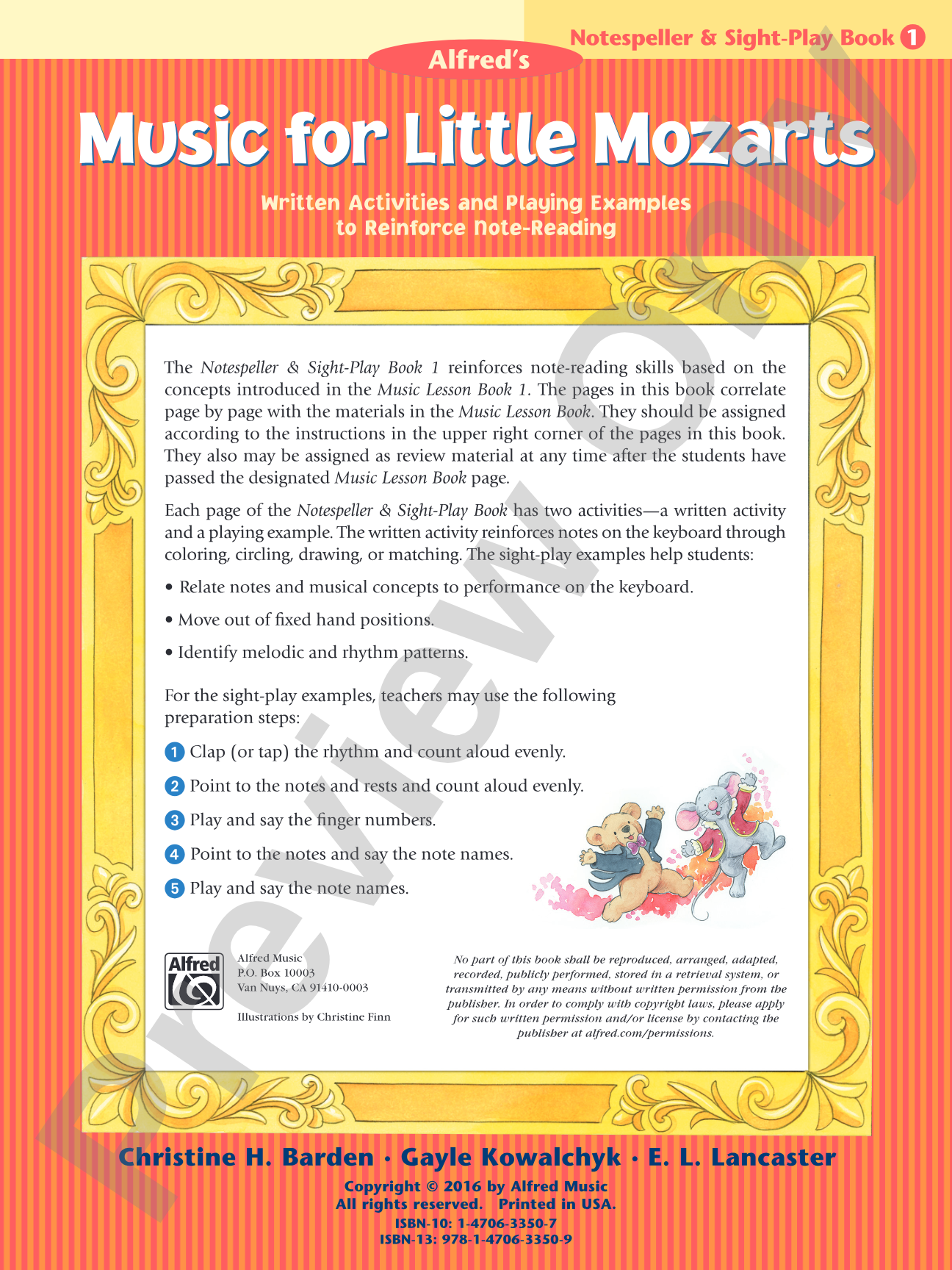
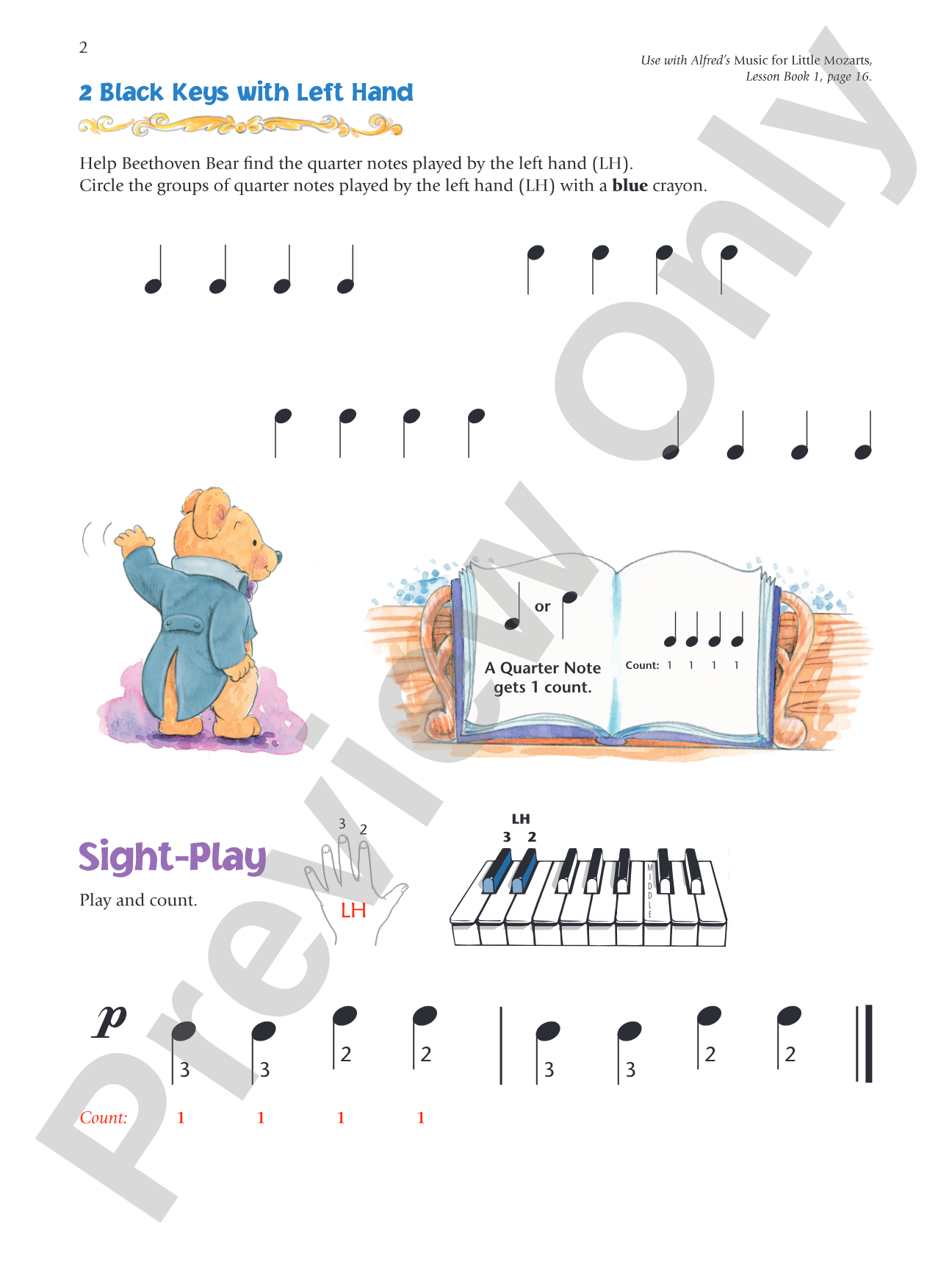
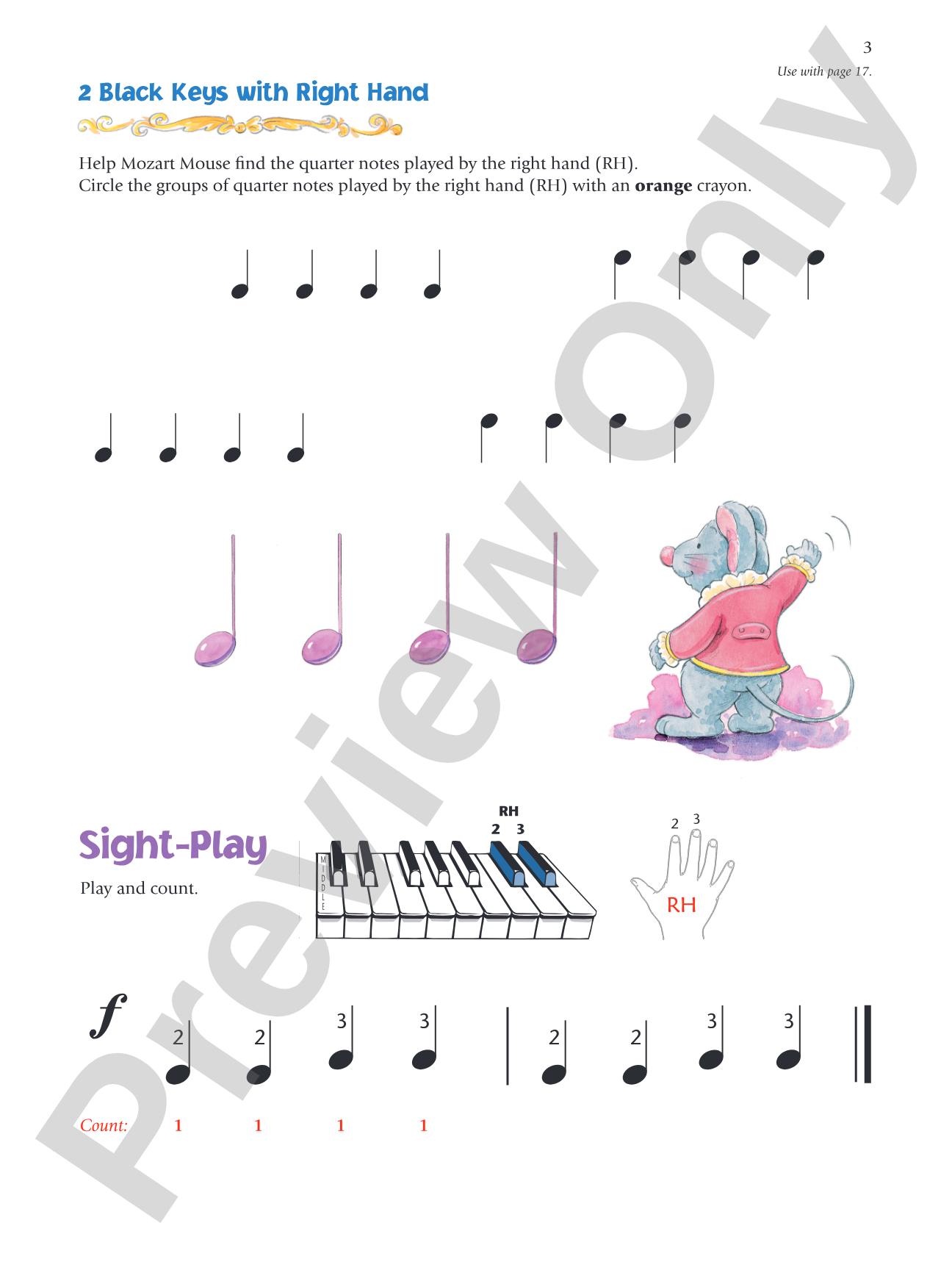
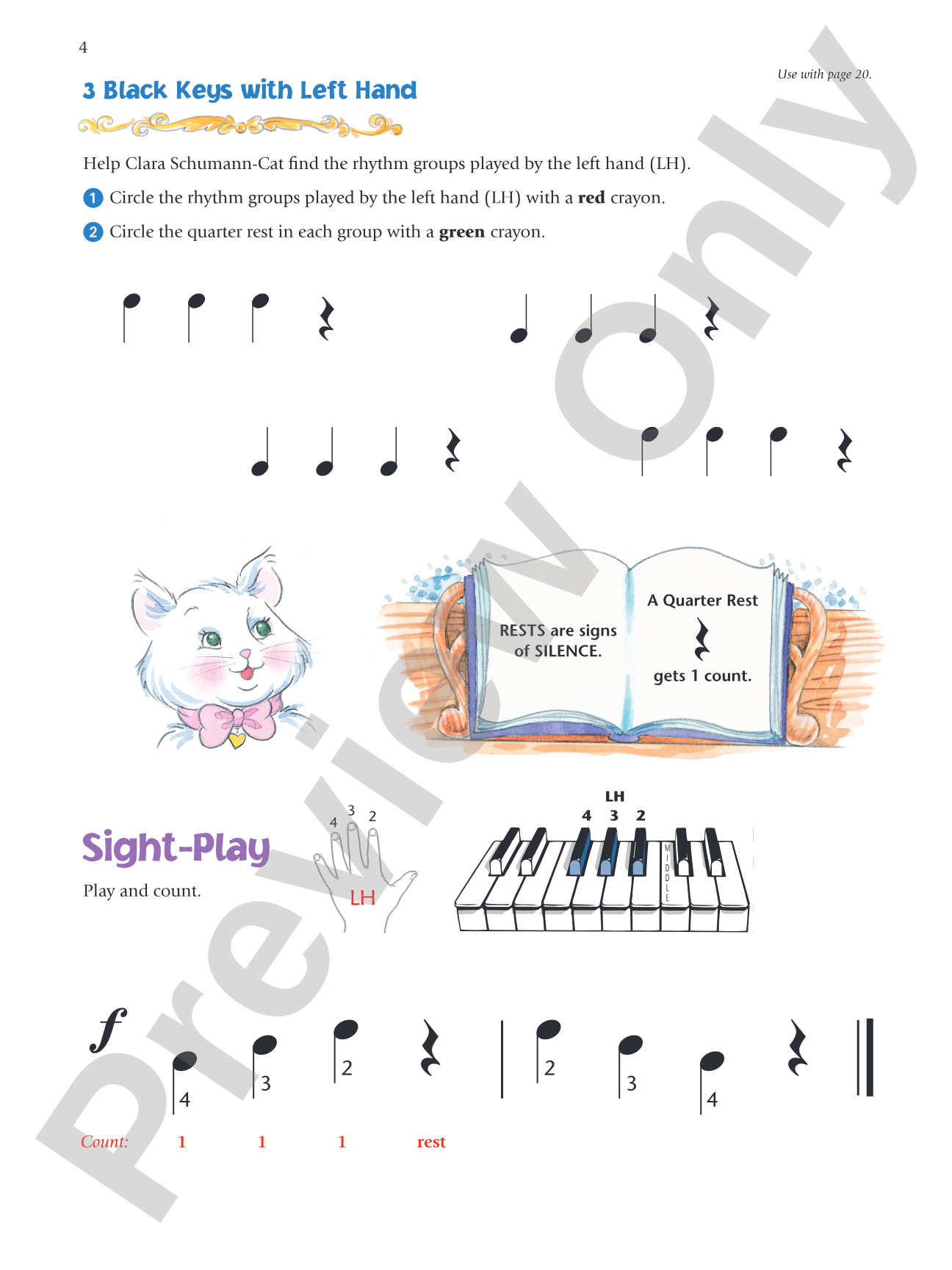
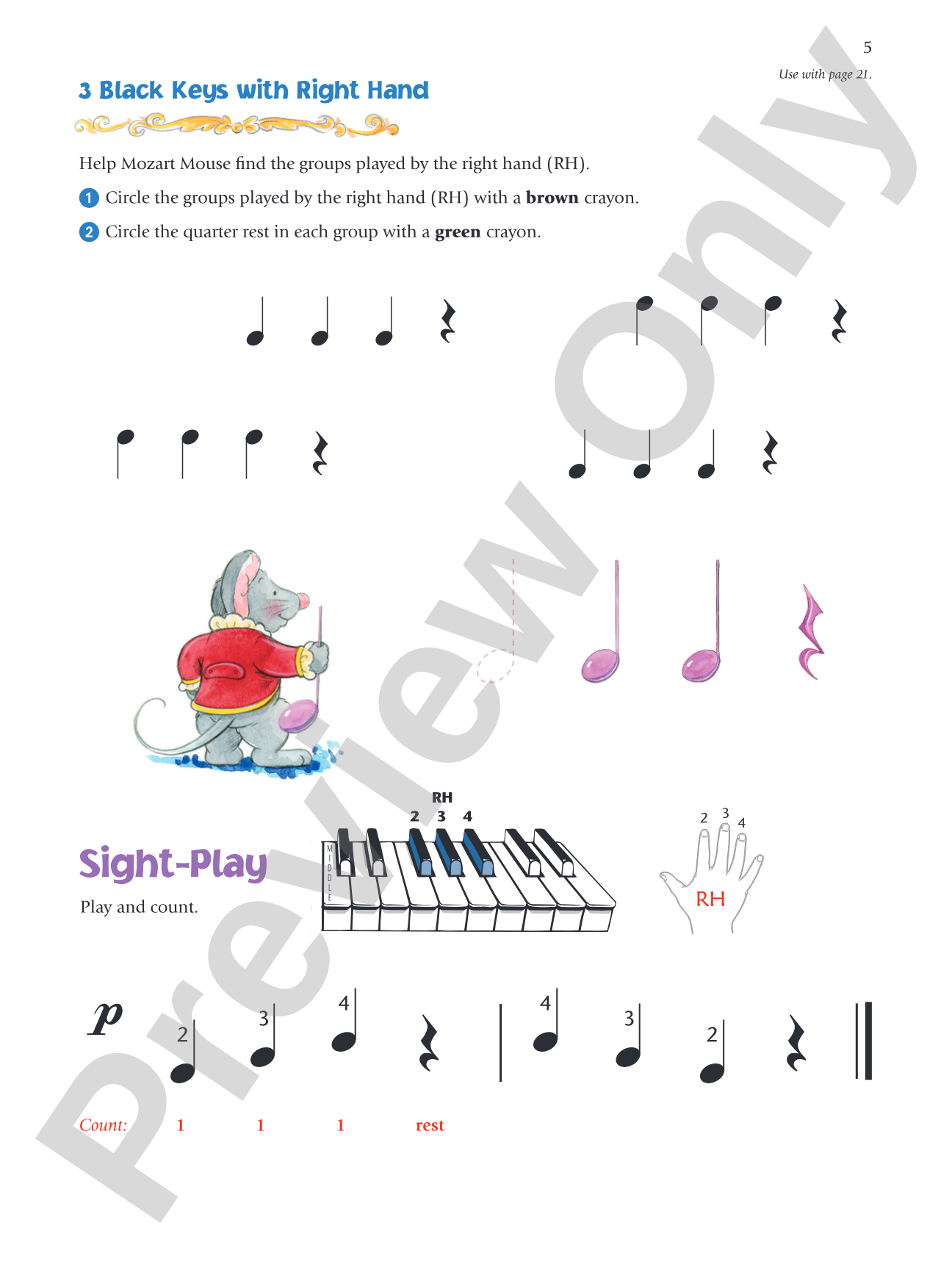
The Notespeller & Sight-Play Book 1 reinforces note-reading skills based on the concepts introduced in the Music Lesson Book 1. Each page of the Notespeller & Sight-Play Book has two activities---a written activity and a playing example. The written activity reinforces notes on the keyboard and staff through coloring, circling, drawing, or matching. The sight-play examples help students relate notes and musical concepts to performance on the keyboard, move out of fixed hand positions, and identify melodic and rhythm patterns.
Discover MakeMusic Cloud: thousands of interactive titles your students can play along with today.
Christine H. Barden co-authored Alfred's Music for Little Mozarts series and brings decades of experience in early childhood music pedagogy to every resource she creates. A piano performance graduate from San Francisco State University, she studied under Vladimir Brenner and spent formative years in Europe deepening her craft. She was among the first American teachers invited to train with Yamaha Music Foundation instructors in Japan, and later served as Director of Curriculum and National Chief Instructor for the Yamaha Music Education System.
Now based in Reno, Nevada, Barden maintains a private teaching studio where her students consistently earn recognition at competitions and festivals. Her workshop presentations have shaped piano instruction at conferences across the United States, England, Norway, and Singapore. Her compositions for young pianists, including the National Federation of Music Club Junior Festival selection "Etude Toccata," reflect her commitment to writing music that genuinely engages developing musicians.
Why we love this
This workbook pairs purposeful writing activities with immediate keyboard application, letting students cement note recognition before they move forward. The variety in activity types keeps early learners engaged while building real fluency with staff and keyboard geography. Most importantly, the sight-play examples ask students to actually use what they've just practiced, which closes the loop between theory and performance faster than worksheets alone ever could.
What to expect
Bright and playful, with activities designed to make note-reading feel like discovery rather than drill. Students move between coloring, circling, and matching activities that keep their hands and minds engaged, then immediately apply their work on the keyboard where the abstract symbols become sound.
Who it's for
Early elementary piano students working through the Music for Little Mozarts Lesson Book 1 who need targeted reinforcement of note-reading. Teachers and parents guiding beginners benefit from the dual approach of written work and playable material in one coordinated book. Students benefit from the variety of activities, which sustains focus and prevents the monotony of single-task worksheets.
How to get the most out of it
Require students to point to and name each note on the staff before writing or playing it. This narration step prevents them from rushing and builds confidence.
Have students play the sight-play examples hands separately at first, even if the music seems simple. This isolates the reading task and builds independence.
Encourage students to identify repeating melodic or rhythmic patterns within each example before they play. Pattern recognition accelerates sight-reading development.
Play the examples back to the student after they complete them. Hearing their own work reinforces the connection between notation and sound.
How to use it
Use this as the primary reinforcement tool during the first year of group or private instruction in Music for Little Mozarts. Assign one or two pages per week alongside the corresponding lesson, completing the written activity in class and playing examples at home. This creates a natural scaffolding where students read, write about, and perform notation in the same curriculum arc.
Skills your students will build
Identifying notes on the treble clef staff
Locating notes on the piano keyboard
Reading and playing simple melodic patterns
Recognizing repeated musical figures
Transitioning from fixed hand positions to flexible finger movement
Connecting written notation to keyboard performance
You May Also Like
Scan to Complete Your Purchase
Use your phone's camera to scan the code below
You'll log in on your phone and the order will be added to your account