
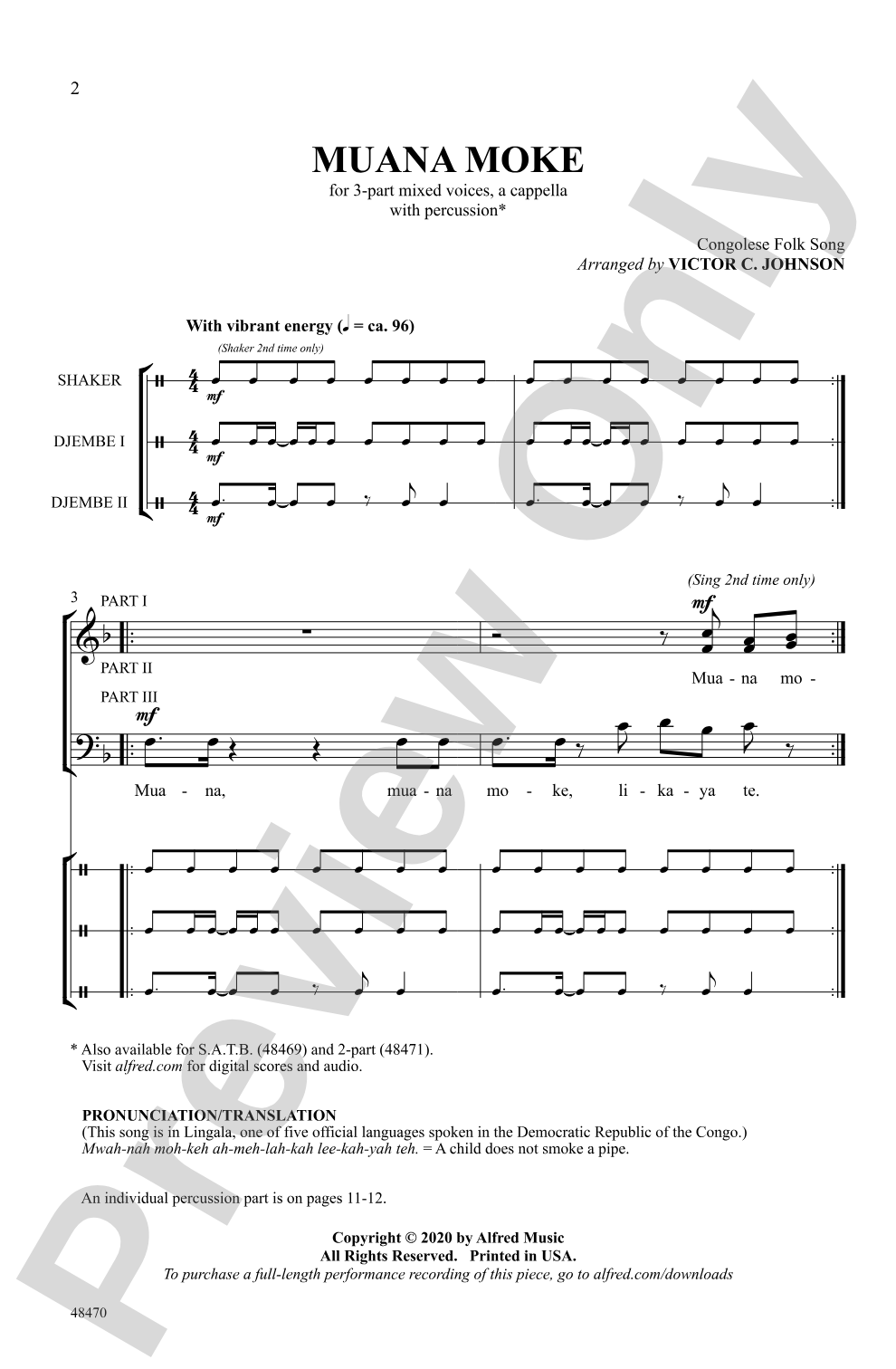
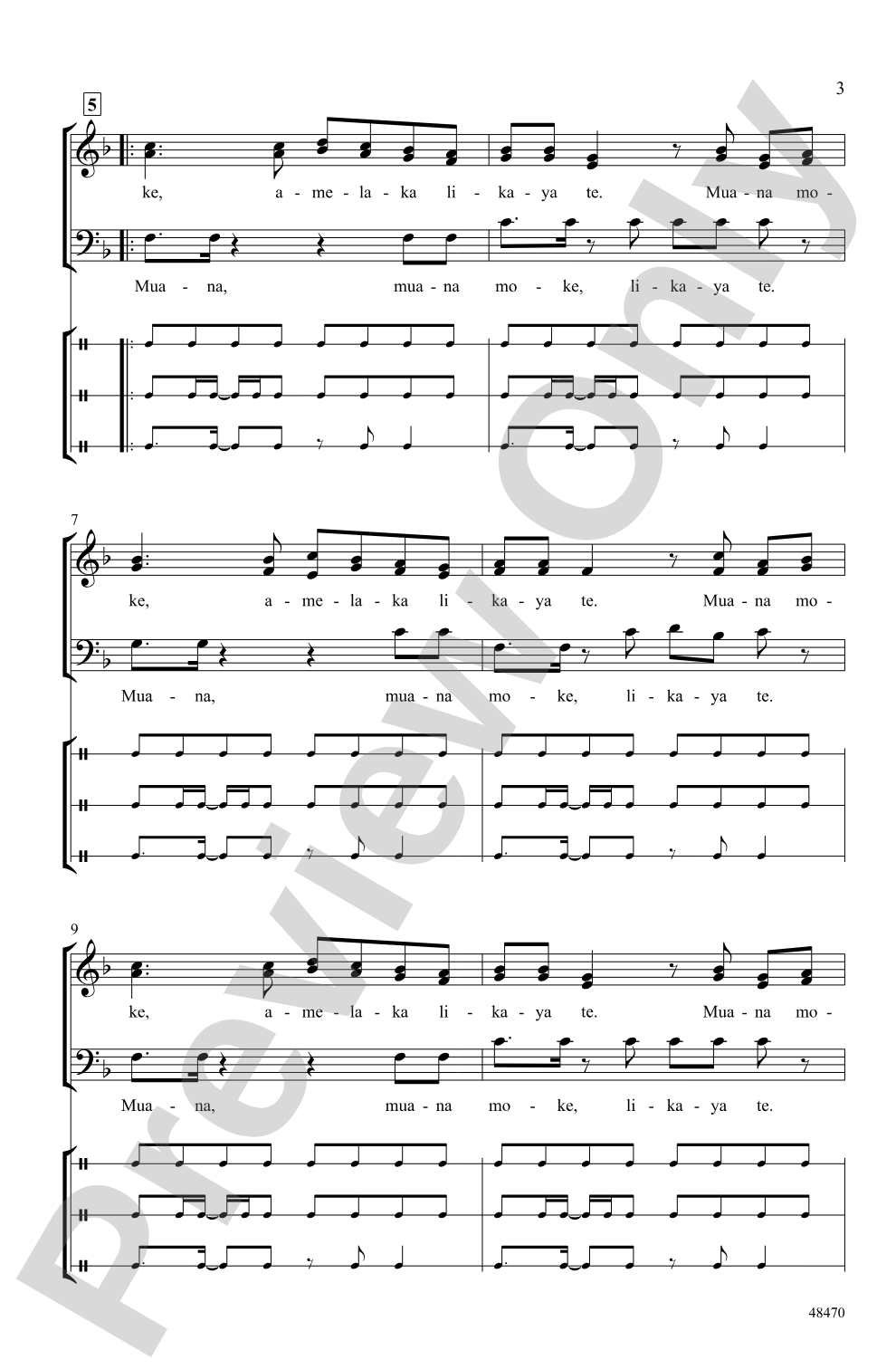
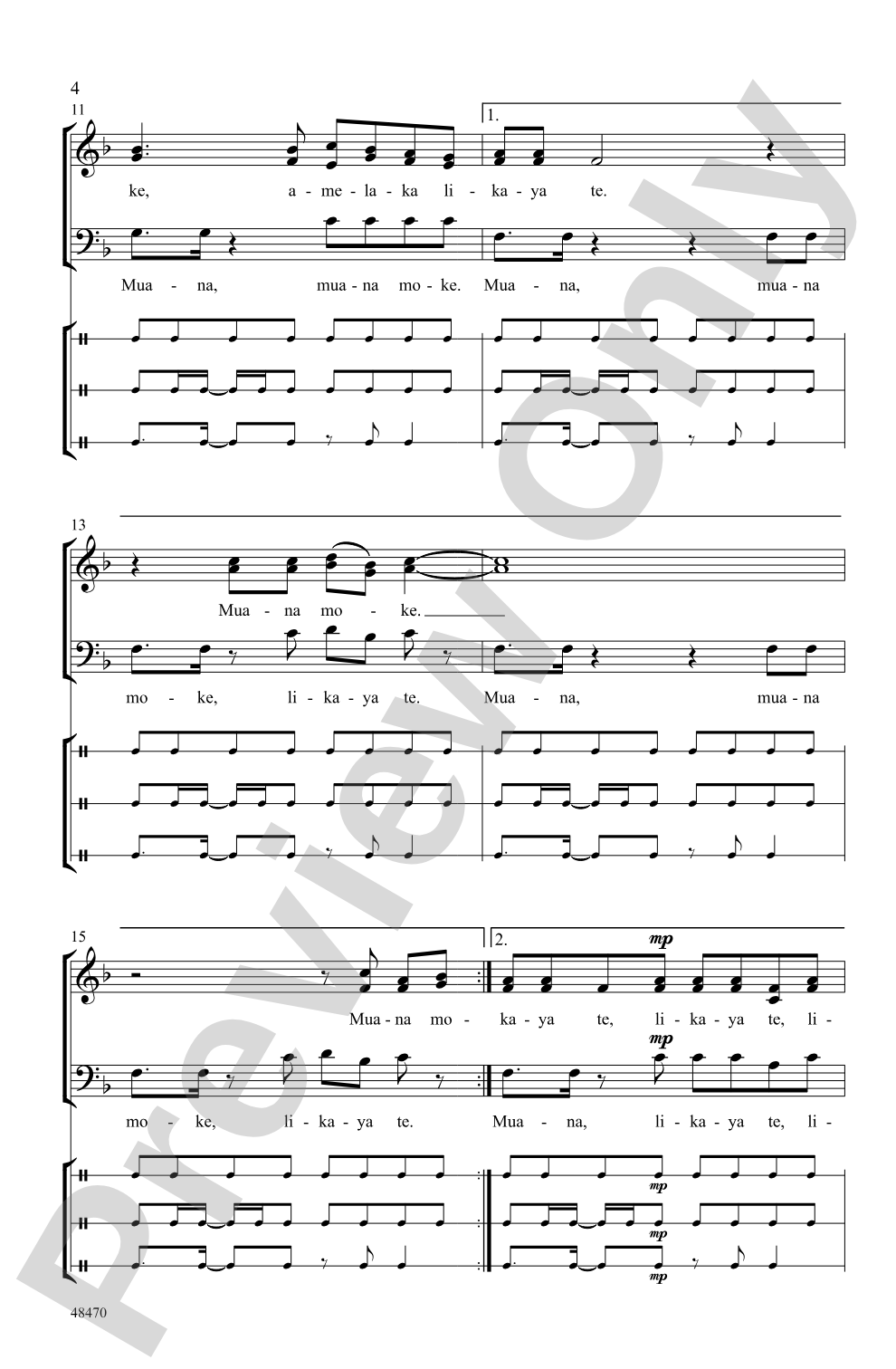

Muana Moke: 3-Part Mixed, a cappella Choral Octavo
Congolese Folk Song / arr. Victor C. Johnson
Item: 00-PO-0006390
$2.05
Minimum order quantity: 20 copies
Pickup currently not available
Description
A trio of percussion instruments lays down an ostinato groove in this otherwise a cappella arrangement of the authentic folk song from the Democratic Republic of the Congo. Expert arranger Victor Johnson sets up an assortment of accessible melodic and harmonic patterns that weave throughout, creating a wealth of fun-to-sing choral textures. Not to be missed!


Muana Moke: 3-Part Mixed, a cappella Choral Octavo isn't in MakeMusic Cloud just yet...but it could be. Let us know you'd like to see it, and you'll help shape what comes next. In the meantime, start a free trial and dive into thousands of interactive titles your students can play along with today.
Request This Title
Tell us you want it.
Start Your Free Trial
Explore everything that's ready to play right now.
Sample Audio
1
Audio File
--:--
0:00
0:00
Sample Video
No sample videos found.
Additional Details
Series:
Alfred Choral Designs
Publisher:
Alfred Music
Page Count:
12
SKU:
00-PO-0006390
Instrumentation:
Shaker; Djembe
More about this title
About the Arranger: Victor C. Johnson

Victor C. Johnson brings decades of choral leadership to his work as School Choral Editor for Sing!, the educational publishing division of Choristers Guild. Based in Dallas, he has built an extensive catalog of over 500 published choral works, vocal solos, and keyboard pieces that serve educators across the country.
Johnson's experience directing choirs at Ft. Worth Academy of Fine Arts (2000-2018) and conducting the Dallas Symphony Children's Chorus Mixed Ensemble shaped his deep understanding of what works in rehearsal and on stage. His professional involvement with the American Choral Directors Association, Texas Music Educators Association, and other organizations reflects his ongoing commitment to the choral art.
Why we love this
Johnson's arrangement captures the propulsive energy of an African folk tradition while keeping the vocal writing genuinely singable for three-part mixed groups. The percussion ostinato (shaker and djembe) does heavy lifting rhythmically, freeing the voices to explore melodic and harmonic interplay without overwhelming younger or less experienced singers. This is the kind of piece that sounds rehearsed and polished after reasonable preparation time, which makes it ideal for building ensemble confidence.
What to expect
Grounded and celebratory, with an irresistible rhythmic pulse that draws the listener into a communal groove. The vocal writing floats over the percussion foundation, creating moments of surprising harmonic color and melodic independence that feel both fresh and deeply rooted.
Who it's for
Three-part mixed choirs seeking authentic multicultural repertoire that engages singers without requiring advanced vocal maturity. This works well for middle school through high school ensembles, community choirs, or collegiate groups looking to expand beyond European art song traditions.
How to get the most out of it
- Establish the percussion groove first in rehearsal. Have your shaker and djembe players nail their ostinato pattern before the voices enter; this gives singers a solid rhythmic anchor.
- Encourage the choir to feel the forward motion of the groove rather than locking into strict metronomic precision. African folk rhythms benefit from subtle swing and flexibility within the pulse.
- Blend the three vocal lines by rehearsing them in isolation, then layering them gradually. Mark where each voice takes the primary melody so singers understand the architecture of the arrangement.
- Let the percussion parts drive the dynamic shape of phrases. The voices should respond to and support the energy of the drums rather than overshadow them.
How to use it
This piece brings immediate energy to concert programs, particularly in sets exploring world music or cultural diversity. It pairs naturally with other African or diaspora repertoire, and works equally well as a concert opener or a high-energy closer that leaves audiences engaged and moving.
Skills your students will build
- Rhythmic independence (singing over a steady ostinato groove)
- Part independence in three-part mixed voicing
- Cultural awareness and authentic interpretation of non-Western folk traditions
- Blend and balance across three vocal lines with instrumental accompaniment
- Call-and-response patterns and call-response phrasing