
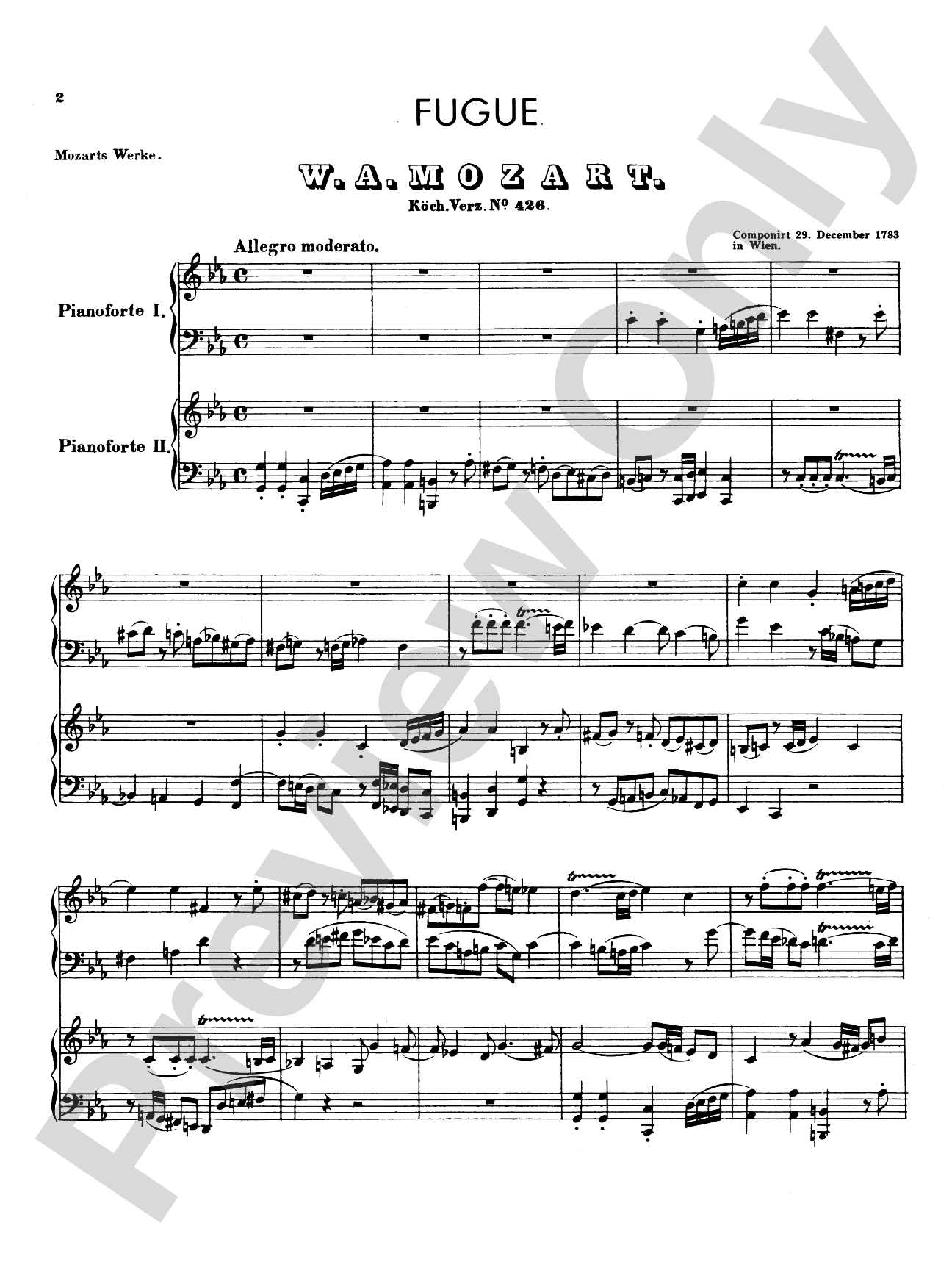
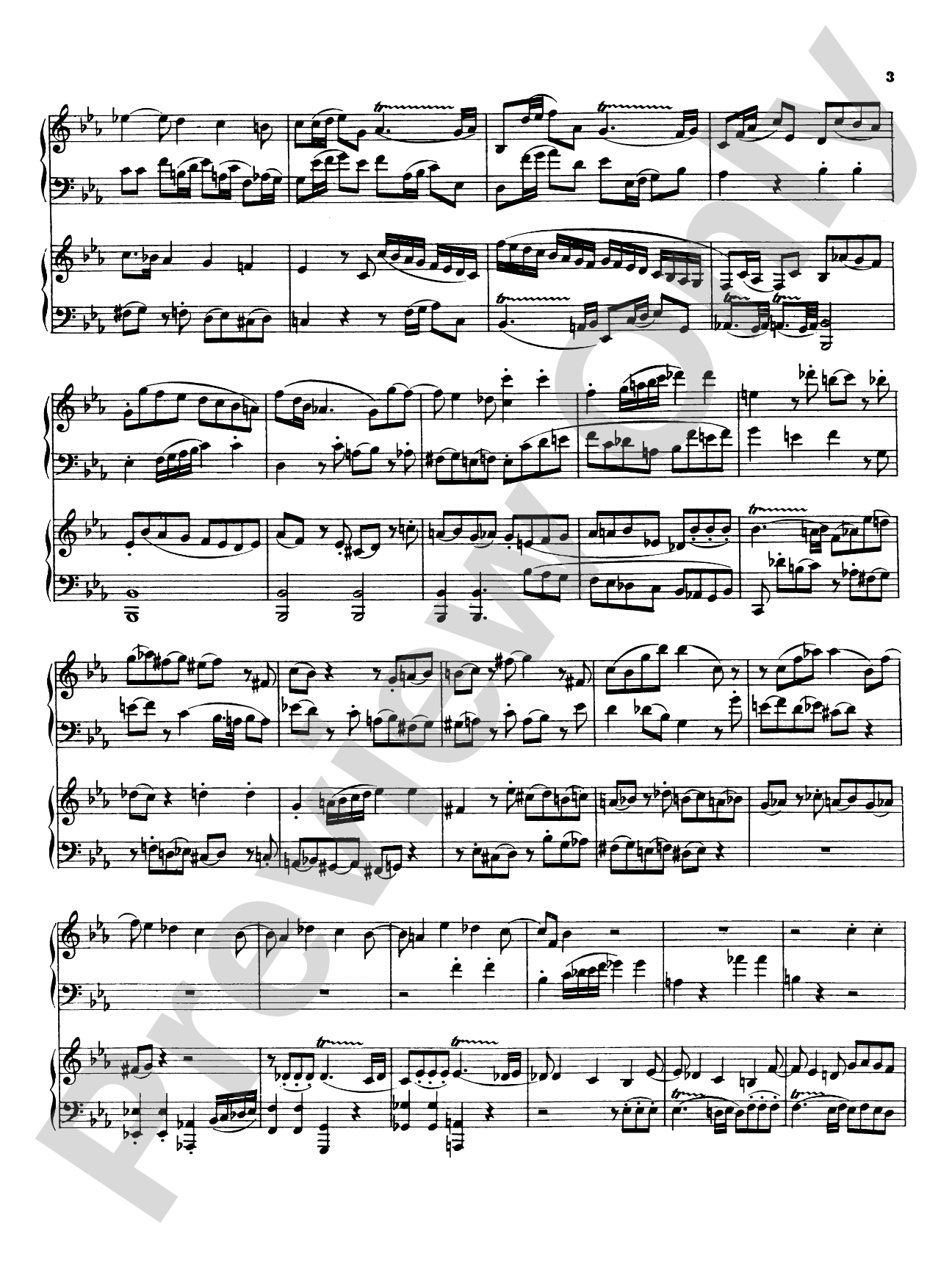
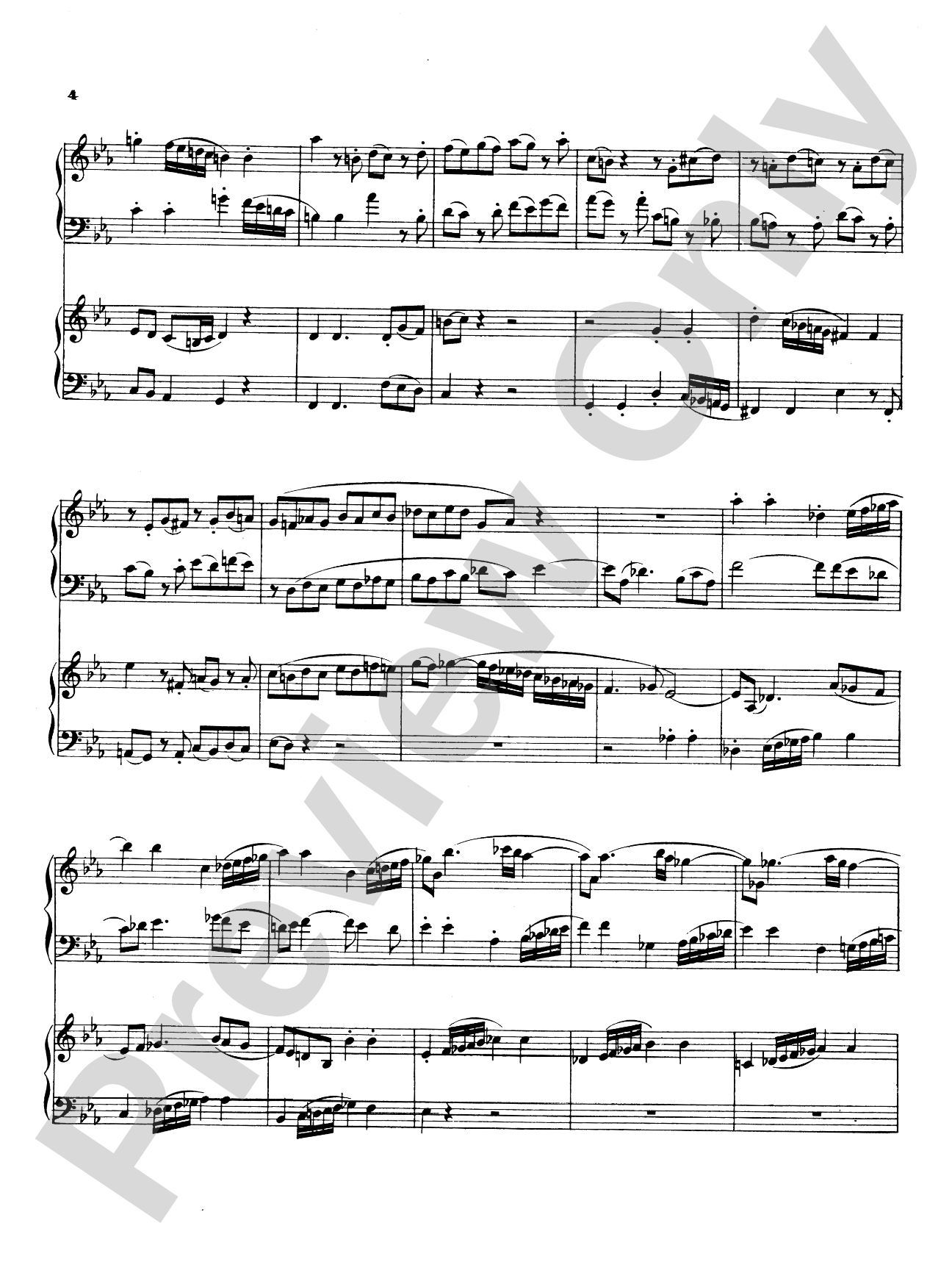
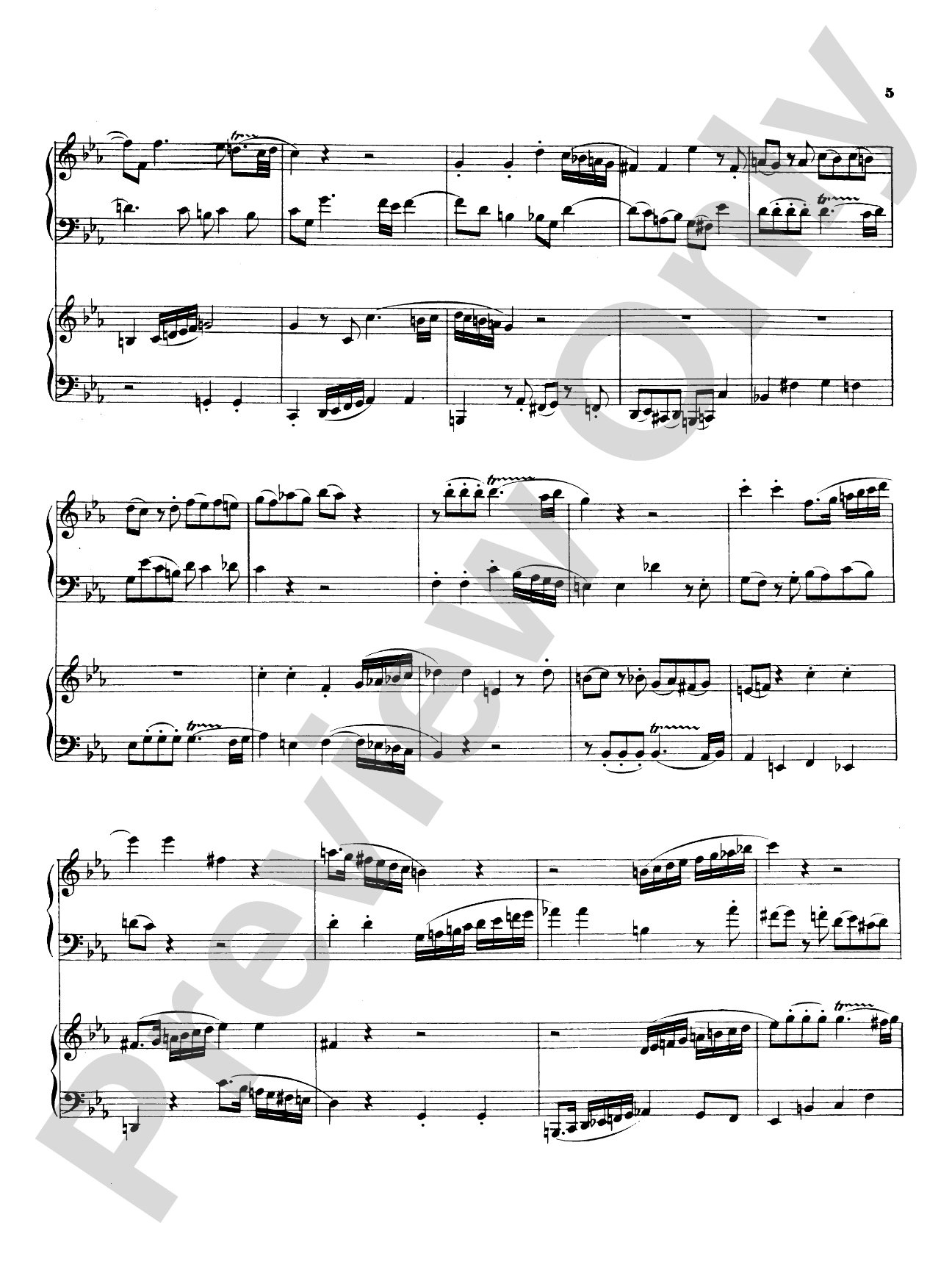
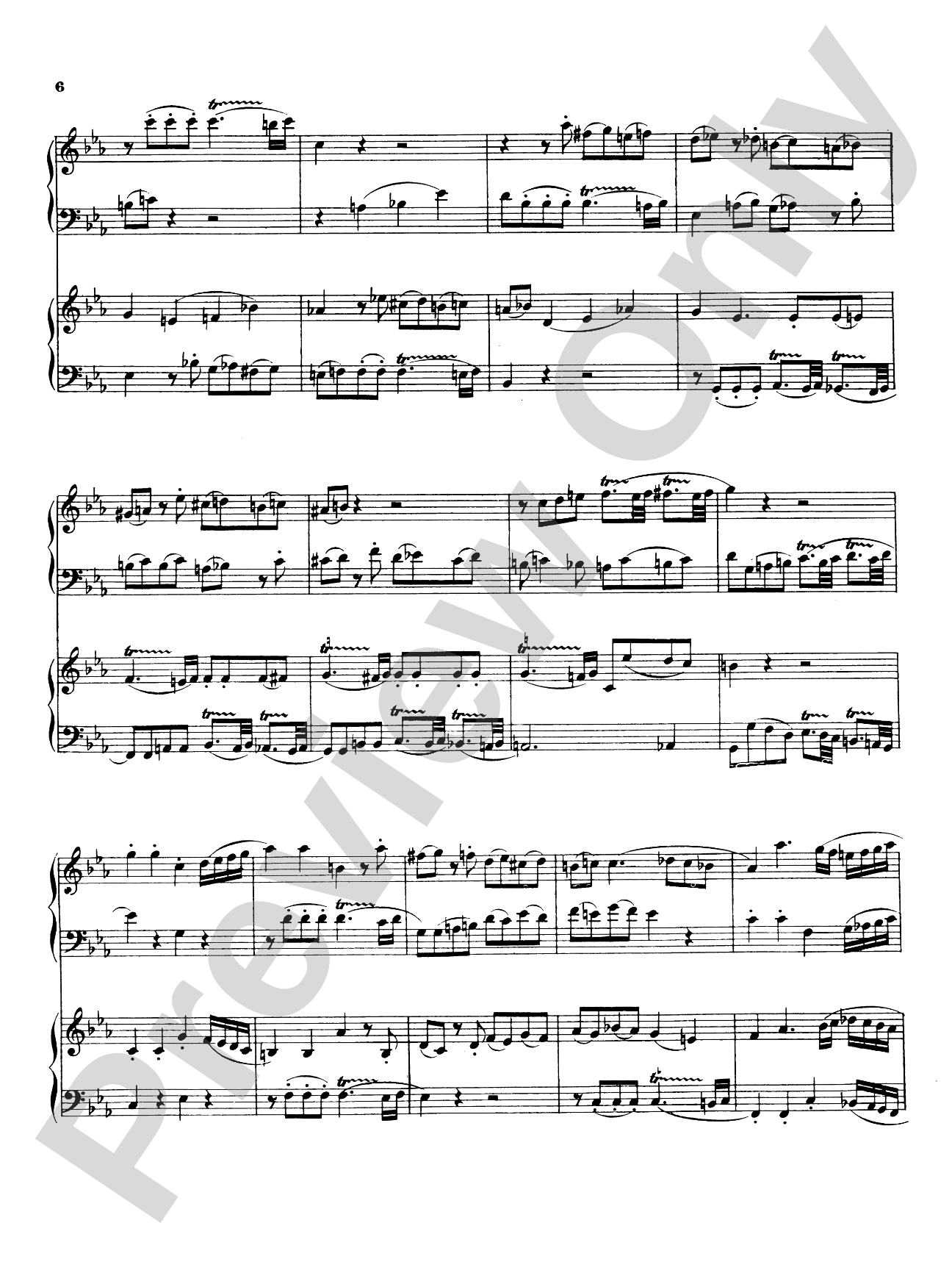
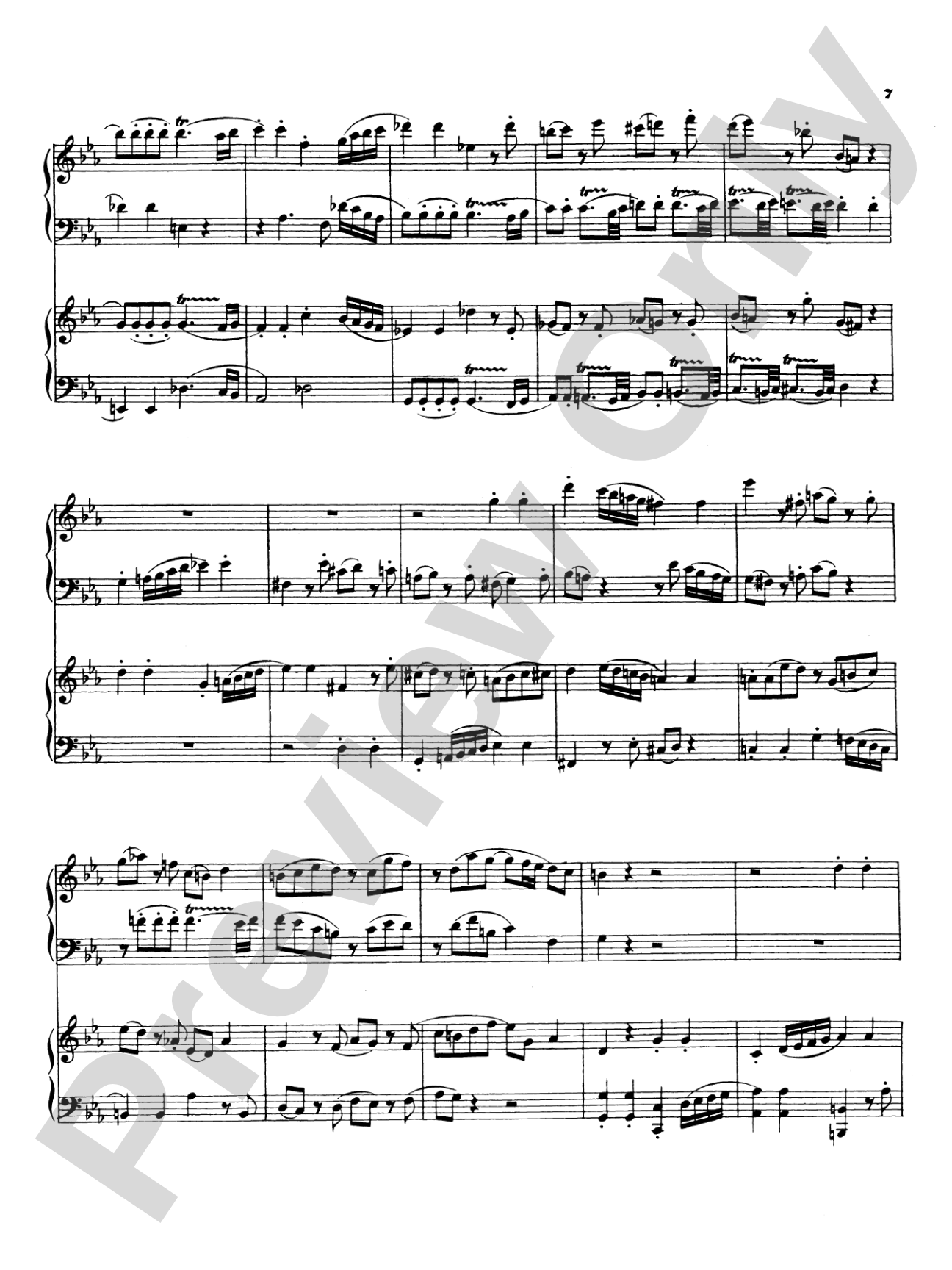
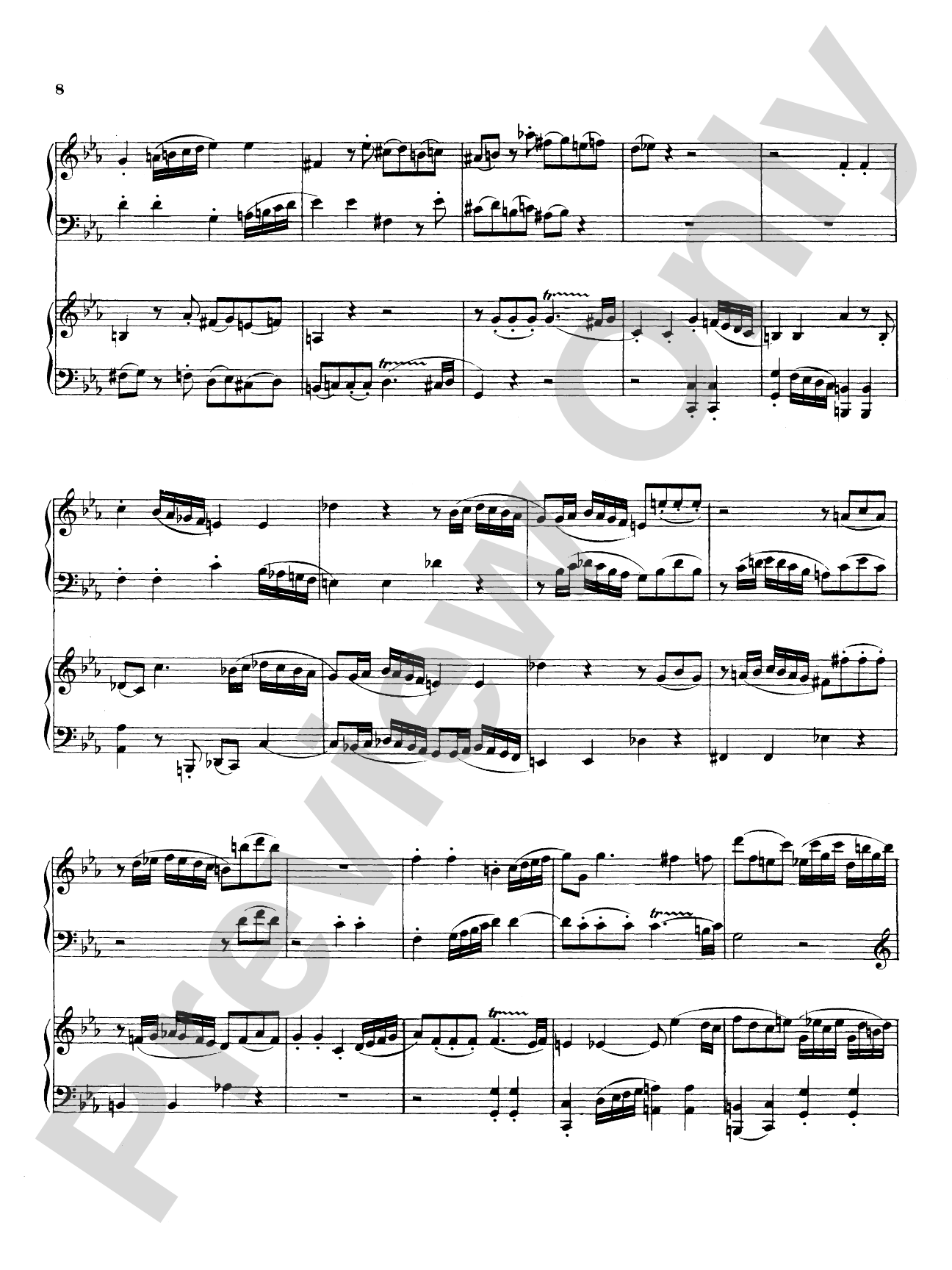
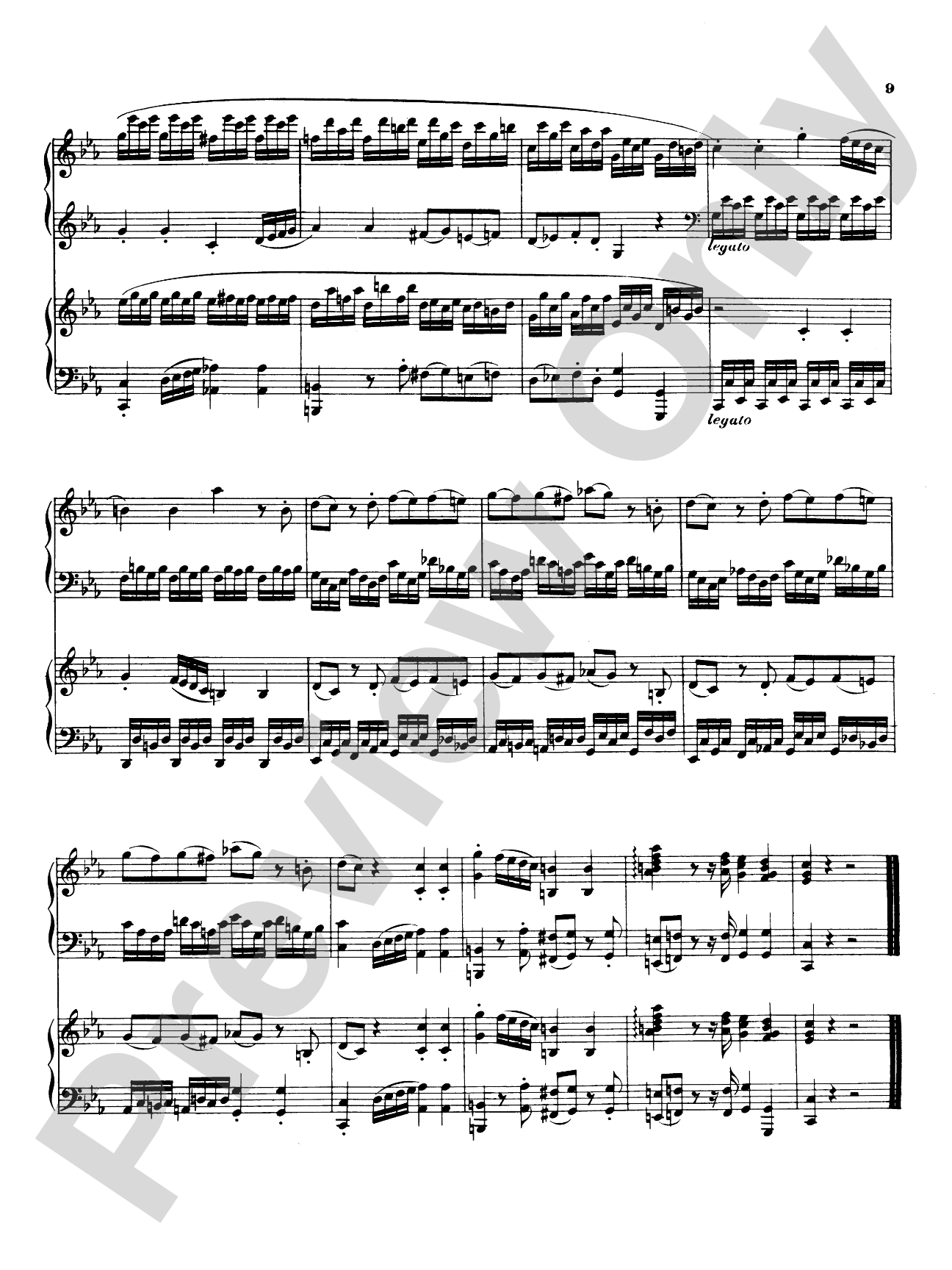

Mozart: Fugue (K. 426) and Sonata (K. 448) (Urtext): Piano Duo (2 Pianos, 4 Hands) Book (2 copies required)
By Wolfgang Amadeus Mozart
Level: Intermediate / Advanced
Item: 00-PK-0003780

$10.99
Pickup currently not available
Buy Extra Parts (Digital PDF Download)
| Product | Price | Quantity |
|---|---|---|
| Mozart: Fugue (K. 426) and Sonata (K. 448) (Urtext) | $4.99 | |
| Mozart: Fugue (K. 426) and Sonata (K. 448) (Urtext) | $4.95 |
Parts Added to Cart!
Related Items
Fugue (K. 426) and Sonata (K. 448): Piano Duo (2 Pianos, 4 Hands) Book (2 copies required) |
$10.99
|
View |
Description
Expertly arranged Piano Duet by Wolfgang Amadeus Mozart from the Kalmus Edition series. This Intermediate / Advanced Piano Duet (2 Pianos, 4 Hands) is from the Classical era. 2 copies are required for performance.


Don't just read it, hear it, play along with it, and watch your students grow with it. In MakeMusic Cloud, Mozart: Fugue (K. 426) and Sonata (K. 448) (Urtext): Piano Duo (2 Pianos, 4 Hands) Book (2 copies required) comes alive with professional accompaniment, adjustable tempo, and built-in practice tools that turn solo practice into real progress.
Open in the Player
Jump straight in and assign it today.
Start Your Free Trial
Open this title and explore the full library in minutes.
Sample Audio
No sample audio found.
Sample Video
No sample videos found.
Additional Details
Series:
Kalmus Edition
Publisher:
Alfred Music
Page Count:
44
SKU:
00-PK-0003780
More about this title
About the Composer: Wolfgang Amadeus Mozart
Wolfgang Amadeus Mozart (1756-1791) composed across every major genre of his time and shaped the Classical style that defined late 18th-century music. Born in Salzburg and trained by his father Leopold, Mozart achieved mastery as both composer and performer before age ten, and his output grew to encompass over 600 works spanning symphonies, concertos, operas, chamber music, and keyboard works. His compositions balance structural clarity with melodic richness and harmonic sophistication, making them enduring models for understanding Classical form and voice leading.
For music students and teachers, Mozart's works offer unparalleled insight into compositional craft. His keyboard duets, in particular, demonstrate how two pianists can share thematic material, contrast registers, and build ensemble texture without sacrificing musical coherence. Works like K. 426 and K. 448 reveal a composer who writes idiomatically for the instrument while maintaining the contrapuntal and architectonic rigor that defined his aesthetic.
Why we love this
These two works sit at the intersection of Mozart's academic rigor and performative flair, offering pianists a rare glimpse into how a master approached the two-piano format. The Fugue showcases Baroque-influenced counterpoint in Mozart's voice, while the Sonata balances the formal structures of the Classical era with genuine dialogue between the two instruments. Pairing them together creates a compelling program that demonstrates both intellectual depth and emotional accessibility.
What to expect
The Fugue unfolds with architectural precision, voices entering and departing in a tightly woven tapestry that rewards close listening and patient ensemble work. The Sonata balances elegance with genuine emotional presence, moving between moments of brilliant passagework and intimate conversational exchanges between the two pianos.
Who it's for
Advanced pianists seeking challenging two-piano repertoire that demands both technical facility and interpretive maturity will find substantial material here. Teachers preparing students for collaborative performance or looking to deepen understanding of Mozart's compositional voice will value the range of writing styles across these two contrasting works.
How to get the most out of it
- Establish clear leadership roles during rehearsal even when both pianists share thematic material; decide in advance who drives pulse during transitions and who responds, then reverse roles in later sections to maintain freshness and prevent stiffness.
- Pay close attention to register and texture balance, particularly in the Fugue where independent counterpoint can obscure each other if one pianist plays too heavily; the Urtext notation will clarify intended dynamics, so honor them faithfully.
- Coordinate pedaling across both pianos during sustained harmonic passages; what one pianist sustains inevitably colors what the other pianist plays, so a brief rehearsal specifically addressing pedal independence prevents muddiness.
- Practice the rhythmic figures that pass between pianos as if they were single-line material first, singing or tapping them as a duo before returning to the score; this internalizes continuity that might otherwise feel fragmented.
How to use it
The pairing invites programming in a chamber concert context where you can let audiences hear Mozart's exploration of two-piano writing across different forms. Follow these works with a single-piano piece to provide textural contrast, or program them near repertoire from Mozart's contemporaries to show how his duet writing compares to what Schubert or other Classical composers offered in the same genre.
Skills your students will build
- Coordinate ensemble entries and releases across two independent instruments
- Balance texture and voice independence when playing counterpoint on separate pianos
- Navigate rapid passagework that moves between both instruments
- Maintain ensemble rhythmic integrity through syncopation and textural shifts
- Interpret Urtext notation and apply historically informed performance principles