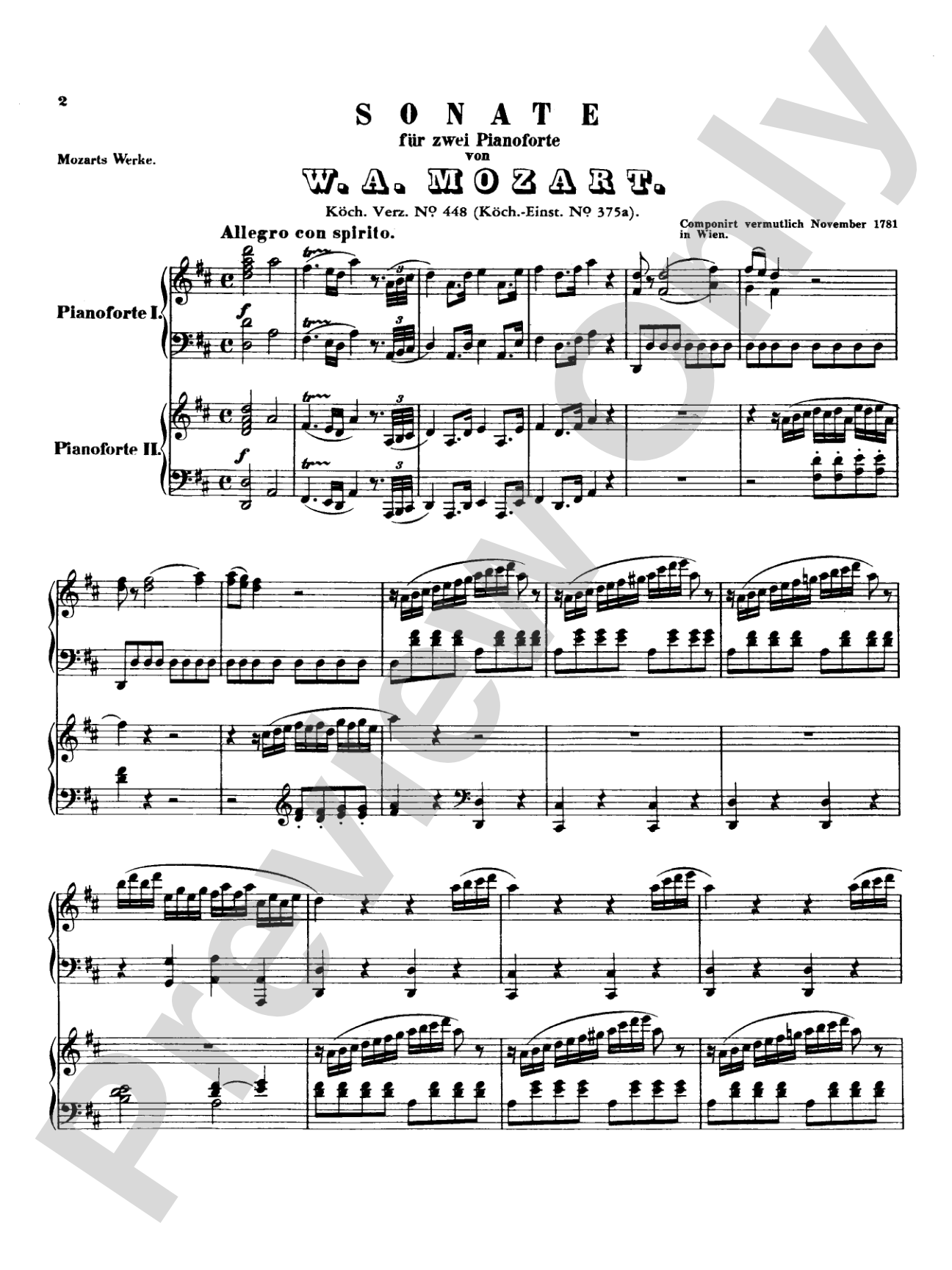
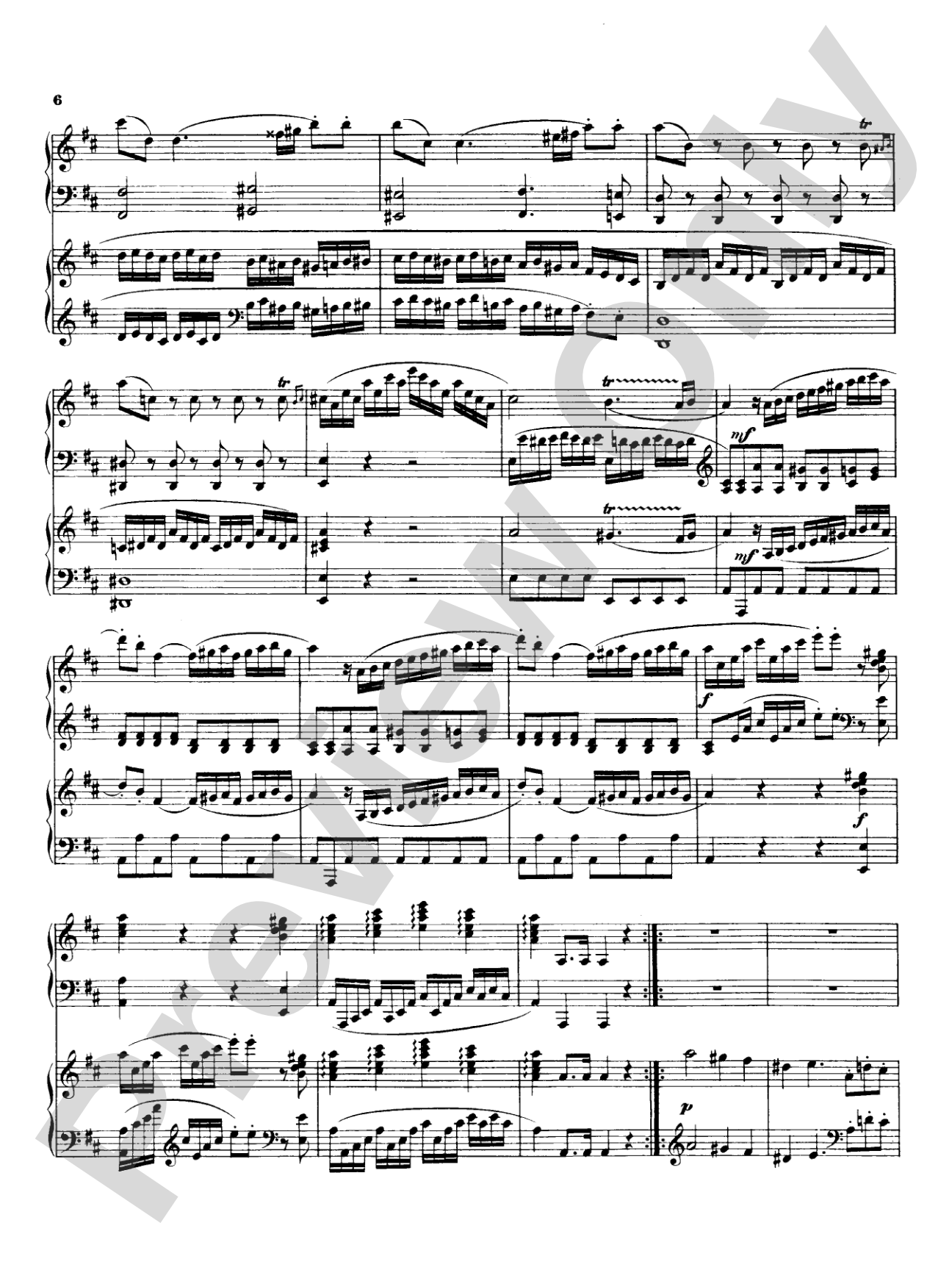
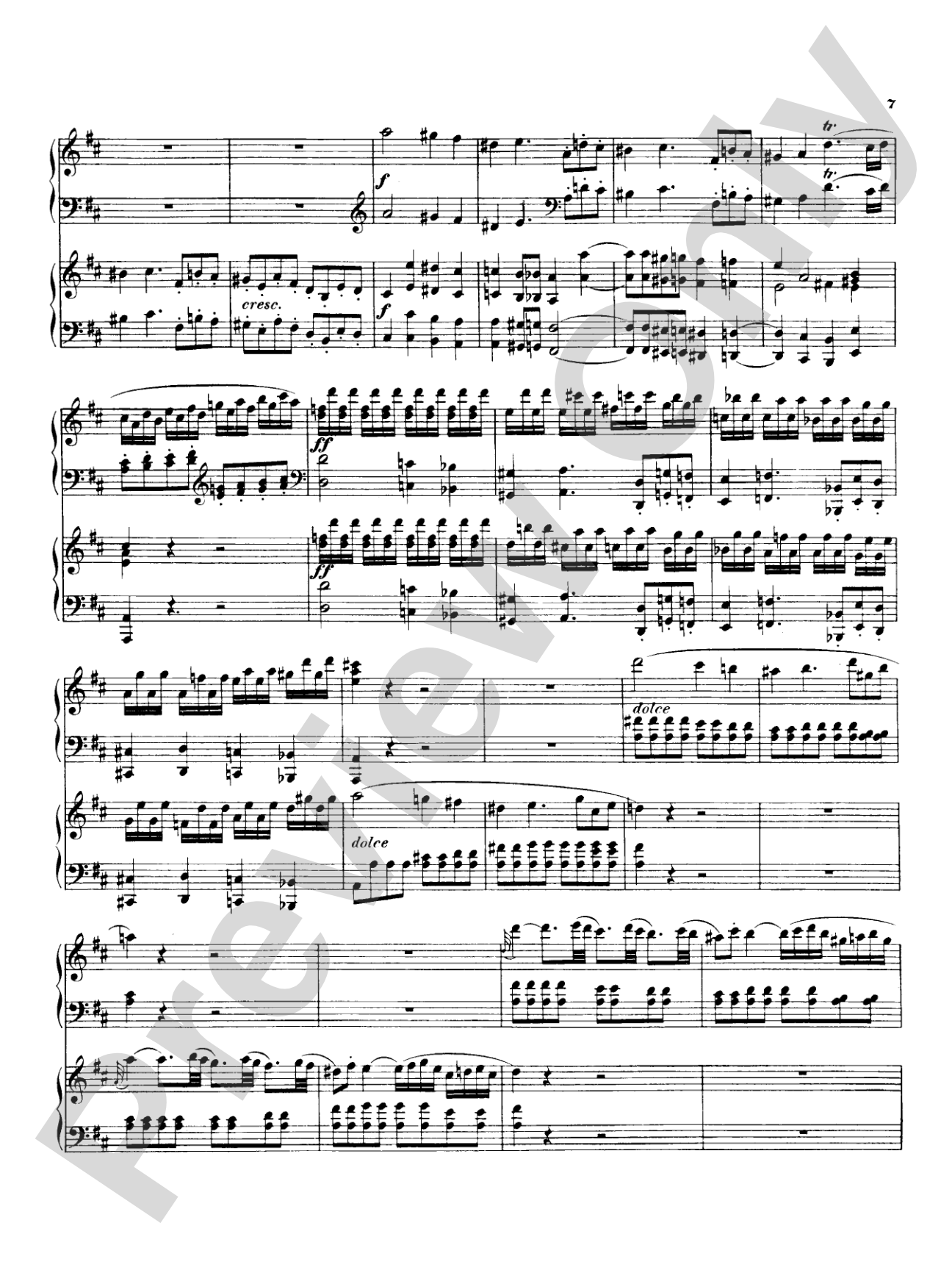
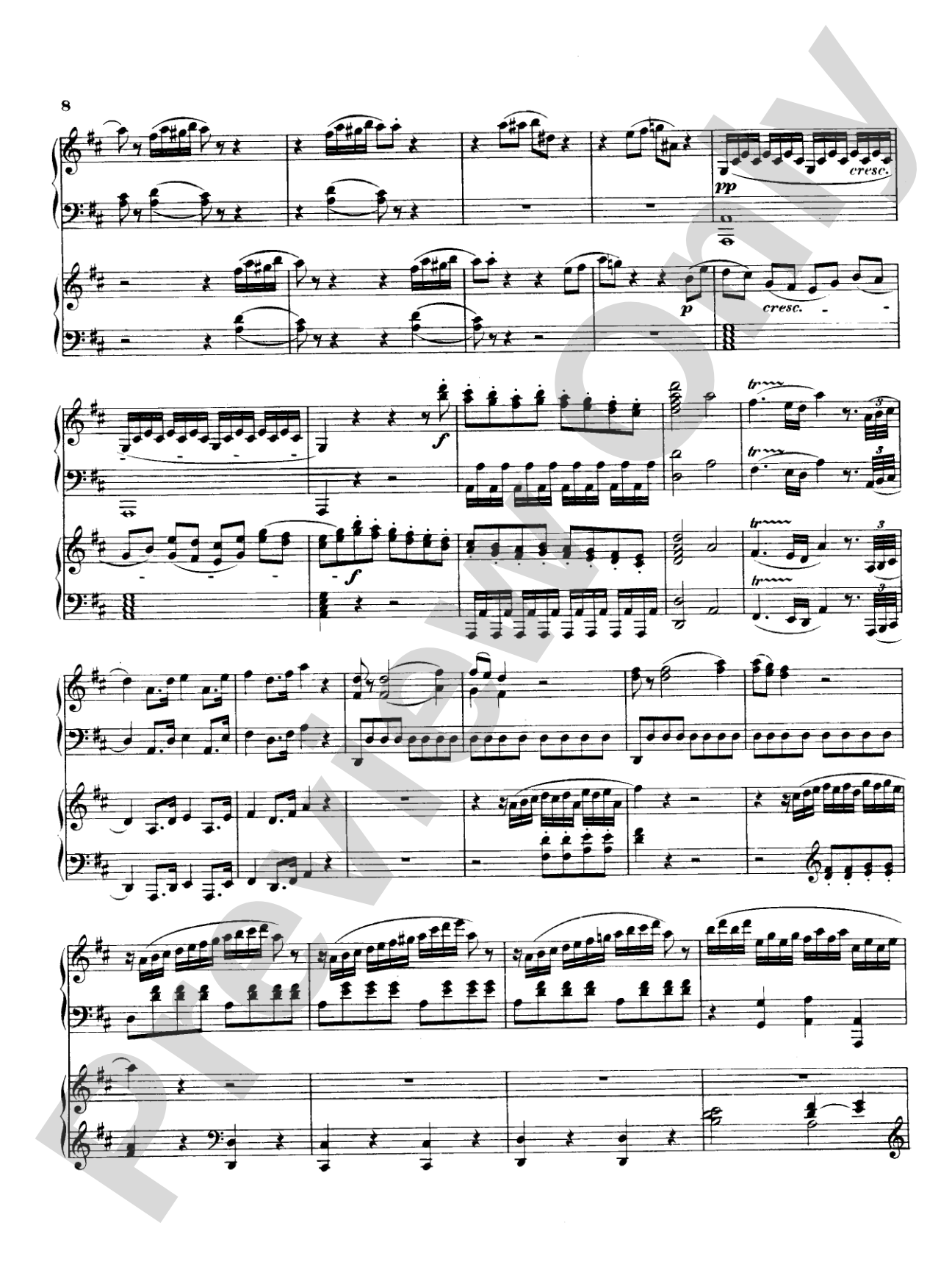
Wolfgang Amadeus Mozart (1756-1791) composed across every major genre of his time and shaped the Classical style that defined late 18th-century music. Born in Salzburg and trained by his father Leopold, Mozart achieved mastery as both composer and performer before age ten, and his output grew to encompass over 600 works spanning symphonies, concertos, operas, chamber music, and keyboard works. His compositions balance structural clarity with melodic richness and harmonic sophistication, making them enduring models for understanding Classical form and voice leading.
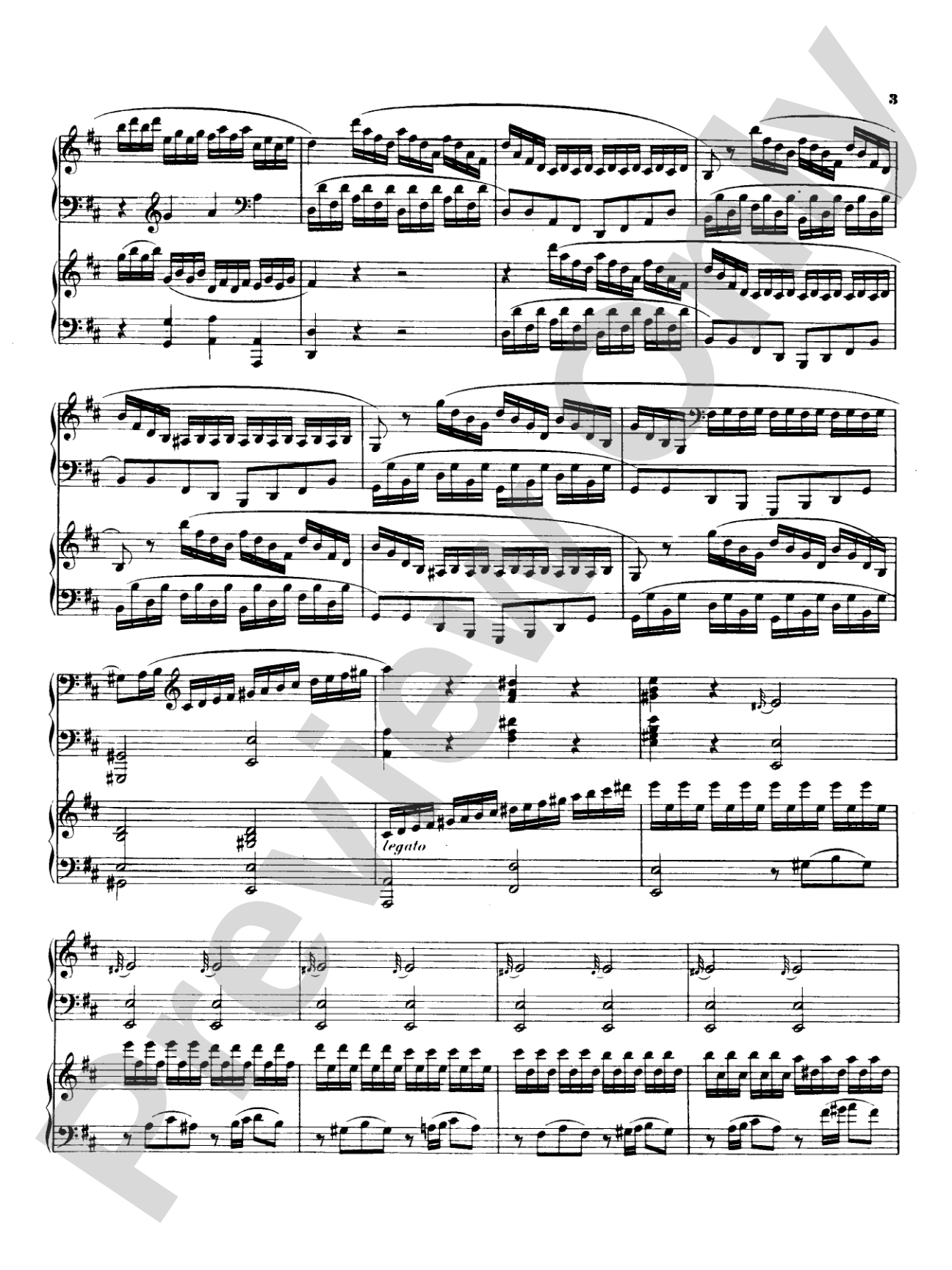
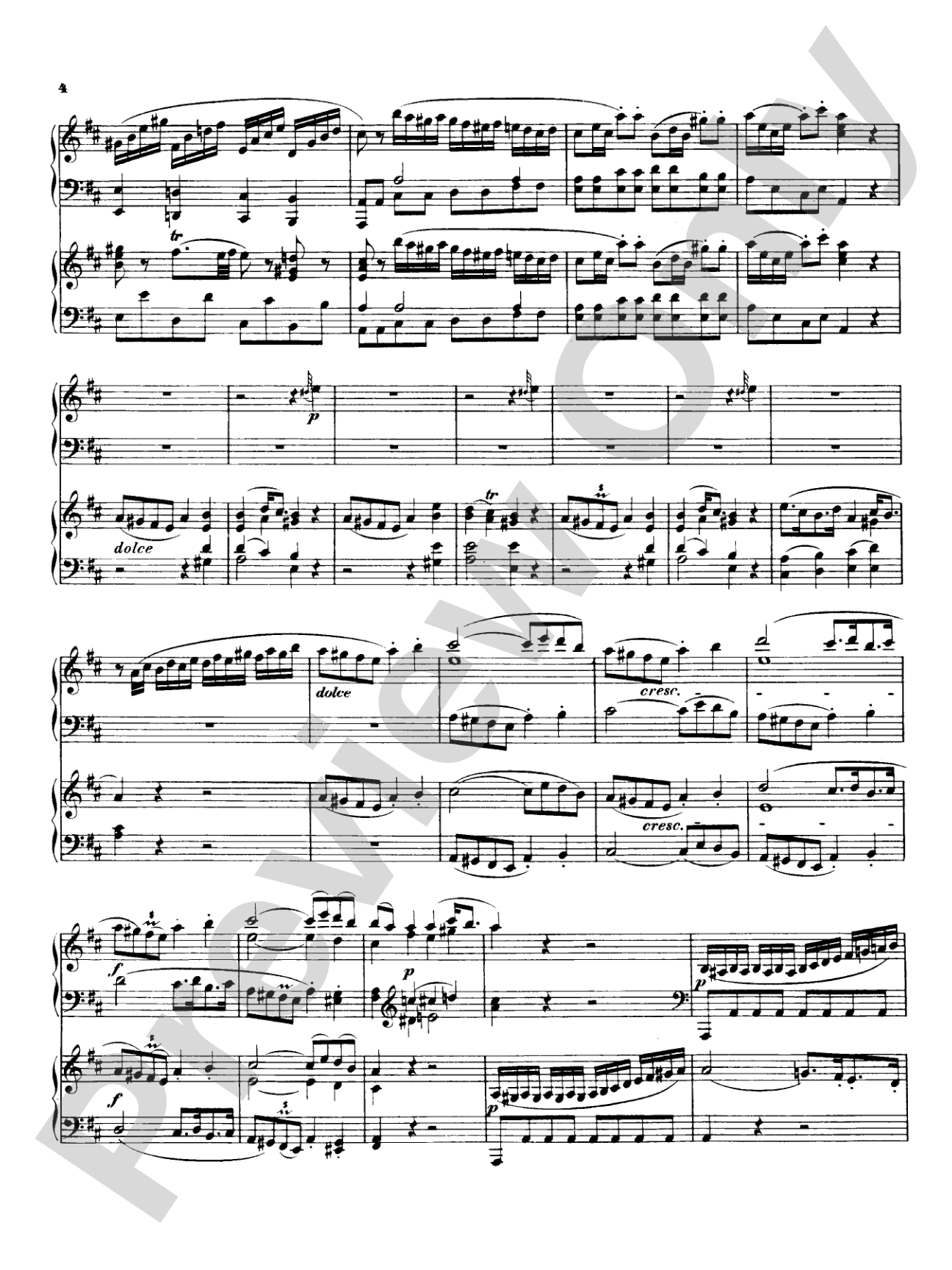
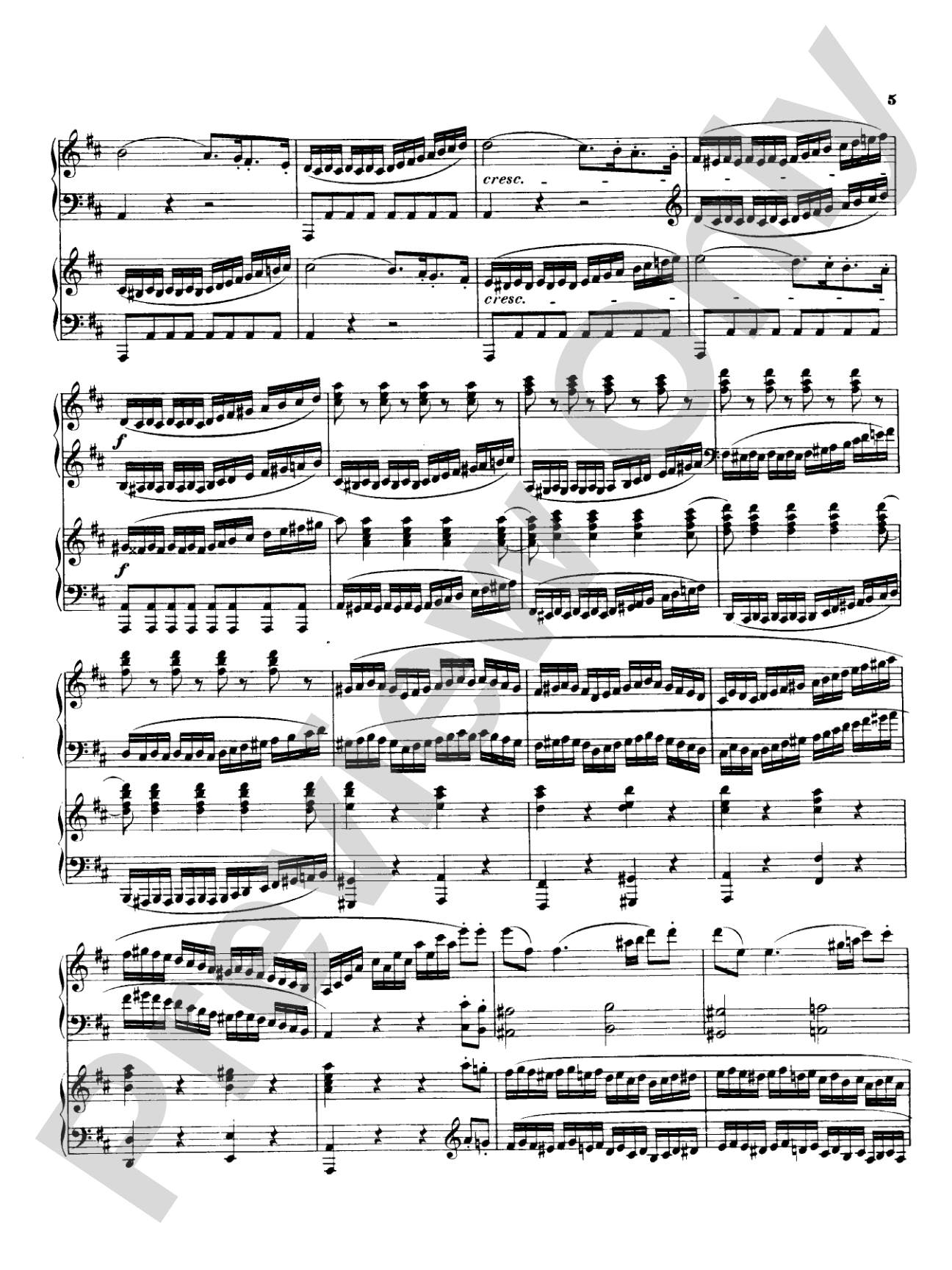
For music students and teachers, Mozart's works offer unparalleled insight into compositional craft. His keyboard duets, in particular, demonstrate how two pianists can share thematic material, contrast registers, and build ensemble texture without sacrificing musical coherence. Works like K. 426 and K. 448 reveal a composer who writes idiomatically for the instrument while maintaining the contrapuntal and architectonic rigor that defined his aesthetic.