More Festive Strings for String Quartet or String Orchestra Cover Image

More Festive Strings for String Quartet or String Orchestra: Cello Part

$5.99 USD
Sale price  $5.99 USD Regular price 
Skip to product information
More Festive Strings for String Quartet or String Orchestra Cover Image

More Festive Strings for String Quartet or String Orchestra: Cello Part

Arr. and ed. Joanne Martin

Item: 00-0997

$5.99
Shipped

One moment…

Description
More Festive Strings is a collection of well-known Christmas and Chanukah melodies arranged to meet the needs of individuals, groups and orchestras. In order to provide flexibility, the collection is available in a number of instrumentations, all of which are compatible with each other. Accessible keys have been used and shifting is kept to a minimum. Titles: O Chanukah * Angels We Have Heard on High * We Three Kings * Silent Night in D Major * We Wish You a Merry Christmas * O Come All Ye Faithful * Dreydl * Silent Night in G Major * Good King Wenceslas * What Child Is This (Greensleeves).

More Festive Strings for String Quartet or String Orchestra: Cello Part isn't in MakeMusic Cloud just yet...but it could be. Let us know you'd like to see it, and you'll help shape what comes next. In the meantime, start a free trial and dive into thousands of interactive titles your students can play along with today.

Sample Pages

Sample Audio
No sample audio found.
Sample Video
Additional Details
Publisher: Alfred Music
Page Count: 16
ISBN10: 0-87487-997-3
ISBN13: 978-0-87487-997-1
UPC: 029156953664
SKU: 00-0997
Instrumentation: Cello Part

More about this title

About the Arranger: Joanne Martin
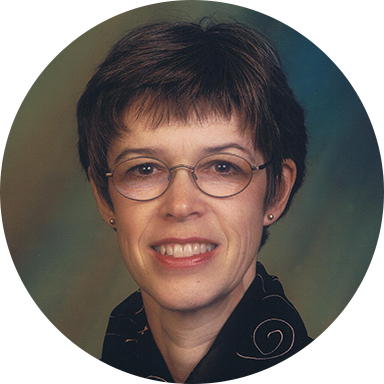
Joanne Martin

Joanne Martin brings decades of experience across performance, pedagogy, and composition to her arranging work. A violist by training, she has performed with the Winnipeg Symphony Orchestra, Manitoba Chamber Orchestra, and numerous chamber ensembles across North America and Europe. Her credentials as a Suzuki Teacher Trainer and her 2007 American Suzuki Institute Suzuki Chair Award reflect her deep commitment to music education at all levels.

Martin's compositional catalog reflects her understanding of how students learn. Her I Can Read Music series has become the standard note-reading method for Suzuki students worldwide, while her ensemble collections like Festive Strings, Folk String series, and Trio Tapestry are designed specifically to accommodate mixed ability levels and flexible instrumentation. She divides her time between Canada and France, continuing to guest clinician at workshops internationally.

Why we love this

Martin understands that holiday programs need flexibility without sacrificing musicianship. These arrangements sit in accessible keys with minimal shifting, making them realistic for intermediate players while remaining musically satisfying. The fact that all instrumentations are compatible means you can build your ensemble on the fly, pull in a solo cello, add a quartet, scale up to full orchestra, and everything locks together seamlessly.

What to expect

These are melodies that resonate across generations and cultures, arranged with clarity and care. The cello part carries warmth and foundation, allowing you to feel both the structural integrity of the ensemble and the emotional core of each familiar tune. There's an understated dignity here, no overwrought arranging, just honest voices in dialogue.

Who it's for

Cellists in community orchestras, school string ensembles, and chamber groups preparing winter concerts. This part works equally well for individual cellists joining a quartet or for full orchestra sections needing accessible but musically cohesive holiday material.

How to get the most out of it

  • Balance the melodic line with your stand partner or section; many of these arrangements feature the cello in a supporting role, so lock in rhythmically with the upper strings first, then shape the phrase together.
  • Pay attention to the key choices Martin selected. Silent Night in D Major versus G Major shifts the cello's position on the fingerboard; use this to your advantage by planning your finger patterns during rehearsal.
  • Sustain tone quality through the longer note values typical of these carols. Holiday audiences hear these melodies everywhere; your job is to deliver them with warmth and presence.
  • Take time with the tempo in slower arrangements. These pieces work best when you resist rushing, letting the harmonic movement breathe naturally.

How to use it

Slot these into a December concert to provide variety without logistical complexity. Mix and match titles across multiple rehearsals to let cellists build confidence in the repertoire, then program 3-4 pieces together as a cohesive suite. The range of tempos and moods means you can open your second half with something reflective or close your program with something celebratory.

Skills your students will build

  • Reading in multiple keys with minimal position shifts
  • Balancing harmonic support roles with clear voice leading
  • Sustaining musical shape across longer phrases in moderate tempos
  • Ensemble listening and rhythmic integration in mixed-ability groups
  • Interpreting familiar melodies fresh through contextual arrangement

You May Also Like