More Festive Strings for String Quartet or String Orchestra Cover Image

More Festive Strings for String Quartet or String Orchestra: 2nd Violin Part

$5.95 USD
Sale price  $5.95 USD Regular price 
Skip to product information
More Festive Strings for String Quartet or String Orchestra Cover Image

More Festive Strings for String Quartet or String Orchestra: 2nd Violin Part

Arr. and ed. Joanne Martin

Item: 00-0987

$5.95
Shipped

One moment…

Description
More Festive Strings is a collection of well-known Christmas and Chanukah melodies arranged to meet the needs of individuals, groups and orchestras. In order to provide flexibility, the collection is available in a number of instrumentations, all of which are compatible with each other. Accessible keys have been used and shifting is kept to a minimum. Titles: O Chanukah * Angels We Have Heard on High * We Three Kings * Silent Night in D Major * We Wish You a Merry Christmas * O Come All Ye Faithful * Dreydl * Silent Night in G Major * Good King Wenceslas * What Child Is This (Greensleeves).

More Festive Strings for String Quartet or String Orchestra: 2nd Violin Part isn't in MakeMusic Cloud just yet...but it could be. Let us know you'd like to see it, and you'll help shape what comes next. In the meantime, start a free trial and dive into thousands of interactive titles your students can play along with today.

Sample Pages

Sample Audio
No sample audio found.
Sample Video
Additional Details
Publisher: Alfred Music
Page Count: 16
ISBN10: 0-87487-987-6
ISBN13: 978-0-87487-987-2
UPC: 029156953633
SKU: 00-0987
Instrumentation: 2nd Violin Part

More about this title

About the Arranger: Joanne Martin
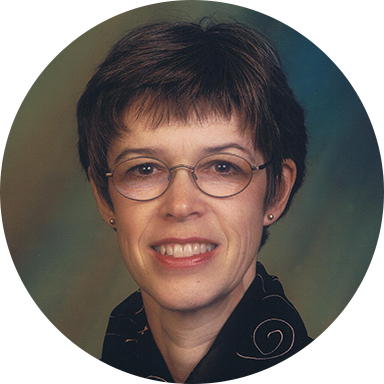
Joanne Martin

Joanne Martin brings decades of experience across performance, teaching, and composition to her arrangement work. A violist, violinist, and multi-instrumentalist who has performed with the Winnipeg Symphony Orchestra and Manitoba Chamber Orchestra, she combines practical knowledge of string playing with deep pedagogical insight. She holds Suzuki Teacher Trainer certification from both the Suzuki Association of the Americas and the European Suzuki Association, and in 2007 received the American Suzuki Institute's Suzuki Chair Award for her contributions to Talent Education.

Her arranging philosophy prioritizes accessibility without sacrificing musicality. Martin's publications, including the widely-adopted I Can Read Music series and her ensemble collections (Festive Strings, Folk String series, ViolaFest, Trio Tapestry), are built on the principle that flexible scoring allows teachers to work with mixed ability levels and varied instrumentation. She divides her time between Canada and France, remaining active as a clinician and guest teacher at Suzuki workshops across North America, Australia, and Europe.

Why we love this

Martin understands what second violins actually need: parts that sit comfortably in accessible keys while remaining musically interesting rather than purely accompaniment-based. The ten selections span both Christmas and Chanukah traditions, giving you genuine programming flexibility without forcing a generic feel. Minimal shifting and thoughtful voice leading mean your students can focus on ensemble blend and intonation rather than wrestling with technical obstacles.

What to expect

Warm, familiar, and approachable. These melodies carry the comfort of tradition; the arrangements honor that without oversimplifying the harmonic language. You'll find yourself part of a cohesive sound that balances melody, harmony, and rhythm.

Who it's for

String orchestras and quartets of mixed ability levels, including school ensembles and community groups preparing winter concert programming. This is equally useful for younger second violins building confidence and for adult amateur ensembles seeking accessible seasonal repertoire.

How to get the most out of it

  • Establish a steady pulse with the first violins before the ensemble plays through an unfamiliar title. Even in slower pieces like Silent Night, rhythmic clarity from the top voice will anchor the second violin line.
  • Balance the bass register against the melody. In arrangements like this, second violin often carries harmonic weight that needs definition; resist the urge to play too softly.
  • Check tuning at the beginning of each rehearsal, especially when moving between the D major and G major versions of Silent Night. The key change affects fingering comfort and intonation tendencies.
  • Record yourself playing through the part alone before the first full rehearsal. Familiarity with the melodic shape helps you contribute to phrasing rather than simply following.

How to use it

Build a mixed-holiday concert set by drawing three to four titles from this collection and pairing them with non-seasonal repertoire for contrast. Alternatively, program the entire suite as a standalone winter celebration piece, letting the variety of tempos and styles carry the concert. The flexible scoring means you can include students at different levels without creating separate material.

Skills your students will build

  • Reading and performing in multiple accessible keys (D, G, and related positions)
  • Sustaining harmonic foundation while listening to melody lines
  • Balancing tuning across major and minor harmonic contexts
  • Ensemble blend and synchronized phrasing with first violin
  • Sight-reading efficiency with familiar melodic material as reference

You May Also Like