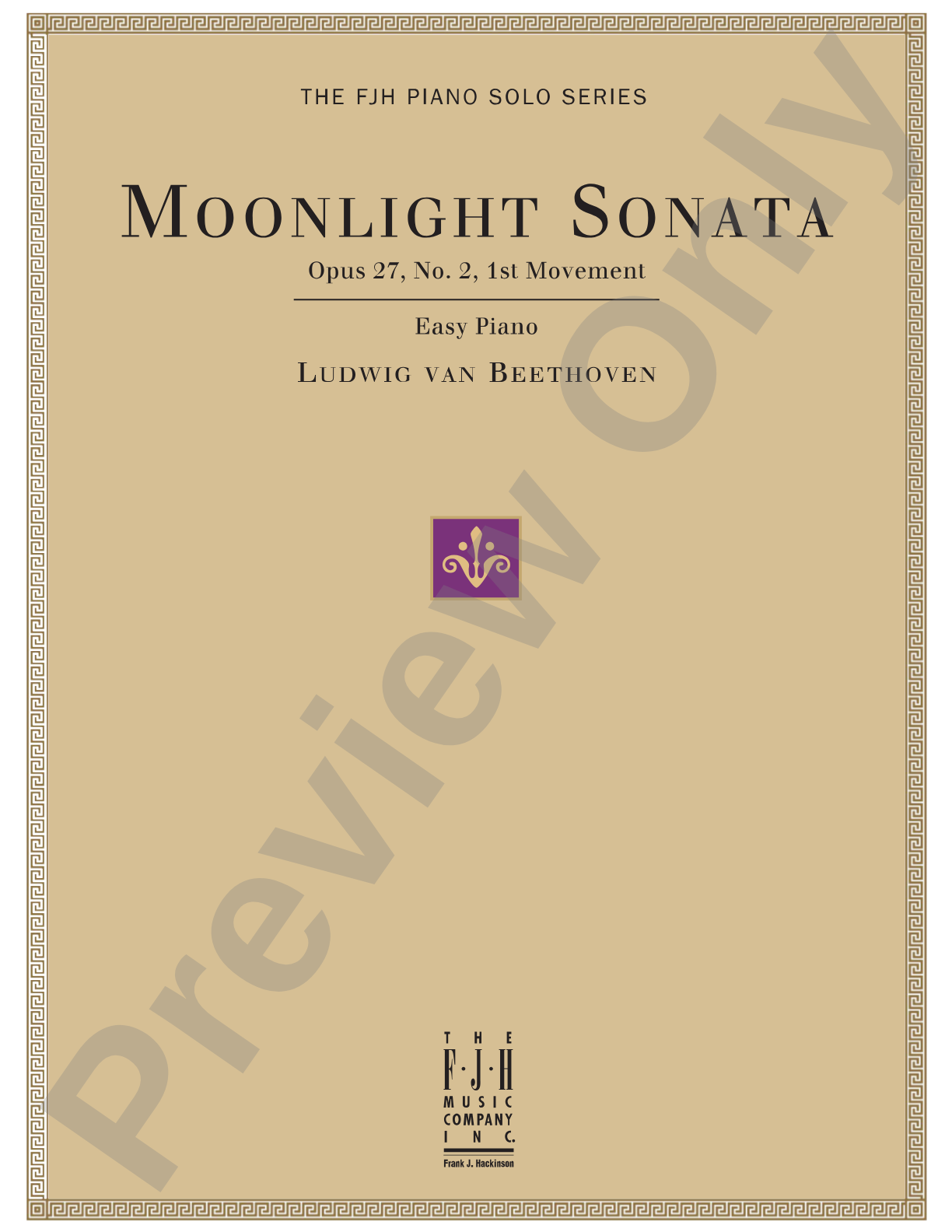
This attractive piano solo is the perfect selection for students, teachers, and performers who wish to quickly learn Beethoven’s immortal melody. Transposed to the key of D minor, this elegant arrangement successfully conveys the expressive beauty of the original.
Discover MakeMusic Cloud: thousands of interactive titles your students can play along with today.
Ludwig van Beethoven (1770-1827) fundamentally transformed Western music during his lifetime, bridging the Classical and Romantic eras with works that combined structural rigor with unprecedented emotional depth. His sonatas, symphonies, and chamber works remain cornerstones of the piano repertoire, studied and performed by musicians across all levels.
Why we love this
This arrangement opens Beethoven's most iconic work to pianists who aren't yet ready for the original's technical demands or the full emotional weight of its harmonic language. The transposition to D minor preserves the introspective character while making the piece accessible to developing musicians, giving them authentic repertoire with genuine artistic substance.
What to expect
Moonlit and reflective, this arrangement bathes the listener in quiet beauty and gentle melancholy. The floating accompaniment figures create a dreamy backdrop for a melody that seems to emerge from stillness itself, evoking introspection and longing.
Who it's for
Elementary-level pianists who want to explore a major Classical work without years of preparation stand to gain immensely from this version. Private studio teachers seeking meaningful repertoire for motivated students and those aiming to build familiarity with the Beethoven canon will find this a rewarding choice.
How to get the most out of it
Sustain the pedal throughout the opening arpeggios to create the shimmering, almost improvisatory quality that defines this movement.
Shape the melody with gentle dynamic swells rather than dramatic gestures; let the expressiveness emerge from phrasing and rubato, not volume.
Balance the accompaniment so it remains supportive background; the right-hand theme should sing clearly over the left-hand figuration.
Allow space and stillness between phrases, particularly in the quieter sections, to mirror the contemplative mood of the original.
How to use it
This works beautifully as a recital opener when you want to establish an intimate, thoughtful mood before moving into livelier works. It also serves as an excellent teaching concert piece, allowing audiences to hear a recognizable masterwork while celebrating the progress of developing pianists.
Skills your students will build
Sustaining and managing pedal to create harmonic blend
Balancing melody and accompaniment across both hands
Shaping long phrases with rubato and dynamic subtlety
Reading and interpreting Romantic-era expression markings
Translating melodic understanding into lyrical playing
You May Also Like
Scan to Complete Your Purchase
Use your phone's camera to scan the code below
You'll log in on your phone and the order will be added to your account