
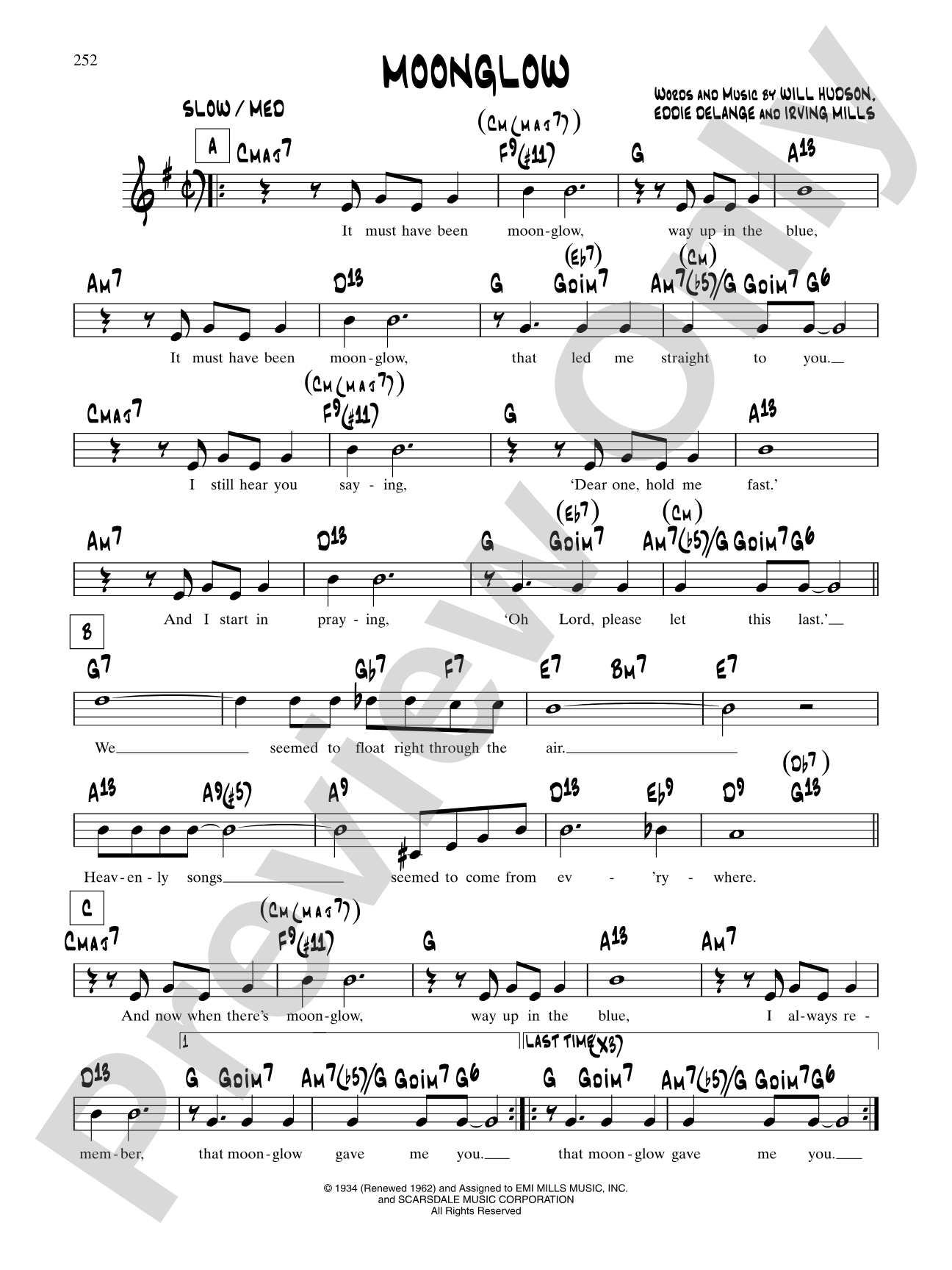

Moonglow: Lead Sheet
Tony Bennett
Item: 00-PSL-000170
$4.99
One moment…
Description
Legendary jazz musician Tony Bennett needs little introduction. Winner of both Grammy and ASCAP Lifetime Achievement Awards, and long-time inductee of the Big Band and Jazz Hall of Fame, Tony's latest release features classic favorites covering three decades of recording. While fans flocked to purchase the CD, PBS's "American Masters" series celebrated the release with a special entitled "Tony Bennett: The Music Never Ends." All music in this album-matching folio includes lyrics, melody line, and chord changes with professionally arranged piano accompaniment.
Titles: Anything Goes * The Very Thought of You * The Way You Look Tonight * Ev'ry Time We Say Goodbye * That Old Black Magic * A Foggy Day * I'll Be Seeing You * Ain't Misbehavin' * It Had to Be You * Moonglow (Duet w with K.D. Lang) * She's Funny That Way * You Go to My Head * They Can't Take That Away from Me * You'll Never Get Away from Me * Taking a Chance on Love.


Titles: Anything Goes * The Very Thought of You * The Way You Look Tonight * Ev'ry Time We Say Goodbye * That Old Black Magic * A Foggy Day * I'll Be Seeing You * Ain't Misbehavin' * It Had to Be You * Moonglow (Duet w with K.D. Lang) * She's Funny That Way * You Go to My Head * They Can't Take That Away from Me * You'll Never Get Away from Me * Taking a Chance on Love.
Moonglow: Lead Sheet isn't in MakeMusic Cloud just yet...but it could be. Let us know you'd like to see it, and you'll help shape what comes next. In the meantime, start a free trial and dive into thousands of interactive titles your students can play along with today.
Request This Title
Tell us you want it.
Start Your Free Trial
Explore everything that's ready to play right now.
Sample Audio
No sample audio found.
Sample Video
No sample videos found.
Additional Details
Publisher:
Alfred Music
Page Count:
76
SKU:
00-PSL-000170
More about this title
About the Artist: Tony Bennett
Tony Bennett stands as one of America's most celebrated vocalists, with a career spanning more than seven decades. His interpretations of the American Songbook have set the standard for jazz singers and popular vocalists alike, earning him Grammy Awards, an ASCAP Lifetime Achievement Award, and induction into the Big Band and Jazz Hall of Fame. Bennett's artistry lies in his ability to infuse every lyric with emotional authenticity and technical mastery, making him a vital reference point for musicians studying vocal jazz interpretation and phrasing.
Why we love this
This folio captures Bennett's interpretations of some of the finest standards in the American Songbook, presented with lyrics, melody, and chord changes alongside professionally arranged piano accompaniment. Each title reflects the sophistication and emotional depth that made Bennett's recordings legendary, offering singers and pianists direct access to how these classics can be performed with intelligence and restraint. The pairing of melody, harmony, and Bennett's own performance context creates an invaluable learning resource for anyone serious about jazz and popular vocal music.
What to expect
These lead sheets carry the warmth and elegance of Bennett's vocal approach: intimate without being sentimental, straightforward without being simplistic. Each chart reflects songs built on beautiful harmonic structures and lyrics meant to be sung with clarity and emotional honesty. Working through them evokes the golden age of American popular song, updated through a jazz sensibility that values substance over flash.
Who it's for
Singers studying jazz and popular standards will find this folio essential for learning how to interpret the American Songbook with authenticity and depth. Pianists accompanying jazz vocalists will appreciate the professionally arranged accompaniments and the opportunity to work directly with materials associated with one of jazz's greatest interpreters. Music educators can use these charts to teach vocal jazz phrasing, interpretation, and the relationship between lyric, melody, and harmony.
How to get the most out of it
- Study the recorded versions alongside these lead sheets to absorb Bennett's phrasing choices and how he shapes phrases across bar lines rather than note-for-note.
- Pay attention to the chord changes as harmonic landmarks for improvisation; Bennett's interpretations offer a model for tasteful embellishment within the changes, not against them.
- Balance the accompaniment so the vocalist can be heard clearly; these arrangements are written to support, not compete with, the lyric and melody.
How to use it
Integrate these standards into a jazz vocal recital or a program celebrating American songwriting across decades. They work equally well for a singer studying the Great American Songbook in private lessons or for an ensemble exploring jazz vocal literature. The 76-page collection provides enough material for a substantial performance project or a semester-long study of how these standards have been recorded and interpreted across generations.
Skills your students will build
- Reading lead sheets with melody, lyrics, and chord symbols
- Interpreting jazz harmony and recognizing common chord progressions in standards
- Phrasing across bar lines and syncopation in vocal jazz
- Understanding the relationship between lyric stress and melodic placement
- Accompanying singers with stylistically appropriate comping and voicing