

Mon Coeur Se Recommande à Vous (I Give to You All of My Heart): SSA Choral Octavo
French Madrigal attributed to Orlando di Lasso / arr., with English words, by Russell Robinson
Item: 00-PO-0000456
$2.25
Minimum order quantity: 20 copies
Pickup currently not available
Description
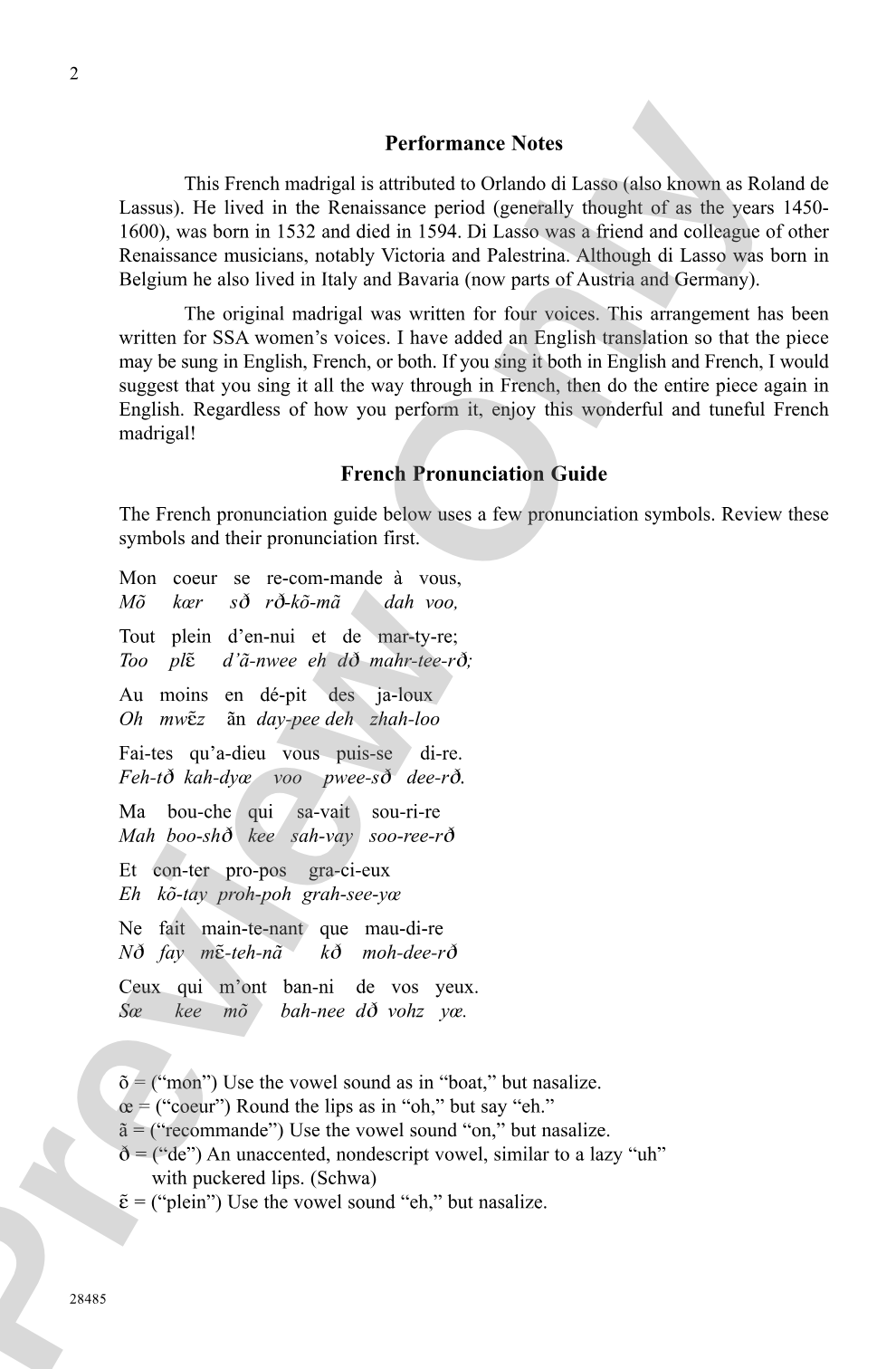
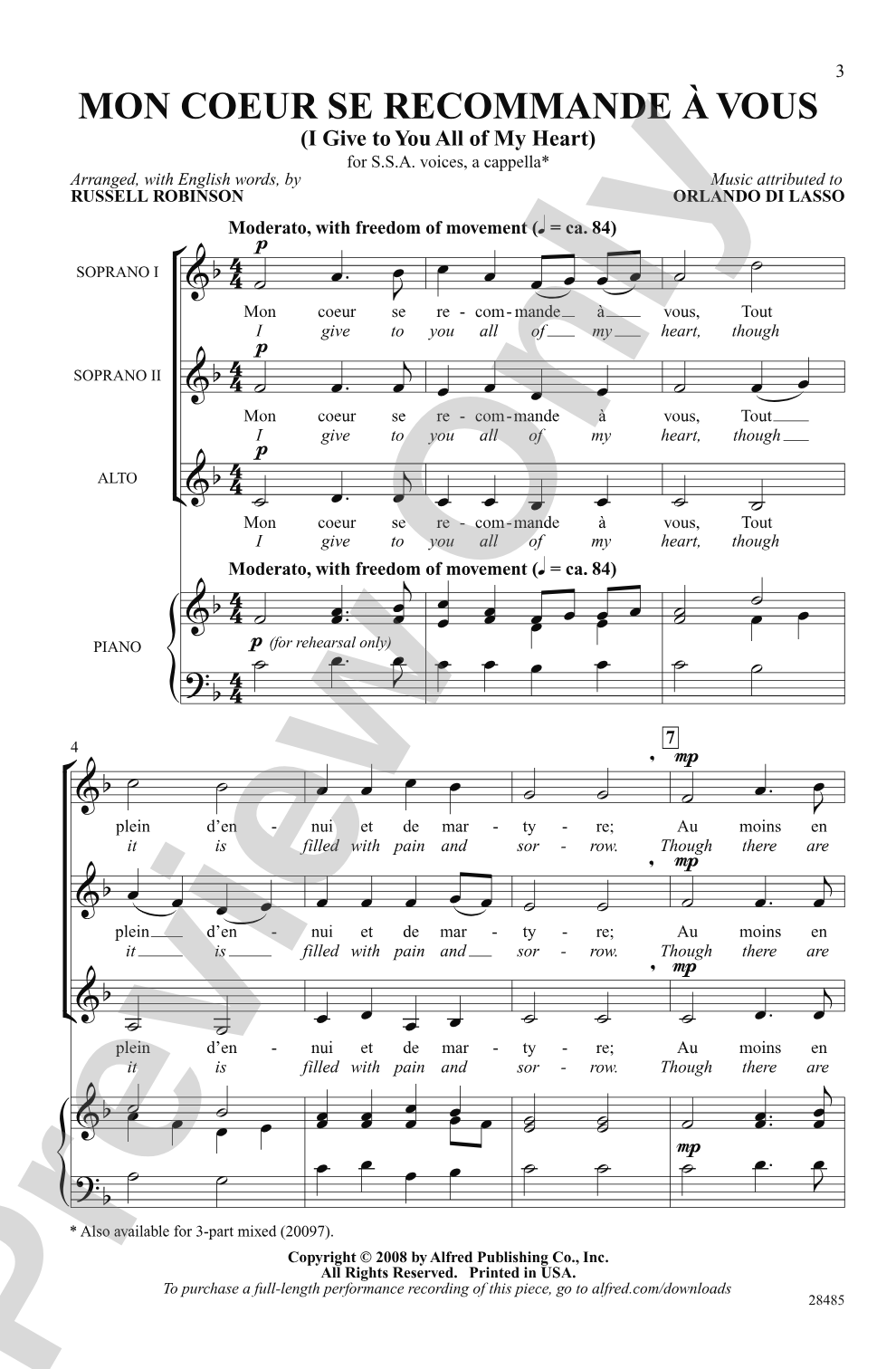
This French chanson (a polyphonic song popular in the 15th and 16th centuries) focuses on the subject of love. Performance notes and a pronunciation guide for the eight lines of French are included in the publication, or use the sensitive English text provided by Dr. Robinson. New edition for SSA choirs!


Mon Coeur Se Recommande à Vous (I Give to You All of My Heart): SSA Choral Octavo isn't in MakeMusic Cloud just yet...but it could be. Let us know you'd like to see it, and you'll help shape what comes next. In the meantime, start a free trial and dive into thousands of interactive titles your students can play along with today.
Request This Title
Tell us you want it.
Start Your Free Trial
Explore everything that's ready to play right now.
Sample Audio
1
Audio File
--:--
0:00
0:00
Sample Video
No sample videos found.
Additional Details
Series:
Alfred Archive Edition: Alfred Choral Designs
Publisher:
Alfred Music
Page Count:
8
SKU:
00-PO-0000456
More about this title
About the Composer: Orlando di Lasso
Orlando di Lasso (c. 1532-1594) was one of the Renaissance's most prolific and versatile composers, working across every major vocal genre of his era. Born in Mons and active throughout Europe, he spent much of his career at the Bavarian court in Munich, where he composed over 2,000 works including masses, motets, chansons, and madrigals that showcase his gift for text expression and harmonic innovation.
Di Lasso mastered the chanson form during a time when composers were expanding the emotional range and musical sophistication of secular song. His chansons blend French elegance with the kind of emotional depth that makes them valuable for teaching singers how to balance text clarity, part independence, and ensemble blend. His influence on choral music education persists because his works remain genuinely rewarding to perform.
Why we love this
Russell L. Robinson's new SSA arrangement opens up this Renaissance masterpiece to choirs ready to tackle polyphonic repertoire without the vocal demands of a four-part texture. The combination of included pronunciation guidance and an alternative English text means you can prioritize either authentic language immersion or musical fluency depending on your singers' needs and your programming goals. This is the kind of piece that feels substantial enough for a festival or competition while remaining genuinely engaging to rehearse.
What to expect
Intimate and earnest, this chanson unfolds like a conversation among friends rather than a proclamation. The interweaving vocal lines create a sense of gentle complexity that rewards careful listening; singers experience both the independence of their own part and the beauty of how it interlocks with others. The overall impression is one of restrained elegance tinged with genuine feeling.
Who it's for
SSA choirs with singers who have some experience reading Renaissance polyphony and are ready to work with a sophisticated harmonic language. This octavo suits both festival-bound ensembles looking to expand their repertoire and classroom choirs interested in exploring how composers shape emotion through counterpoint rather than homophonic texture.
How to get the most out of it
- Balance text intelligibility with the counterpoint. In a piece this texture-rich, singers often need to hear the other parts clearly in rehearsal; use sectional work to lock each line's independent melodic contour before bringing the voices together.
- If performing in French, drill the pronunciation guide systematically during early rehearsals so singers can focus on musical matters (phrasing, blend, balance) once language accuracy is secure.
- Shape the emotional arc through subtle dynamic control rather than dramatic shifts. Renaissance chansons thrive on restrained expression, so encourage singers to let the text and harmonic movement do the expressive work.
- Attend to the cadential moments where the voices align rhythmically. These structural anchors help the ensemble lock in without needing a conductor's crutch.
How to use it
Pair this with other Renaissance secular works to build a concert segment that demonstrates the richness of the chanson tradition, or use it in a mixed-era program where it can highlight the emotional sophistication of earlier polyphony before moving to later works. It sits naturally on a festival program or in a concert celebrating love songs across centuries, and the eight-page length makes it manageable alongside larger choral works.
Skills your students will build
- Reading independent melodic lines within a three-part texture
- Sustaining accurate intonation across multiple overlapping vocal lines
- Performing Renaissance counterpoint with proper voice leading and cadential awareness
- Interpreting French text with accurate pronunciation and expressive clarity
- Balancing individual part security with ensemble blend and blend