
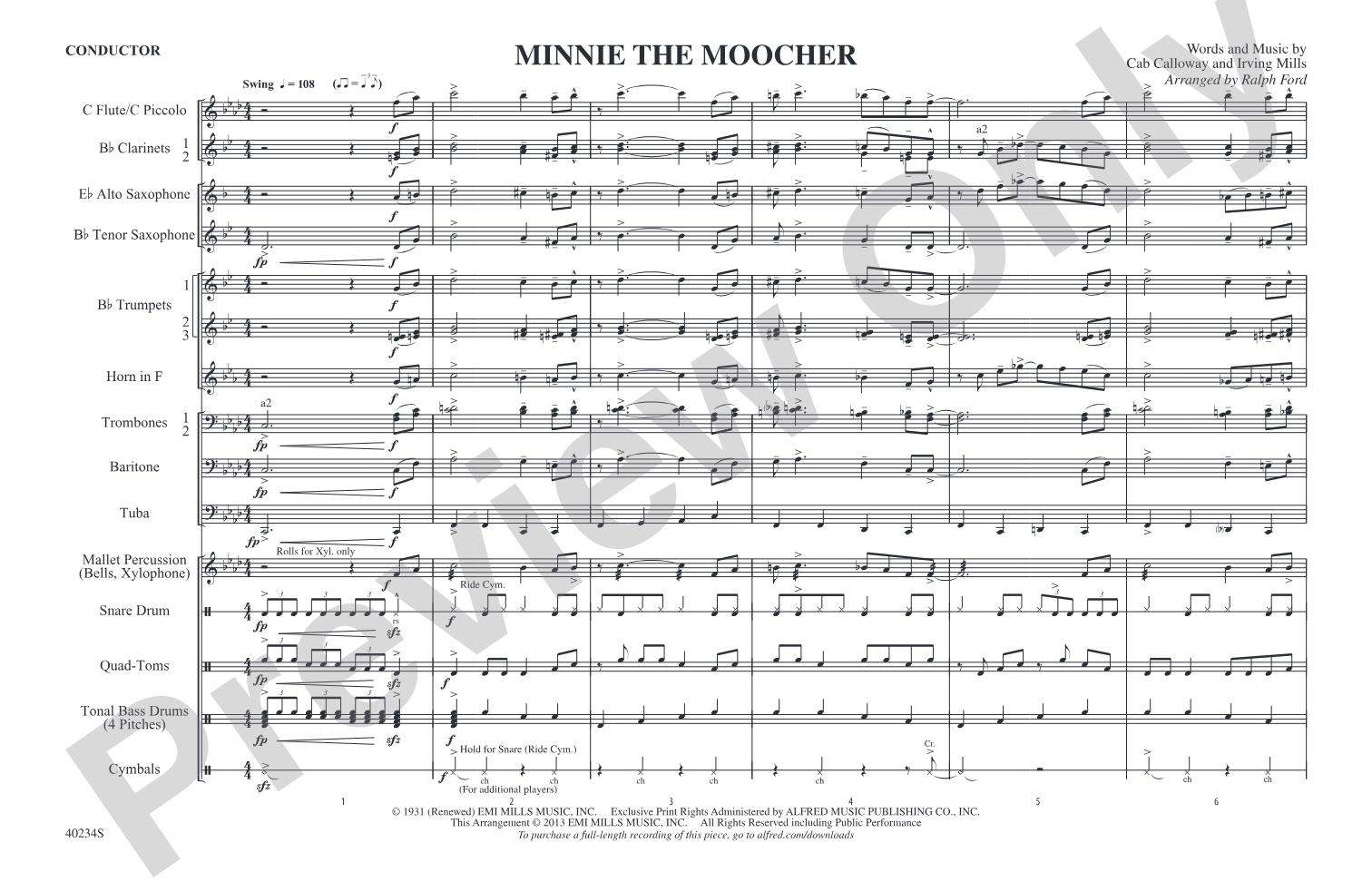
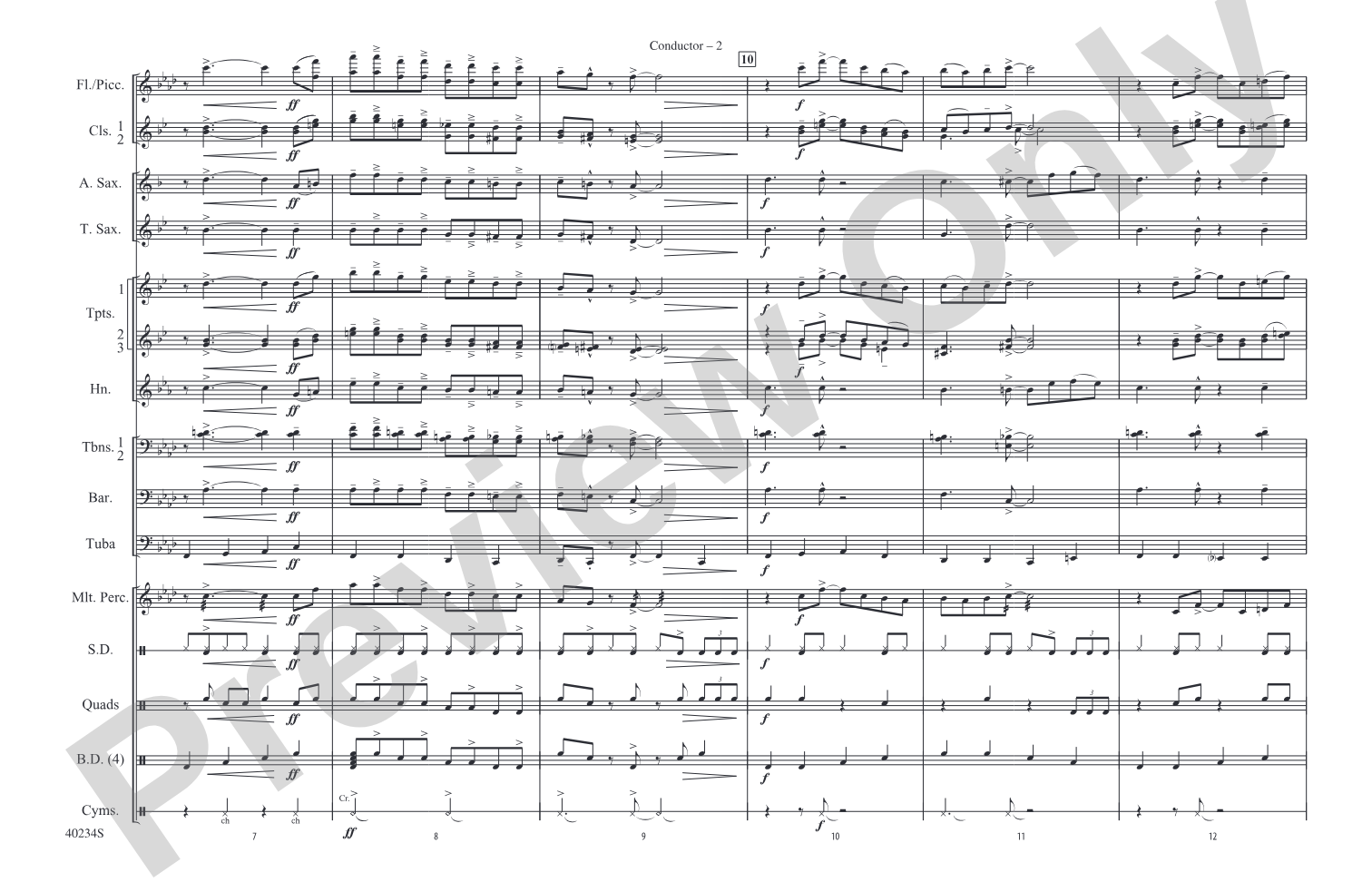
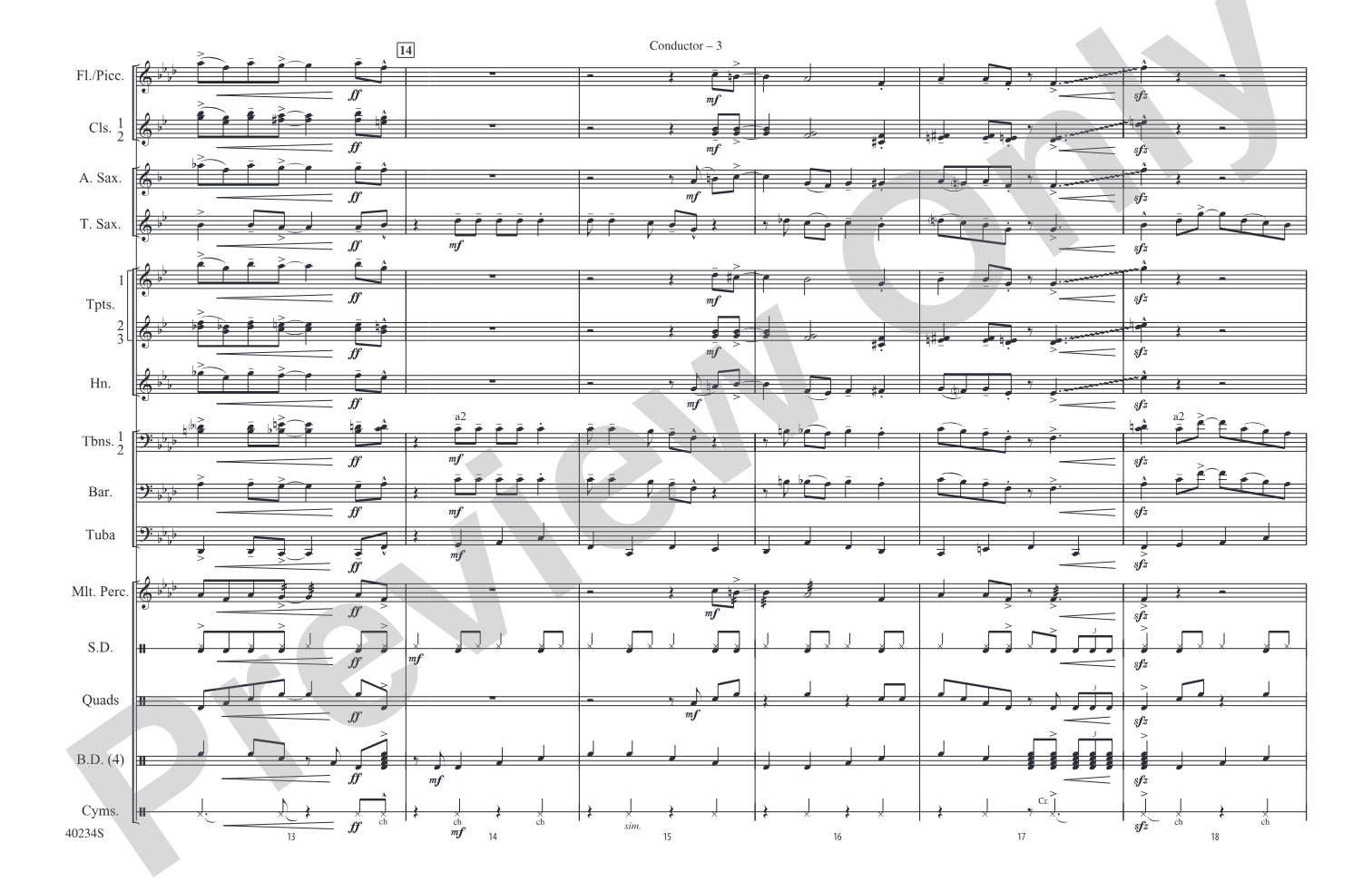
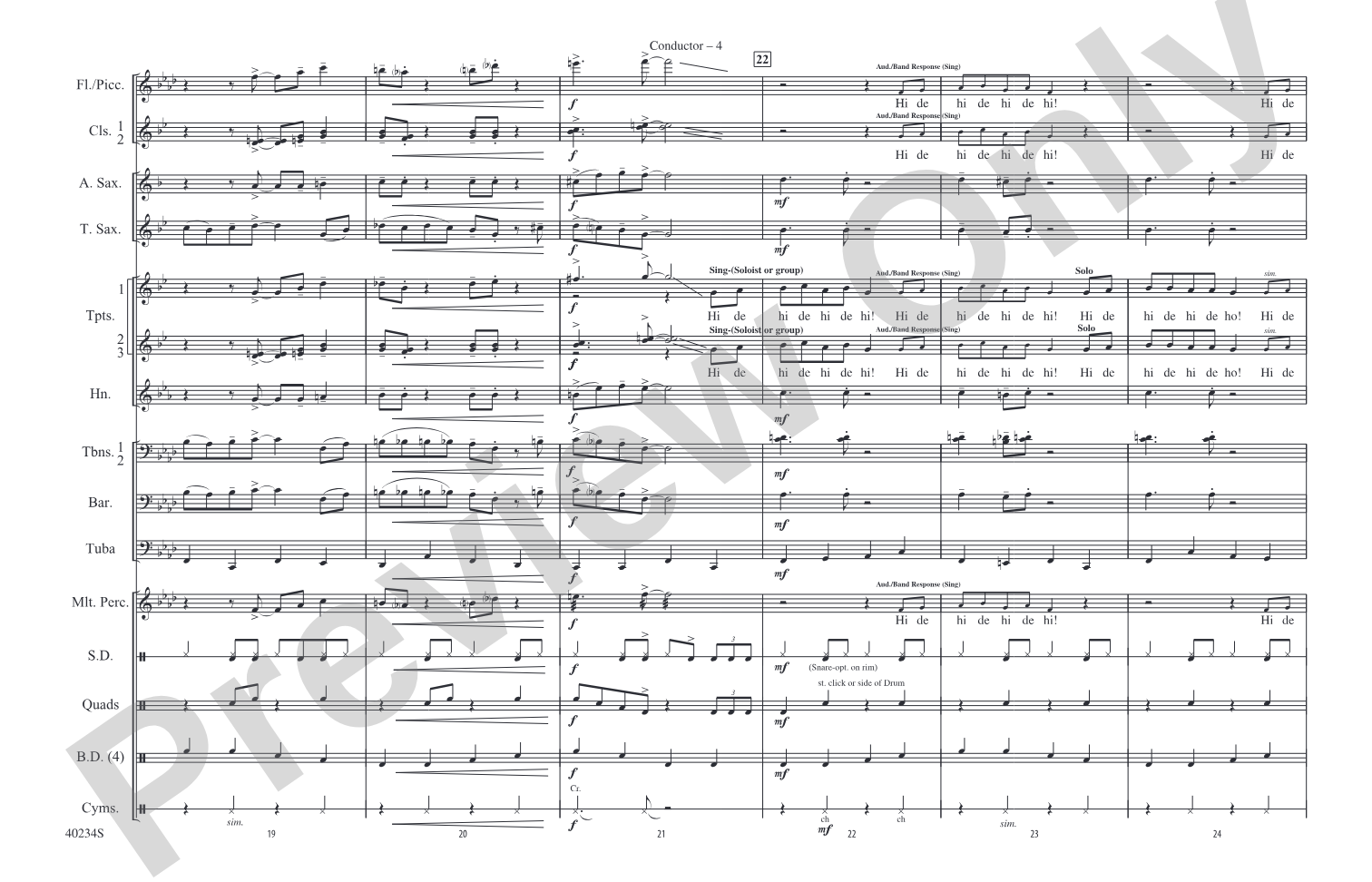
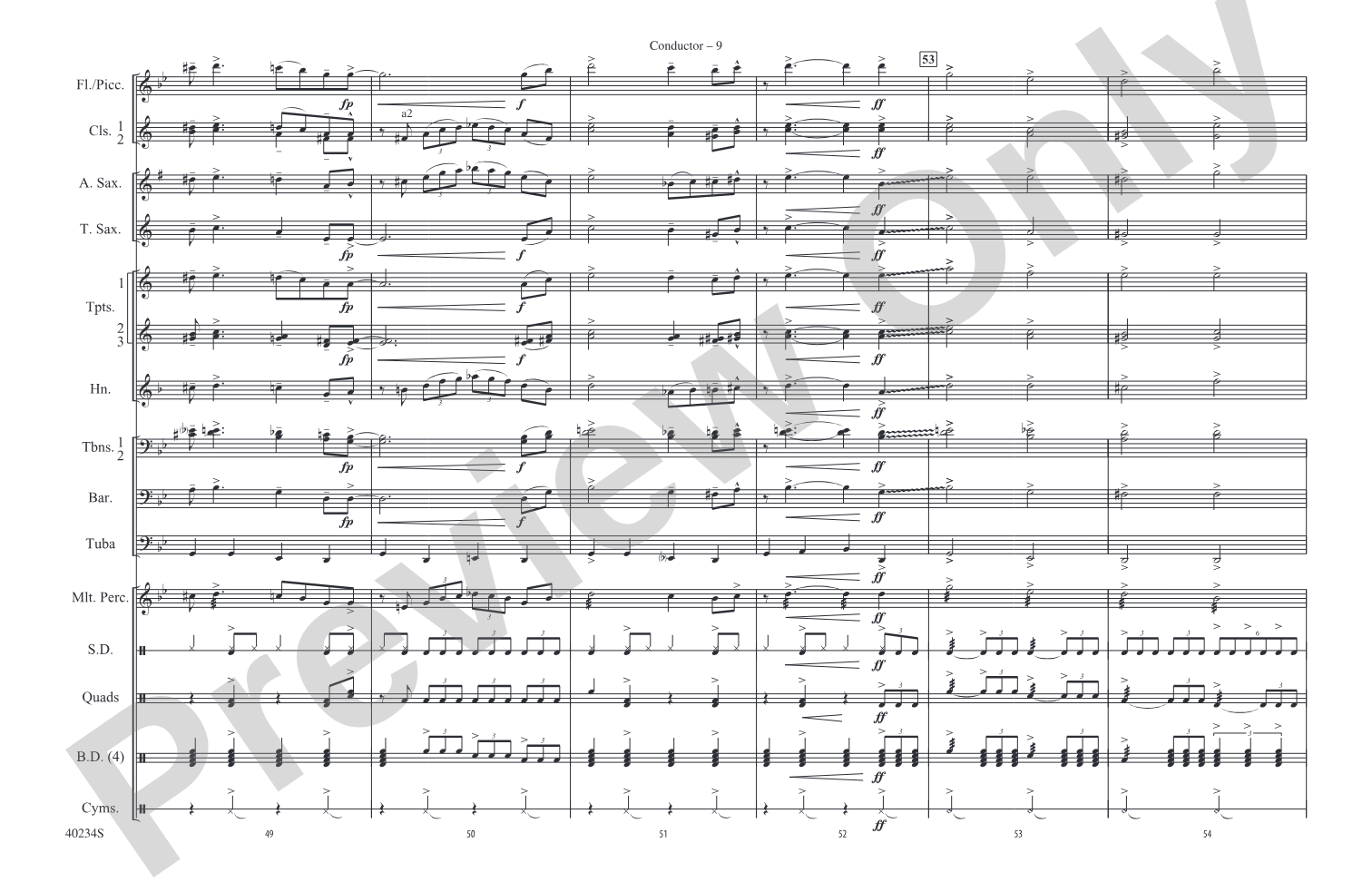
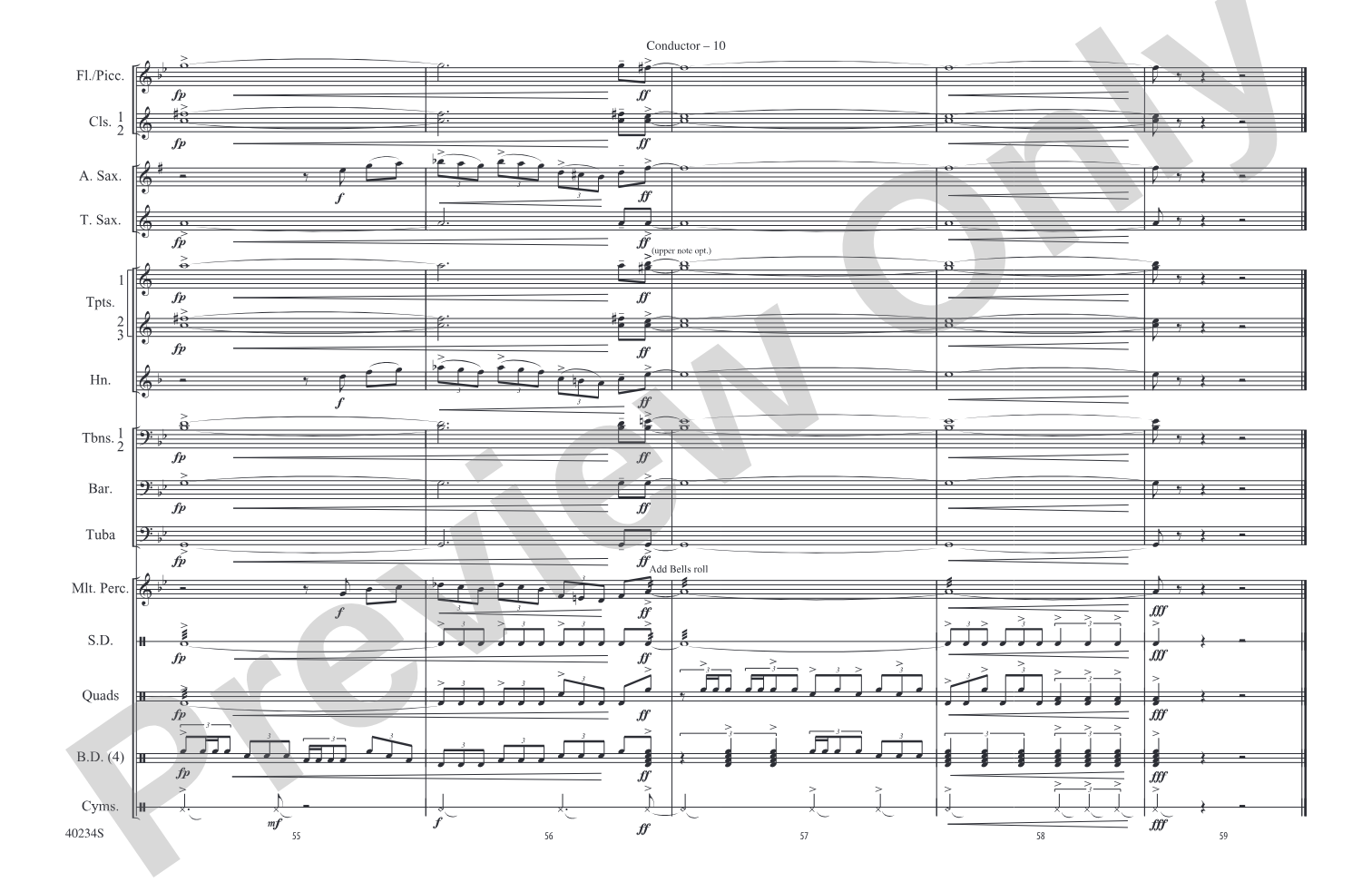

Minnie the Moocher: Marching Band Conductor Score & Parts
Words and music by Cab Calloway and Irving Mills / arr. Ralph Ford
Grade: 3.5 (Medium)
Item: 00-PK-0008030

$60.00
One moment…
Related Items
Minnie the Moocher: Jazz Ensemble Conductor Score & Parts |
$42.00
|
View | |
Minnie the Moocher: Concert Band Conductor Score & Parts |
$63.00
|
View | |
Minnie the Moocher: Full Orchestra Conductor Score & Parts |
$70.00
|
View | |
Minnie the Moocher: Concert Band Conductor Score & Parts |
$63.00
|
View | |
Minnie the Moocher: Concert Band Conductor Score |
$10.00
|
View | |
Minnie the Moocher: Marching Band Conductor Score |
$9.00
|
View | |
Minnie the Moocher: Full Orchestra Conductor Score & Parts |
$70.00
|
View | |
Minnie the Moocher: Full Orchestra Conductor Score |
$9.00
|
View | |
Minnie the Moocher: Jazz Ensemble Conductor Score & Parts |
$42.00
|
View | |
Minnie the Moocher: Jazz Ensemble Conductor Score |
$7.00
|
View |
Description
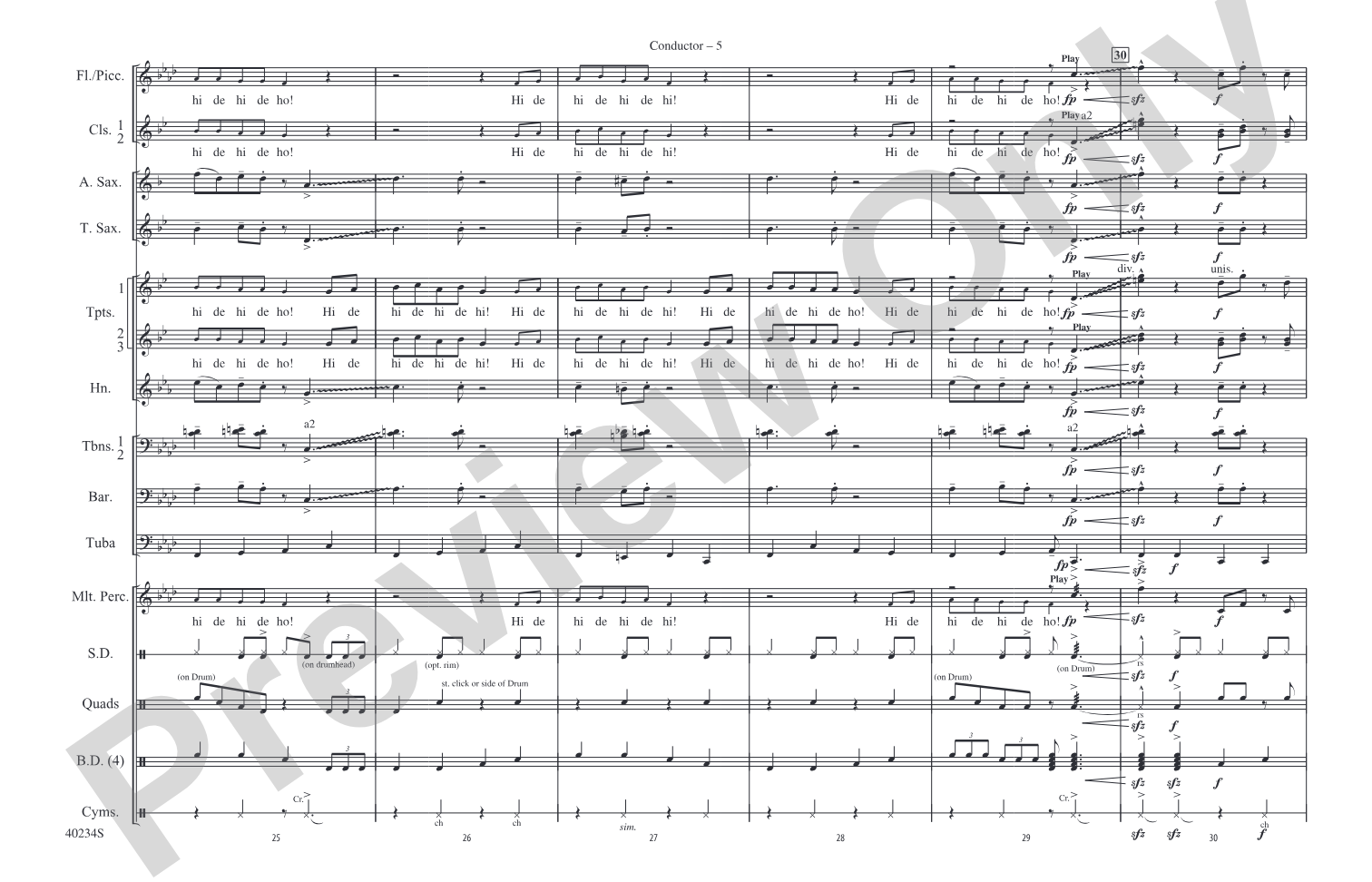
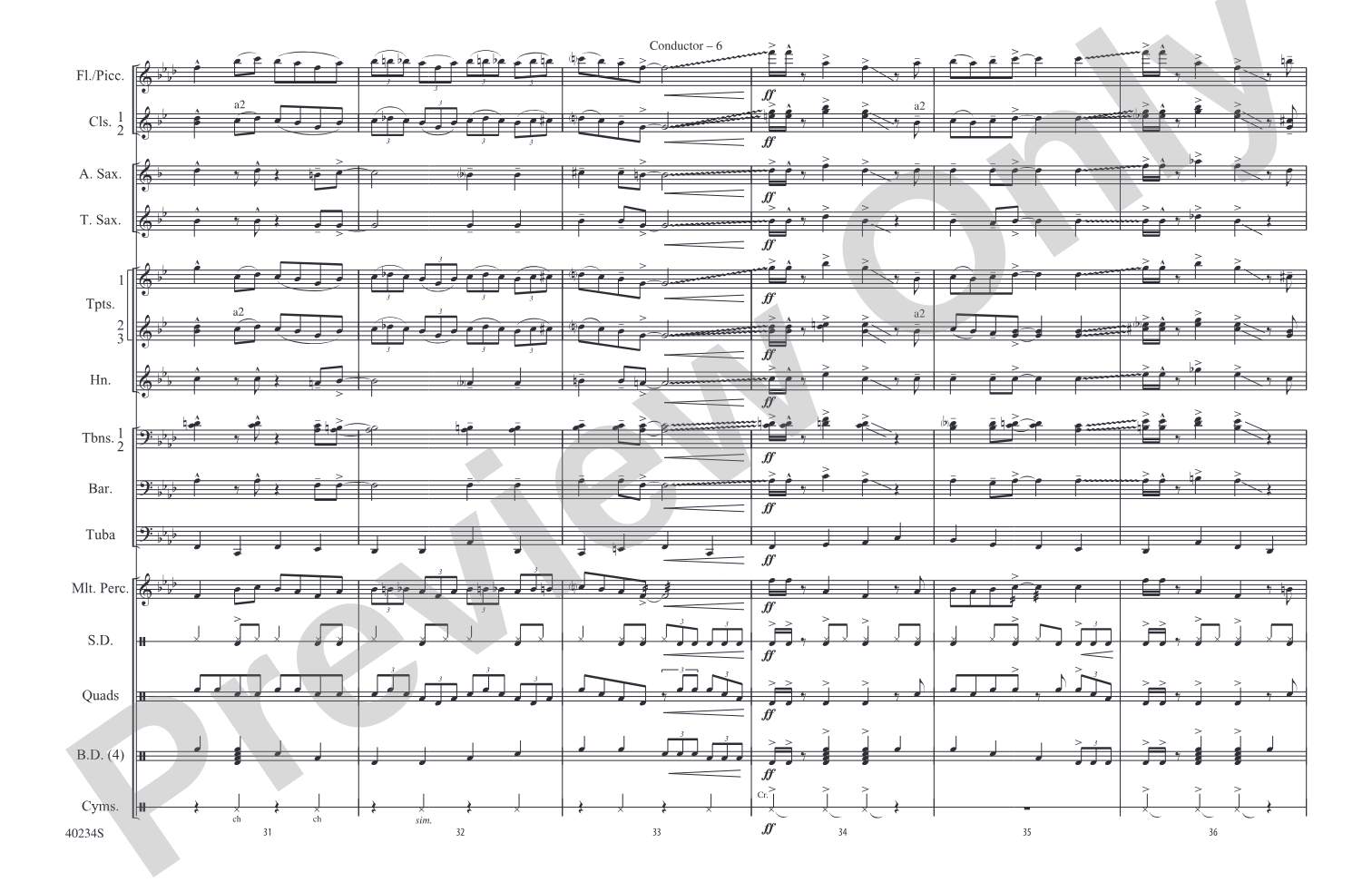
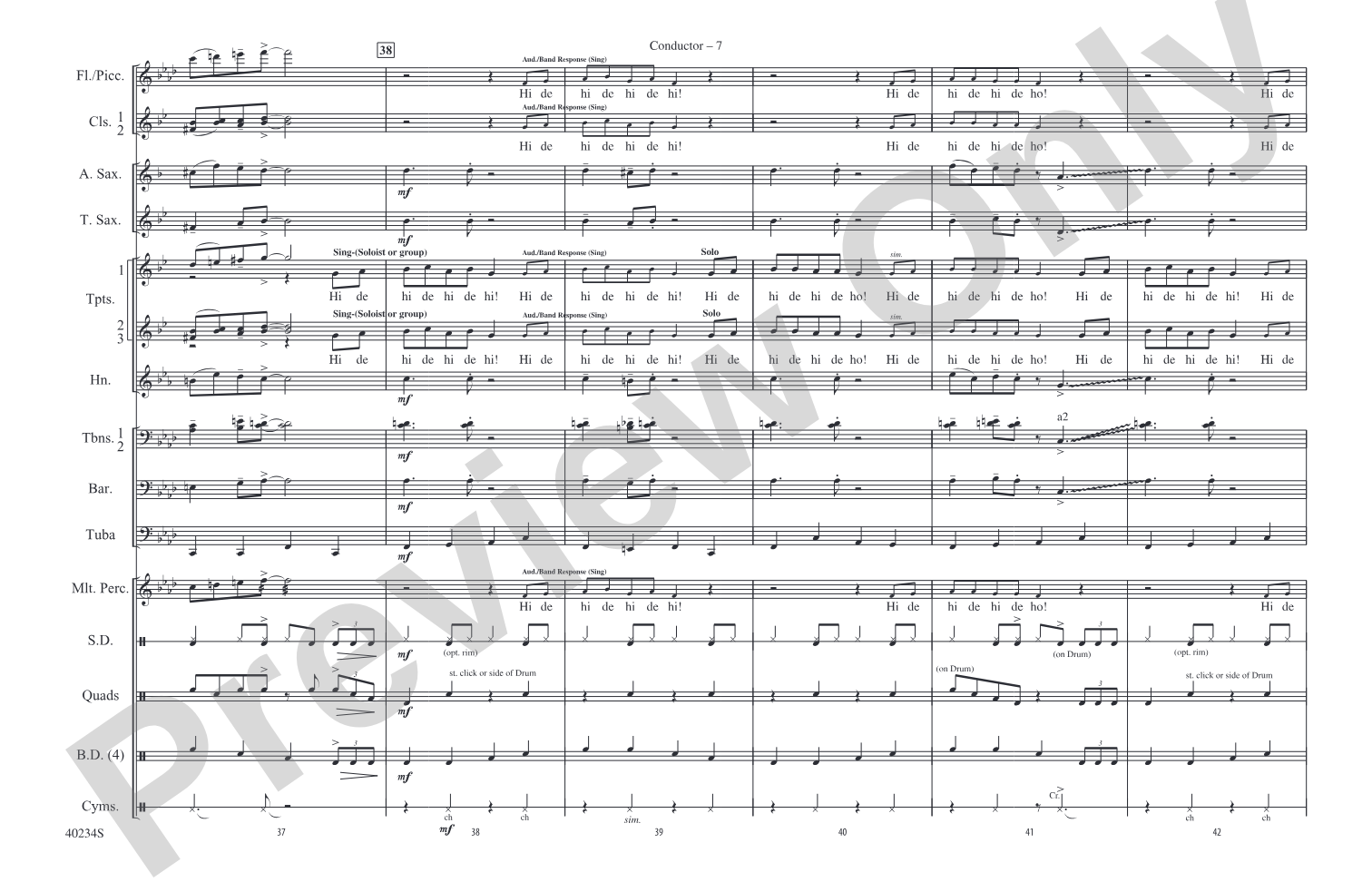
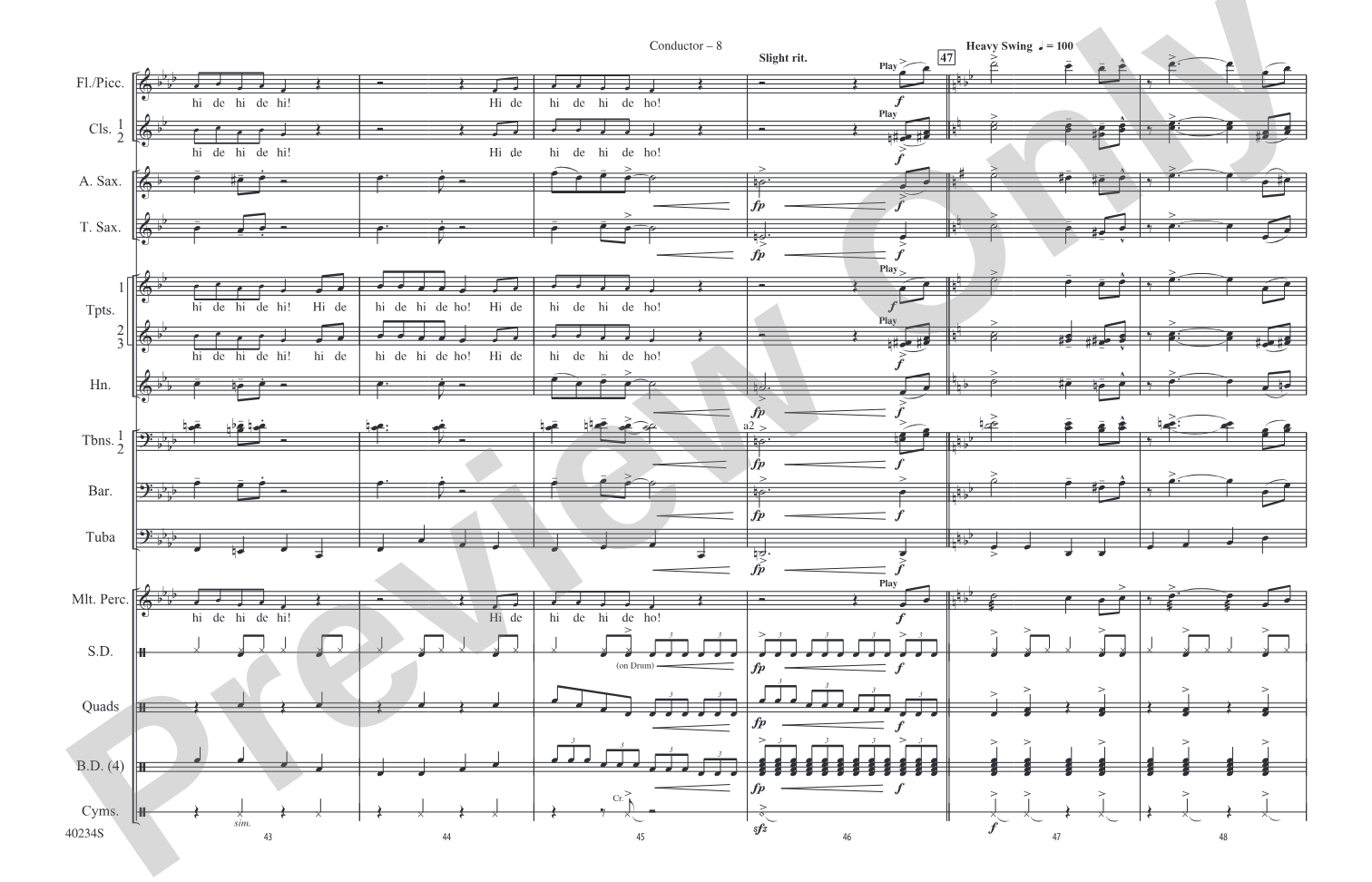
Check out this big band classic, now in a fresh new version by arranger Ralph Ford. Hot bluesy brass licks, rock-solid scoring, and audience or band call-and-response vocal sections make this a sure-fire hit! (2:15)


Don't just read it, hear it, play along with it, and watch your students grow with it. In MakeMusic Cloud, Minnie the Moocher: Marching Band Conductor Score & Parts comes alive with professional accompaniment, adjustable tempo, and built-in practice tools that turn solo practice into real progress.
Open in the Player
Jump straight in and assign it today.
Start Your Free Trial
Open this title and explore the full library in minutes.
Sample Audio
1
Audio File
--:--
0:00
0:00
Sample Video
Additional Details
Series:
Premier Series for Marching Band
Publisher:
Alfred Music
Page Count:
122
SKU:
00-PK-0008030
More about this title
About the Composer: Cab Calloway
Cab Calloway (1907-1994) was a bandleader, singer, and entertainer who defined the sound of big band jazz in the 1930s and beyond. Known for his showmanship, scat singing, and impeccable taste in arranging, Calloway led one of the most commercially successful orchestras of the swing era and recorded prolifically across five decades. His influence on jazz pedagogy extends far beyond performance: his records demonstrate how strong section discipline, clear voicing, and rhythmic precision serve the art form, making his work invaluable for student musicians learning the fundamentals of ensemble jazz.
Why we love this
This arrangement captures everything that made 'Minnie the Moocher' a phenomenon: the infectious groove, the conversational energy between soloist and band, and the blend of blues feeling with tight harmonic writing. Ralph Ford has scaled the piece smartly for marching band without sacrificing the swagger that makes big band charts so rewarding to teach and perform.
What to expect
Slick, energetic, and infectious. The piece radiates the confidence of a bandstand favorite, built on a blues foundation that feels immediately familiar while the clever voicing and brass punch keep things fresh. There's joy in every phrase, from the opening bluesy calls to the moments where the whole band locks into the groove together.
Who it's for
Marching bands at the Grade 3.5 level with strong section leaders and musicians ready to dig into jazz interpretation. This works equally well for programs seeking accessible big band repertoire with real jazz vocabulary and for groups looking to bridge classical technique with popular historical styles.
How to get the most out of it
- Lock the articulation in the brass soli passages. The bluesy licks need precision and unity to land with the style they deserve; mark these sections clearly in rehearsal and have players check with each other.
- Shape the call-and-response sections as true dialogue. Brief them as a conversation where the band responds to the vocalist or audience with intention, not as an echo or afterthought.
- Balance the reeds against the brass. The scoring includes hot brass parts, but the reed section carries essential harmonic color; adjust your section volumes in balance passages so both layers sing.
- Maintain relaxed swing eighth-notes. The piece swings, so eighth-note feel matters; a stiff, straight interpretation flattens the blues vernacular at the heart of the arrangement.
How to use it
Program this as a concert opener or closer to energize the audience and set a lighter, more entertaining tone alongside classical or contemporary marching band fare. It also serves well as a sectional or full-band morale booster during rehearsal season, since the style engages musicians who might be fatigued by straight technical work.
Skills your students will build
- Jazz articulation and phrasing (short-long swing eighth-notes, blues inflection)
- Call-and-response leadership and listening (vocal and instrumental)
- Section blend and balance in thick harmonic scoring
- Interpreting lead sheets and jazz notation conventions
- Rhythmic precision within a swinging, relaxed feel